I love outlining and detailing my paintings with fine ink. But even the best artist quality ink pens have been a huge pain in the butt, always getting ruined when trying to draw over dried paint. It feels wasteful, all those plastic pens just giving up so easily. And I’m constantly scribbling them on a separate page in attempts to revive them, only to just get a few more lines before they crap out for good. I had an aha! moment while enjoying another amazing artist residency program at Oak Spring Garden Foundation.
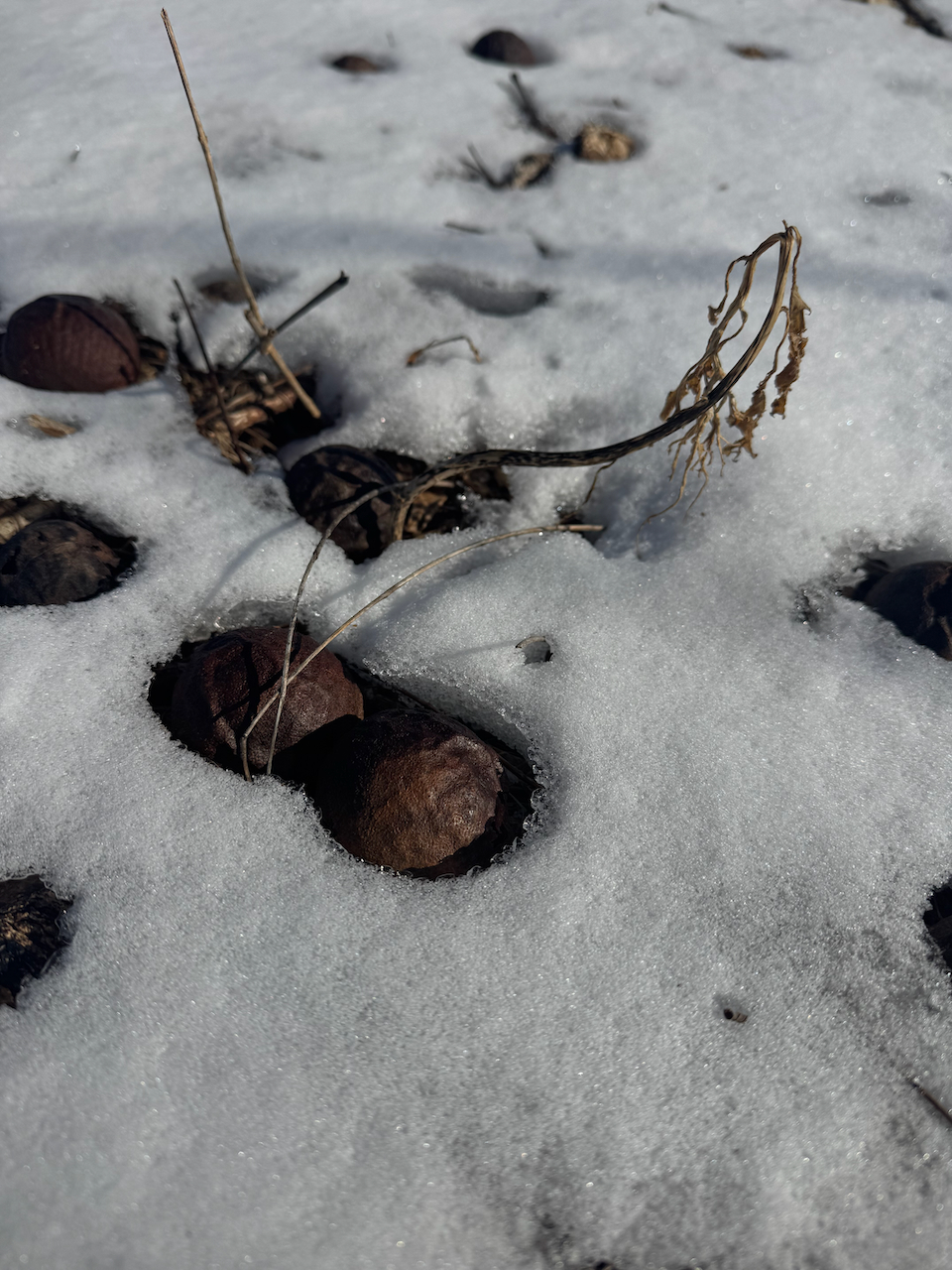
I arrived here in Virginia in mid-January. Not a great time to forage for botanical inks, but a good time to stay indoors and be creative. I happened to be here during the Arctic blast system that sent snow to Florida! The highs were in the teens, lows in the single digits for many days. All the plants are dead or dormant. But I did know from the previous times I roamed about in warmer weather here, that the stand of Black Walnut trees behind the farm might have some fallen and frozen fruits. I just couldn’t help myself, so I got on all my winter gear and wandered around, trying to remember where exactly those trees were, and then searching around the ground underneath for the fruits once I found them.

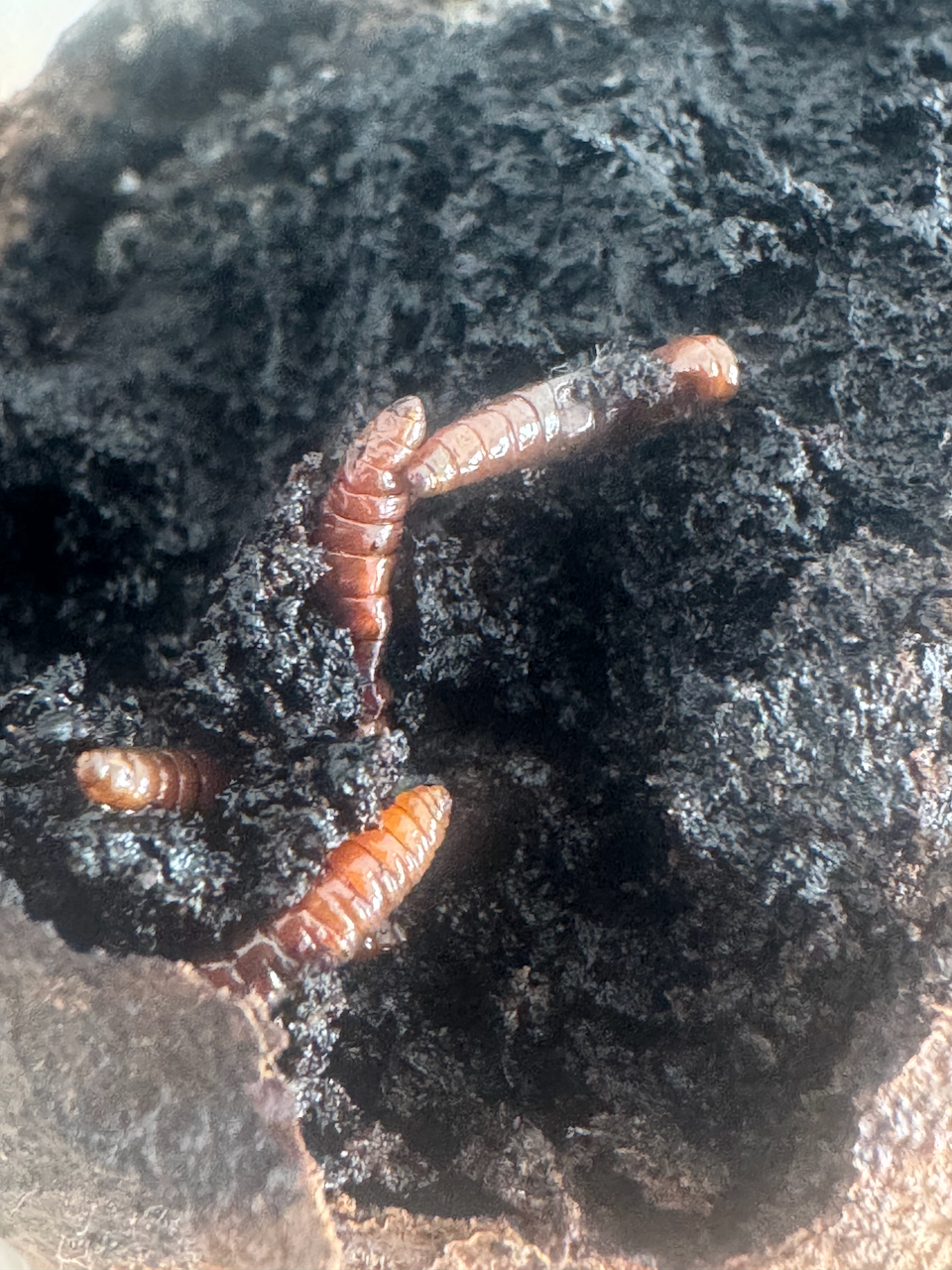
I found some in the snow, decomposing. Yay! I gathered a few, washed them off, and then let them soak in snow for several days in the studio. One had some dead little grubs inside, so I accidentally took some winter bird food away from the critters. Although I wonder what they taste like, soaked in that intense tannic juglone chemical that keeps many other plants from growing nearby.
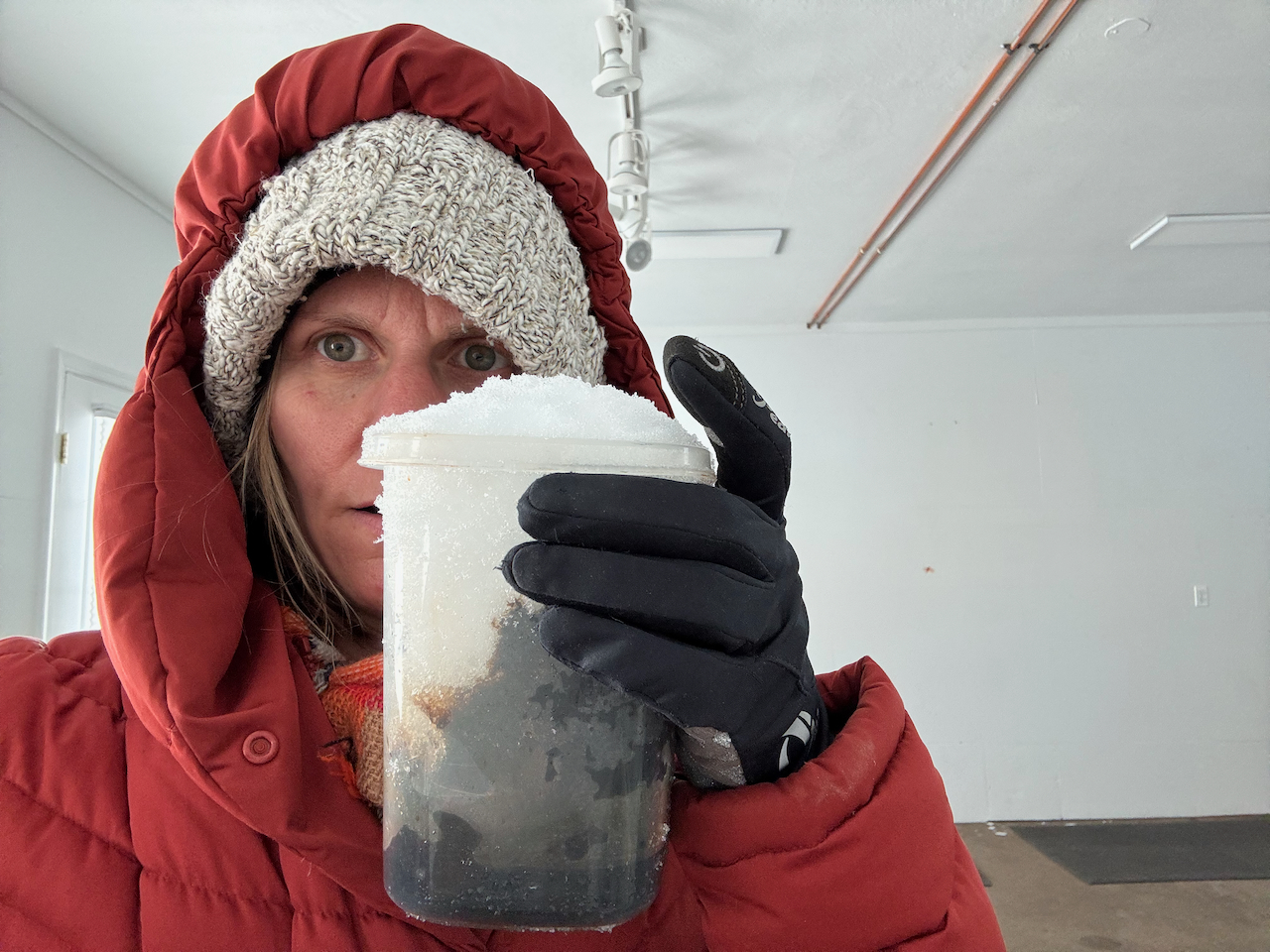
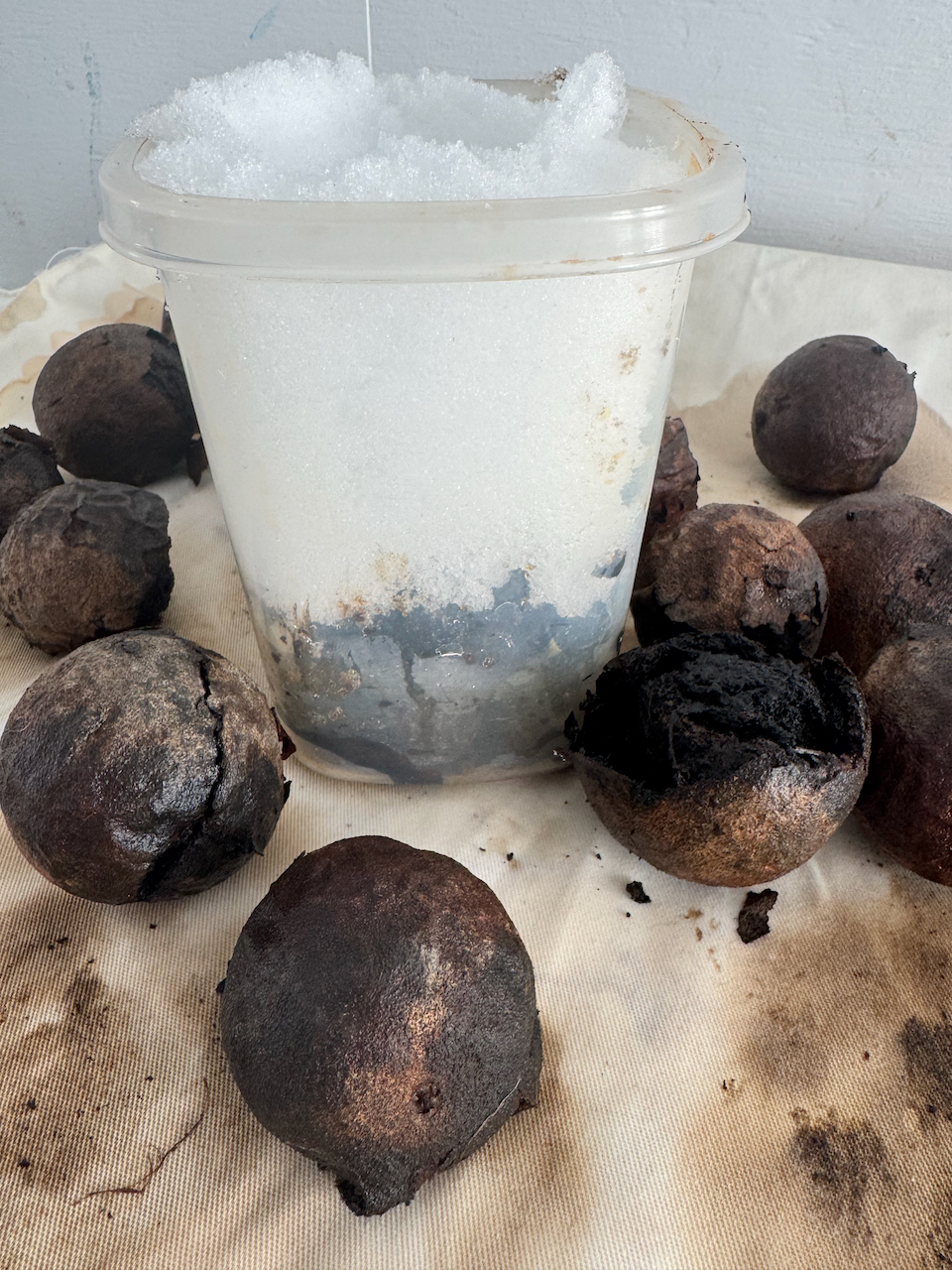
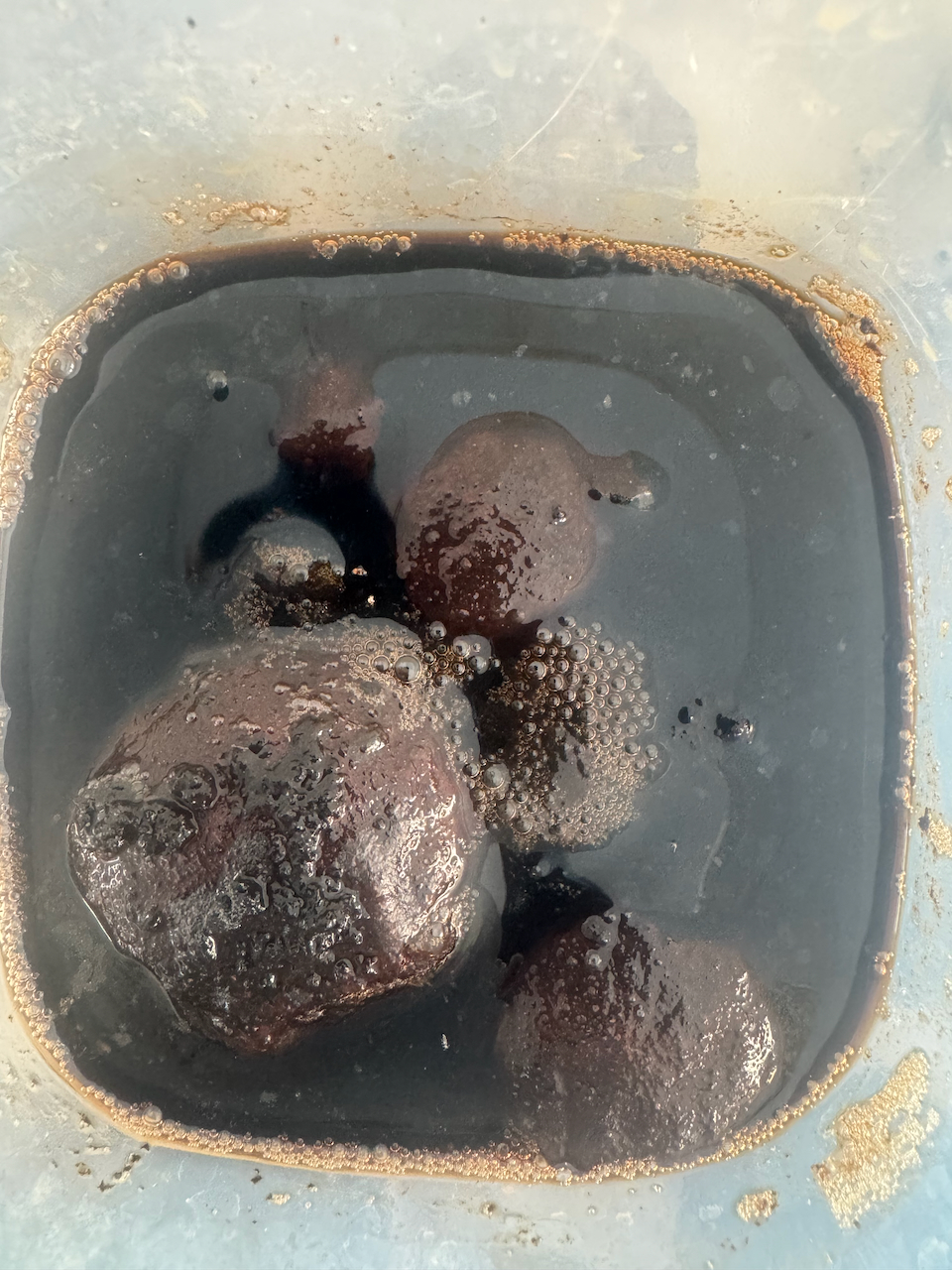
After soaking in melted snow for a few days, I gently simmered the watery brown liquid for an hour or so until is was concentrated enough to my liking. I then strained, bottled, and labelled a little jar – and that’s it.
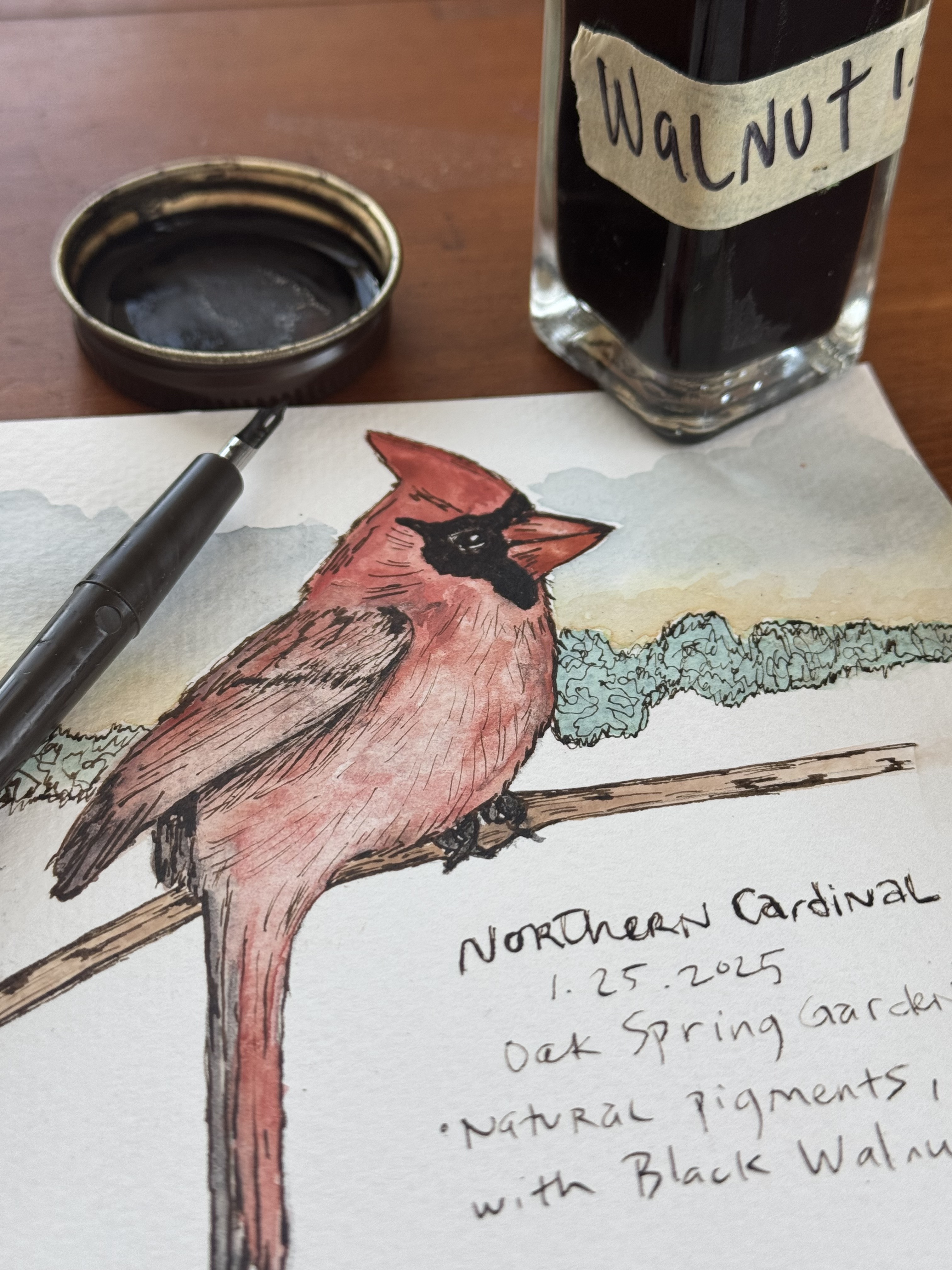
As I was doodling and painting various birds and getting frustrated again with those dang pens, I wondered….could I find a dip pen and try my own recently made ink?
It seems anything you need at this place, appears if you ask. When I first arrived, I inquired about a humidifier for my room, as the dryness was parching me. I’m so used to Florida humidity, and not adapting well to the cold and dry. Headaches, thirst, bloody nose. Ugh. The next day, James (our artist resident coordinator) showed up at my door with one! So I asked – might there be a dip pen around I could borrow? And there was!
So I tried my freshly made walnut ink and it’s a dream! The detailed lines I got with this simple pen were amazing. Neither the ink or pen were ruined by the paint at all. I was delighted and surprised at how long the ink lasted in the little dip pen reservoir, before needing another dip.
This is a game changer for my work. I can now use my own handmade inks and avoid wasting plastic pens. It’s also really pleasurable to hold an old and effective tool in my hands, doing slow and methodical work.
The only downside I see thus far, is that that the walnut ink is not waterproof. So I can’t paint over it once the final lines are drawn. This particular nib also seemed a bit scratchy, maybe from being practiced with by amateurs like me. Perhaps a new one, in a more skilled hand will glide better. It will also likely work better on smoother, hot press watercolor paper compared to the cold press and more textured paper I tend to use.
I have so many colorful botanical inks in my collection, and can’t wait to try them! I just ordered a sampler set of nibs and a holder so that I can keep practicing when I get home. I might try making my own version of India ink, from burnt pine bark chunks I have from a prescribed burn site.
 seedsandstories.blog