make ink from plants

I like making both inks and paints, and there are differences both in how they are used to make art, and practically – how they store and travel, how long they last, and how much is involved in the process of making them.

Ink is ancient. It’s been prepared and used for thousands of years, transmitting language on various surfaces. Dark brown ink made from oak galls was used to create many famous manuscripts (like the US Constitution); Leonardo daVinci drew with it.

Basically it’s a concentrated colored liquid used to write with. It is fairly simple to make with fewer ingredients and steps compared to paints, but is perishable, harder to transport, and not as easy to use due to its fluidity. But the fluidity can be a good thing, as colors readily run together and dry in beautiful and unexpected ways. Additives to improve stability and thickness can be used to produce high quality ink.

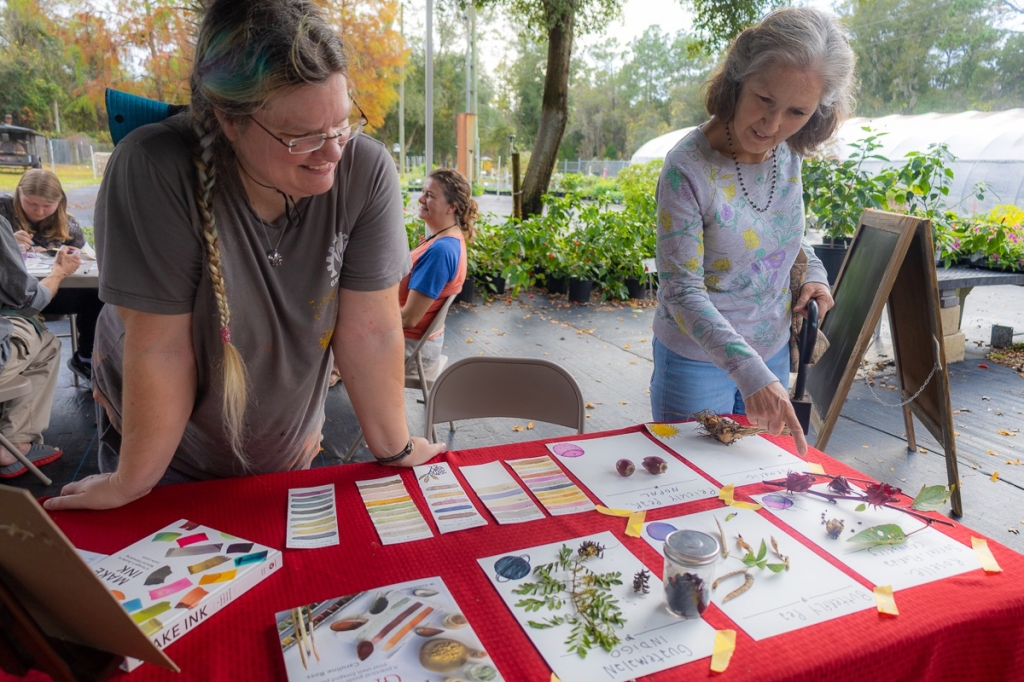
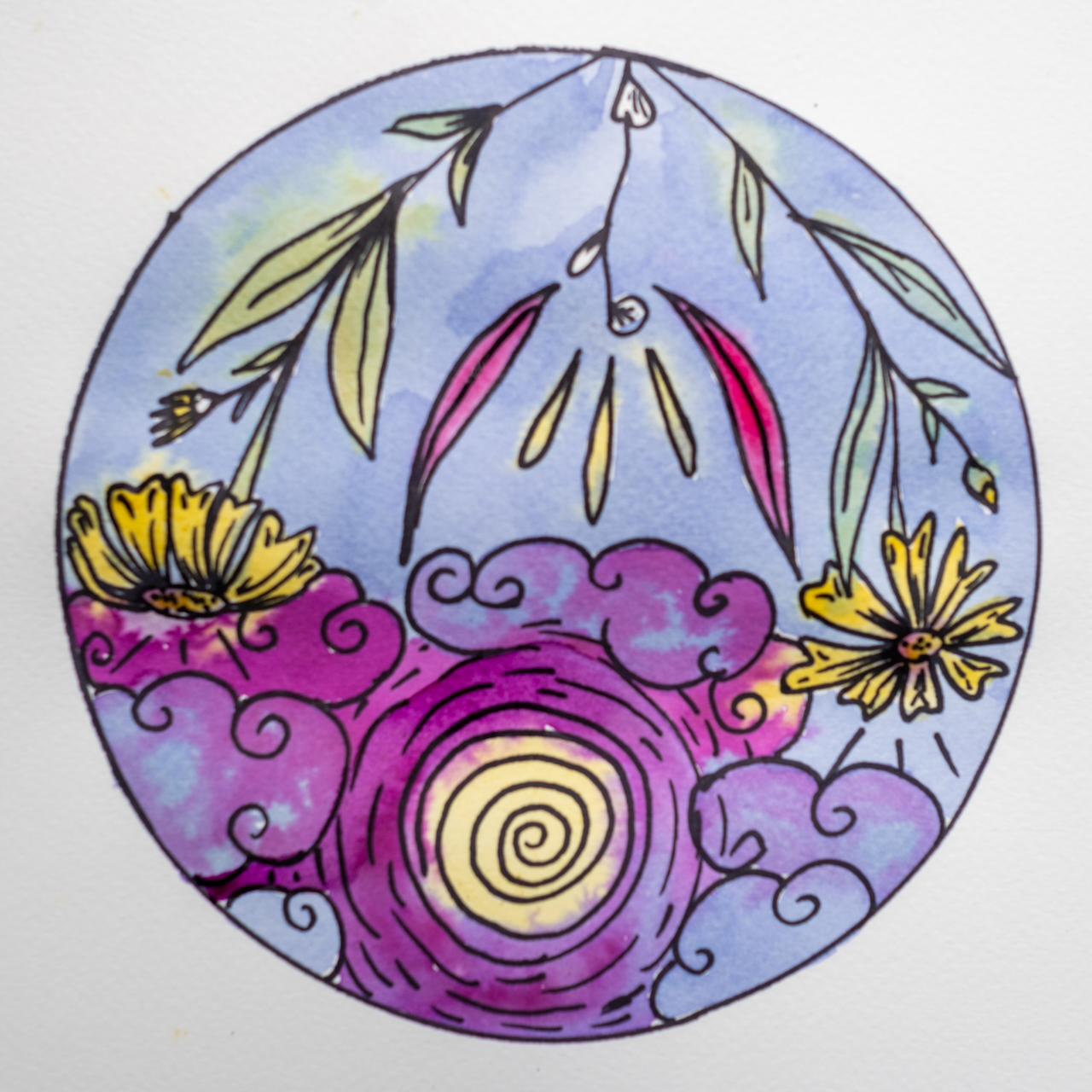
I started with inks and graduated to paints, but keep both for use in my artwork. Much of the artwork in this sketchbook was created with inks. Jason Logan’s book, Make Ink: A Forager’s Guide to Natural Inkmaking is very inspirational.

For lots more detailed information, pigmented plants to find in Florida, techniques, plant info, and lots of my art – pick a copy of my book!
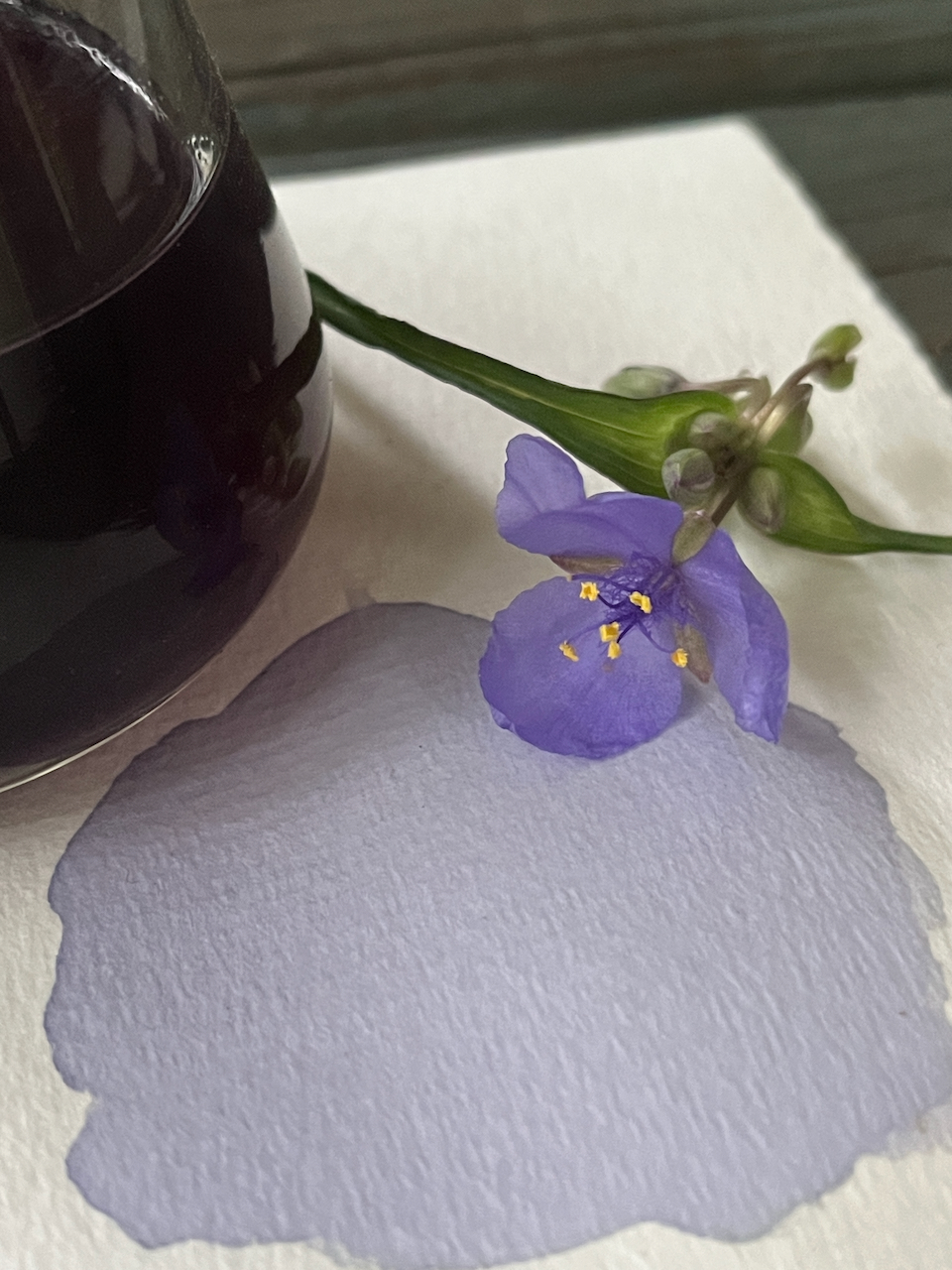

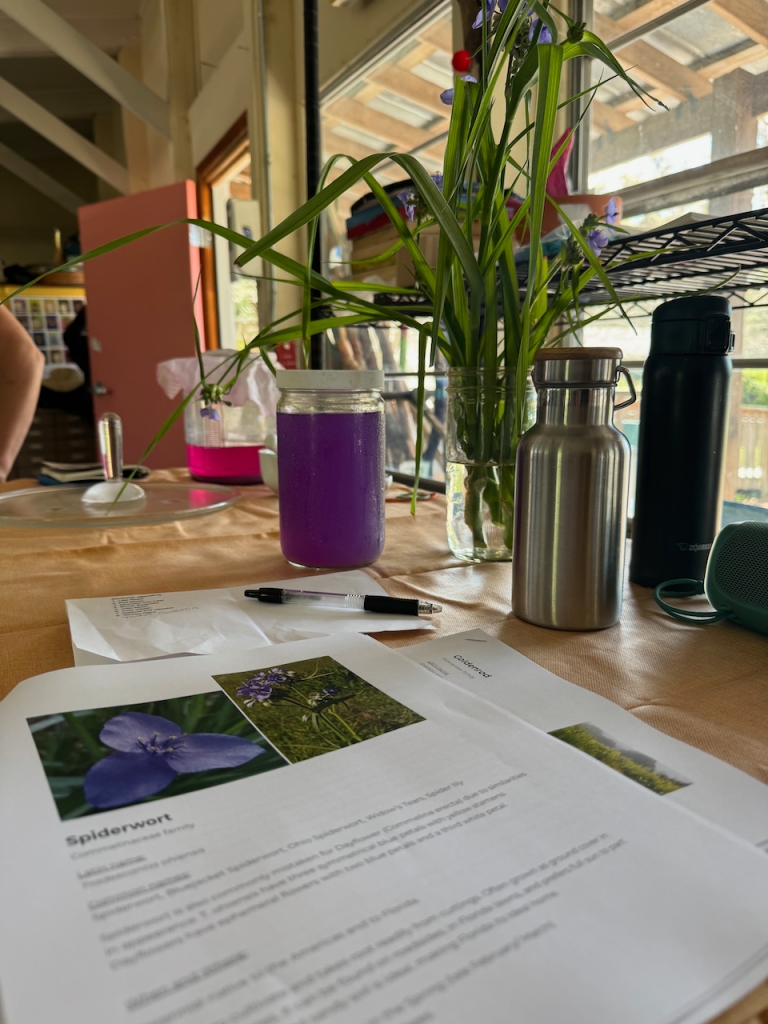
Spiderwort flowers make a lovely ink. With a dash of citric acid to the warmed ink, it maintains true to color.

Gather up supplies and ingredients

  • Plants (fresh, frozen, or dried)
  • Muddler
  • Fabric pieces or fine strainer
  • Pot (that you don’t mind possibly getting stained)
  • Watercolor paper (regular paper can’t handle liquid ink, I prefer the more textured and absorbent cold press type)
  • Paint brushes
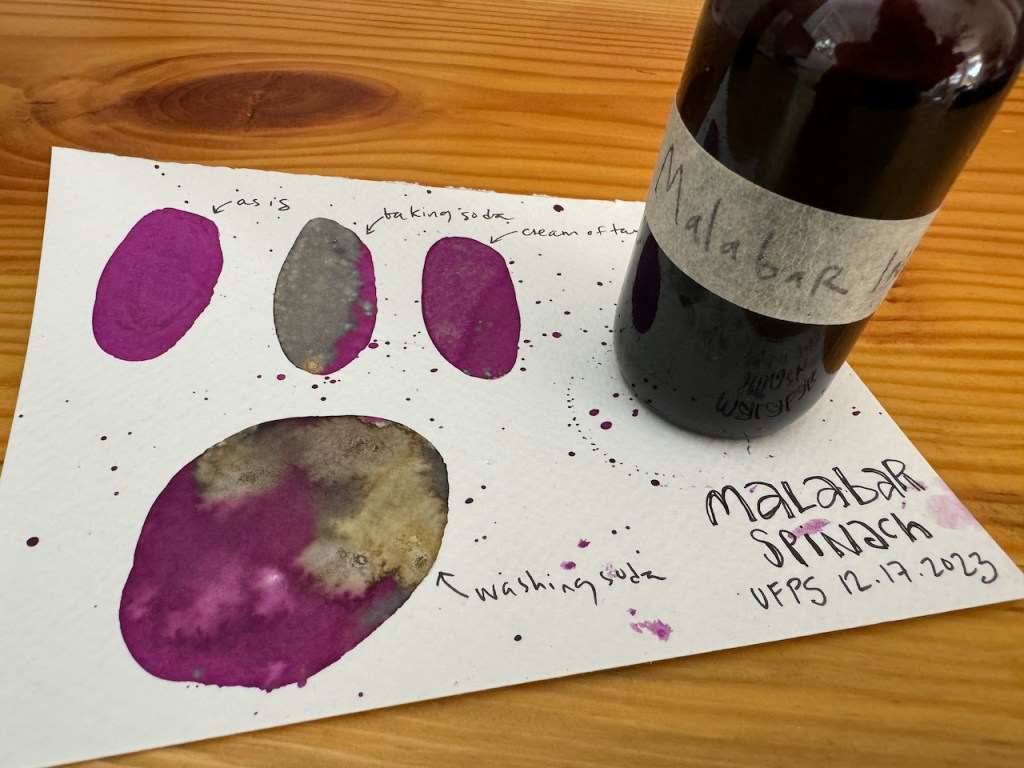
  • Optional chemicals to initiate pH induced color shifts:
    • Alum, citric acid, cream of tartar, lemon juice and vinegar are acidic
    • Baking soda and soda ash are basic
  • Jars, dropper bottles or other small vial with a leak-proof lid
  • Watercolor medium and preservative. See here for recipe.
  • Clove or thyme oil as preservative

Process

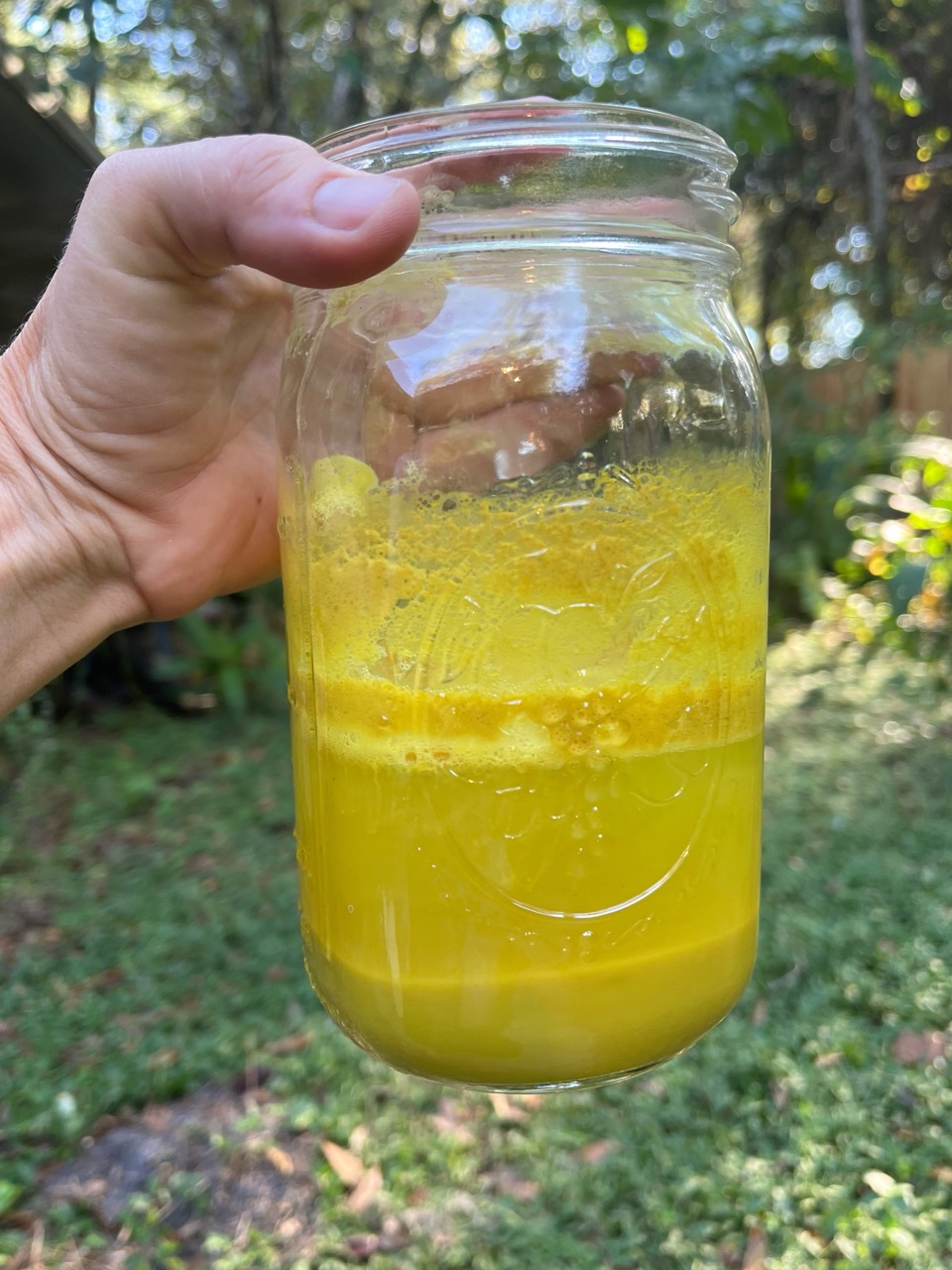
  1. Simmer plant material in water (except for berries that may not need additional liquid), muddling several times. 1-2 hours for flowers and petals, much longer for bark, roots and other tough materials. Simmer until a rich colored and concentrated dye is obtained with as little water as possible. Cut the heat and rest overnight. Repeat again if needed to allow tough plant tissues to break down further; likely not necessary for delicate petals. Avoid burning and boiling. Attend your pot closely, set timers periodically so you don’t forget to check!
  2. Allow liquid to cool enough to handle.
  3. Squeeze out all plant material through a cloth or very fine sieve. Compost the plants.
  4. Pour your new liquid ink into a very clean and labelled jar or bottle. Include plant + date and anything else you want to capture. A separate notebook is good for the finer details you can’t fit on a small bottle.
  5. Optionally, add 1 part watercolor medium to 3 parts ink, or approximately 10 drops to 2 ounces of ink.
  6. Add a drop of preservative oil, shake to mix. Store in refrigerator ideally but will last weeks or months at room temperature.
  7. Alum, copper, iron oxides and cream of tartar may be used to make the ink more permanent. Experiment with what works for various hues.
make paints from plants

I like making both inks and paints, and there are differences both in how they are used to make art, and practically – how they store and travel, how long they last, and how much is involved in the process of making them.

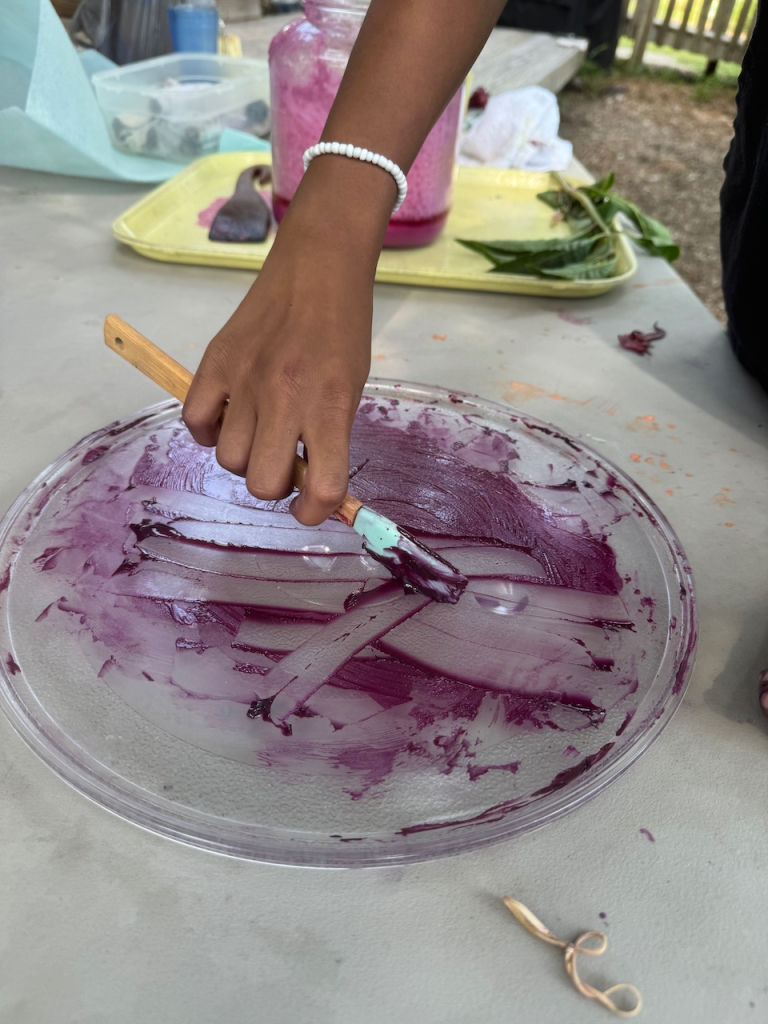
Paints are solid and can be re-wetted with water for use. Creating them is an involved process but worth the exploration if you become more serious about homemade colors. Pure pigments are drawn out of botanical material through a chemical process known as “laking”, which binds the pigment to a metal salt.

The resulting pigment is dried, finely ground, and mulled with a watercolor medium into a paste which is then used like watercolor paint. Earth based materials like clays and stone can also be used.

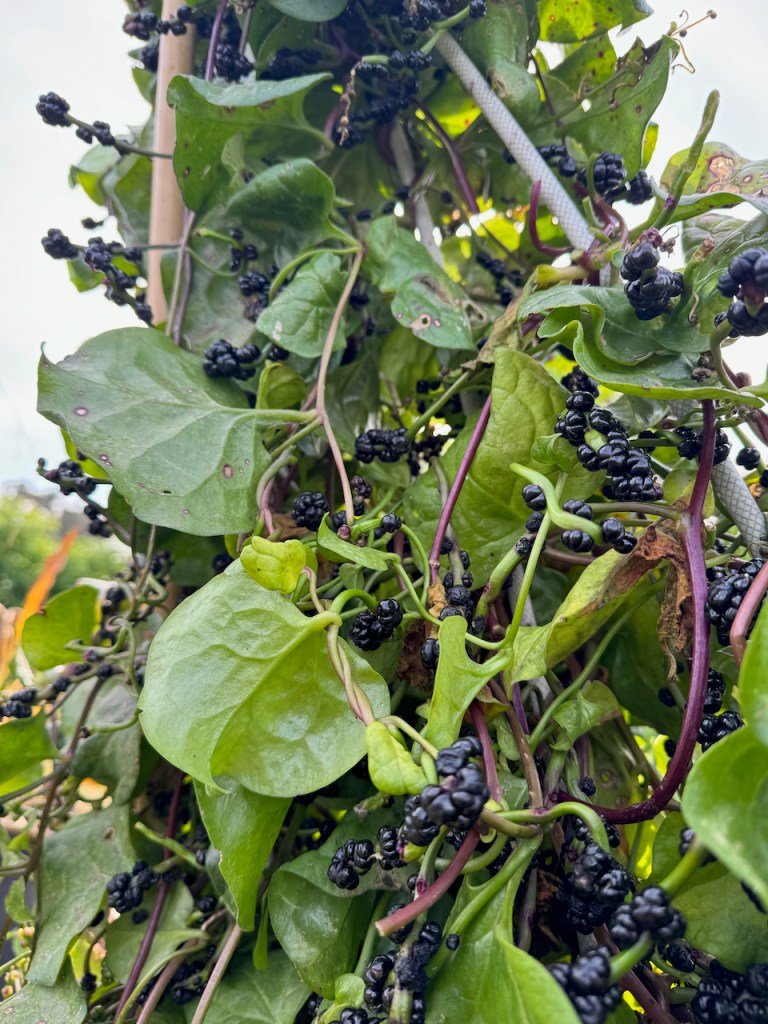
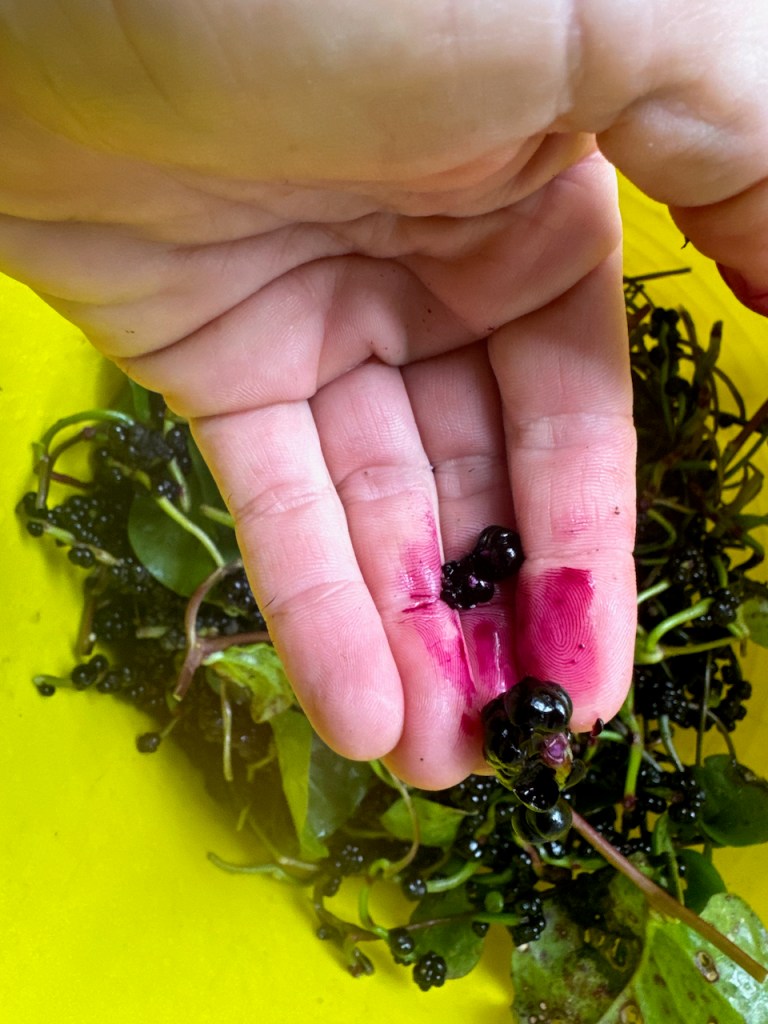
Compared to inks, paints are more portable, do not need refrigeration, and tend to be more stable. I am slowly converting most of my colors to be in paint form as I find them easier to create art and travel with. However, some have better colors as an ink and are best used that way. For example, both beets and malabar spinach berries are bright pink inks, but dull brown paints.

For lots more detailed information, pigmented plants to find in Florida, techniques, plant info, and lots of my art – pick a copy of my book!


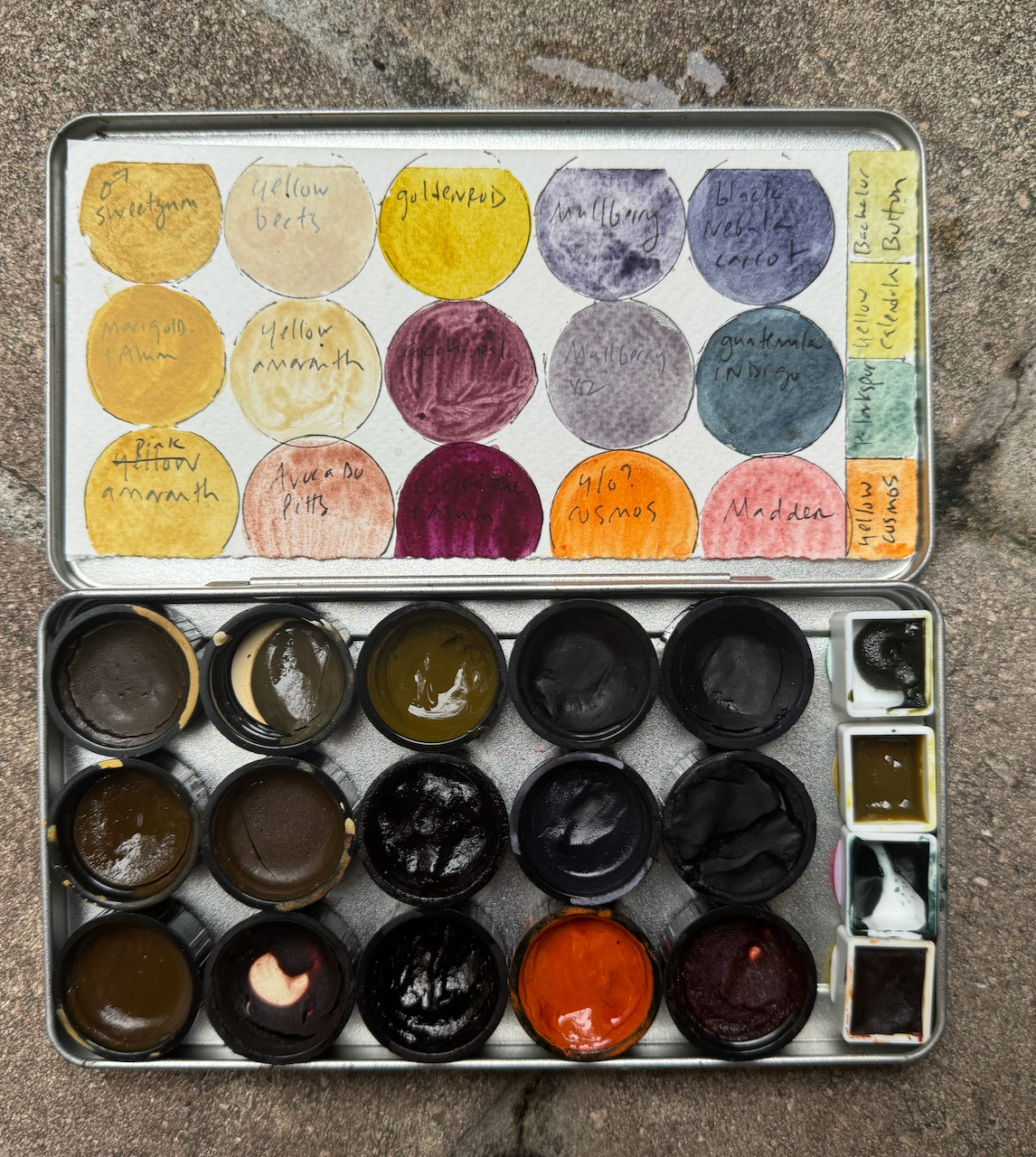
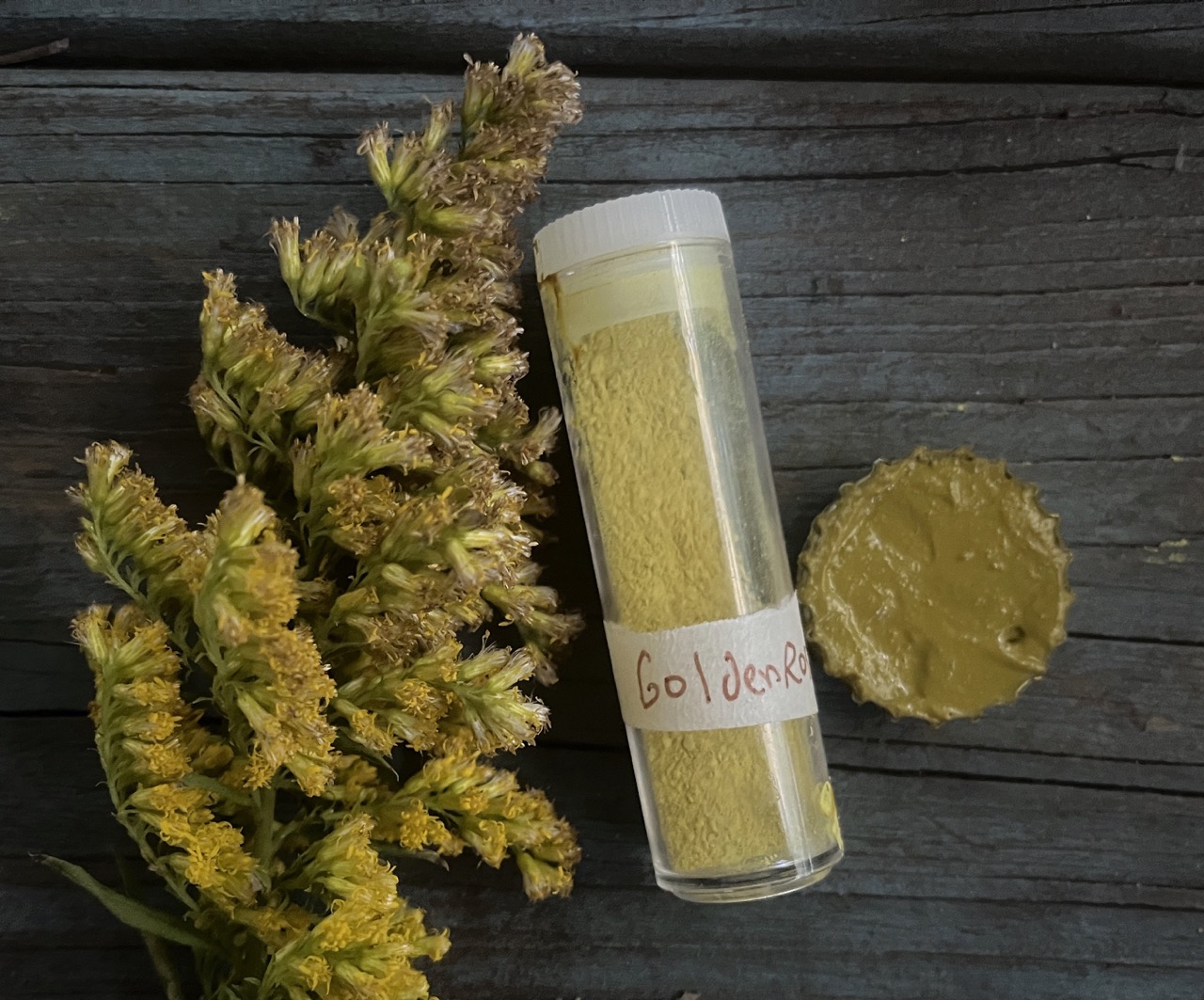
A homemade palette of watercolors using re-purposed plastic bottle caps and an Amex card metal tin.

Gather up supplies and ingredients

  • Plants (fresh, frozen, or dried)
  • Muddler
  • Fabric pieces or fine strainer
  • Pot (that you don’t mind possibly getting stained)
  • Watercolor paper (regular paper can’t handle liquid ink, I prefer the more textured and absorbent cold press type)
  • Paint brushes
  • Large, clear, heat safe glass jars
  • Alum (aluminum sulfate or aluminum potassium sulfate)
  • Soda ash See here how to make.
  • Stirring sticks/spoons
  • Coffee filters
  • Rubber bands
  • Glass board (old microwave dish or cutting board)
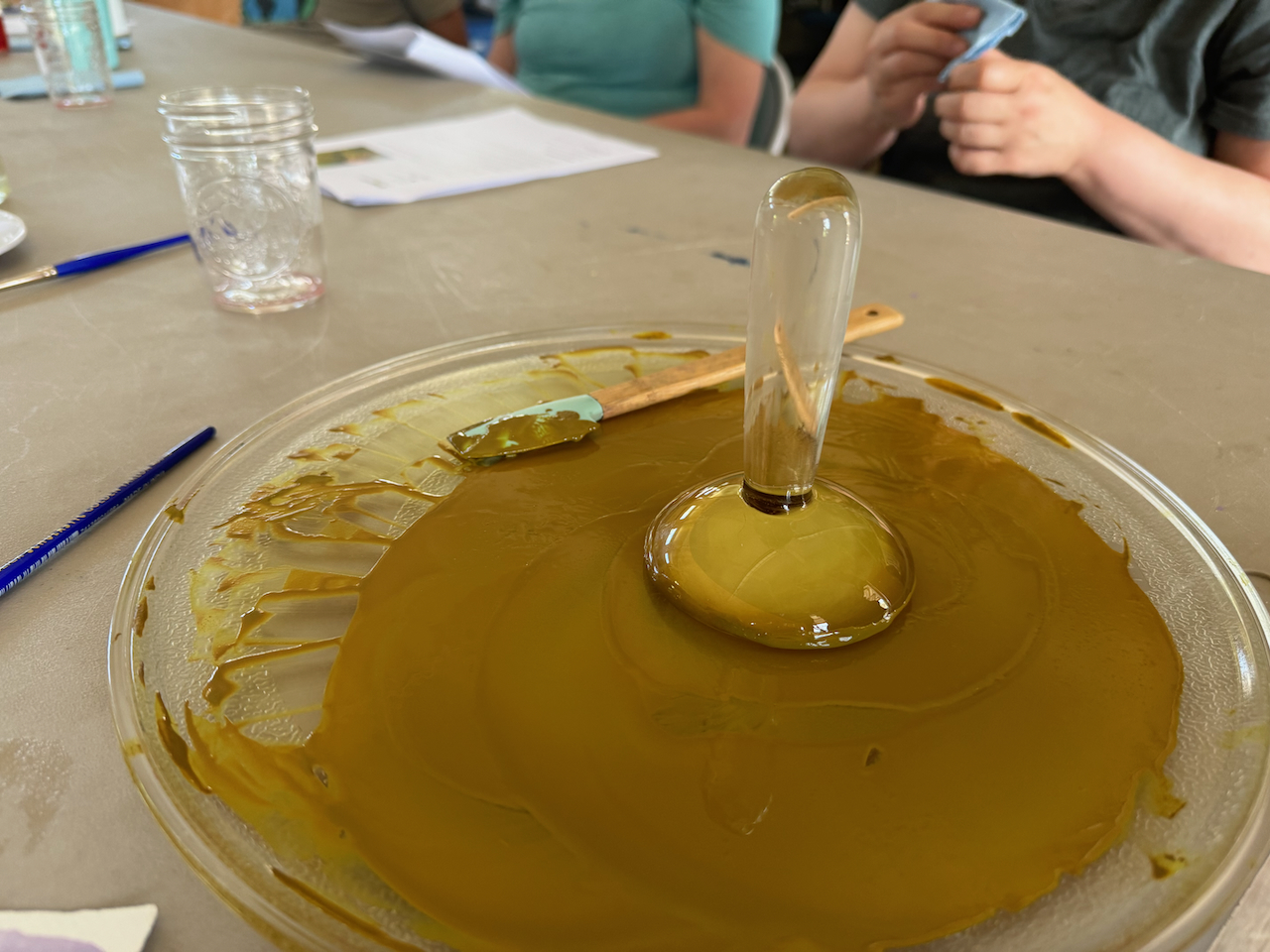
  • Glass muller
  • Palette knife/spreader
  • Spatula
  • Paint containers (bottle caps, acorn tops, paint wells)
  • pH papers (optional)
  • Watercolor medium:

Process

  1. Simmer plant material in water, muddling several times. Perhaps 30 minutes or up 2 hours for flower petals until rich colored dye is obtained. For bark, roots or other tough material, chop and simmer over a few hours, rest over night, and repeat again if needed to allow tough plant tissues to break down. Unlike ink, it’s not necessary to reduce water to a very low volume, but you do want to make sure you’ve pulled as much pigment into the water as possible which could take time, depending on the material.
  2. Squeeze out all plant material through a cloth or very fine sieve. Reheat liquid if cooled before the next step.
  3. Prepare chemical solutions. See here on how to prepare
  4. Mix alum with enough boiling water to fully dissolve.
  5. Mix soda ash with enough boiling water to fully dissolve.
  6. Stir alum solution into warmed colorful dye liquid.
  7. Slowly stir in soda ash solution and prepare for foaming action! Container should be big enough to allow expansion and overflow.
  8. Continue stirring and scraping the foam till settled down.
  9. If you have pH papers, test for a neutral 7 and tweak acid/base addition (more alum to decrease, more soda ash to increase).
  10. Rest at least an hour or overnight allowing pigment to settle.
  11. Pour off liquid on top (supernatant) and carefully strain out the remainder over another container fitted with a coffee filter secured with a rubber band or clothespins.
  12. Carefully remove coffee filter once all liquid has drained and a colorful pasty sludge remains. Lay flat to dry over a towel. While not necessary, it is preferable to get the cleanest pigment possible by washing after the first strain. If frothy bits or white crystals are present, I recommend this extra effort. When pigment has been fully strained, re-submerge in a clean bowl of water. Let settle and pour off water once or twice more till clear and clean looking. Strain again and dry.
  13. Once pigment is fully dried, grind into a fine powder using a mortar and pestle. The finest powder possible is required. Sieve and re-grind if necessary.
  14. Measure approximately equal amounts of pigment powder and watercolor medium onto a glass board.
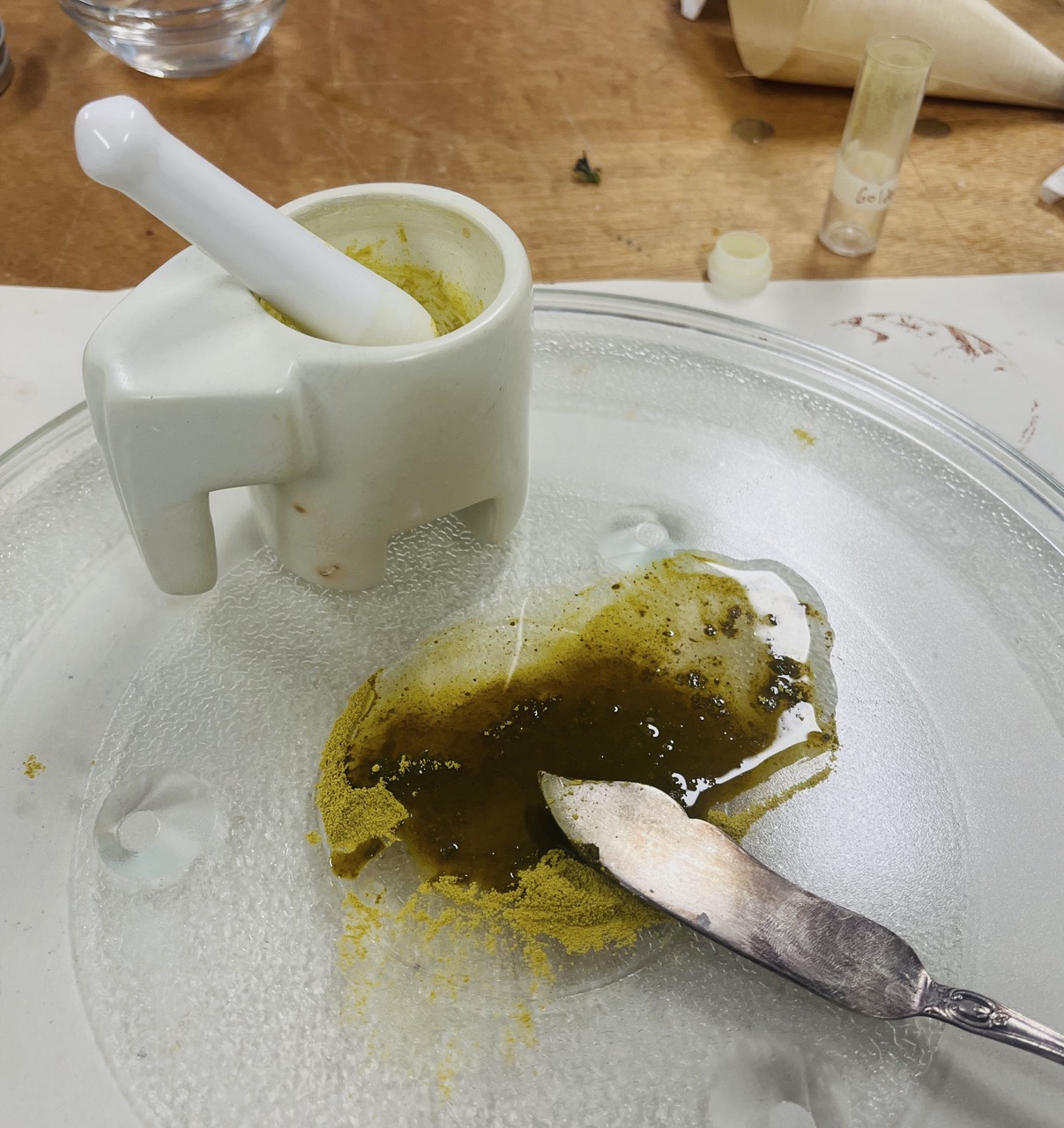
  15. Mix with a palette knife and then mull with glass muller in circular and figure 8 patterns, repeatedly scraping back into the center, and continuing until smooth and gliding easily. Additional water droplets or medium may be needed. This may take a lot of time, and takes practice to get right. Enjoy the process!
  16. Scrape into a container. You now have paint! Yay!
  17. Test the color and enjoy painting, using like watercolor paints.
  18. If your supernatant (clear liquid above settled pigment) is still very dark in color, you can lake that again for a different color! It’s also a sign that more chemicals could have been used the first time.

community art

Last winter I started bringing my art out into the community more. I now feel a bit more confident sharing what I know about natural paints and inks, and have accumulated enough material to bring along for show and tell and play.

Gratefully, I was a recipient of an Alachua County Art Tag Mini Grant. Thanks to those that purchase the fancy “I Support the Arts” license plates and Visit Gainesville, there are small grants available to local artists like me. As part of this gift, I brought workshops to a diverse crowd of folks. Here’s a little snapshot of what I’ve been up to the last several months!

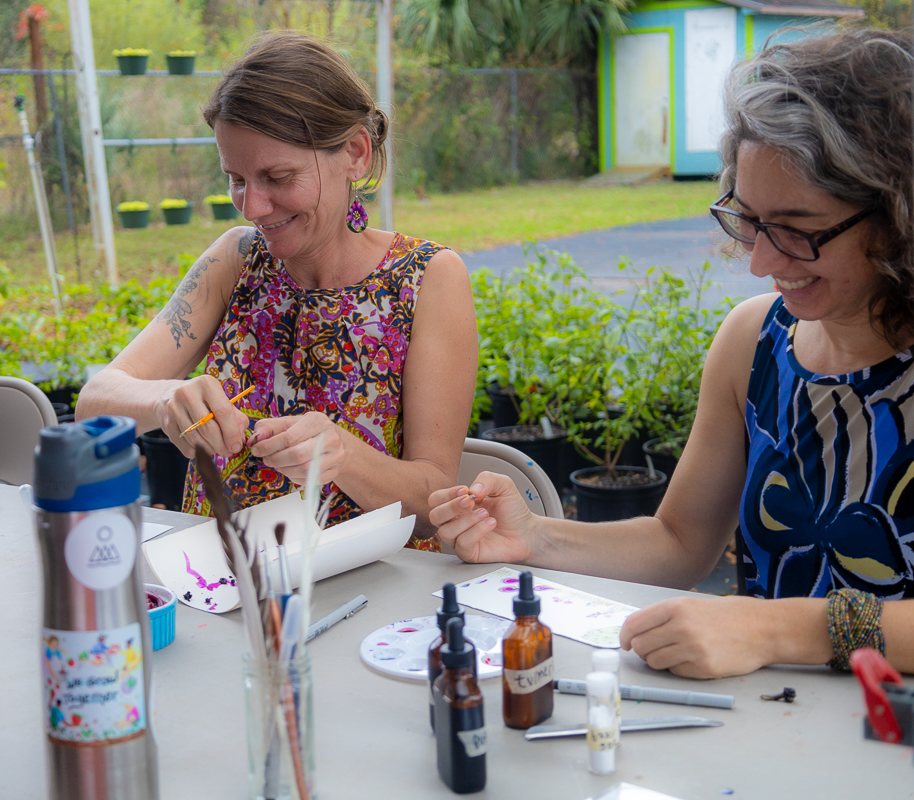
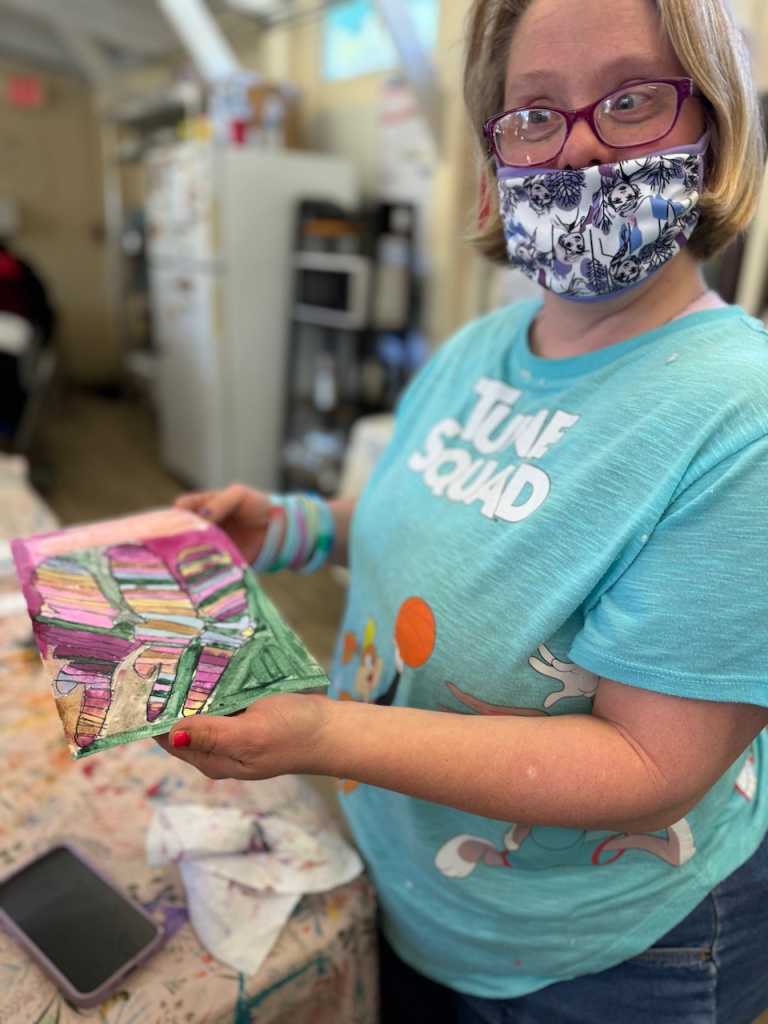
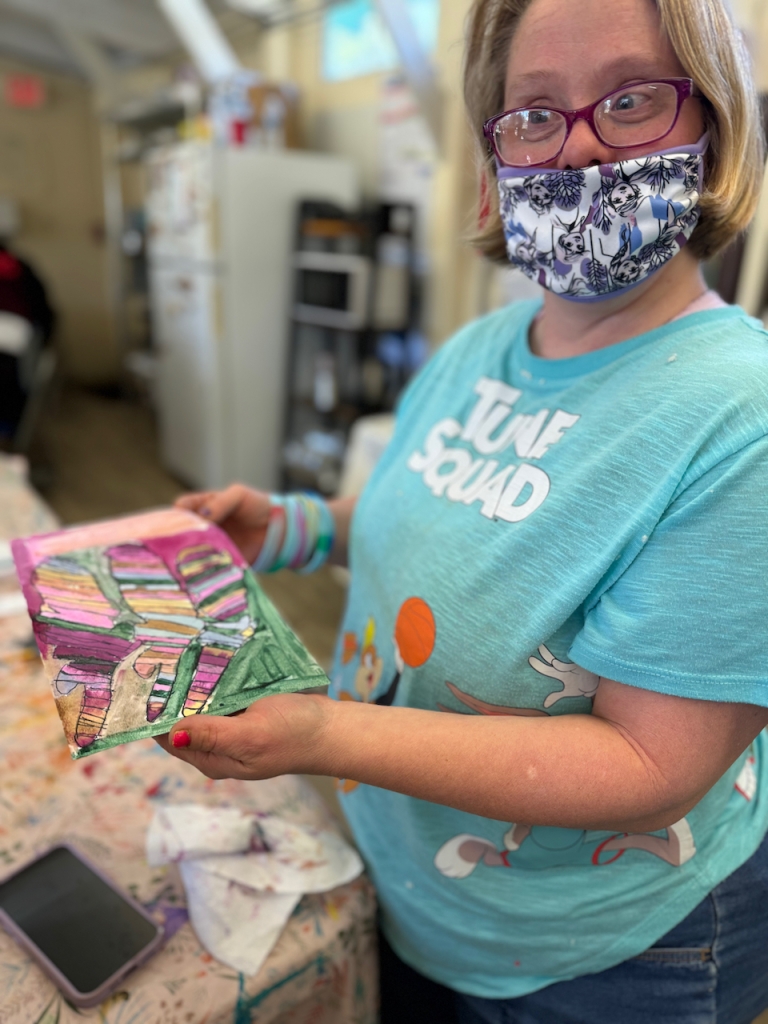
As part of the Florida Heritage Foods Project’s Crops & Colors Festival in early December at GROW HUB, I created a work station for folks to explore natural pigments and play around with them. Not to brag but I think my table had the most engagement and the most lingering folks around! There’s just something about working with these natural materials that feels relaxing and soothing. I was excited to see many new faces and get to re-connect with folks I hadn’t seen in a while.

** All these photo blocks are slideshows – be sure to slide through them all! **

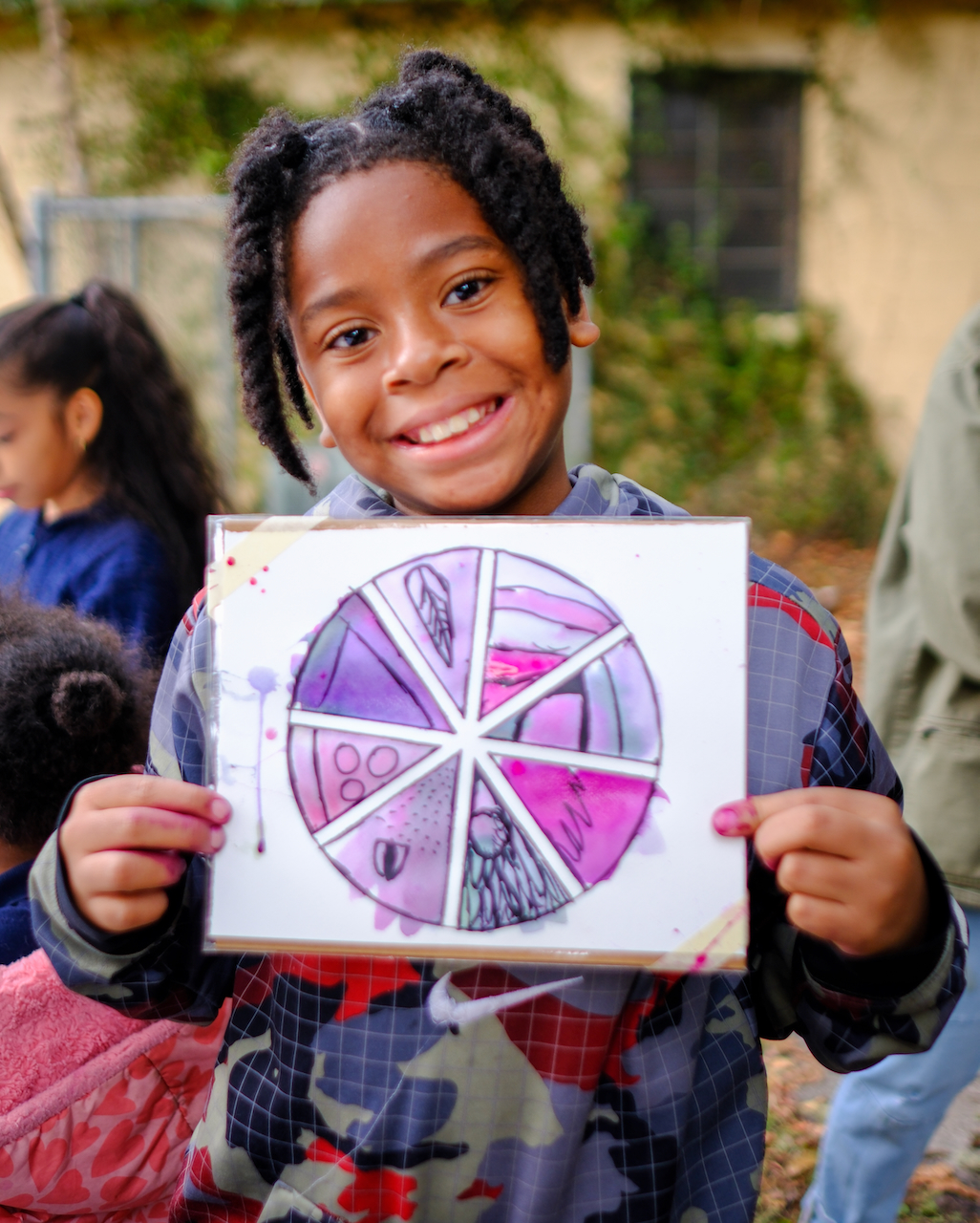
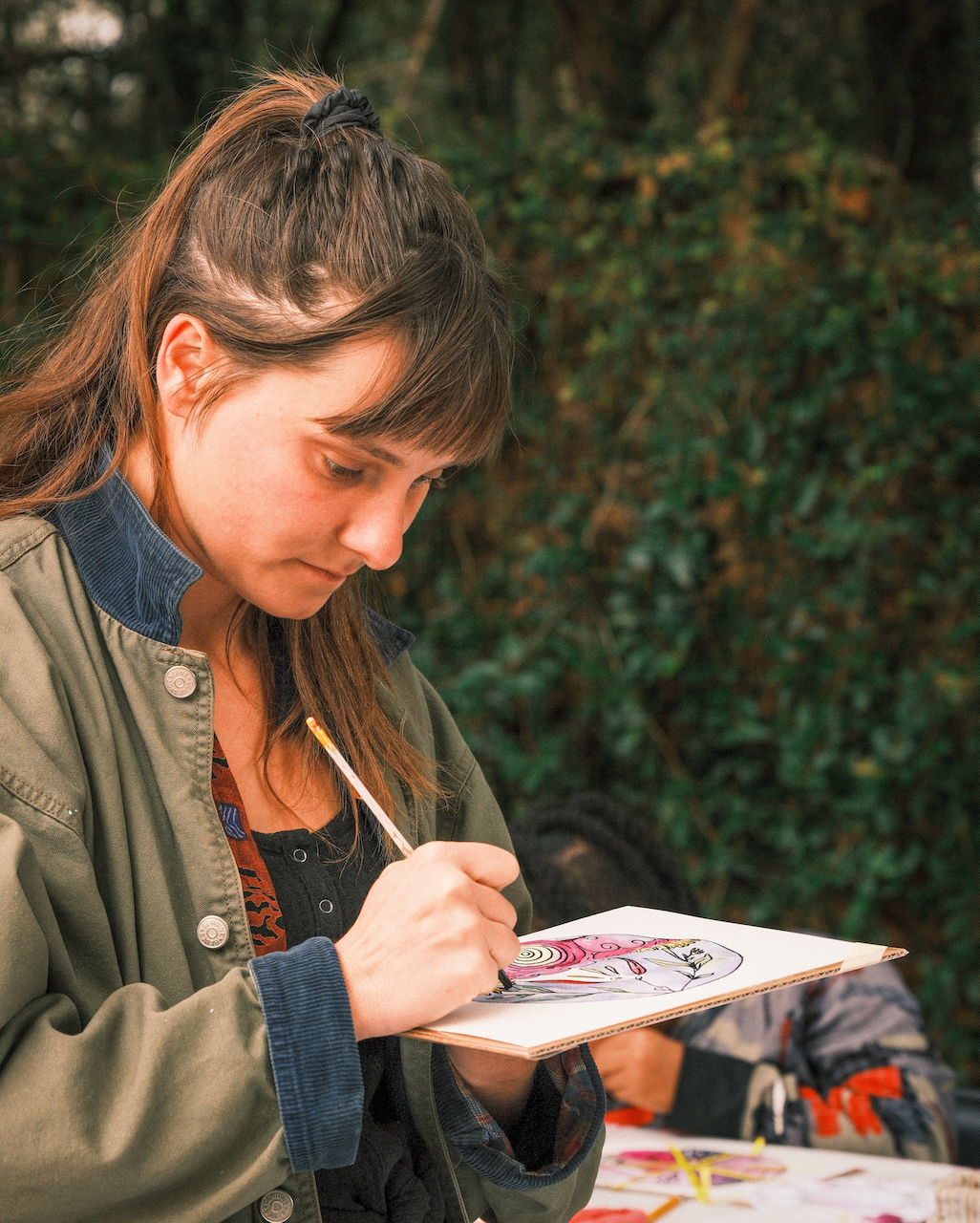
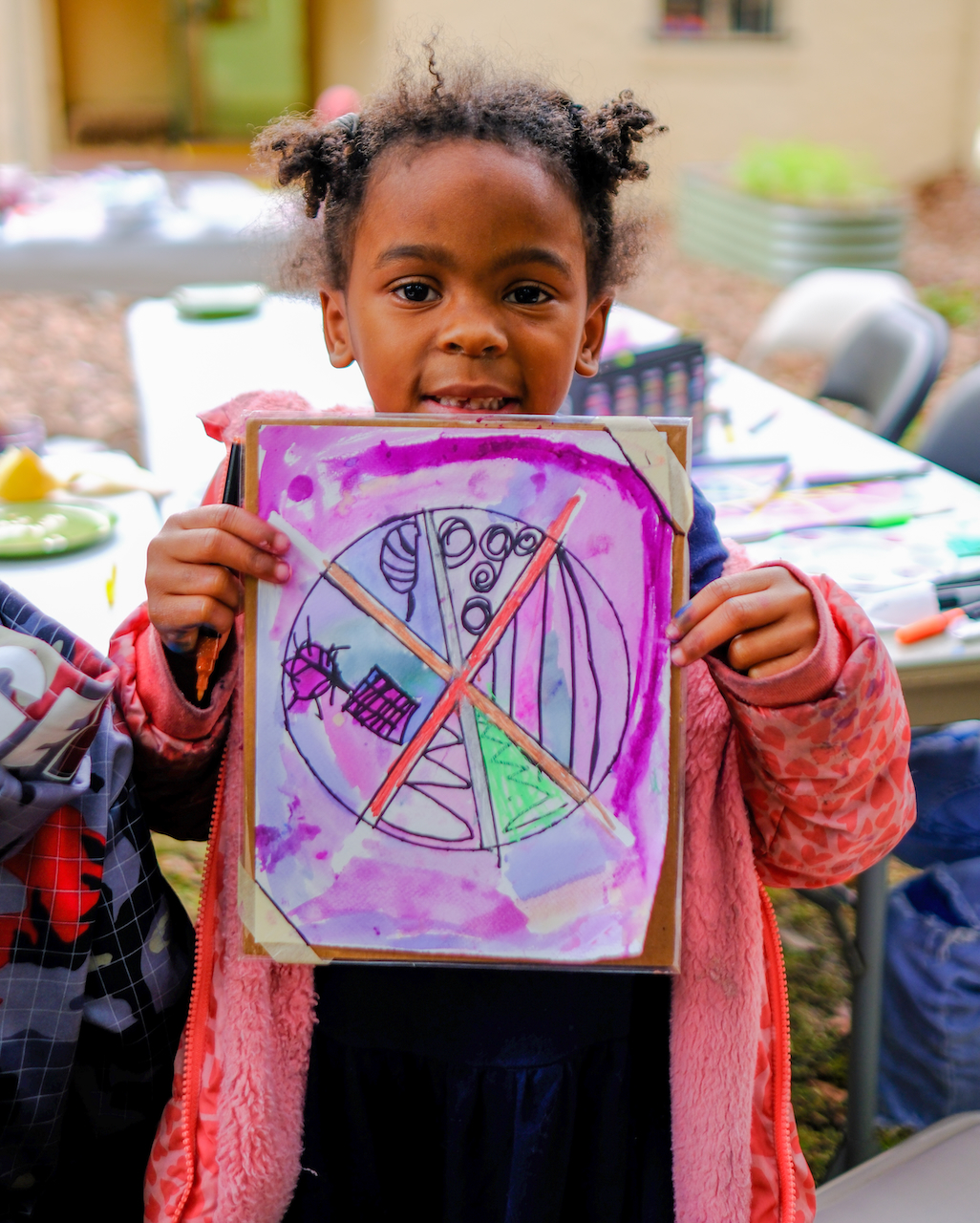
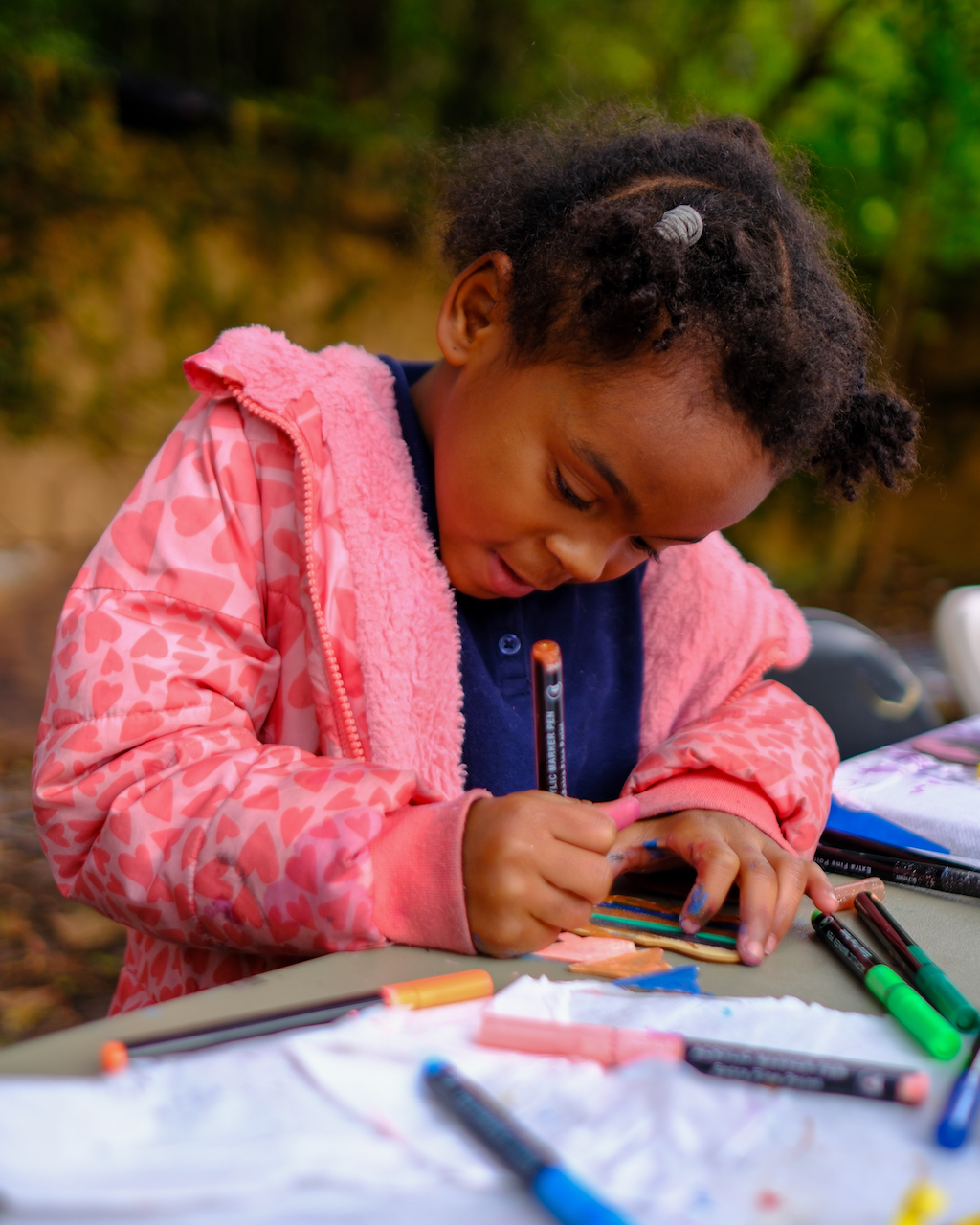
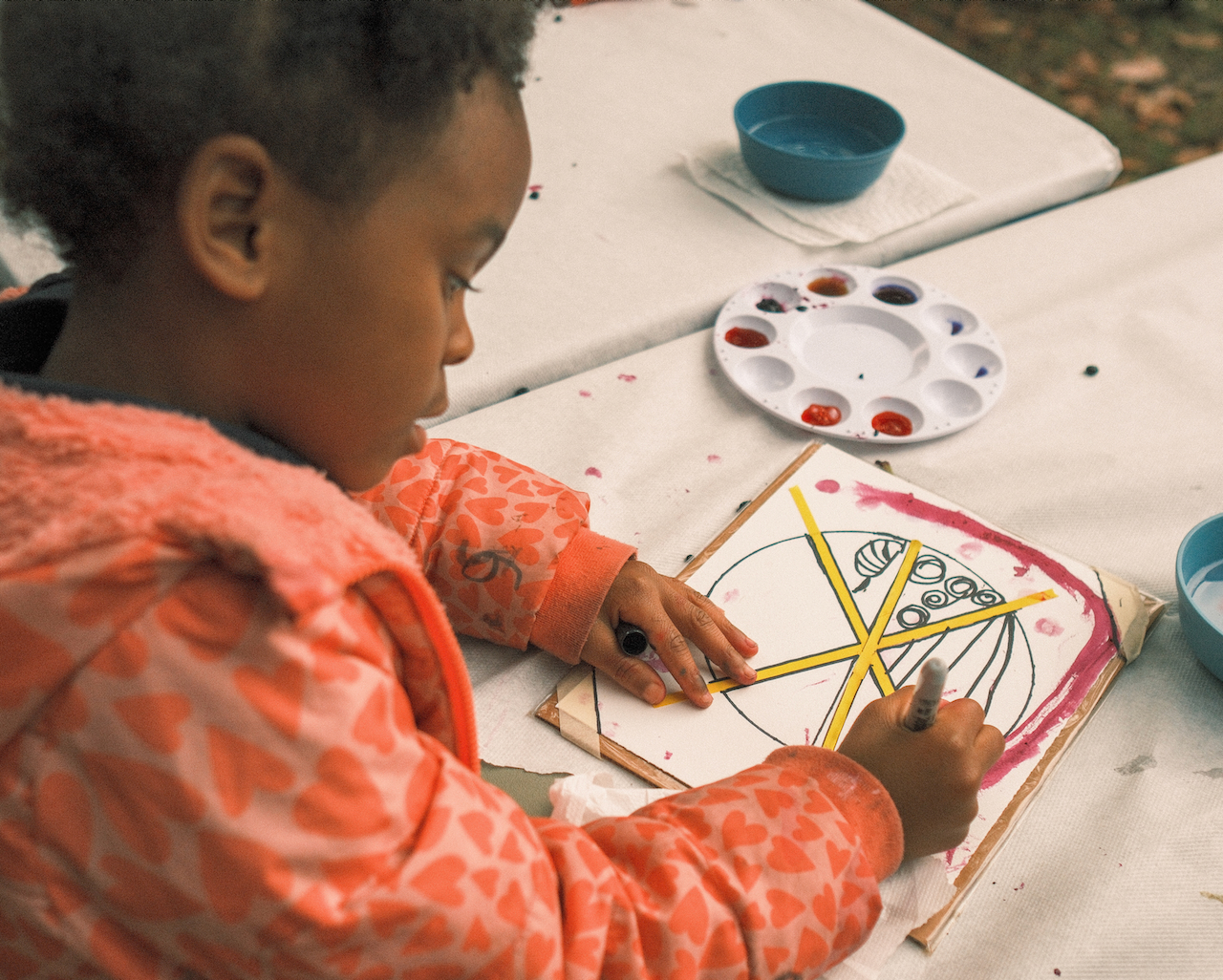
Then later that month with the most perfect weather for more outdoor art making, I spent time with the amazing kids enrolled in the George Washington Carver After School Science Club run by the Cultural Arts Coalition. Every Wednesday, my co-workers at Working Food, Jesse and Jenna bring gardening, food and art exploration to the club as a fun way to learn about science. This is such a beautiful connection because George Washington Carver was not only a friend to farmers bringing regenerative agricultural techniques to to poor southern farmers, but he was also an artist himself, using natural pigments! Thanks to Ryan Smolchek for capturing a few great moments for some of these adventures!

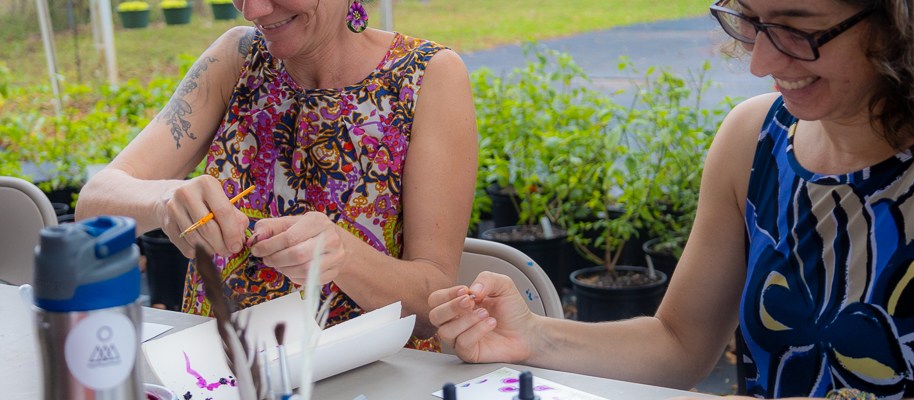
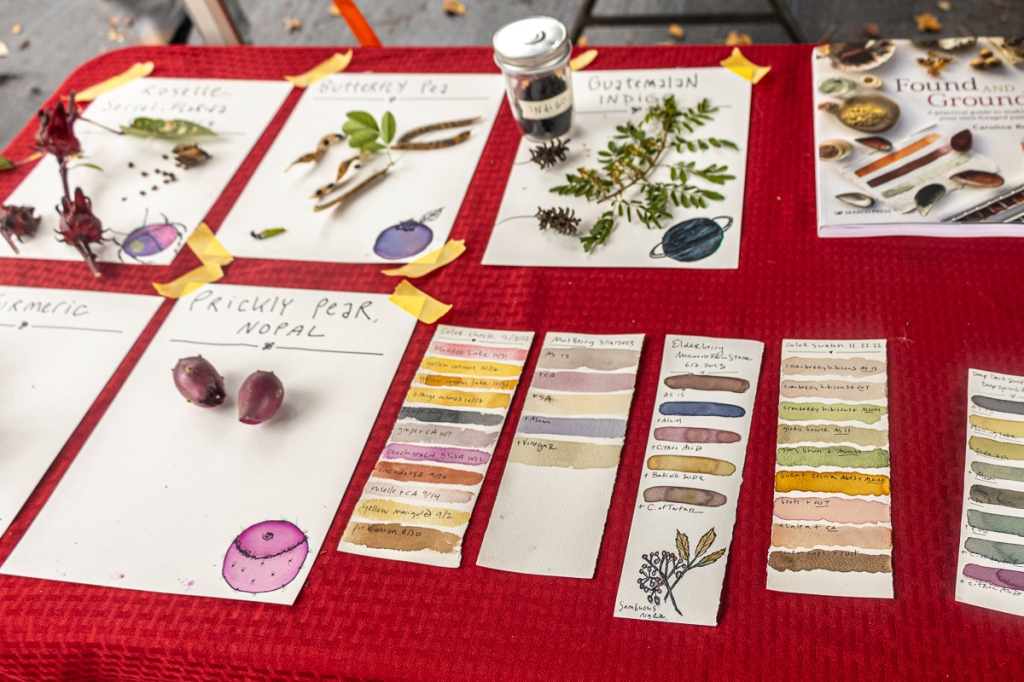
In the new year, I spent time at the Art Hub – one of my favorite places nestled at GROW HUB where I spend many days tending to the seeds and gardens that are my life’s work with Working Food. Once a week, UF Center for Arts in Medicine provides art classes for the staff members and volunteers. On a chilly winter’s day (for Florida!) in January, we played with vibrant spring colors harvested from last year: poke, turmeric, prickly pear fruits, roselle calyxes, and butterfly pea flowers. All grown on site except for the prickly pear which came from a robust patch of thorny plants on 10th Avenue near my house.

A couple weeks later, we played with indigo! This one was extra fun because myself and one of the staff at GROW HUB, Sarah H. grew the indigo plants (Indigofera suffruticosa or Guatemalan Indigo), which were gifted to me years ago by Jenn Rex, and now we can’t get rid of this plant, which I’m not mad about! We harvested the plants and went step by step through the specialized process required to obtain the pure blue pigment. Students got a chance to learn about mulling, part of the process of making watercolor paints.

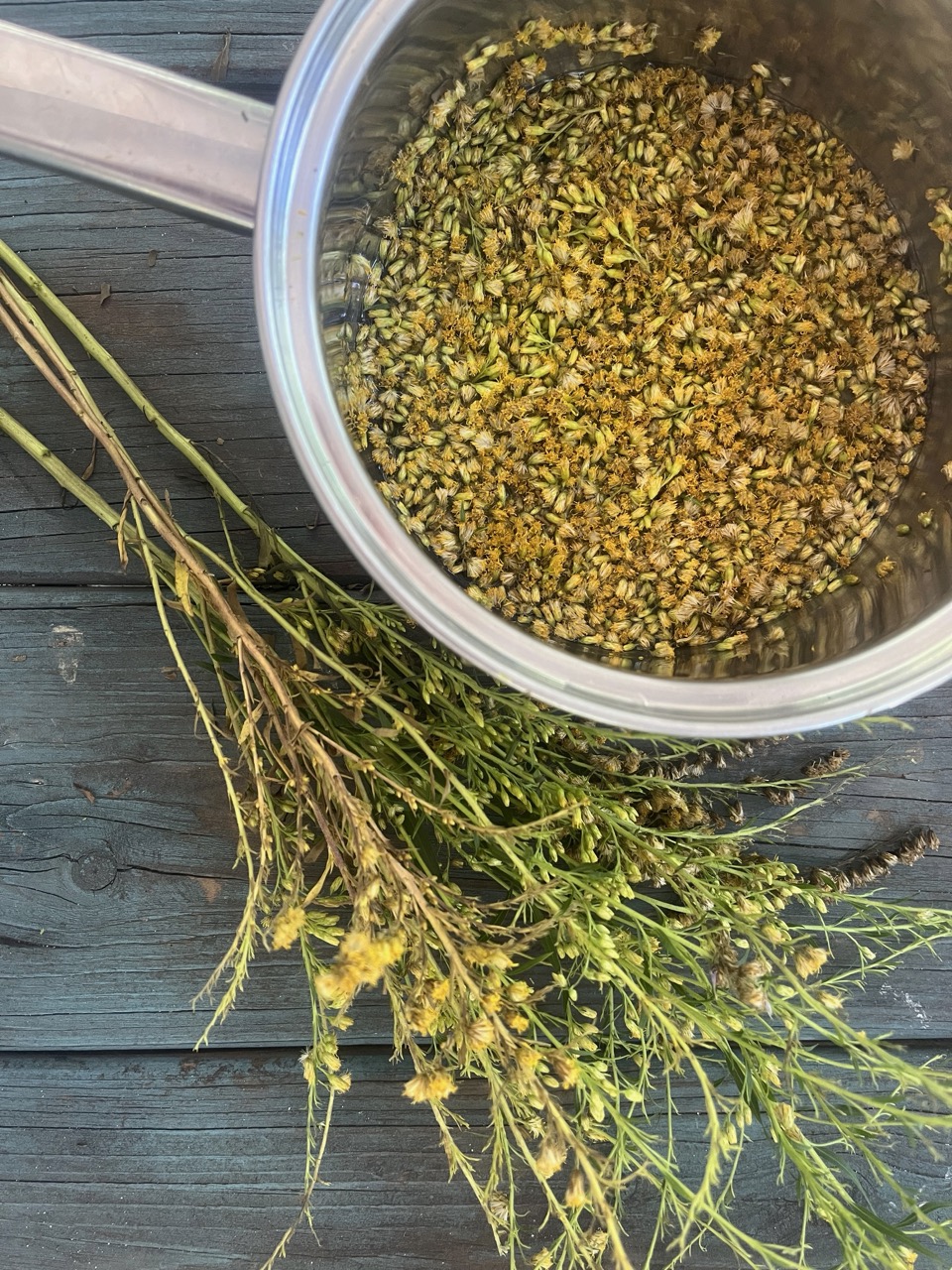
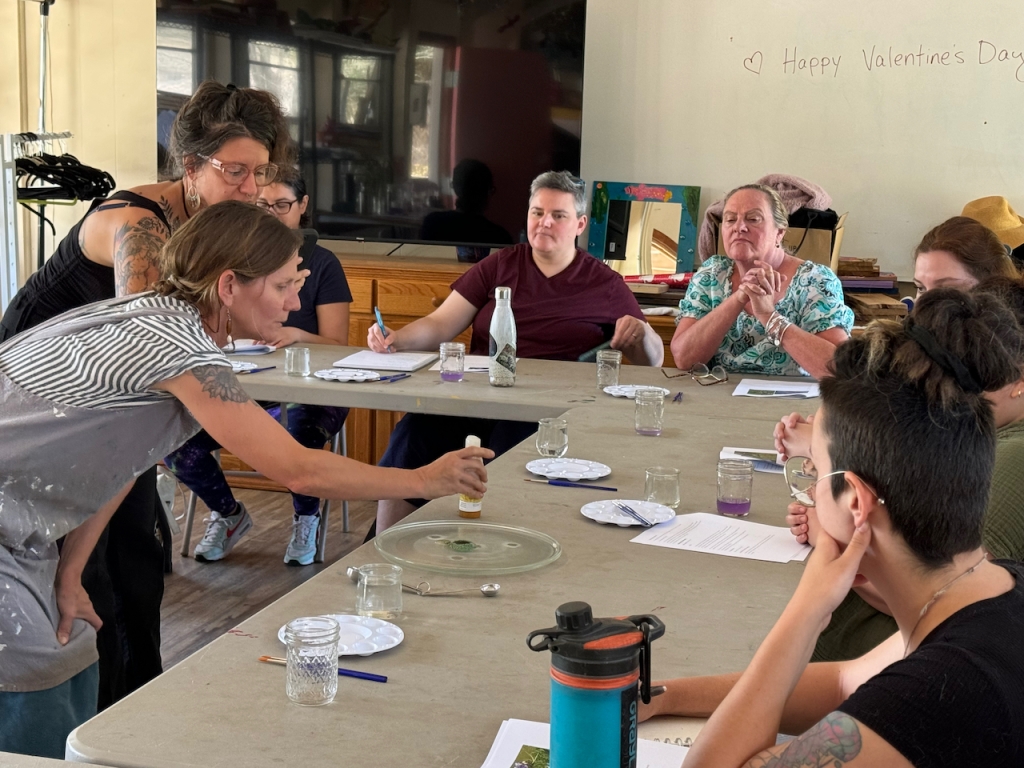
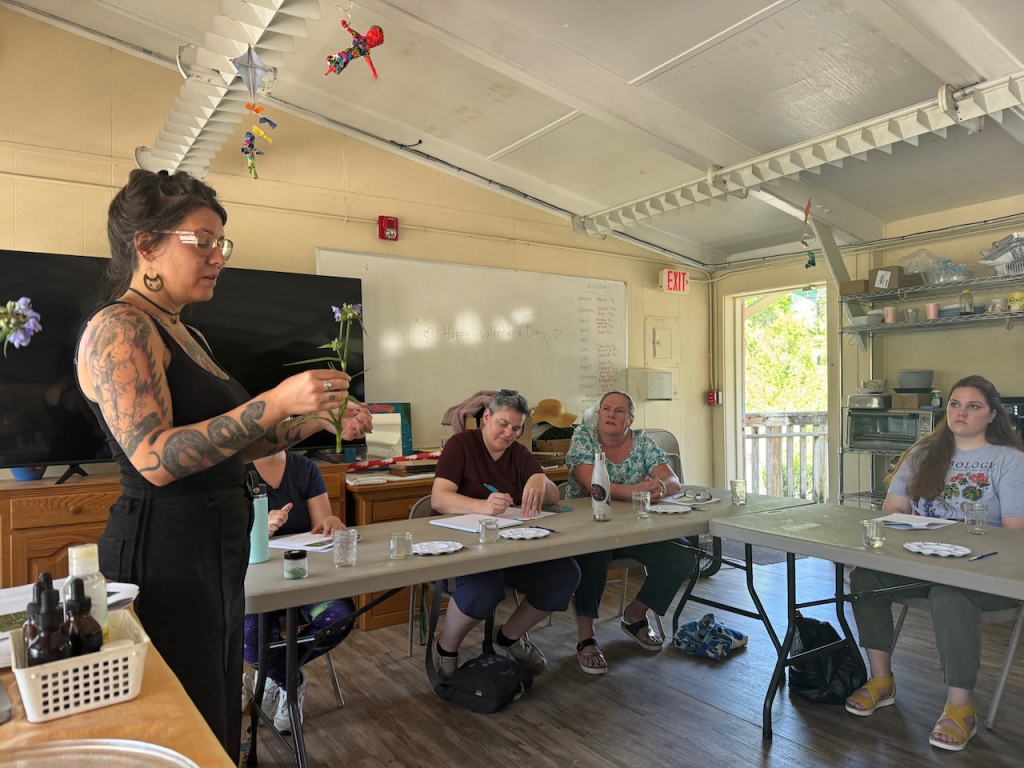
Then as spring was at it’s most perfect in mid March, with spiderwort blooming all around, and a stash of roselle from the fall harvest in the freezer, LeAnn Averill from A Thousand Leaves Herb Shop and I did an amazing collaboration – Paint Medicine! A lovely group of folks shared in the herbal magic LeAnn and I brought together. Celebrating roselle, goldenrod, spiderwort and poke – familiar local plants to those who notice, we discussed the virtues of each as medicine or food, and as a pigment source. Students got to taste spiderwort fermented soda and roselle tea, sample goldenrod tincture, and rub a poke root salve into their skin. Then we experienced each plant and the pigments they offered.

The last workshop (for now) was at the end of May, and once again with the fun and curious kids of the George Washington Carver Science Club. They had a special field trip out to GROW HUB, where we started off our adventures at the mulberry tree! We harvested some abundant berries for snack and for making ink later. No one had ever done that before and we were all so giddy and grateful, thanking the mulberry tree for all the goodies.

This time they got to learn about the science of plant pigments – the chemistry that is pigments like anthocyanin (red, purple and blue), chlorophyll (green), carotenoids (yellow and orange). And how these colors signify nutrition and healthy foods, help the plants in various ways, and are colorful and may be used in art!

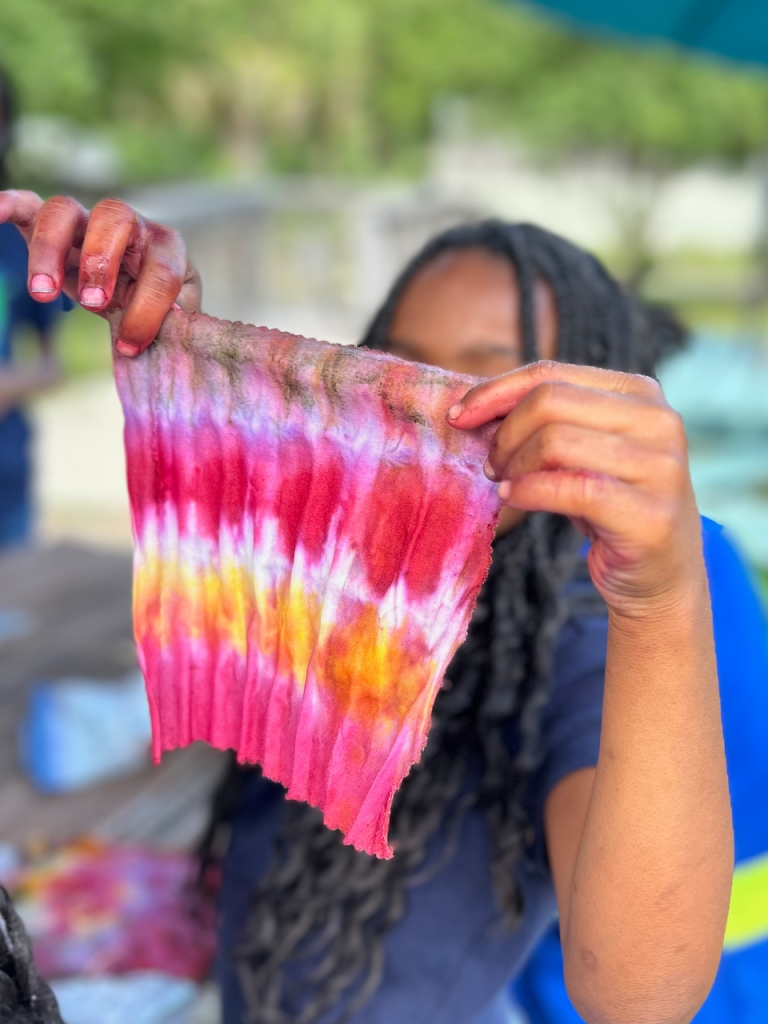
I demonstrated the chemical reaction that causes the precipitation of plant pigments that are pulled out of solution and into a solid form that can be used for paint making. I did it with poke berries that were harvested last summer and the hot pink foam was a crowd pleaser for these curious little scientists and gardeners! I also had some dried poke pigment they mulled into watercolor paints using my homemade binder solution of local honey, apple tree gum, thyme oil and water. Jesse, my amazing and creative co-worker then introduced a mini tie-dye activity and they made beautiful little swatches of colorful flags using turmeric, spiralina, roselle and sumac.

The grand finale will be a collaborative art show at Cypress & Grove Brewery in August, where we’ll show some artwork and photos of this nature based goodness!

The youth and GROW HUB workshops were proudly funded in part, by the Alachua County Board of County Commissioners through Art Tag proceeds and Visit Gainesville – Alachua County, FL.

painting with plants

Part 3 of a series of posts about my artist in residency experience at Oak Spring Garden Foundation.

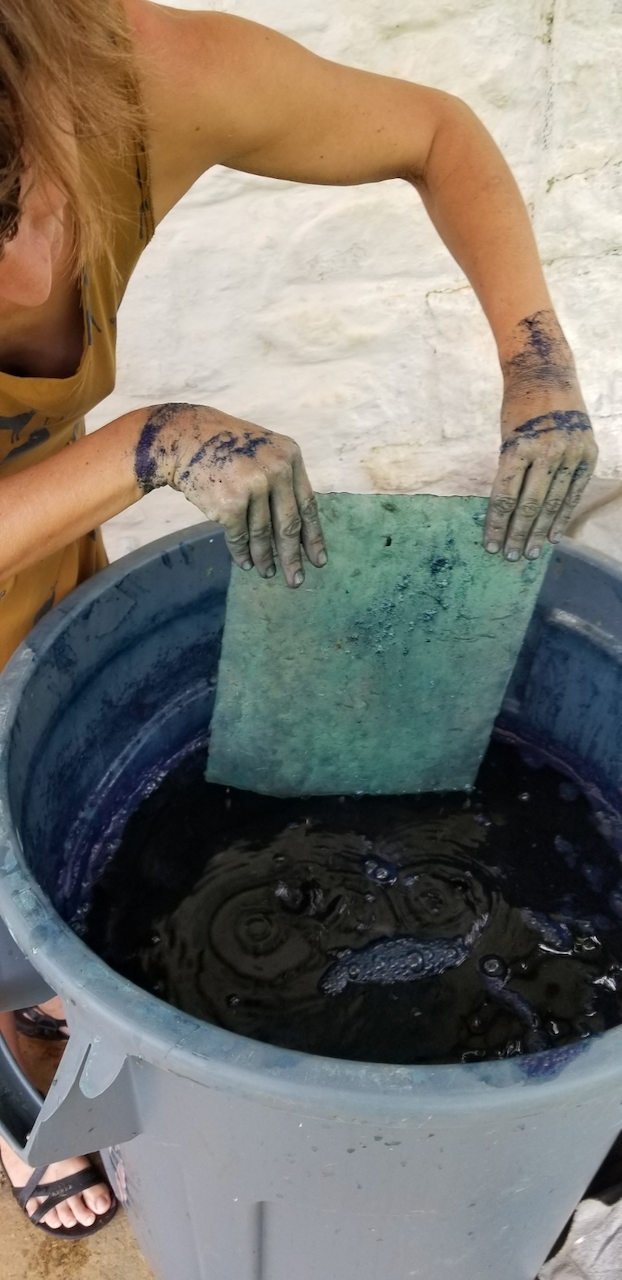
Within 2 days of arriving and digging in, I immediately became curious about plant pigments. My first volunteer day was at the Biocultural Conservation Farm, harvesting plants that produce an indigo pigment. I wandered over every evening to peek inside the vat that was fermenting away and pulling out pigment, and dipped a few papers in to see what would happen. After that, I was hooked, and started looking around at all the other plants in the gardens and in the landscapes in a whole new light. Plants are just so dang fascinating! 

Dipping a few print papers into the fermenting vat.

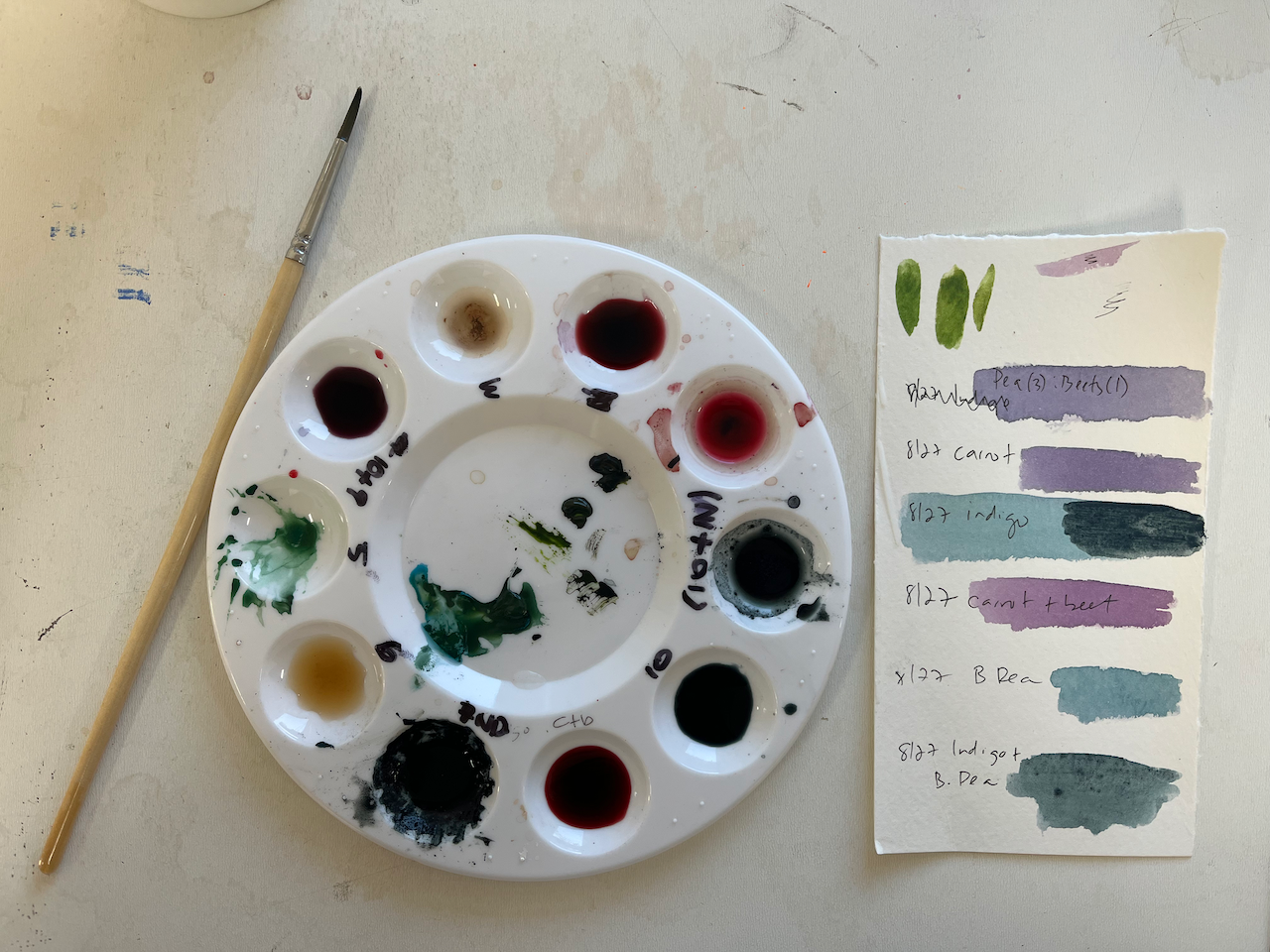
Pretty soon my studio turned into a lab, with plants in various stages of experimental extraction. I was going off the School of Google, with only bits of information as the internet is spotty here and I wouldn’t always get to all the videos or pages I wanted. Chatting with folks here over the last couple of weeks, and attending an ink making workshop using invasive plants, has added to my growing amateur hobby. 

Every plant requires some experimentation, and I had to really use my sciency brain to think about acids, bases, chlorophyll, carotenoids and the like (i.e. the colorful parts of plants) and how they are best pulled and preserved. They all have their own personalities and this is the fun part of learning, where art and science blend together! I’m so freaking curious about this now, that I am sure it will become part of my artistic tool kit, creating a collection of my own hand made and non toxic paints. 

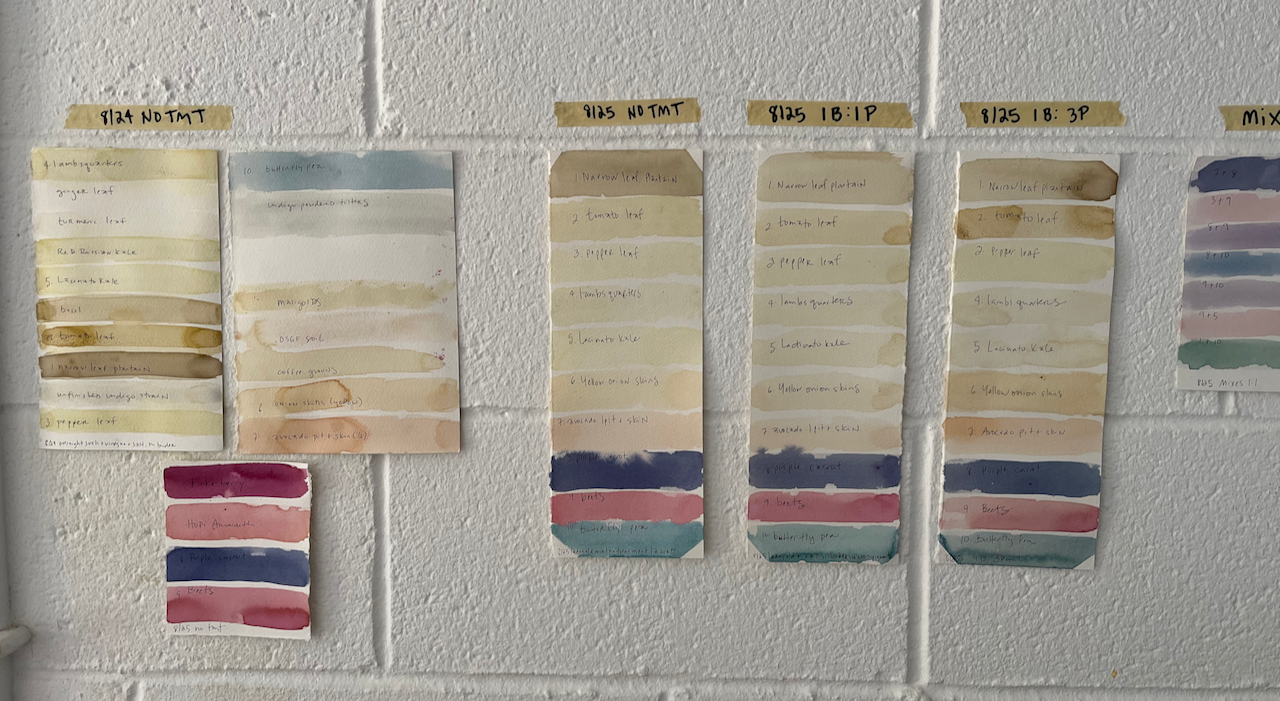
Keeping track of who’s who over time, concentrations etc. More experiments to come. Greens have been hard, working on figuring out how to pull forward that magical chlorophyll!! With regular muddling and soaking they just make….brown!

It’s especially intriguing for a few reasons. 

First, it takes the creation of art even deeper, creating your own raw materials from what’s available. Not only can I paint, I can now make my own paint! Pulling pigments from what surrounds me just feels so dreamy and comforting; creating seasonal palettes of place. 

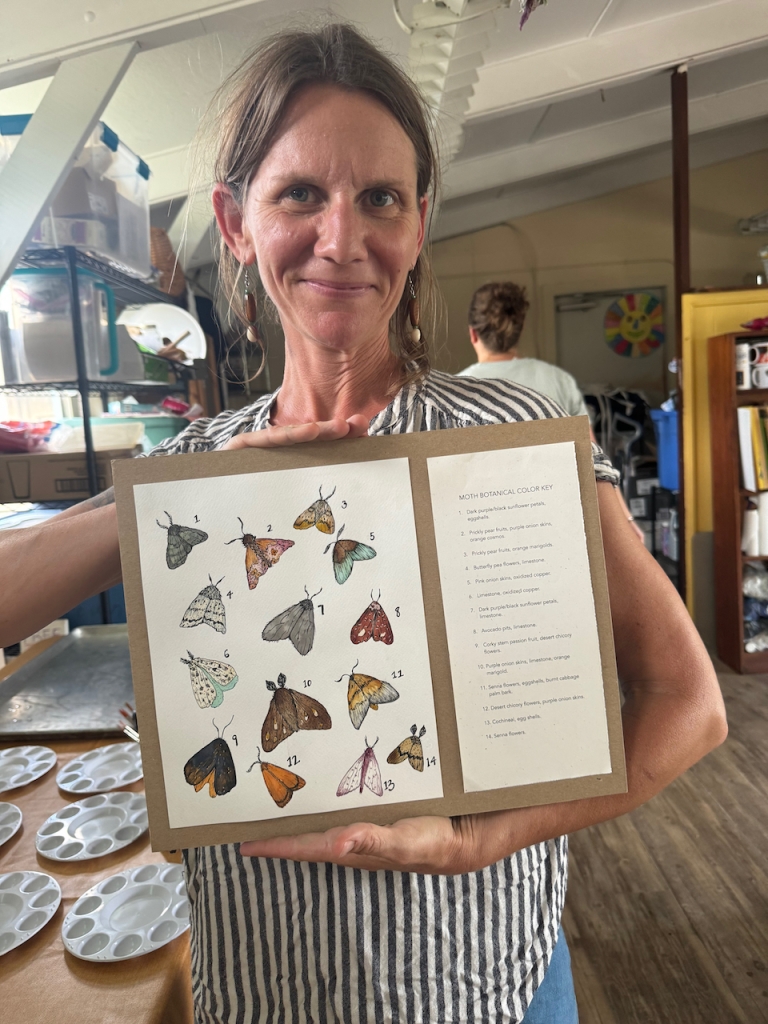
There are kestrels here, always swooping over the grassy fields, and I had the palette! Light blue = butterfly pea. Darker blue = indigo. Gold = yellow onion skins, Background I’d hoped to be a vibrant pink sunset, faded quite a bit but is a mix of yellow onion skins, poke berry, Hopi dye amaranth and avocado skins + pits. Local plants pressed and glued. The glue did not play well with the natural paints and ate them up, giving the weird halo effect around each blade. It’s kind of a cool and unexpected transformation.

Second, using natural plant paints has encouraged me to let go of a lot. Which is always a good practice in life, generally. Letting go! I no longer have an exact color match for the insect, bird or plant I’m painting, but I have what I have – and it’s beautiful. The expected result of pigment rarely comes forth, and is fleeting as it ages. Hot pink pokeweed subdues over 24 hours into a lovely deep rose, for example. Purple carrots go from bright purple to a lovely dark blue. These don’t flow like the professional paints I’m used to and the colors are unpredictable, at least until I experiment more and figure some of this out. It’s just so much fun to let colors run across the page! Seeing how how onion skins play with beets, how plantain mingles with butterfly pea to make a lovely grayish blue. I’ve just felt so much joy in the process of messy, unpredictable and ephemeral materials. 

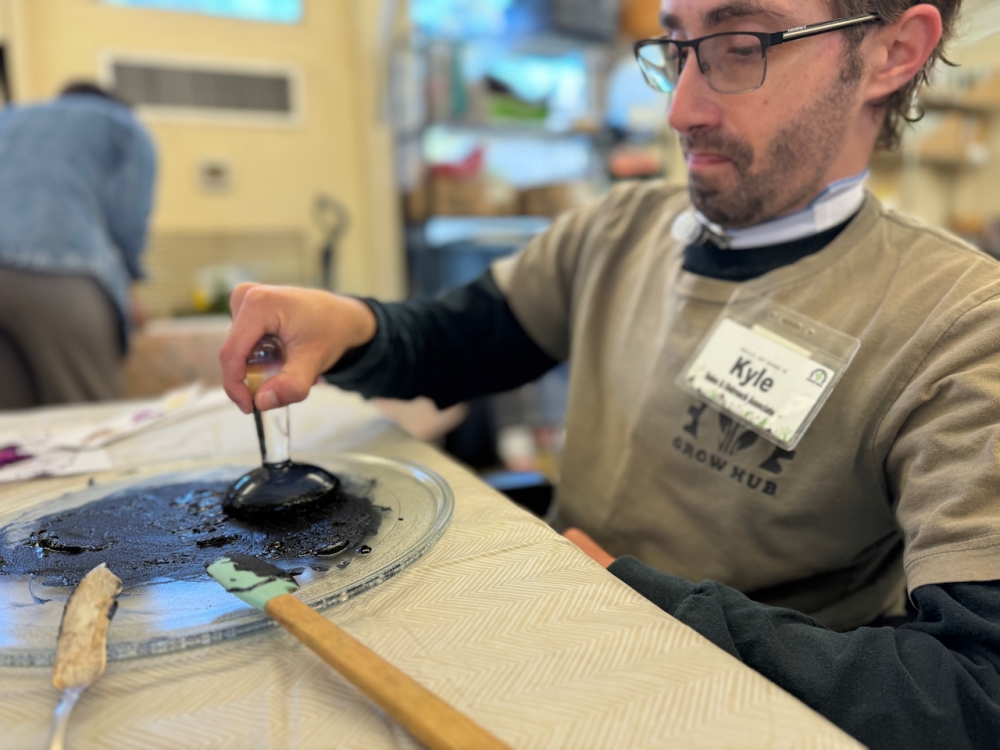
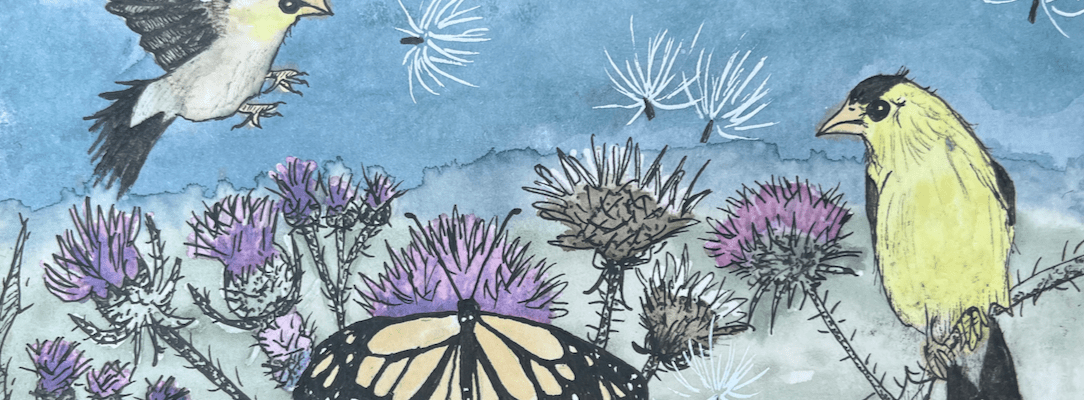
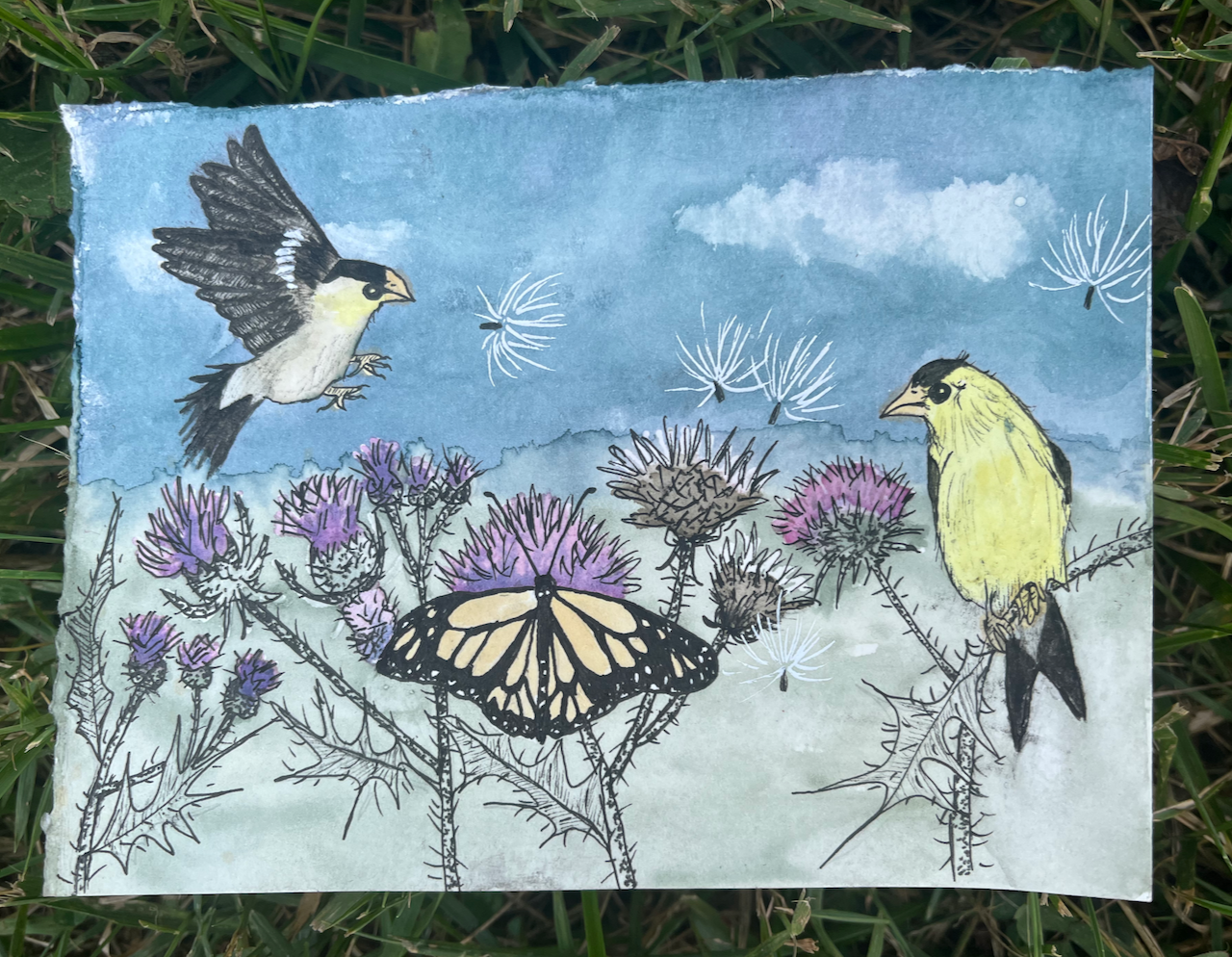
Way outside my “usual”, but a must paint! I had the palette, and the thistles and goldfinches are so abundant here! The messy black ink is made from wood ash and I do not like it! I’ll stick with my black pen, or see how the Black walnut ink I’m working on now will substitute. This is so very messy and not detailed like I usually do, but let me tell you how much fun I had making a mess! Sky = butterfly pea. Finch bodies are combined with plantain leaf (brownish hue for the female top left) and a mix of invasive weeds making the bright yellow (Barberry and Mahonia). Thistles are purple carrots and a mix of other reds/pinks. Pale orange monarch = some invasive weed I lost track of during the workshop! Green = Bush Honeysuckle.

This process is allowing for the creation of cleaner and gentler products.  Many artist’s supplies are harmful to our Earth, made of all sorts of icky things like synthetic and toxic chemicals, plastics, metals etc. While handmade plant paints aren’t perfect, with some of the inputs needed to extract and bind the pigments so they actually function as paint, dye or ink – they are better options, and there is room to improve. I have been exploring and thinking about the gentlest and most minimal  inputs that will still create beautiful materials, that don’t harm the beings I’m inspired to draw, paint or print.

There are some things I’ll never be able to give up, like paper, black micro pens, and some of the very rich commercially made watercolor paints and inks. But this process is allowing me to think more about resources including those readily abundant from my own backyard. Which is currently the rural countryside of Virginia with the most incredible gardens that create quite the palette!

I can’t wait to paint Florida colors! Hopefully I’ll still find the time for such play when I get back to regular life.