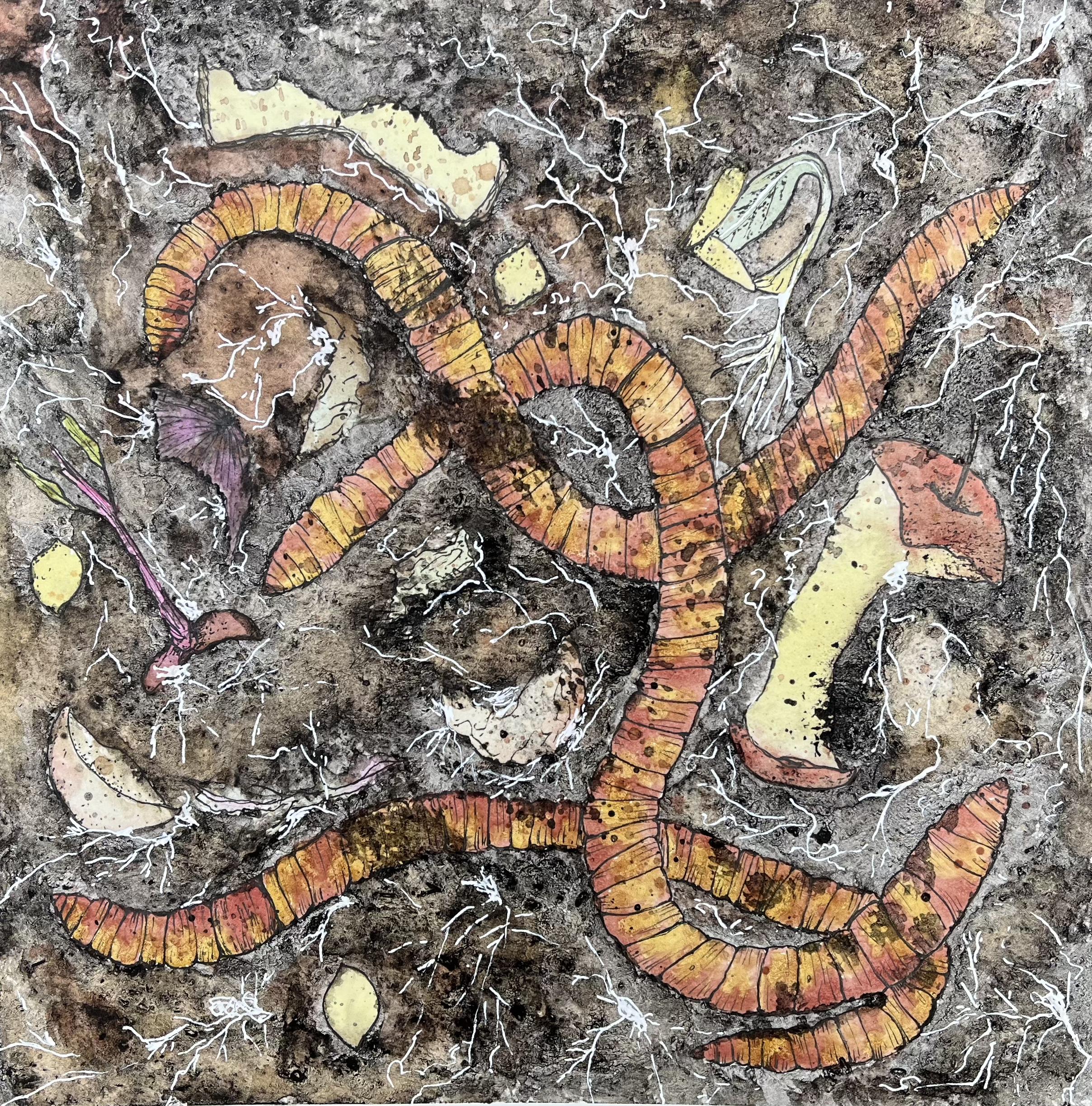
My friend Jesse shared this poem with me and I just absolutely love it! Since reading it, I’ve been daydreaming about painting worms, compost magic, mycelium, decay and renewal soaked in ecstasy of simple but vital things – in a world often unseen or appreciated by most of us.
Feeding the Worms
by Danusha Laméris

Ever since I found out that earth worms have taste buds
all over the delicate pink strings of their bodies,
I pause dropping apple peels into the compost bin, imagine
the dark, writhing ecstasy, the sweetness of apples
permeating their pores. I offer beets and parsley,
avocado, and melon, the feathery tops of carrots.

I’d always thought theirs a menial life, eyeless and hidden,
almost vulgar—though now, it seems, they bear a pleasure
so sublime, so decadent, I want to contribute however I can,
forgetting, a moment, my place on the menu.
I have great fondness for worms and their role in creating living soils, and inspiring curiosity and connection. Having worked with children in gardens over many years, I’ve developed the Worm Theory. I believe these creatures can be a gateway to opening up curiosity and compassion for all other creatures. Worms are typically slow moving, and their lack of legs, inability to sting or bite, fly or crawl up your sleeve or into your face, means they can be held in peace and safety for close observation, as they tickle your hands, trying to move back into darkness. This acceptance of creatures so different from ourselves, opens up the mind and heart to others- that don’t feel as safe and easy. Next, they’ll be looking at rolly-pollies, roaches, other beings that freak out adults (pointing at myself here, I still squeal and recoil at the sight of a roach). I’ve seen kids name the worms, caress them, and even hold worm funerals, mourning the loss of a friend.
Worm Theory suggest that their gentle nature, facilitates connections to other worlds and lives not our own. Worms allow us to overcome the ick factor that may either be innate or learned, or a mix of both.
It turns out, they are fascinating creatures too, with much to learn about! Our youth program at Working Food would be a lot less fun without worms! Often, a simple worm activity ends up taking up an entire session and we just scrap the rest of our best laid plans, to go with the worm flow. Here are just a few things I know:
They are hermaphrodites.
They consume bacteria and fungi that decompose organic materials (i.e. they don’t actually eat the apple core you toss into the compost bin, they eat the microbes that eat the apple).
Their poop (aka worm castings) is black gold, a probiotic bliss for plant life.
They are an important source of food to so many other animals.
They have the ability to sense the world over the surface of their bodies; their permeable, moist skin is covered in chemoreceptors and they breath, taste, and sense light and vibrations over their body surface.
Worms painted with senna and avocado. Black soil is cabbage palm charcoal mixed in with splotches of black walnut, avocado and plantain. Various decomposing items painted with marigold, avocado, beets, cochineal. White mycelium added with a gel pen.
Part 5 of a series of posts about my artist in residency experience at Oak Spring Garden Foundation.
I’m back home and adjusting to normal life after such a luxuriously long time of freedom and quiet for creativity, flow, rest and reflection. Fortunately, I’ve made time to keep some of the flow and inspiration going.
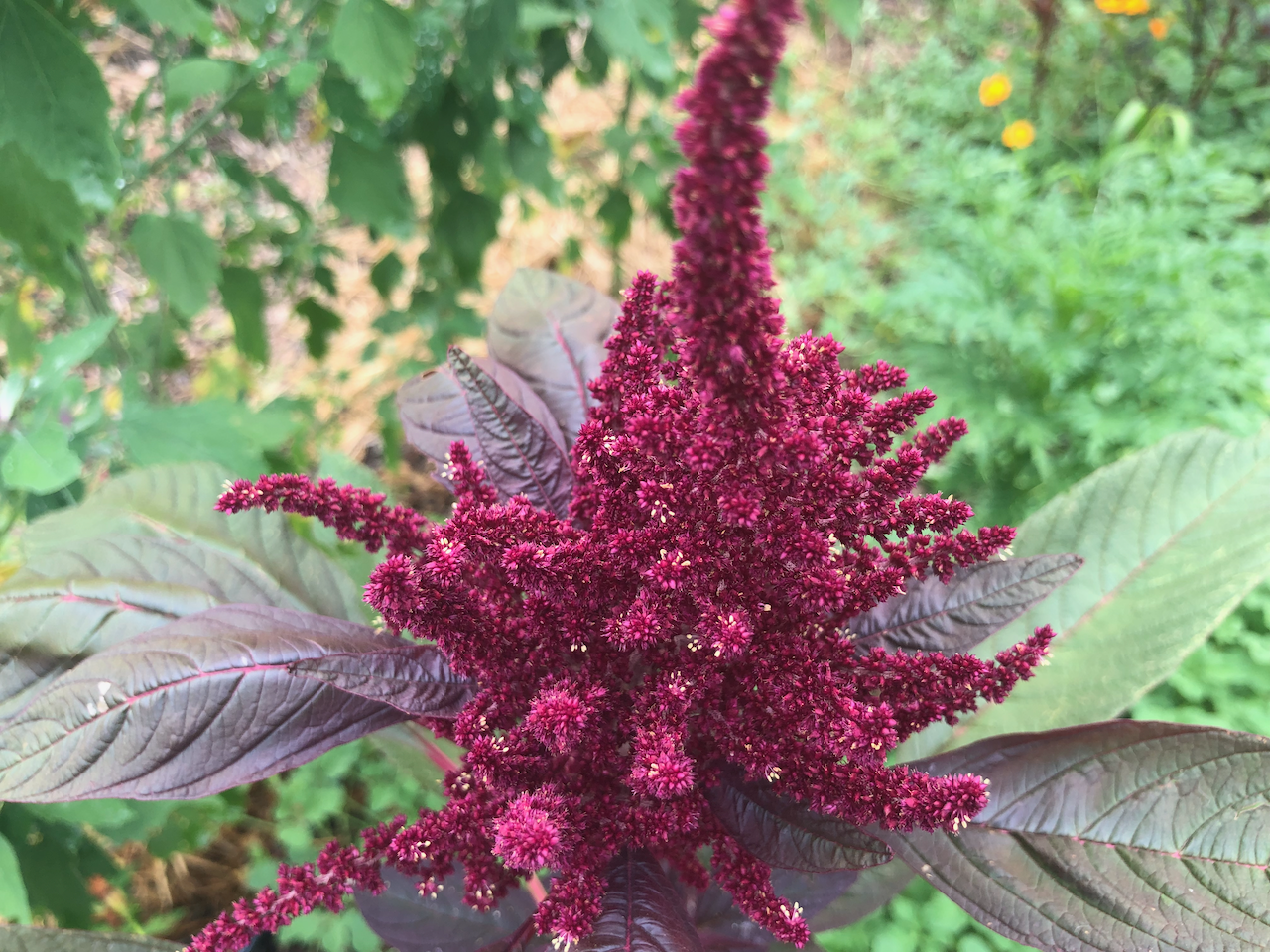
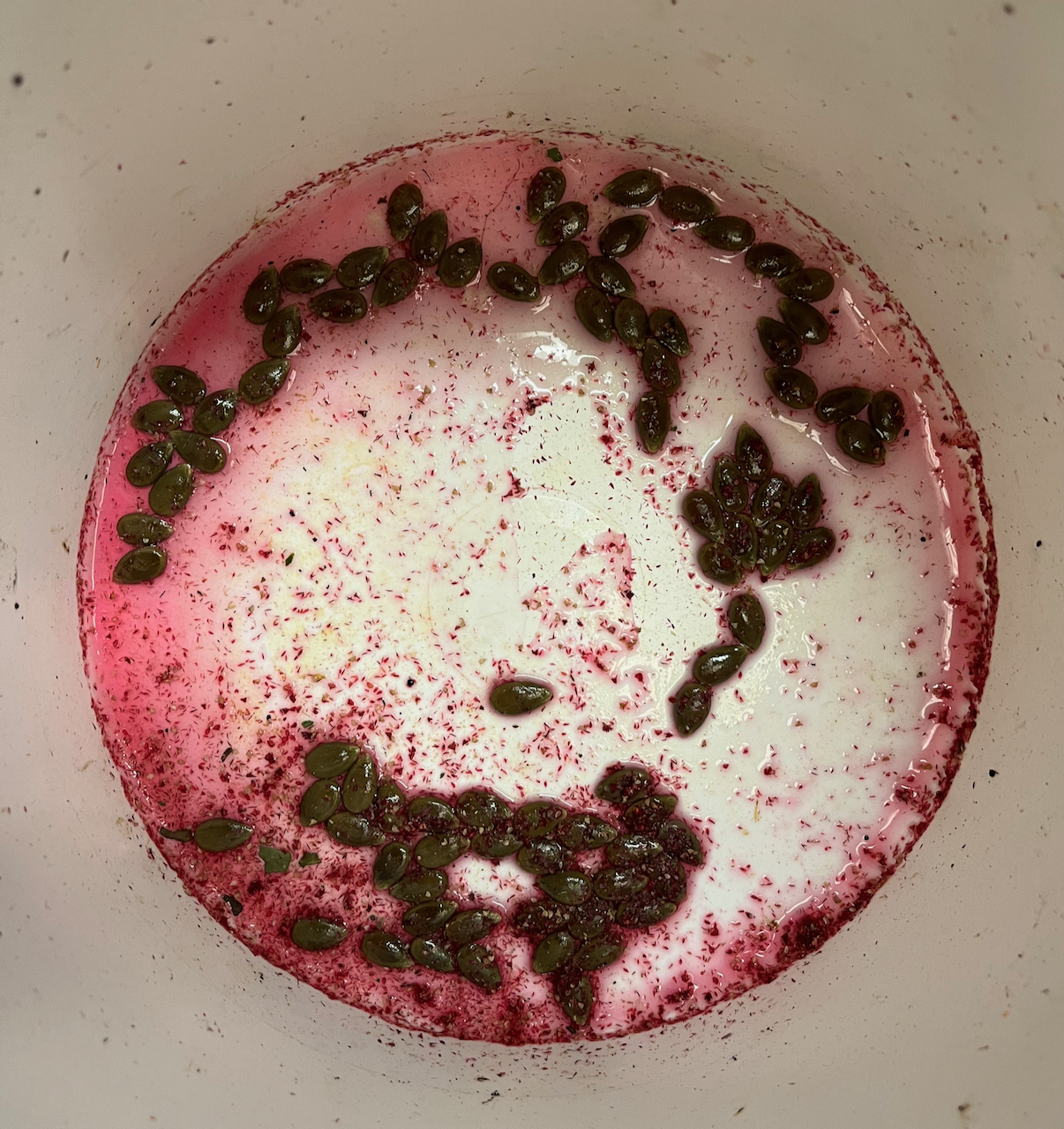
My first day back to work, I was cleaning up some Hopi Red Dye Amaranth seeds. I wanted a gentle and enjoyable re-entry to work, and seed cleaning is one of my favorite things to do. So I was glad when Sarah said that’s what she needed us to do. An accidental blowing of the lightweight chaff into a nearby bucket with some wet seeds, seemed to be a sign when I peeked inside: make some plant paint!
Hopi Red Dye Amaranth is an ancient grain crop cultivated by the Aztecs and still with us today. Prized for its ability to lend color to food and fiber, it sure doesn’t take long for color to leek out! These watermelon seeds were left in a wet bucket nearby, as the seeds I was cleaning blew around the lightweight chaff. Universe telling me to keep creating!
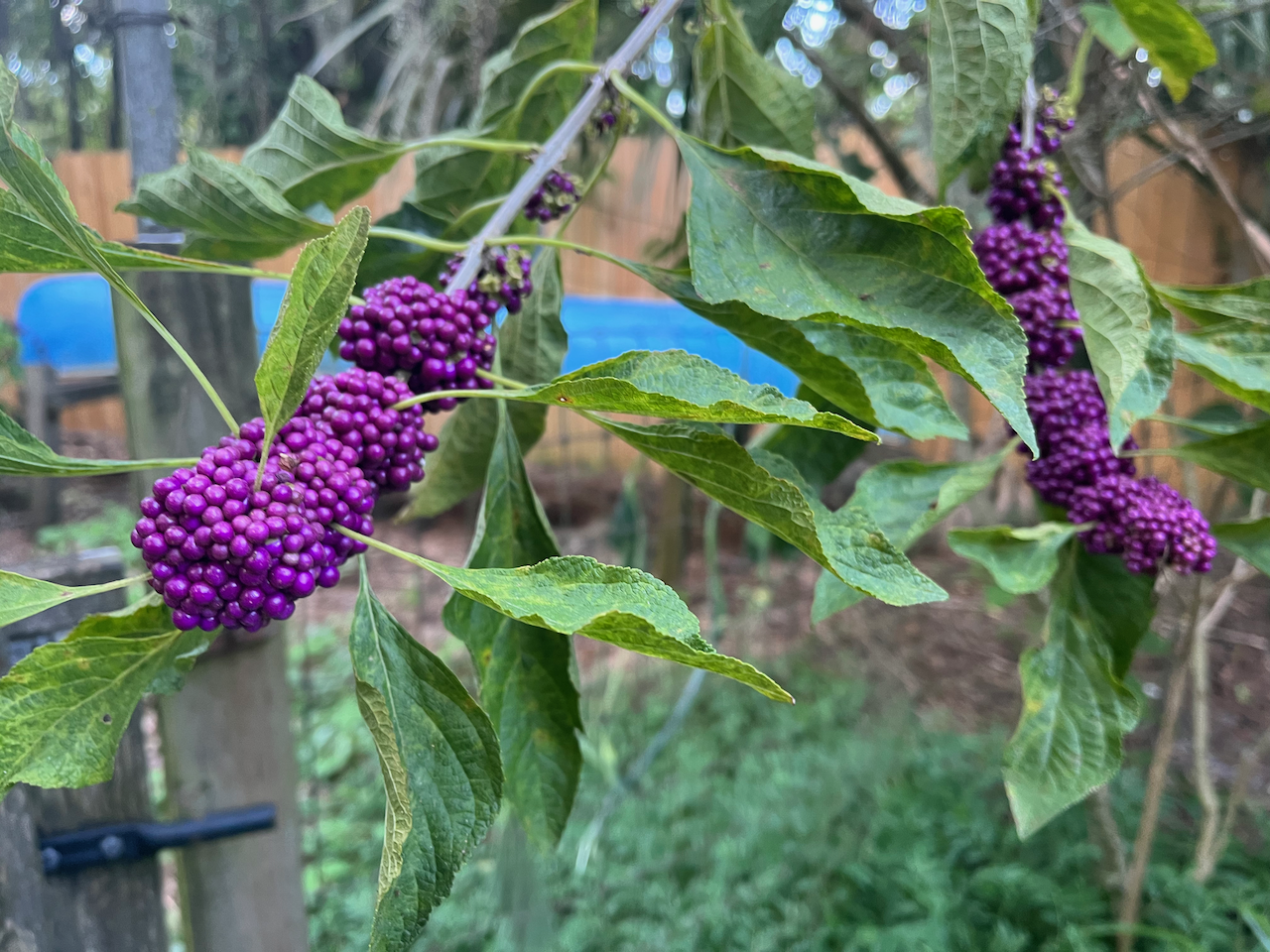
I collected all the chaff and played with it this weekend. I also made some paints from turmeric powder I’ve had on hand for a couple of years and played with some moringa and beauty berries a few different ways. They were all abundant and practically calling for me to play with them from the backyard, just as the amaranth chaff was.
The birds and I couldn’t be happier about the plump beauty berries!
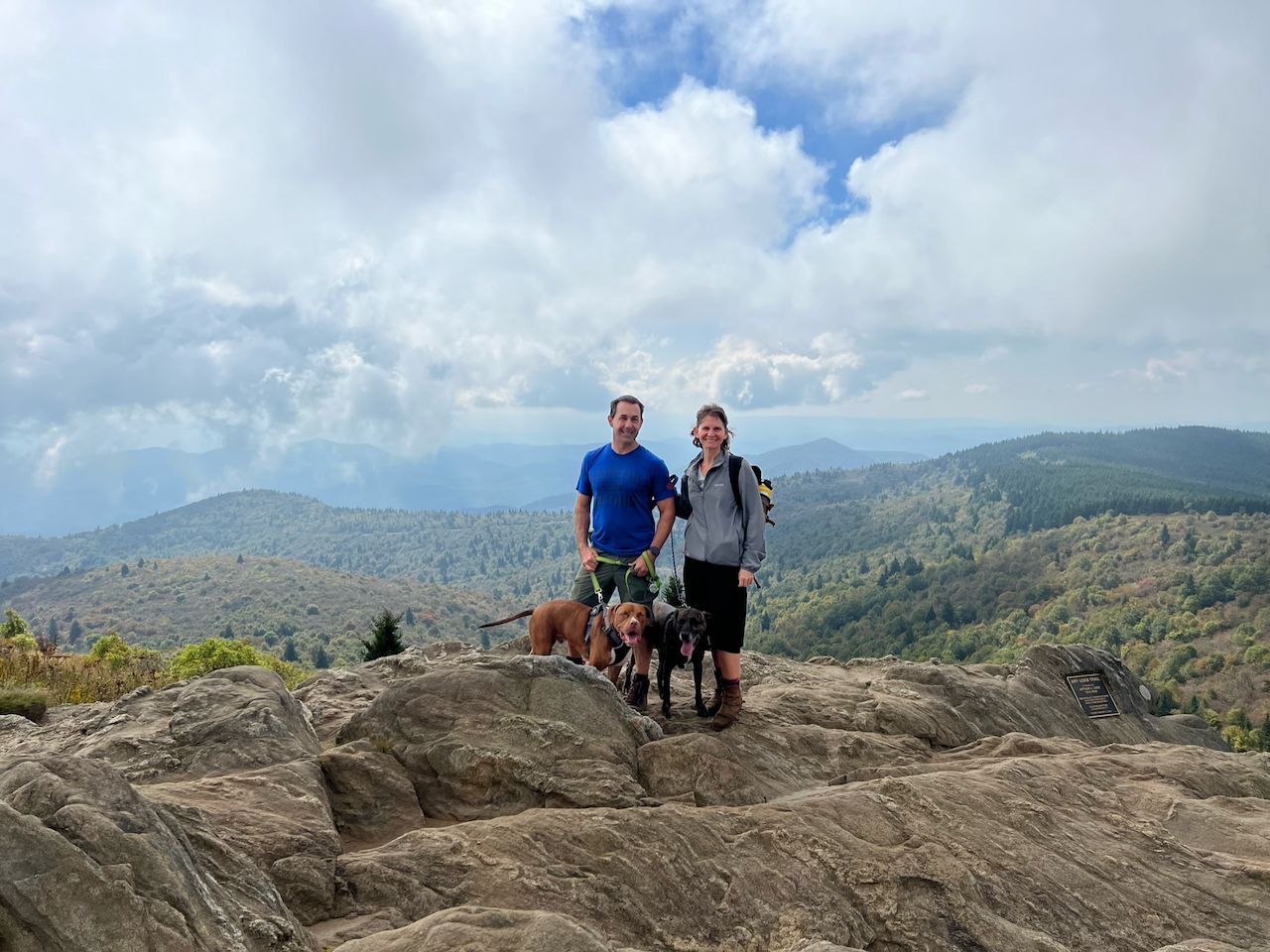
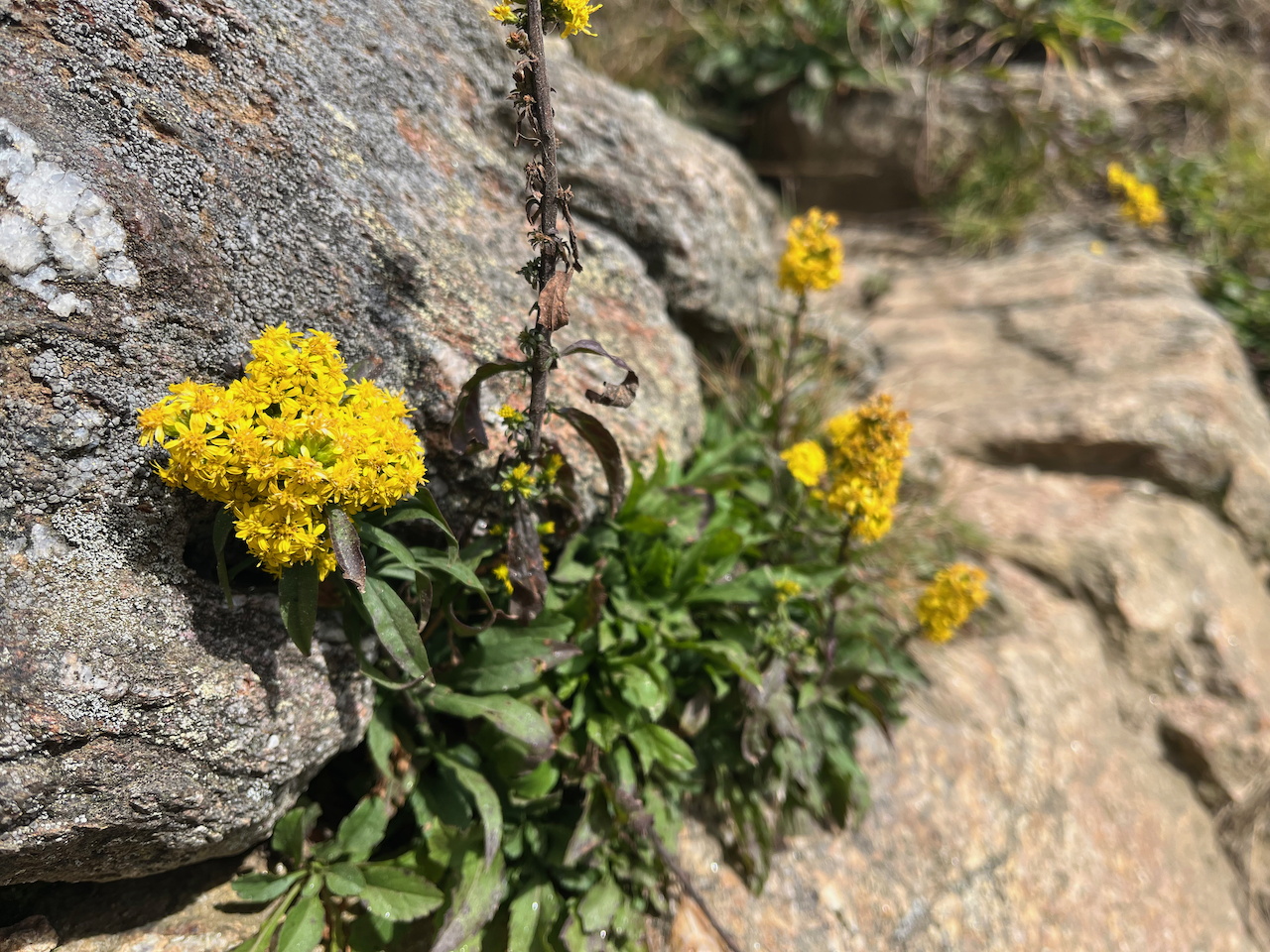
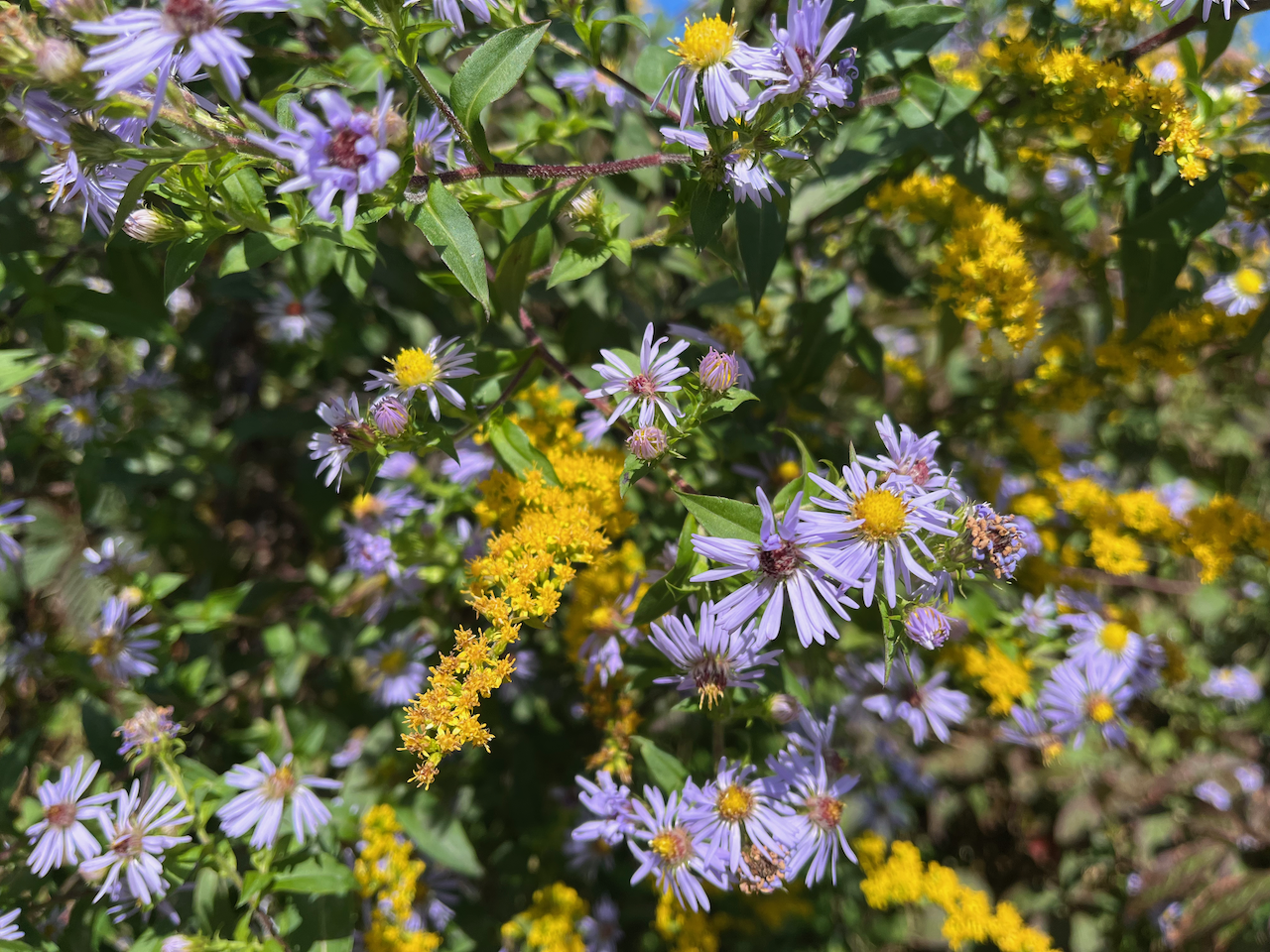
I was thinking a lot about the beautiful hikes Mike, Huxley, Okra and I did as we wound our way slowly south, stopping at Shenandoah and then Pisgah National Parks. From the mountains of Virginia to the coastal plains of Florida, goldenrod a was in full bloom! In the mountains, purple asters were also gloriously in full bloom, and were especially stunning when mingling with the goldenrods.
Art Loeb trail head in Pisgah National Forest was loaded with asters and goldenrods, and amazing views. Tough as nails growing on a rock face in the mountains. Pretty alone, but stunning together, below!
They reminded me of a chapter from Robin Wall Kimmerer’s book, Braiding Sweetgrass. An entire chapter is devoted to this stunning pair that often bloom together with showy fields of purples and yellows. It’s hard not to fall in love, and be drawn in. Robin wonders and marvels as have I, why they look so beautiful together?
Basic color wheel theory has them at opposite sides – complementary or reciprocal colors. Putting them together makes each more vivid. Just a touch of one will bring out the other.
Fun fact: although bee eyes perceive flowers much differently than human eyes, it turns out this reciprocal color display appears similar to us both! I’ve always wished I could have bee vision in a garden or field of flowers, and this might be the closest I get! Interestingly, when these two plants grow together, they both receive more pollinator visits than they do when growing alone.
Better together, right?!
The pairing is lived reciprocity; wisdom that the beauty of one is illuminated by the radiance of the other. Reciprocity is a major theme throughout this book and one that I think, if we could all embrace and act upon, would give us a much kinder world. I’ve thought a lot about this word and what it means since reading this book.
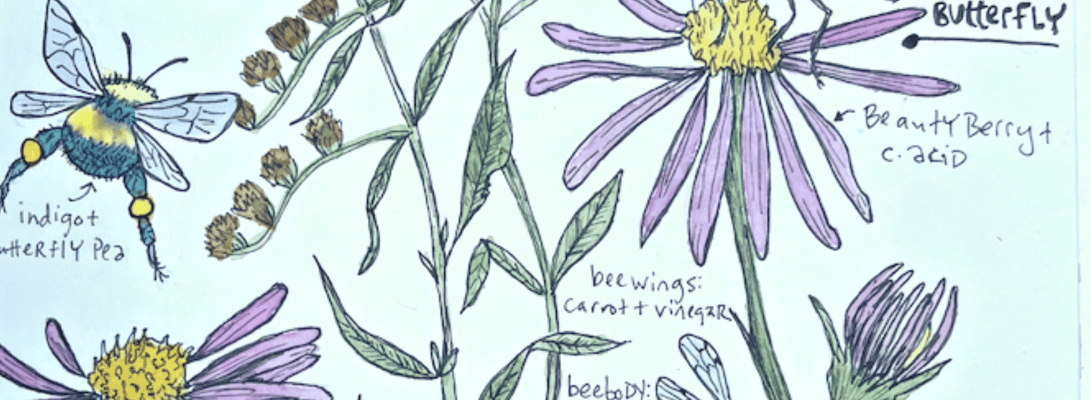
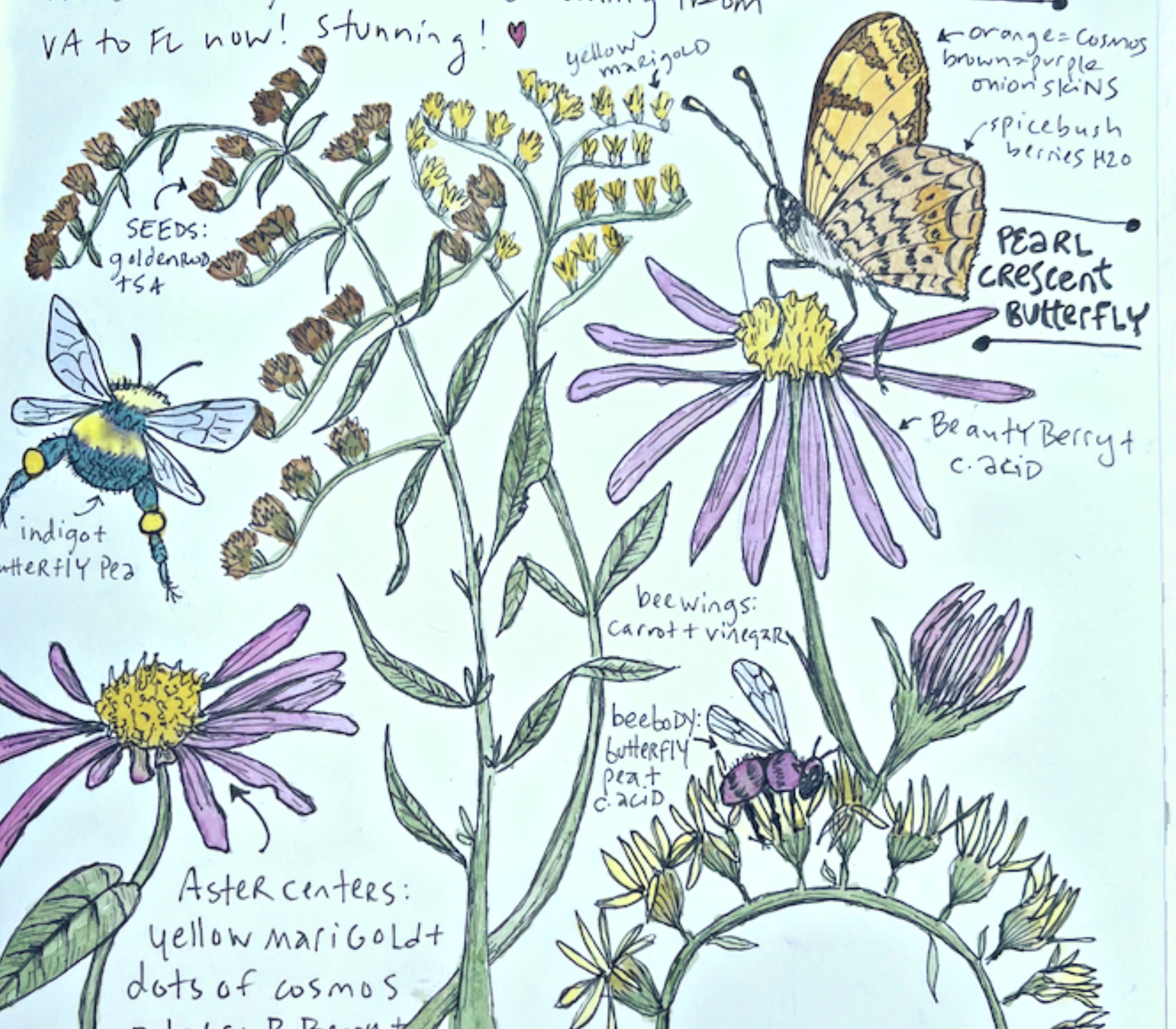
Back to the Florida yard- the beauty berries were fun and one way of preparing them led to a lovely purple hue – ASTERS! That might not seem surprising, but just on their own simmered in water created more of a grayish purple when dried. But a touch of citric acid turned it into a vibrant pink, that dried purple on the paper. I left plenty for the birds, just taking a couple big handfuls to experiment with. I had some decent yellow options already, plus some new turmeric hues- GOLDENROD + ASTER CENTERS!
So I had the palette, and it was go time!
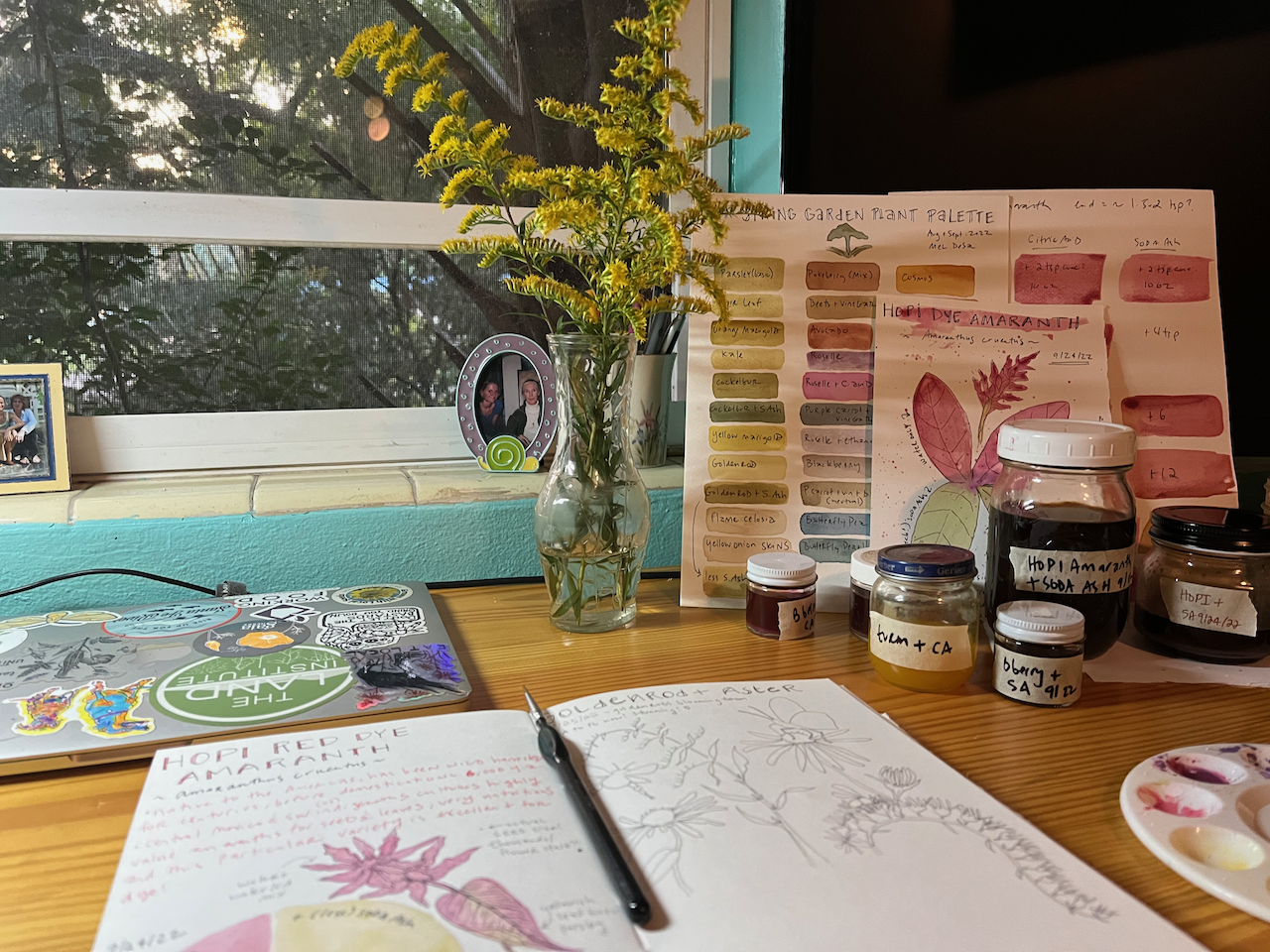
Set back up at home, re-creating Oak Spring Garden vibes with my plant palette, sketchbook, and goldenrod for inspiration!
I agreed with myself on Friday, that me and my creative bee would get some time to buzz and play this weekend, despite the somewhat long and pressing list of things to do and catch up on this coming week. Oh, and the hurricane we have been watching that might come visit us this coming week was also on my mind. But worrying less and creating more seemed like the better option.
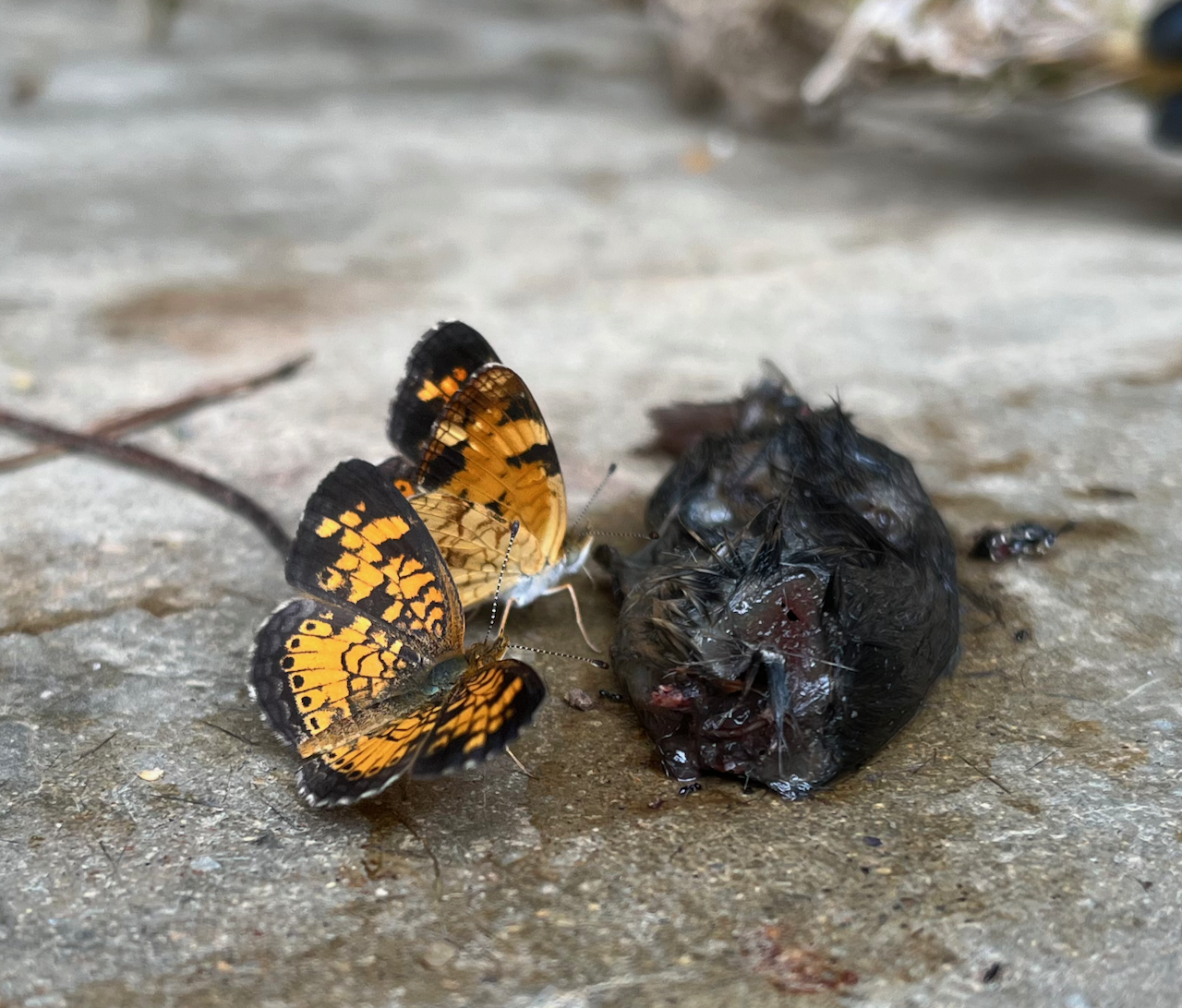
I included a Pearl Crescent Butterfly here among the pollinators. I first really noticed these small butterflies at Oak Spring Gardens in a way that some might find surprising for butterflies: swarming over a stinking mouse carcass. Many butterflies, even if they are pollinators, find value on carcasses and poop because of the salts and minerals they can’t get from a plant’s sugar water. I’d noticed them as well as some swallowtail and buckeye butterflies also enjoying some poop on the road. Nature doesn’t waste any waste! Is this reciprocity? I don’t know, but it’s neat!
Pearl Crescent butterflies finding sustenance on a decaying mouse. Funny story. I was calling into our monthly staff meeting when I noticed this scene as I was wandering, listening, and chiming in now and again. I guess I wasn’t muted because Sarah later said (when I sent her this picture), “is that what you gasped about during the meeting?” Oh she knows me so well! I didn’t know I gasped, but wouldn’t you if you saw this with your own eyes?
Nature never ceases to amaze me, and find me deep in wonder and curiosity; hunched over, on my knees, gazing up, or zooming in for a closer look at what most people pass by. A classic Mary Oliver poem that is pasted to the front inside cover of my sketchbook reflects this wonder in the small things so well.
The Summer Day
by Mary Oliver
Who made the world? Who made the swan, and the black bear? Who made the grasshopper? This grasshopper, I mean — the one who has flung herself out of the grass, the one who is eating sugar out of my hand who is moving her jaws back and forth instead of up and down — who is gazing around with her enormous and complicated eyes. Now she lifts her pale forearms and thoroughly washes her face. Now she snaps her wings open, and floats away. I don’t know exactly what a prayer is. I do know how to pay attention, how to fall down into the grass, how to kneel down in the grass, how to be idle and blessed, how to stroll through the fields, which is what I have been doing all day. Tell me, what else should I have done? Doesn’t everything die at last, and too soon? Tell me, what is it you plan to do with your one wild and precious life?
Part 6 of a series of posts about my artist in residency experience at Oak Spring Garden Foundation.
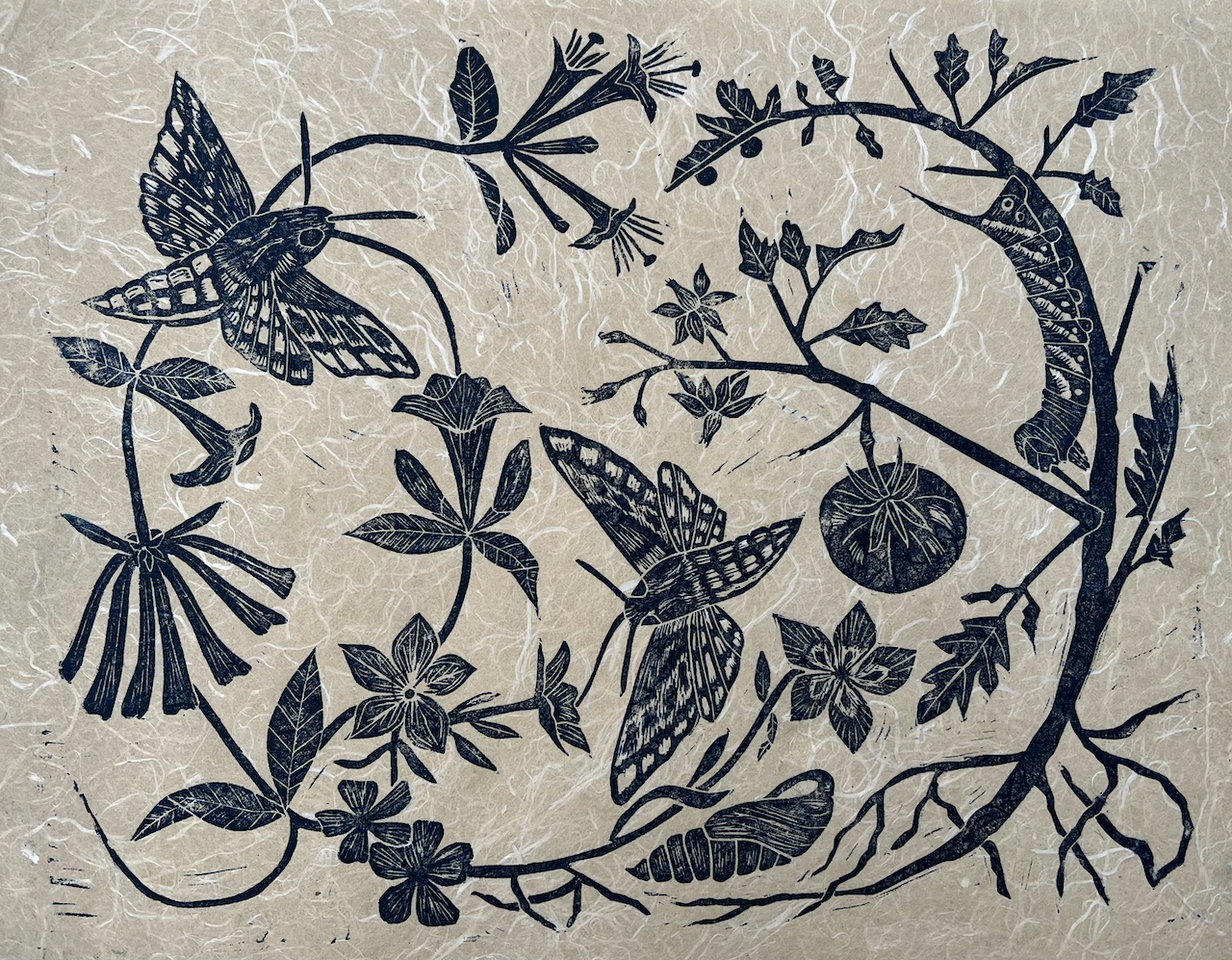
It’s been about a year since I picked up my linoleum tiles and carving tools to make a print. It felt good! I’ve wanted to create this lifecycle piece for awhile now, but had forgotten about it. I was reminded while here at the lovely Oak Spring Garden Foundation for my artist in residency stay, and had the time to dig in.
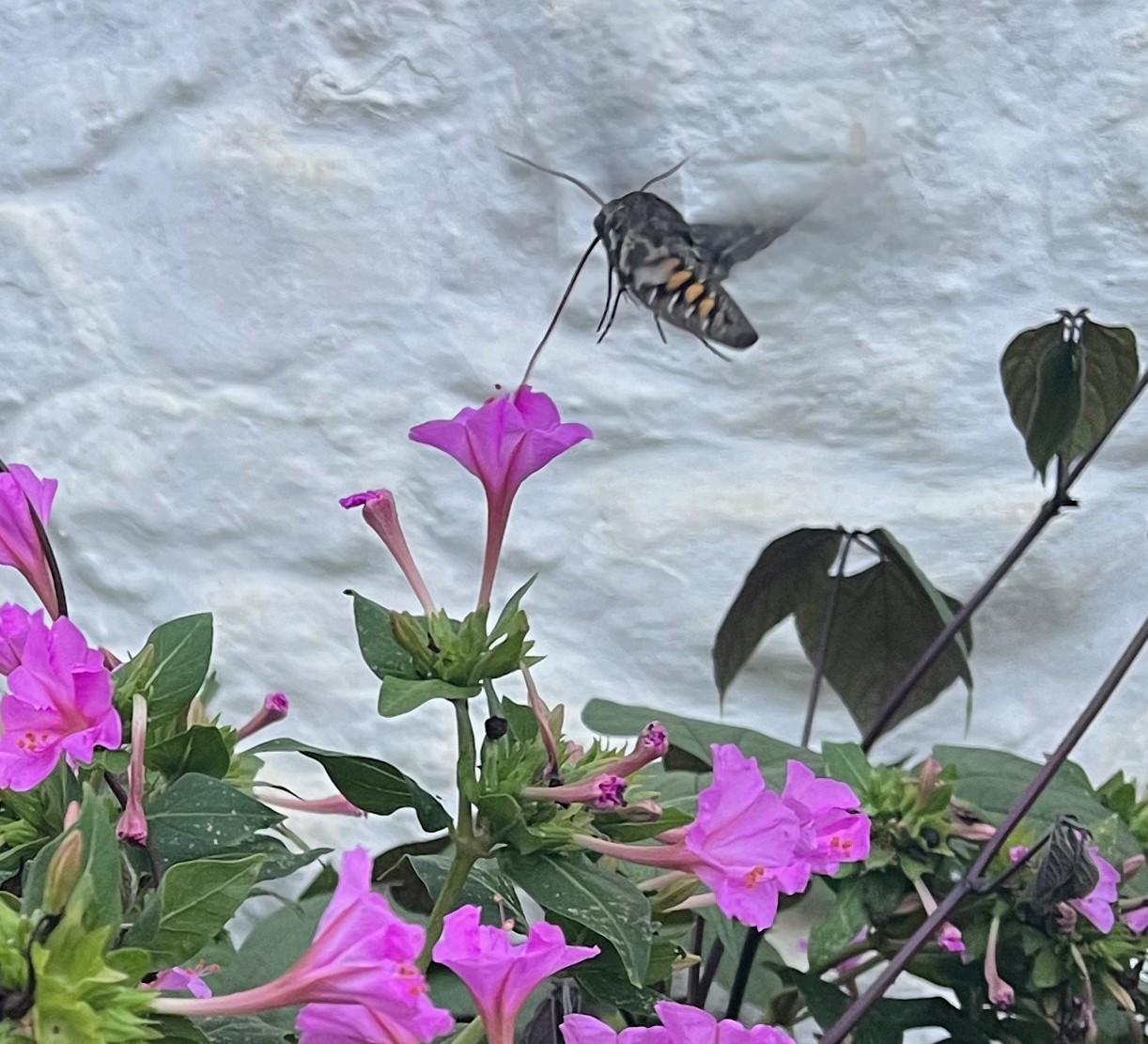
During my evening walks and meanderings about the gardens, I’ve been entertained by the flurry of hawk moth activity. We met in the lilies, and I followed them out to the 4 o’clocks- both very pronounced and tubular flowers.
This piece is inspired by the complicated relationships we have with insects. As a farmer and seed saver, growing tomatoes is important to me. As an ecologist and lover of all life, insects are also important to me. The process of metamorphosis so many insects undergo is marvelous. From a caterpillar to a pupae to a moth or butterfly. I wrote about metamorphosis awhile ago.
Oh my! It’s something spectacular.
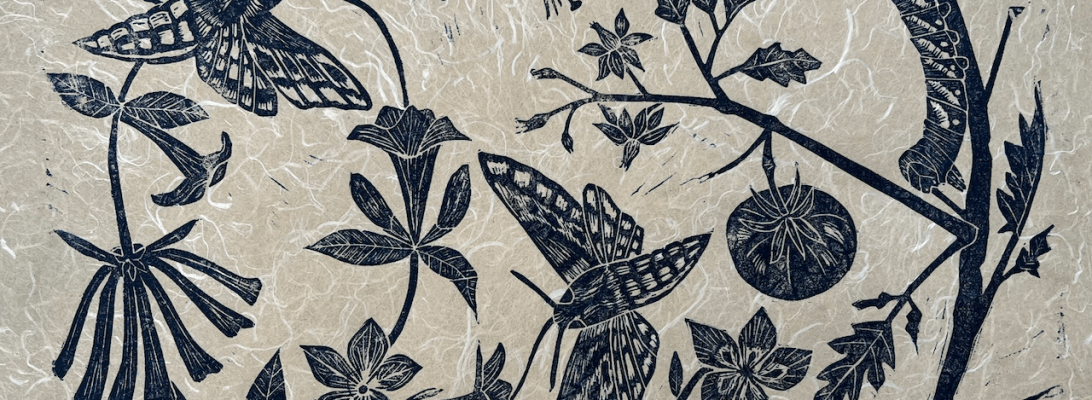
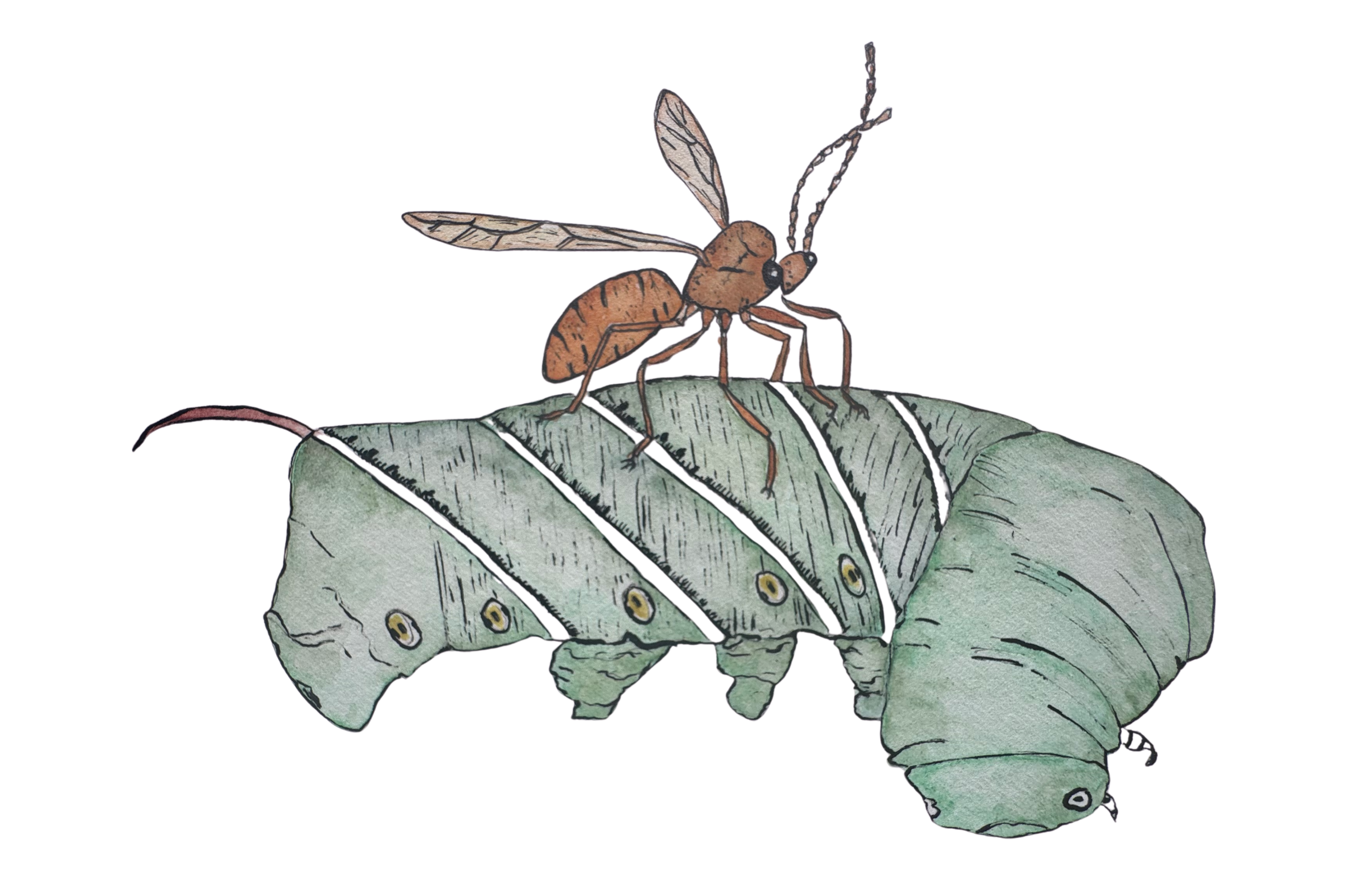
My latest linoleum carving + print showcasing all stages of this insects life from egg to moth.
But when a tomato hornworm shows up, things get really complicated.
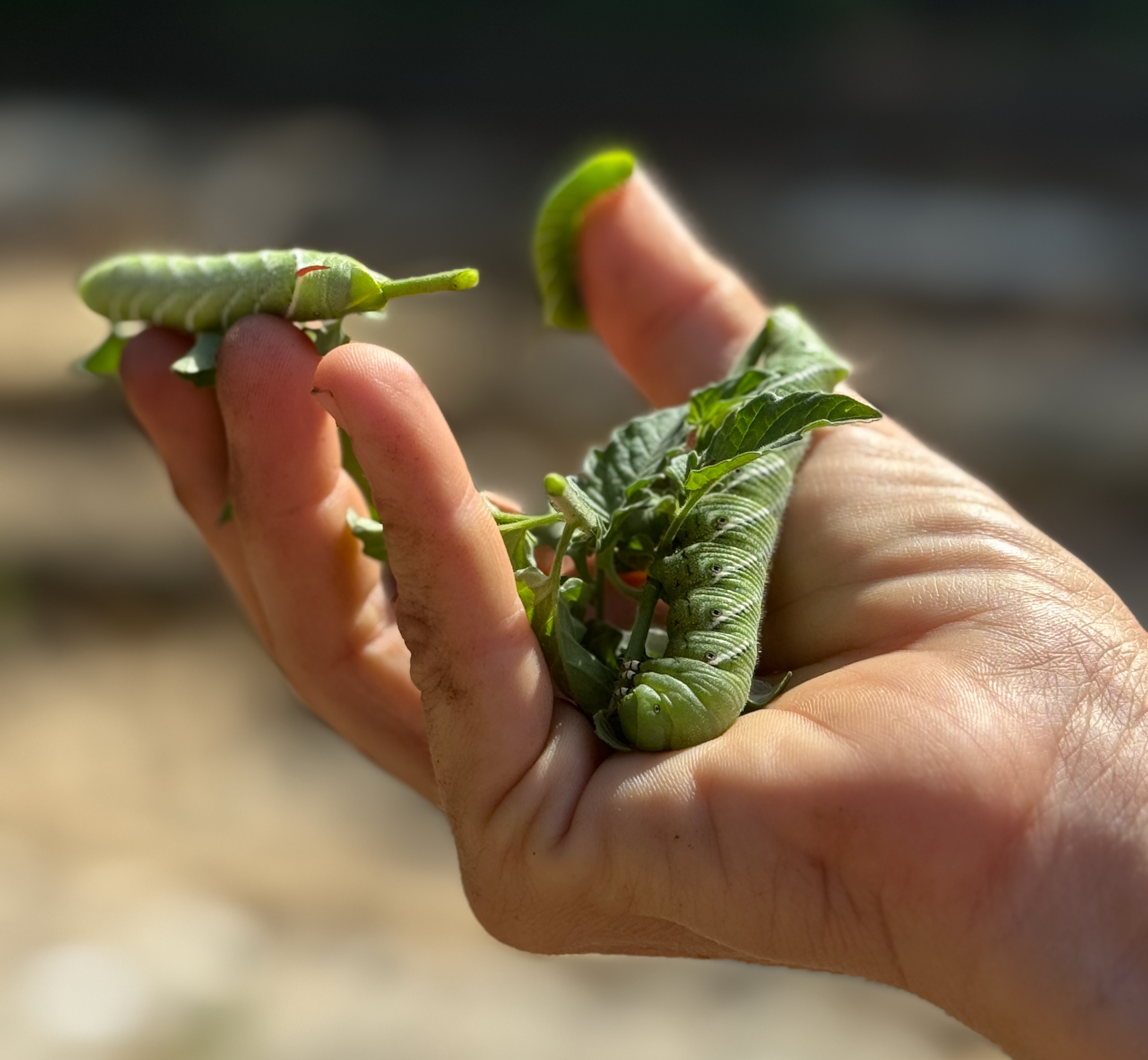
I think the bright green caterpillars are cute! Soft and silky, I like to pet them gently. After a few strokes, they settle in, and I think they might actually like the little massage. The horn on their back is a bluff. They are gentle, tomato-loving creatures. But they are ravenous for tomato plants and can do quite a bit of damage before going noticed.
Once they are fat and satiated on tomato leaves, flowers, and even fruits, they crawl to the soil and pupate underground. This is where metamorphosis magic happens. Cells liquefy and re-organize themselves. Crawling muscles swapped for flight muscles, extra legs swapped for wings, and so on.
The emerging pupa are gorgeous moths, known as the 5-spotted hawk moth. Their exquisitely long proboscis (tongue) is specially designed to sip from flowers with similarly long and tubular necks. They need each other. They are so large and so fast, they are often mistaken for hummingbirds. And so they are also colloquially referred to as hummingbird moths.
An Oak Spring Garden resident visiting the 4 o’clocks.
I’ve seen them consistently every evening here at Oak Spring Gardens. I imagine back down in Florida, they are finding some great native plants like jessamine, phlox, trumpet vine and coral honeysuckle, which are depicted in this piece. Long tubular flowers with a sweet nectar treat waaaaay down in there, waiting for the pollinator match to arrive. Lots of ornamental garden plants are also likely to attract them.
Unlike hummingbirds, these nectar feeding pollinators are mostly active at dusk and night time. They lay their eggs singly on the host plant- tomatoes- starting the cycle all over again. Each tiny egg will hatch into a teeny tiny caterpillar that will successfully grow into larger and larger versions of themselves – as they devour tomato plants. We often won’t spot them till significant damage is done and they are quite fat. At this point, they are close to going into life phase 3: underground pupae.
Farmers and gardeners typically reach for a bottle of something or other to “take care” of the problem. And they are not necessarily wrong in doing so. Tomato hornworms have the ability to destroy a crop of tomatoes if it gets out of hand.
I have found a balance.
I will let a few get large enough to successfully become pupae, depending on the size of my tomato plant population. The little tiny caterpillars (if I can find them!) might be squished, along with an apology and a prayer if I feel the plants can’t sustain their own growth and that of the hungry, hungry caterpillars.
Sometimes nature swoops in on horrifying wings and takes care of things. Braconid parasitoid wasps lay their eggs inside a living hornworm caterpillar, and the hatched larvae literally eat the poor caterpillar alive. So if you ever see white rice-like things protruding out the back of a caterpillar, best leave it alone and let Mother Nature do her thing.
I may resort to spraying with Bt, a fairly harmless and organic approved spray (harmless for all but caterpillars of course) on select plants. Tilling can reduce pupa in the soil by about 90%, but tilling has its own issues for soil health too.
Part 4 of a series of posts about my artist in residency experience at Oak Spring Garden Foundation.
In my ongoing experimentation with creating paints from plants on site, I have learned what most people dabbling in or perfecting this art have as well: lots of things turn brown! It makes a whole lot of sense if you stop for a second and think about it. All living beings will eventually return to the soil and turn some shade of brown. Dying plants, seed pods, fallen leaves, decaying bones and flesh….
So macerating petals and simmering leaves with the hopes to preserve vibrant hues is not in line with nature just doing her thing. The trick is figuring out if it’s possible to capture the pigments and preserve them before they turn brownish. Some will oblige, others will not. For those that will not, the fleeting glimpse of their living pigments on paper is only meant to be enjoyed for a short period of time. Or perhaps best enjoyed on the living plant.
What’s our obsession with preserving things in perpetuity anyway? Avoiding change or worse – death! Why do we allow ridiculous things like embalming bodies in formaldehyde so they don’t rot and turn brown? I wrote about death awhile ago. It’s all around us, all of the time but our culture prefers to ignore it, and be afraid of it. You and me, and everyone we love are going to die one day and turn brown (if we go the natural way of things and avoid formaldehyde and cremation). I’m not being morbid, or pessimistic, or dark. Quite the contrary! Accepting that we are not here forever, allows us to fully embrace and love the hek out of this ephemeral life! This colorful, beautiful, ephemeral life.
Trust me. As a cancer survivor, every precious day is more vibrant because of death.
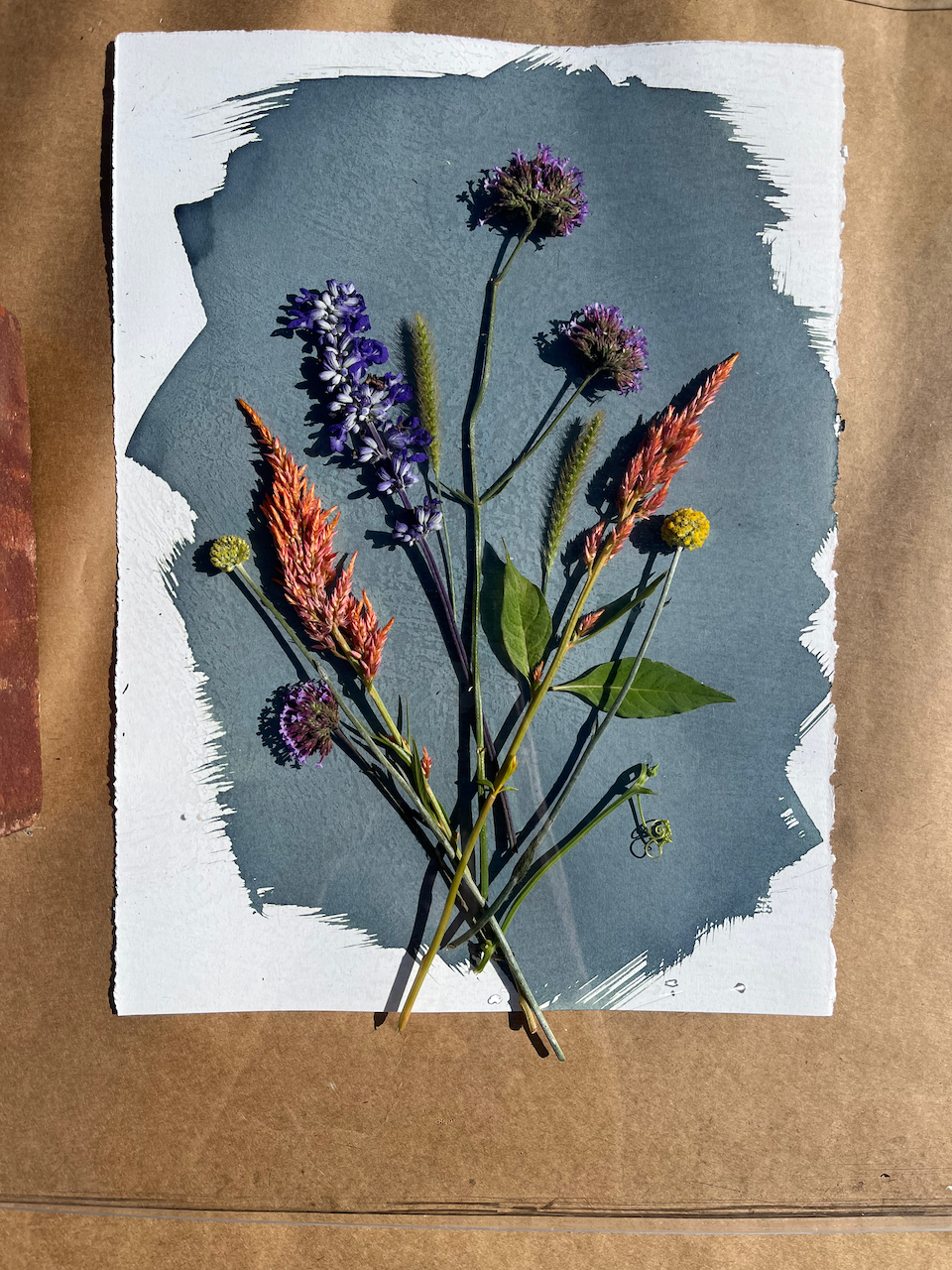
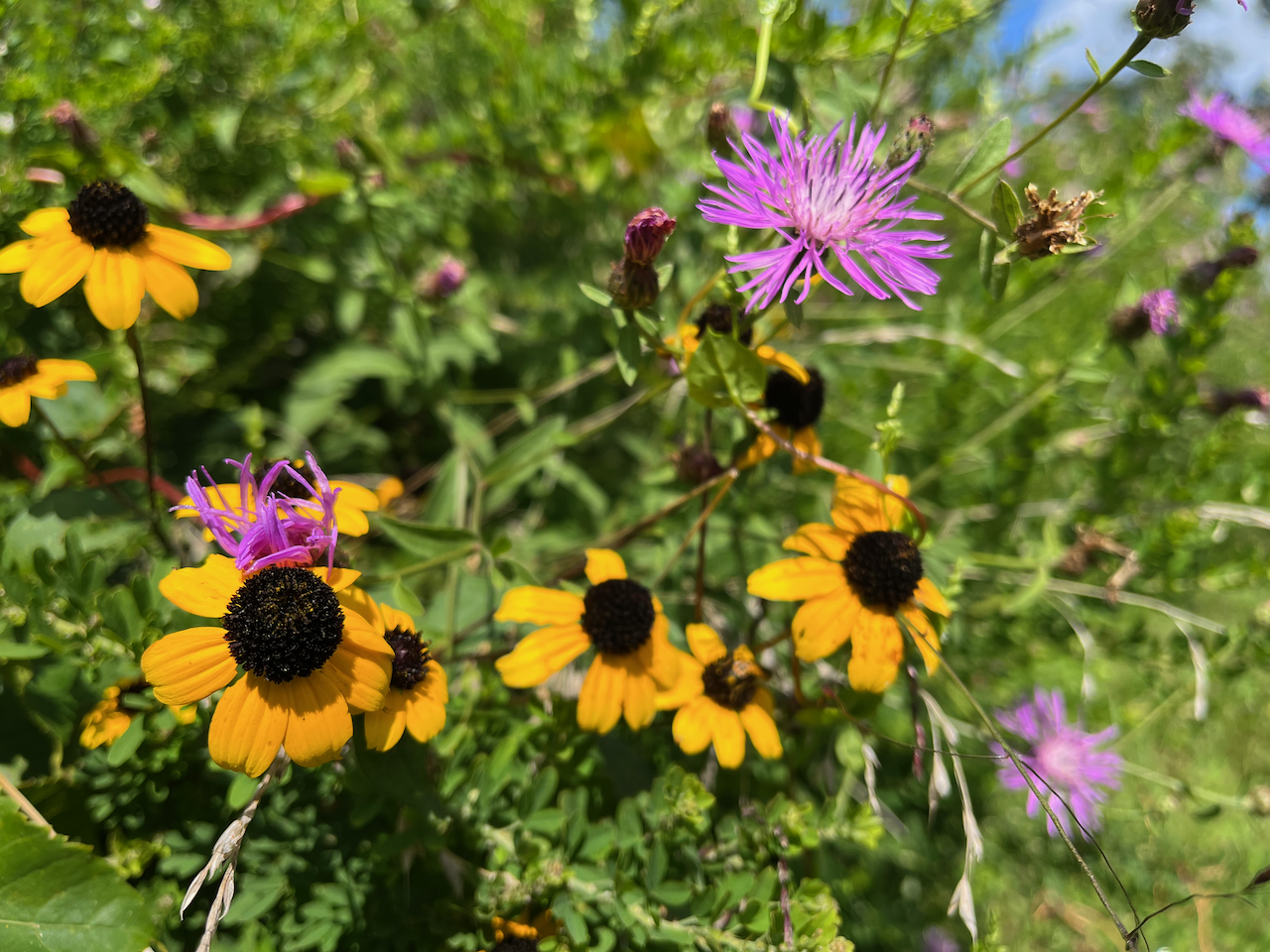
An abundance of vibrant colors that will all one day…turn brown! Top left to bottom right: Black Swallowtail butterfly on Thistle, making cyanotypes with garden flowers, the formal garden at Little Oak Springs, plant based paints, Rudbeckia and Aster(?) along the Appalachian Trail.
In my early disappointment at watching vibrant green or yellows turn brown, I looked around me and realized – it’s just fine! Plenty of pretty beings living or dead are some shade, or many shades of brown. The Polyphemus moth, and actually most moths and many butterflies, rabbits, coyotes, milkweed and thistle seed pods, spiders a plenty, lots of birds fully brown or with brown bellies or throats, falling leaves, grasses going to seed…. So I embraced the browns and the shades of them I was getting.
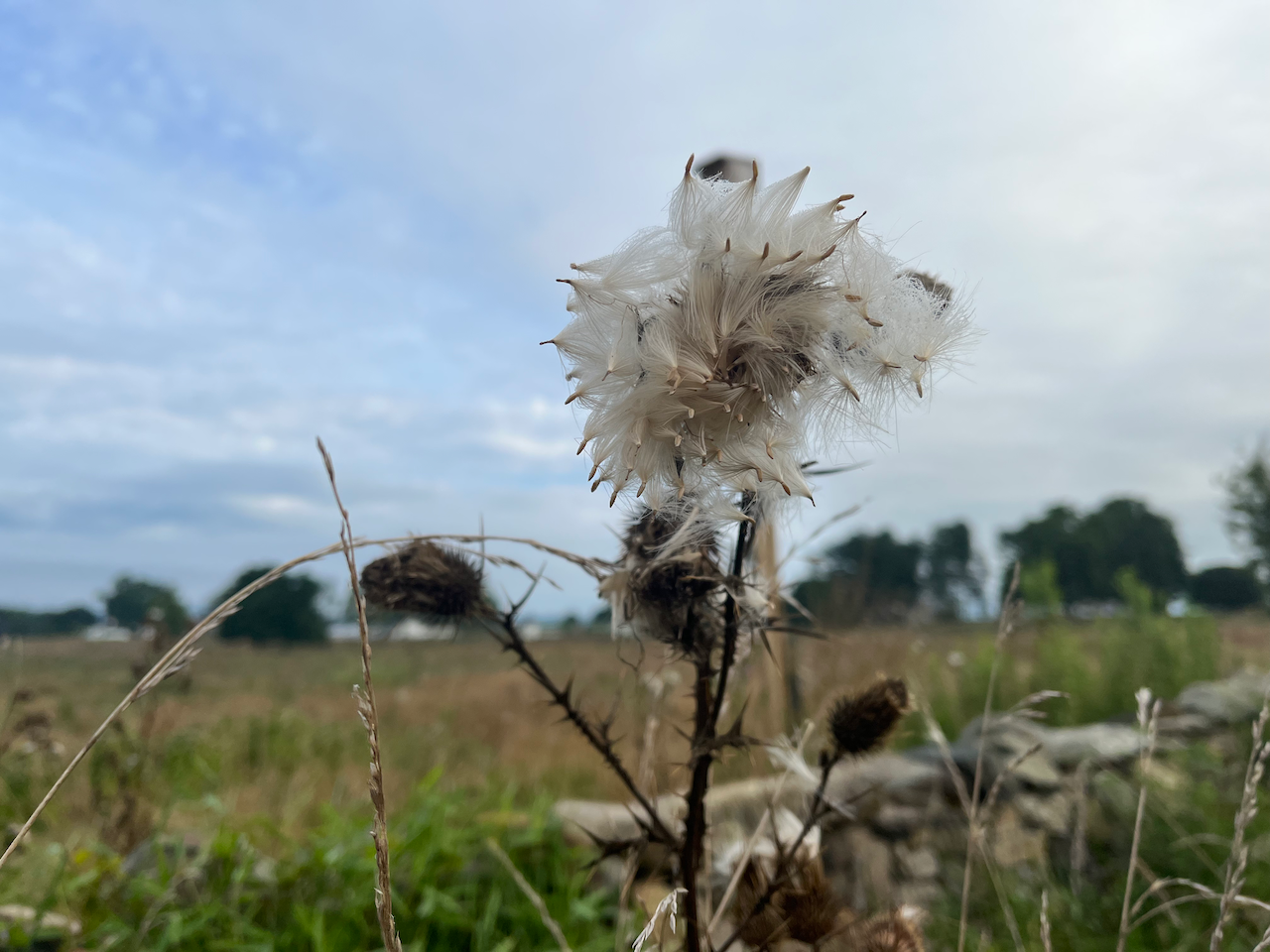
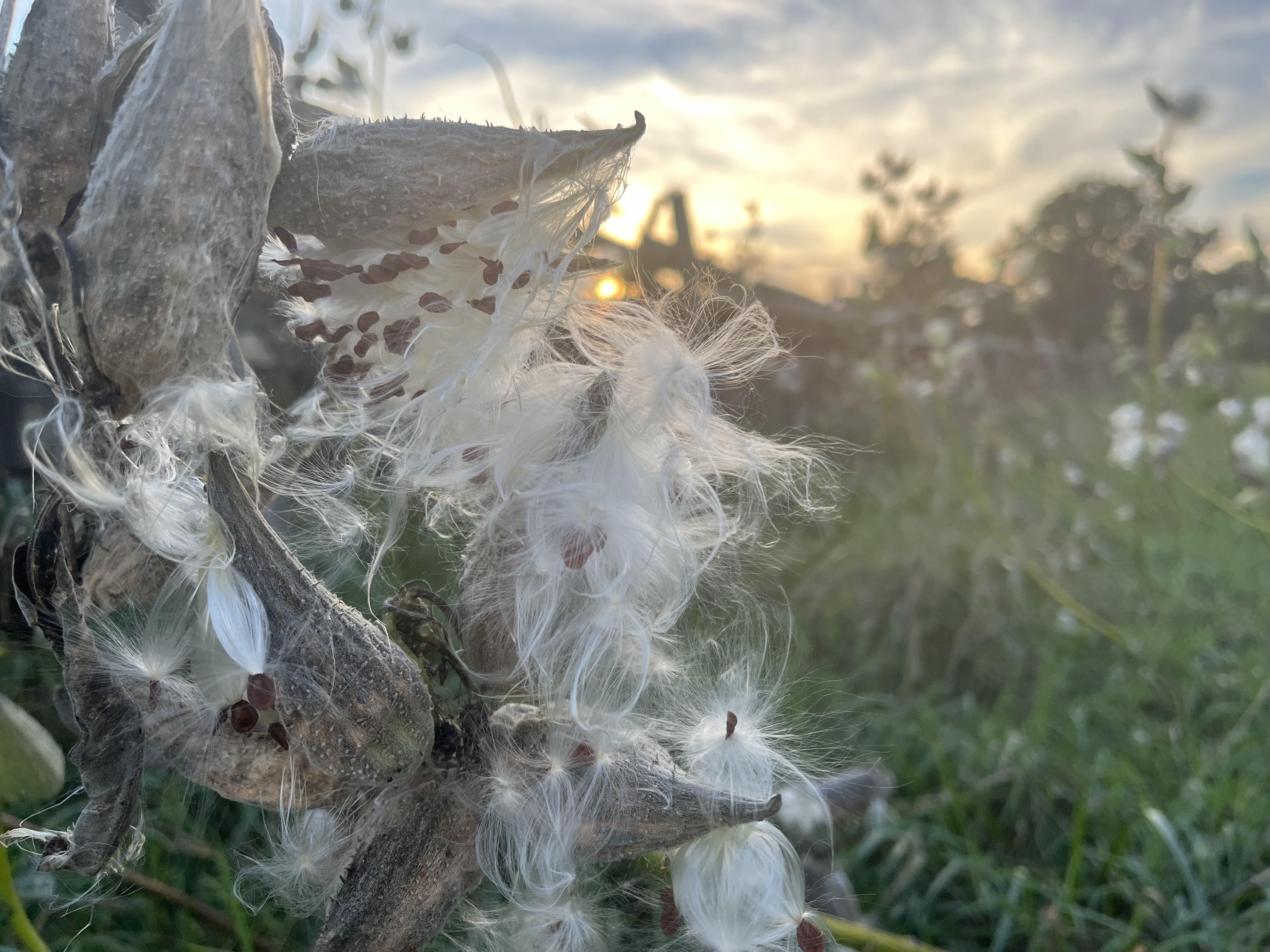
Everyone turns brown. Top left to bottom right. Polyphemus moth and Dobson fly, Crab spider on grass, Thistles going to seed, and Common Milkweed seed pods all at once went POOF!
Anyhow, back to plant pigments!
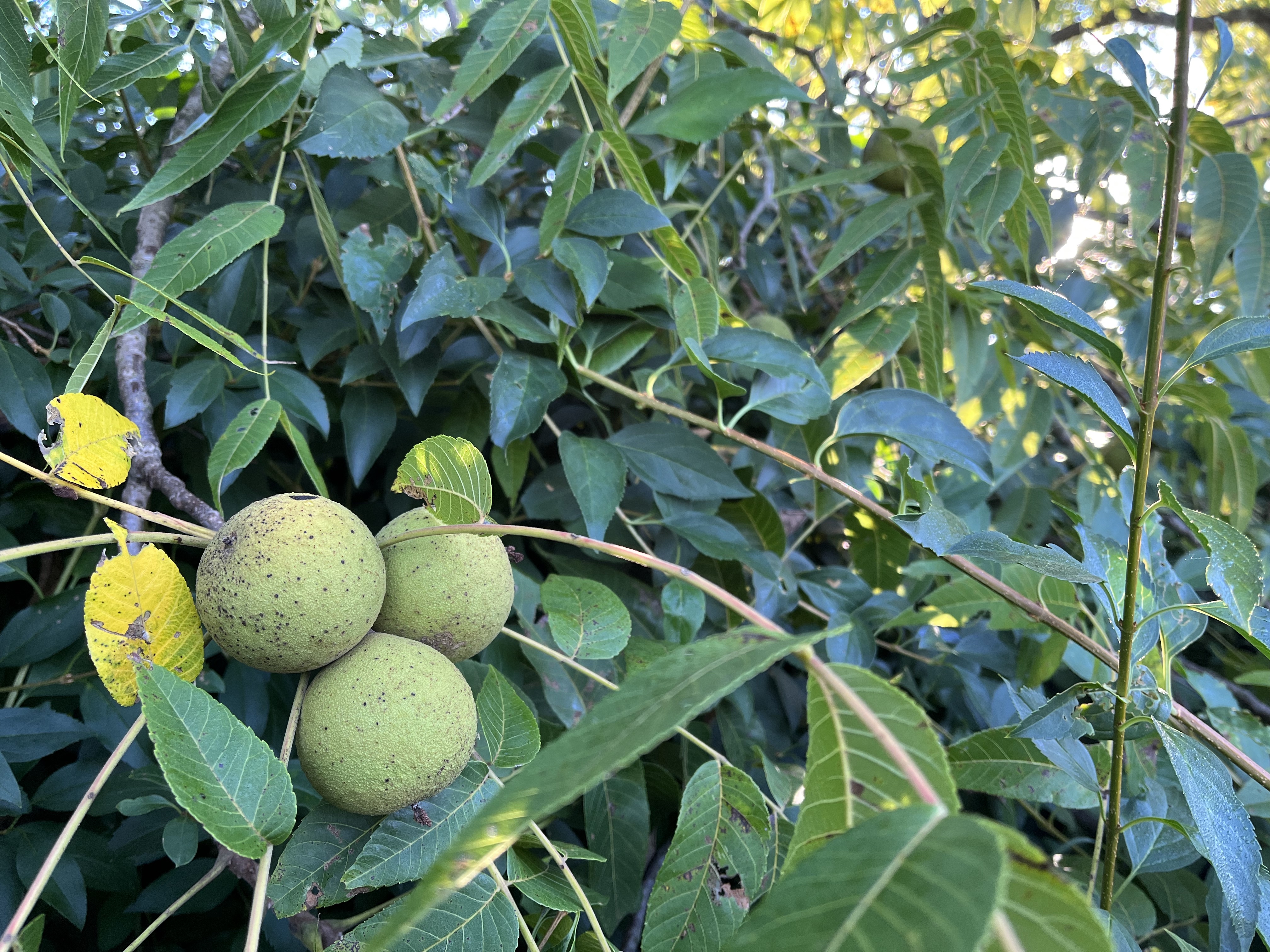
One that particularly made me happy was the Eastern Black Walnut. A common complaint is that the fallen fruits stain things when they drop. PAINT! In the same way I always spot SEEDS! whenever I’m out and about, I am now looking and wondering….PAINT?! One of our cohort mates here Jackie, a botanist from the Dominican Republic, found a Black Walnut tree here and brought me some of the fruits to play with.
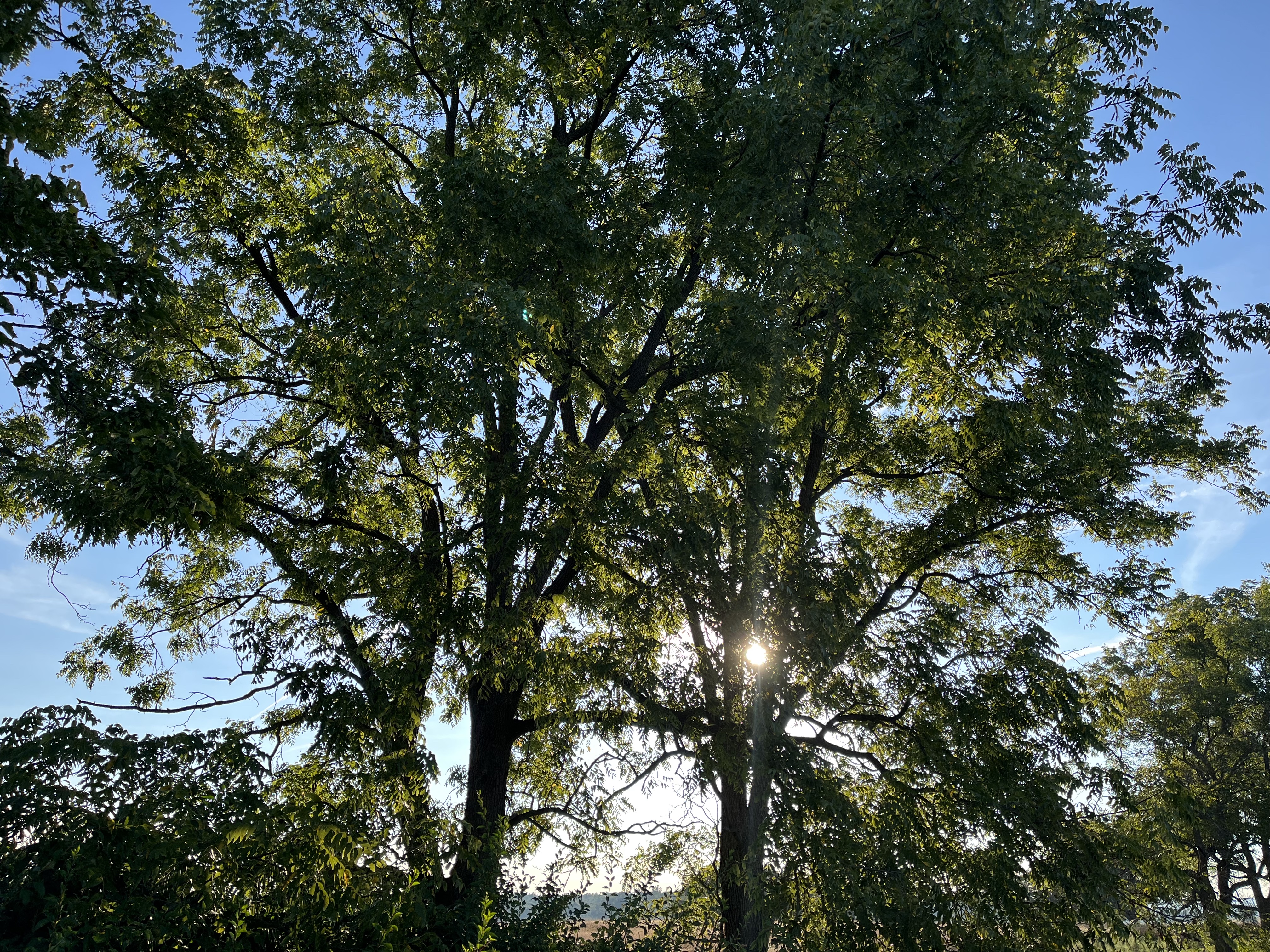
Eastern Black Walnut tree in the early morning sun, and their fruits!
The Eastern Black Walnut is a native tree to the Eastern US, and considered a “pioneer” species meaning they are one of the first trees to establish in disturbed areas like along roadsides, in fields, and forest edges; places that are more open. They don’t thrive in forests with other trees and lots of shade. They must spread out in full sun to live their best life. They secrete a chemical into the soil called juglone which repels some species of plants. A partial list includes includes tomatoes, potatoes, peas, peppers, cabbage, alfalfa, serviceberry, chestnut, pine, arborvitae, apples, blueberry, blackberry, cherry, azalea, rhododendron, lilac, hydrangea, privet, and members of the heath family. But not all plants are poisoned by juglone, some will thrive and others can tolerate it.
The tree is lovely in her own right, but of course as humans we need to know the uses for living beings to understand them or find value. So, it turns out that walnut trees makes fantastic lumber, the staining fruits are used to make dyes and inks, the nuts are edible for many wildlife and of course humans too, and the abrasive shells have many industrial uses for blasting, sanding and filtering things.
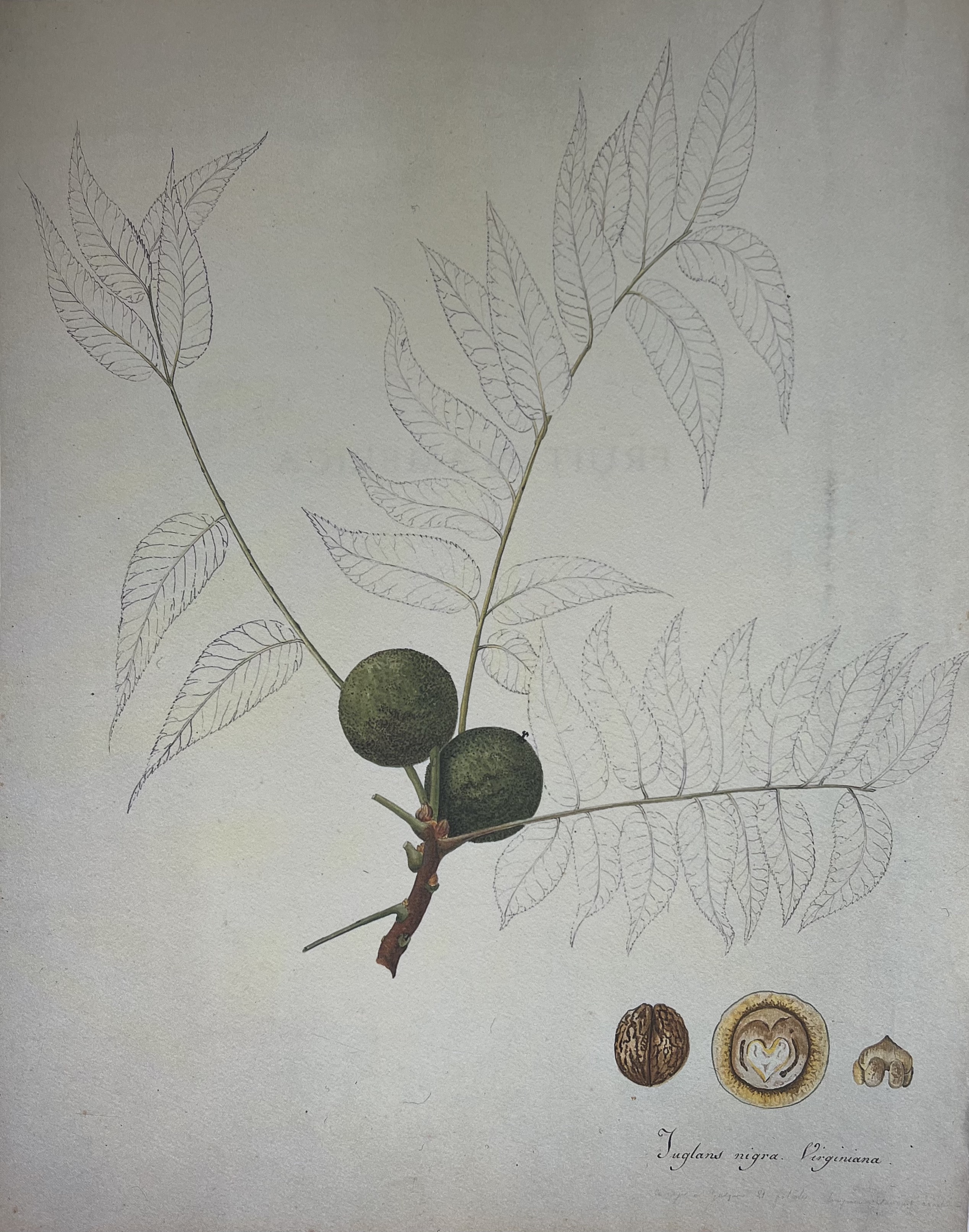
An anonymous French watercolor of a Black Walnut from Virginia, made early the nineteenth century when the tree was being naturalized in France. Photo courtesy of An Oak Spring Pomona by Sandra Raphael. Oak Spring Garden Library in Upperville, Virginia, 1990.
The process of making paint from the Black Walnut fruits was simple. What I loved most is that it required nothing but time, water, and heat to prepare.
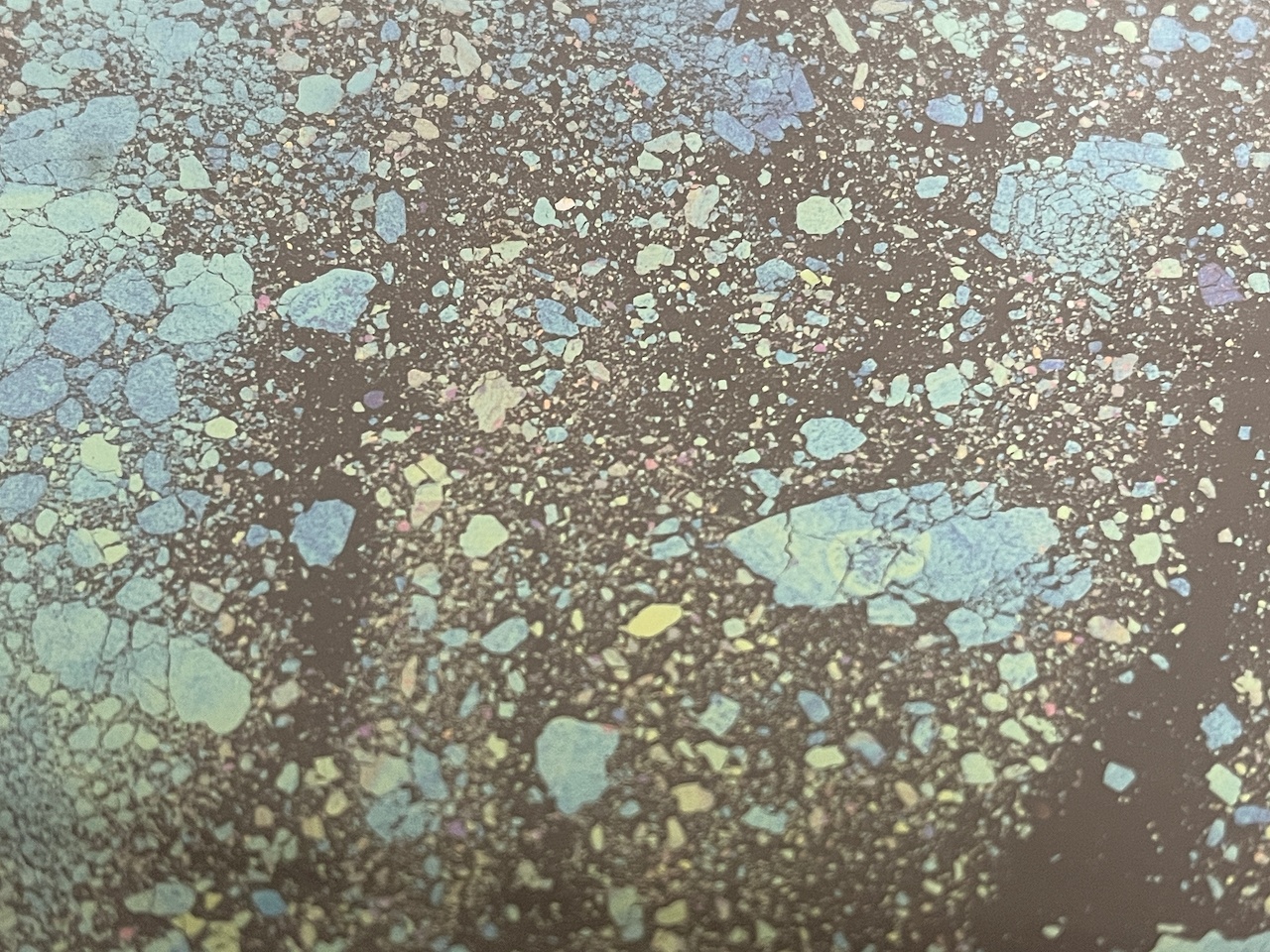
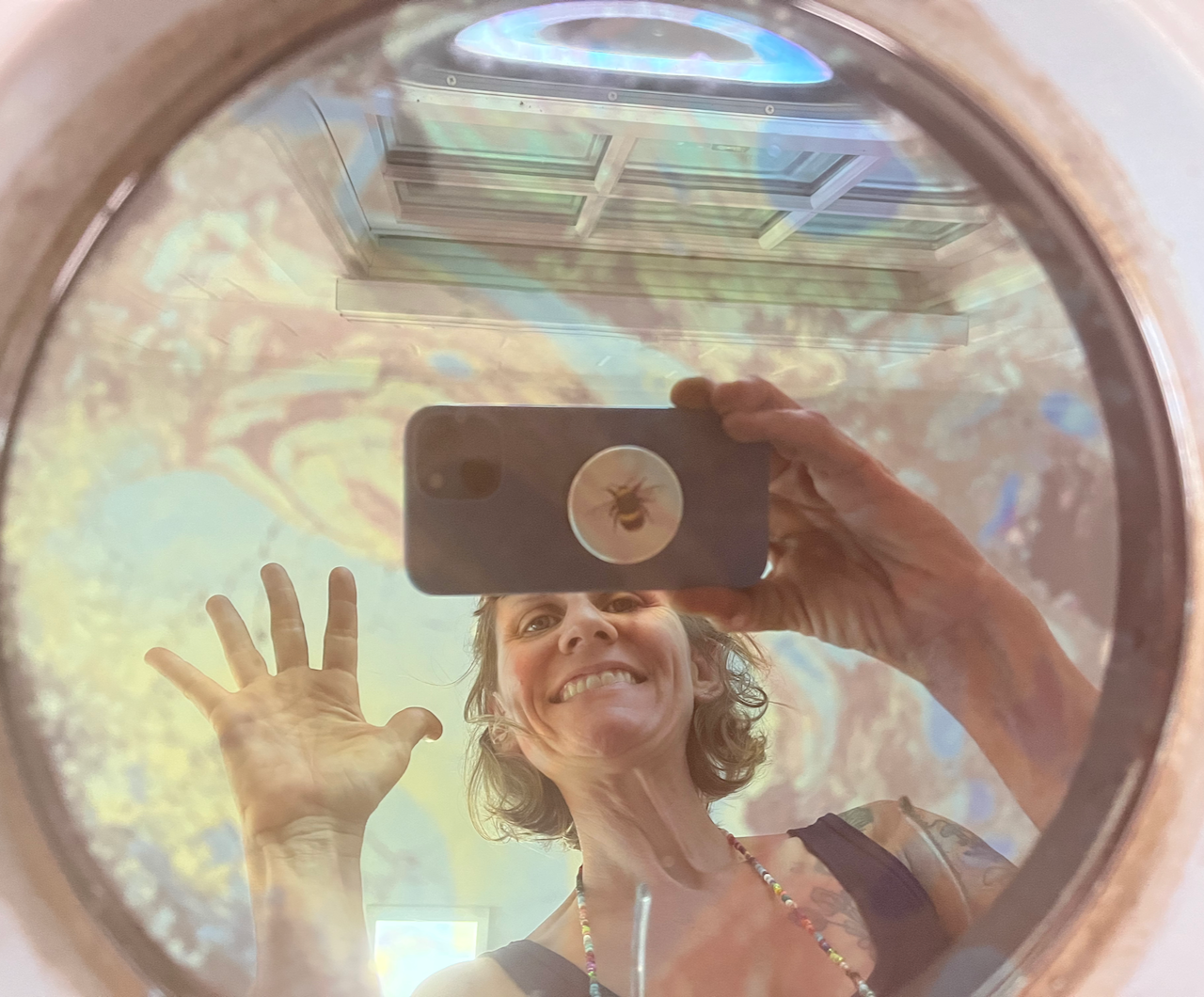
I cracked the fruits with a hammer against a hard floor, to remove the skin from the seed and shell. I broke the skin into as many pieces as possible and covered them with water. I did not wear gloves, but kind of wish I had. My hands were stained brown, fading to yellowish tan for many days. I don’t really care, but it was pretty obvious and perhaps something to consider next time! They soaked for 48 hours out in the sun while I was tinkering with other things in my studio. The water turned a lovely deep, iridescent mix of yellowish-greenish-brownish hues as the oils, pigments and tannins leached out. Then I strained out the chunks and gently simmered the solution for about 1 hour on the stove. I let it settle and tried to take a photo of the lovely design on the surface of the inky water, but only got my reflection!
Soaking the fruit skins, the strained and simmered solution sitting awhile, and me trying to take a photo of the last phase and seeing my silly self in the reflective liquid. Lovely, lovely, browns and friends along the way.
That’s it! Next up for all my paints, I will be adding a solution made of gum arabic, honey, thyme oil and glycerin that all together help bind the pigments to the paper, prevent decay, and slow the drying time of the paint. I’ll share my “recipes” later on once I’ve fiddled and had a chance to compile all my notes and color charts.
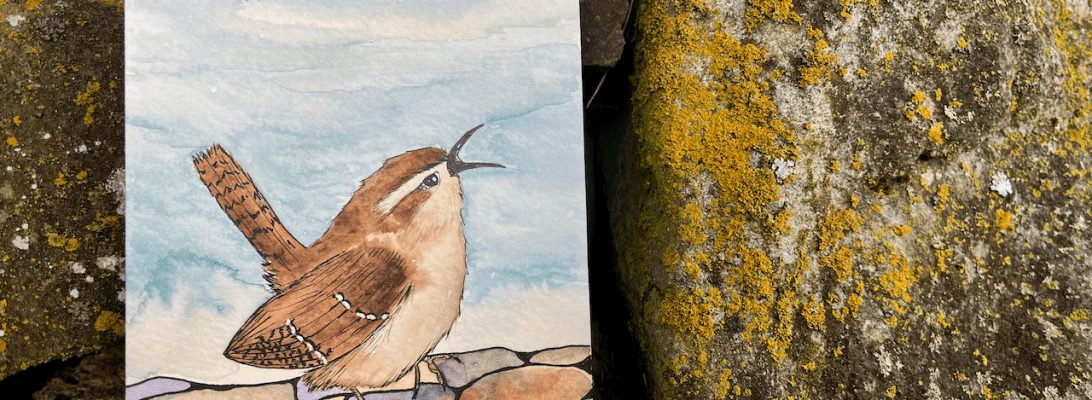
Here are just a couple of lovely brown creatures I created. They are all using only paints I’ve made here from local plants!
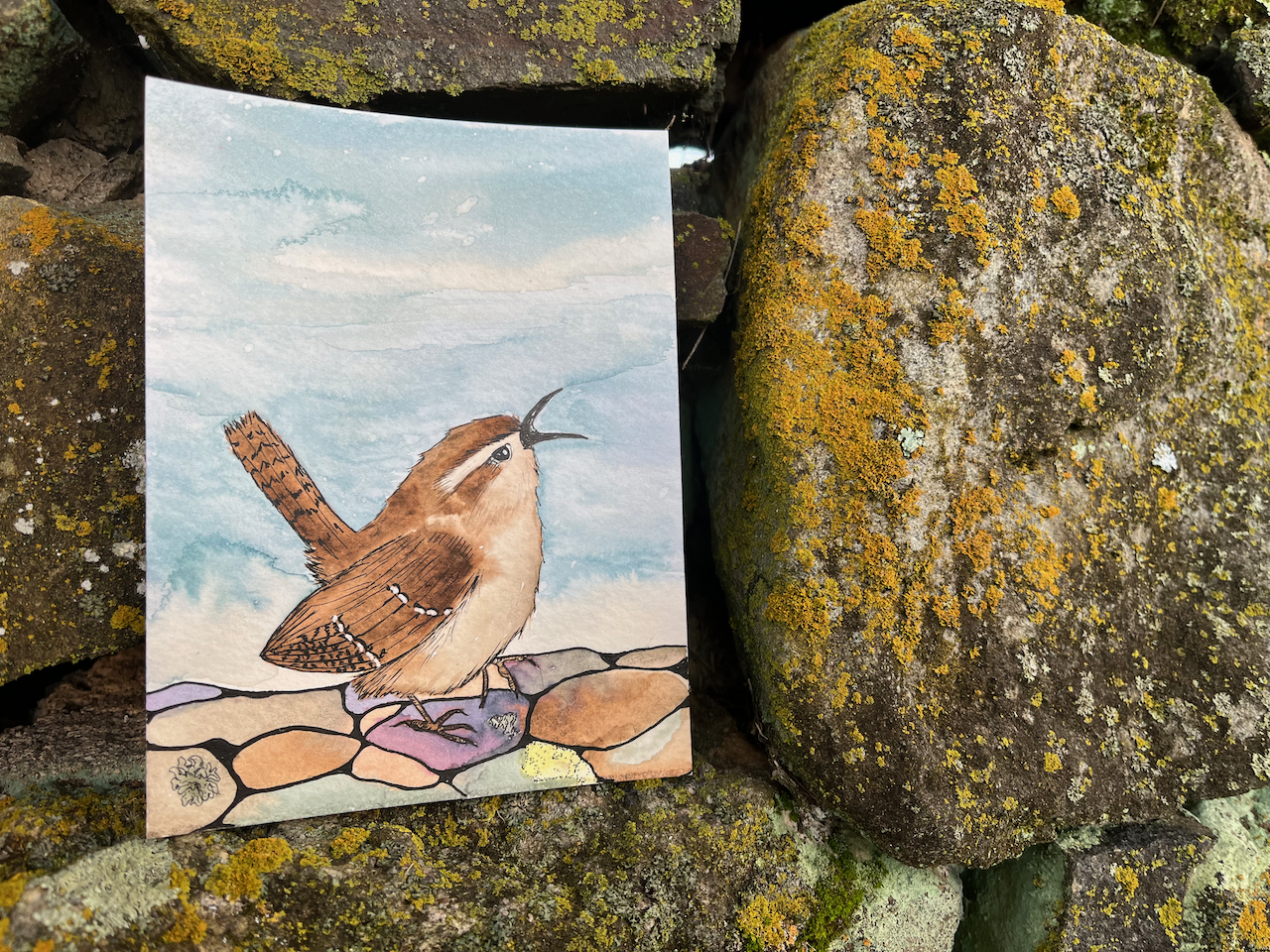
The iconic rock walls covered with lichens and mosses are familiar here, as are the familiar Carolina Wrens that belt out their tunes. Little Wren’s browns were created using Black Walnut’s Ink (the dark brown on his back), and brownish hues of Narrow-leaf plantain and yellow onion skins mixed to make his brownish belly. The rocks that are brown are various invasive plants from around here that I acquired during a workshop I attended. Polyphemus moth. Those antennae get me every time! Various shades of brown used include pink onion skins, plantain leaf and Black Walnut fruits. The mossy inspired background is a wash of orange marigold with splashes of beets, yellow onion skins and butterfly pea.
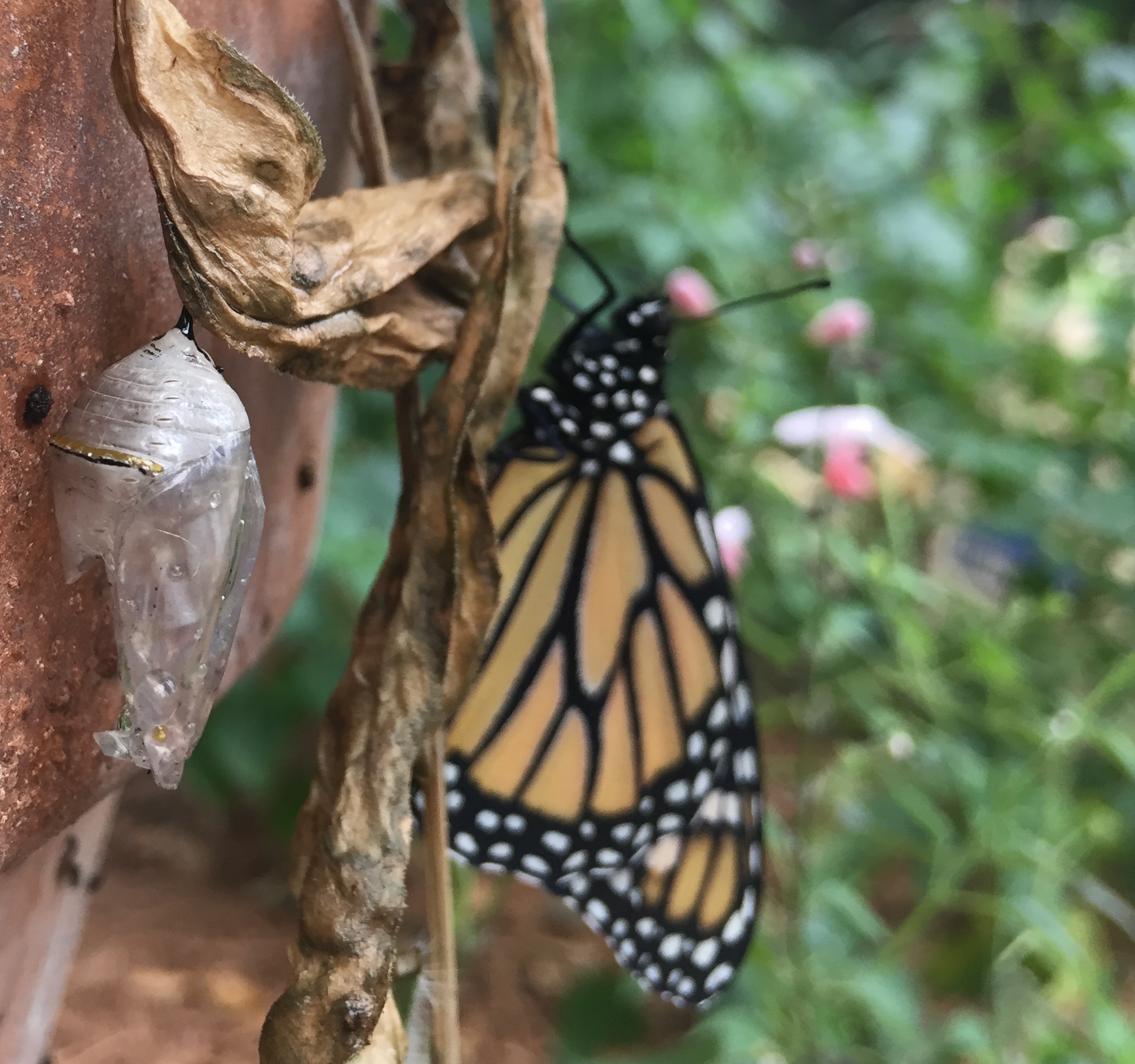
I’ve long been fascinated by the process of metamorphosis. It happens a lot in the insect world, most beautifully and visibly for us humans as the transformation of a caterpillar into a stunning butterfly.
Imagine! You fall asleep one day, forming a protective sheath around your body. Your own cells start to liquefy, digesting themselves. But then they start re-organizing, creating entirely new structures, until eventually you re-emerge. You’re an entirely new being. Something with scales instead of skin; wings instead of legs to move around the world. Everything about you is different, even though you’re still the same. That’s pretty mind blowing.
If you’ve got an extra 2 minutes and 42 seconds, watch this time lapse video of the process.
“The caterpillar is a necessary stage but becomes unsustainable once its job is done. There is no point in being angry at it, and there is no need to worry about defeating it. The task is to focus on building the butterfly…” ~Elizabet Sahtouris
I liken the transformative process of metamorphosis, to that of my cancer experience. I felt a major shift in the way I viewed and lived my life.
Our society always talks about the FIGHT against cancer. Everyone reassured me of how strong I was, that I would surely fight this and win. We had to be aggressive to beat this thing. There’s an all out WAR on cancer.
I was frustrated with the assurance of my strength and bad-assery, and the assumption of the great fight that lay ahead. It just didn’t sit right with me.
I was with my friend and healer Tia, receiving some counsel and much needed massage and other healing treatments. I mentioned this concept of a fight to her. She looked at me deeply like she does, really connecting. While I can’t remember her exact words, it was something like this:
“Well, you’re not a fighter. It’s not your nature. You are gentle, and you nurture. Perhaps you don’t fight this thing, but you work with it in your own way.”
I was reminded of a quote from a card a friend gave me long ago when I was a teenage animal activist that said, “The greatest strength is gentleness.”
That was it! I wasn’t going to fight the cancer. The cancer was after all, me. My own cells inside my own body had gone haywire. Was I going to fight myself?
When the caterpillar starts the process of becoming a butterfly, the Imaginal cells that lay dormant in the active caterpillar start to become active. Initially, the caterpillar enzymes attack the Imgainal cells. But eventually these cells organize and mobilize, creating the necessary bits and pieces for a butterfly.
“There is no point in being angry at it, and there is no need to worry about defeating it. The task is to focus on building the butterfly…”
And so it was with my cancer. I couldn’t be angry at it, or the unknown conditions that caused it. I couldn’t be angry at myself (even though I blamed myself in many ways for the diagnosis).
So I went within, and really had a conversation with myself. Not how I normally do, chatting away out loud as I fumble through my day. No, I went really inward, visualizing those growing cells, that were my own. They were a part of me, so I could connect with them. I talked to them, or myself, or whatever and said….
“Hey. Thanks for the visit. No really! You’ve woken me up and I’m definitely paying attention. I’ve made some changes and I’ve been thinking a lot. I’m really not in any position to leave this world right now. Maybe in 20, 30 or 40 years you can re-visit and take me then if you must, but certainly not now. I’ve got a lot of work ahead of me, and lot of people that need me. So I’d ask that you kindly dissolve and leave. Thank you for showing me what’s on the other side. So long and farewell…please.”
Furthermore, I envisioned all kinds of things that gently asked cancer to leave. Chemo silently dissolved the cells when infused. Healing warm rays of light dappled through trees, gently melted the cells. I asked Mother Earth and the endless universe, to absorb into her vastness some of my pain and illness. Water washed them away. I saw my mother (passed away 3 years prior) at a totally fabricated and perfect place in my mind, sitting with me and helping me heal, like she always did.
And so, all the myriad things I allowed to happen to me, and those that I chose, showed my cancer the door. Through a massive metamorphosis of my own, eyes and heart wide open, I transitioned into a different person. Perhaps not as dramatically as a caterpillar accomplishes, but damn near felt like I had wings and a new lease on life.
(Pro- tip: these tools of visualization were cultivated by reading the book, Creative Visualization by Shakti Gawain. I would recommend this for anyone, not just those experiencing a difficult time.)
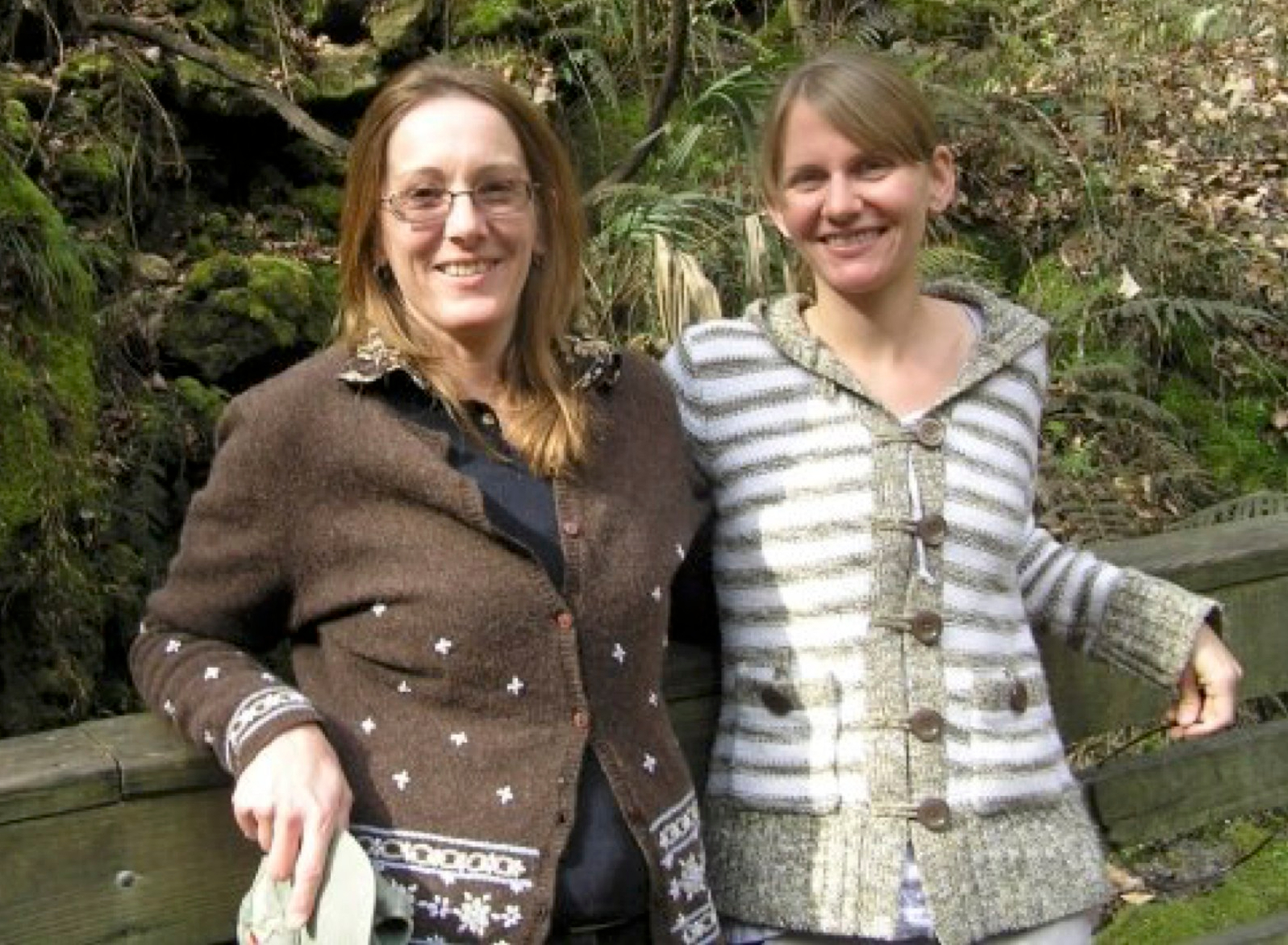
My sweet mother and I at Devils’ Millhopper. I longed for her through my cancer ordeal, but also was glad she didn’t have to bear the weight of the situation.






 seedsandstories.blog