Journal in Place with me and Janisse Ray!

I’m excited to share that I’ll be participating in an upcoming online writing course with Janisse Ray, an award-winning Southern author whose writing is deeply rooted in the land and in the rhythms of her daily life.

Janisse believes in the power of stories—to change the world, to help address the climate crisis, and to create a more just society. Notably, she was a major inspiration for me early in my career around seeds and seed saving, after I read The Seed Underground: A Growing Revolution to Save Food. Her work helped shape how I think about stewardship, nature, and attention to place.

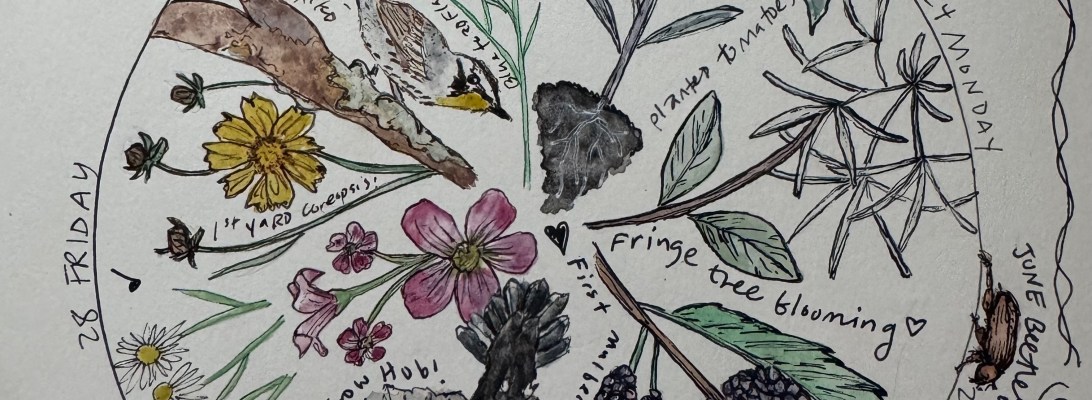
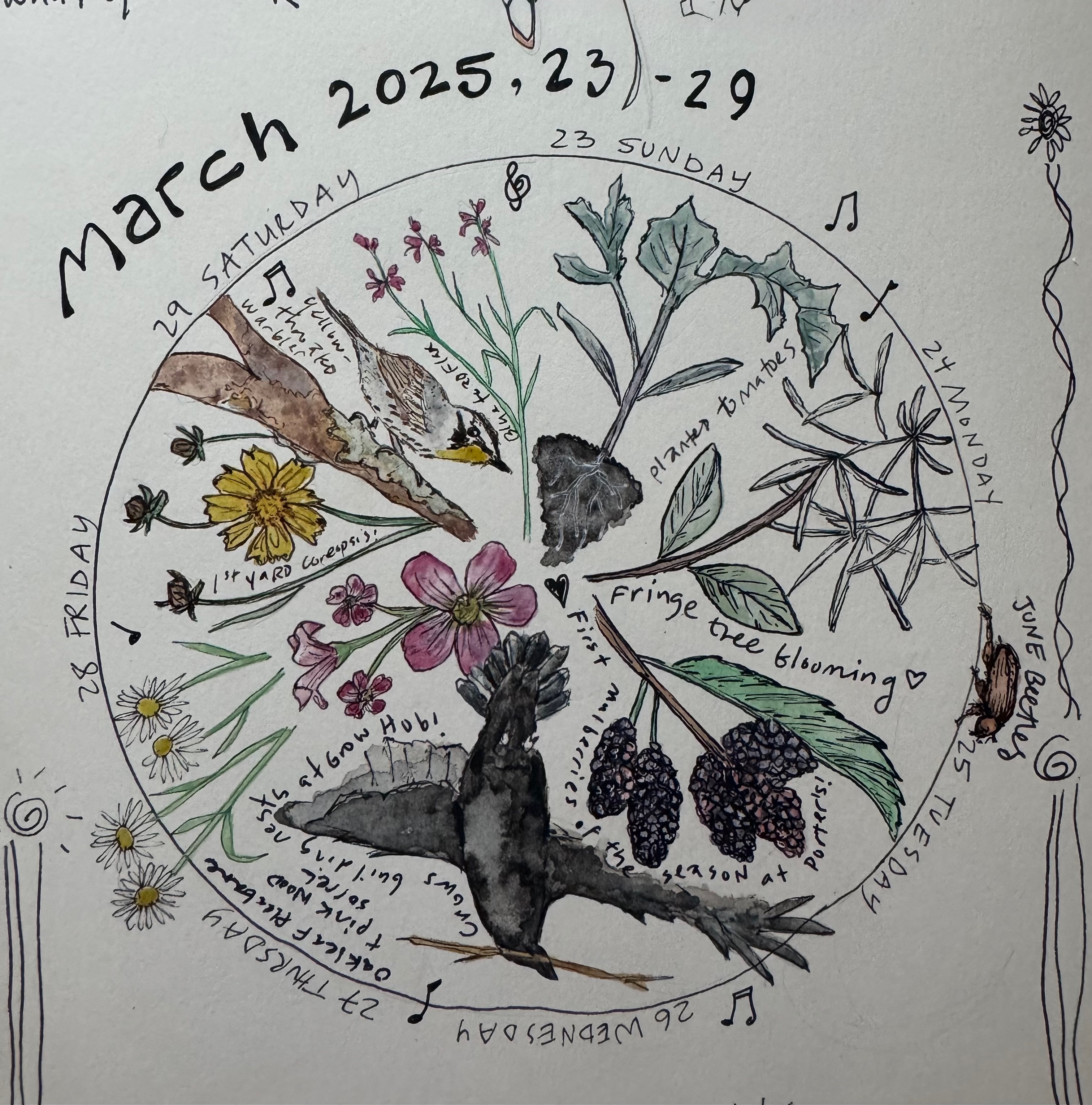
I took a previous online offering with Janisse, and it inspired me to begin creating phenology wheels. For me, they’ve become a perfect way to gather and reflect on my observations—what’s happening, when it’s happening and how it’s all woven together, what I see both in the natural world and in my garden. They give me space to practice sketching and painting skills, while sharpening my ability to notice patterns and seasonal change.

This is just one of many creative practices that will be shared in the course. I’ll be joining 10 other creatives, each offering ideas to support your own journaling practice, including:

  • nature observation and writing
  • simple art exercises
  • shapes, borders, corners, spirals, dividers, banners, and other page designs
  • weather, mapping, perspective
  • what place means to us
    …and so much more.

Registration is by donation, so you can pay what you’re able and what the experience feels worth to you.

The Winter 2026 series focuses on Place—our complicated, ancestral, and modern relationships with the places that matter to us.


The course meets 7 Sundays in a row, from January 11 through February 22, 2026, on Zoom from 5–6 pm Eastern.

Here’s the link to register.

worm theory

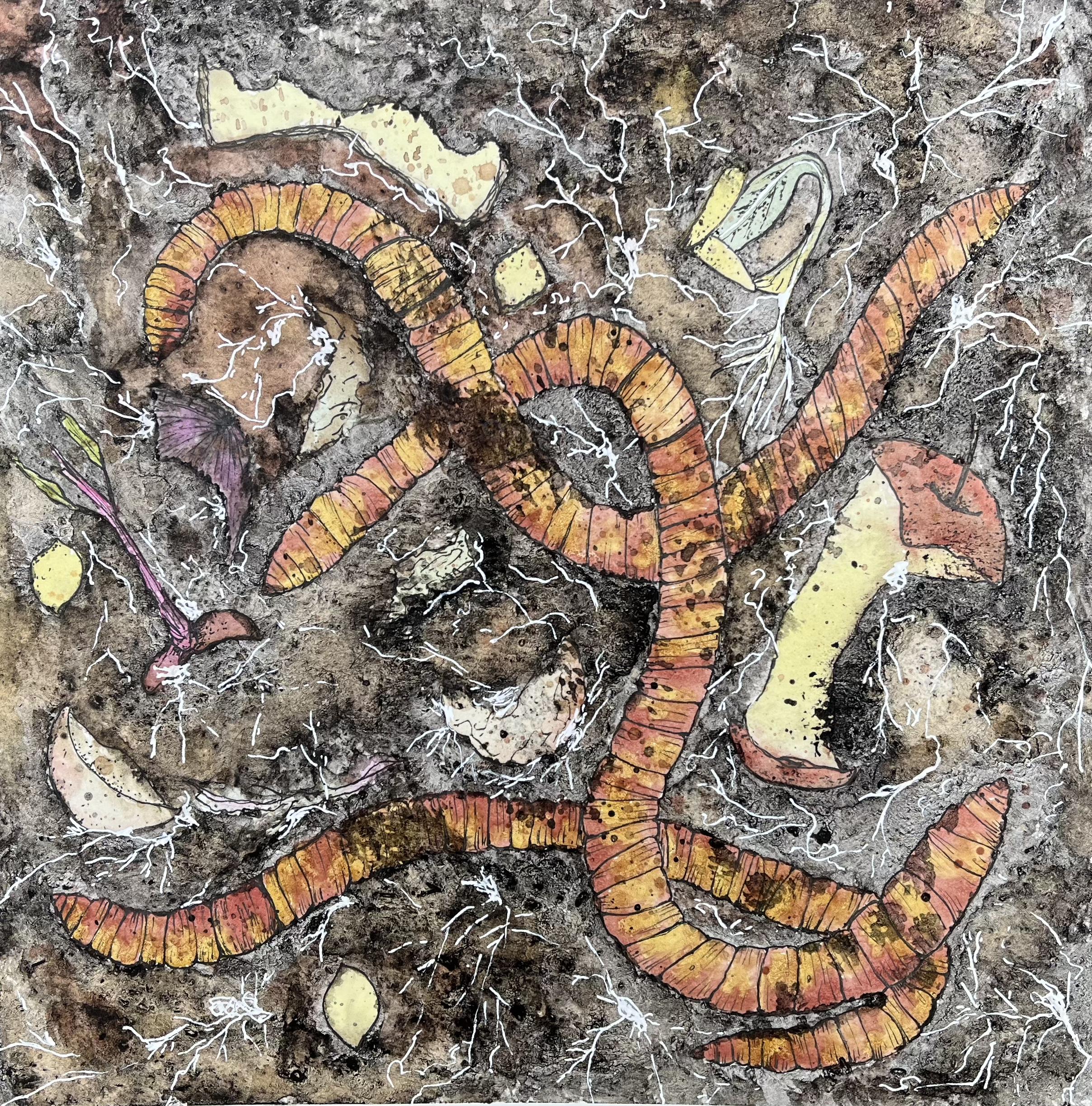
My friend Jesse shared this poem with me and I just absolutely love it! Since reading it, I’ve been daydreaming about painting worms, compost magic, mycelium, decay and renewal soaked in ecstasy of simple but vital things – in a world often unseen or appreciated by most of us.

Feeding the Worms
by Danusha Laméris

Ever since I found out that earth worms have taste buds
all over the delicate pink strings of their bodies,
I pause dropping apple peels into the compost bin, imagine
the dark, writhing ecstasy, the sweetness of apples
permeating their pores. I offer beets and parsley,
avocado, and melon, the feathery tops of carrots.

I’d always thought theirs a menial life, eyeless and hidden,
almost vulgar—though now, it seems, they bear a pleasure
so sublime, so decadent, I want to contribute however I can,
forgetting, a moment, my place on the menu.

I have great fondness for worms and their role in creating living soils, and inspiring curiosity and connection. Having worked with children in gardens over many years, I’ve developed the Worm Theory. I believe these creatures can be a gateway to opening up curiosity and compassion for all other creatures. Worms are typically slow moving, and their lack of legs, inability to sting or bite, fly or crawl up your sleeve or into your face, means they can be held in peace and safety for close observation, as they tickle your hands, trying to move back into darkness. This acceptance of creatures so different from ourselves, opens up the mind and heart to others- that don’t feel as safe and easy. Next, they’ll be looking at rolly-pollies, roaches, other beings that freak out adults (pointing at myself here, I still squeal and recoil at the sight of a roach). I’ve seen kids name the worms, caress them, and even hold worm funerals, mourning the loss of a friend.

Worm Theory suggest that their gentle nature, facilitates connections to other worlds and lives not our own. Worms allow us to overcome the ick factor that may either be innate or learned, or a mix of both.

It turns out, they are fascinating creatures too, with much to learn about! Our youth program at Working Food would be a lot less fun without worms! Often, a simple worm activity ends up taking up an entire session and we just scrap the rest of our best laid plans, to go with the worm flow. Here are just a few things I know:

  • They are hermaphrodites.
  • They consume bacteria and fungi that decompose organic materials (i.e. they don’t actually eat the apple core you toss into the compost bin, they eat the microbes that eat the apple).
  • Their poop (aka worm castings) is black gold, a probiotic bliss for plant life.
  • They are an important source of food to so many other animals.
  • They have the ability to sense the world over the surface of their bodies; their permeable, moist skin is covered in chemoreceptors and they breath, taste, and sense light and vibrations over their body surface.

Worms painted with senna and avocado. Black soil is cabbage palm charcoal mixed in with splotches of black walnut, avocado and plantain. Various decomposing items painted with marigold, avocado, beets, cochineal. White mycelium added with a gel pen.

reciprocity as told by asters & goldenrods

Part 5 of a series of posts about my artist in residency experience at Oak Spring Garden Foundation.

I’m back home and adjusting to normal life after such a luxuriously long time of freedom and quiet for creativity, flow, rest and reflection. Fortunately, I’ve made time to keep some of the flow and inspiration going.

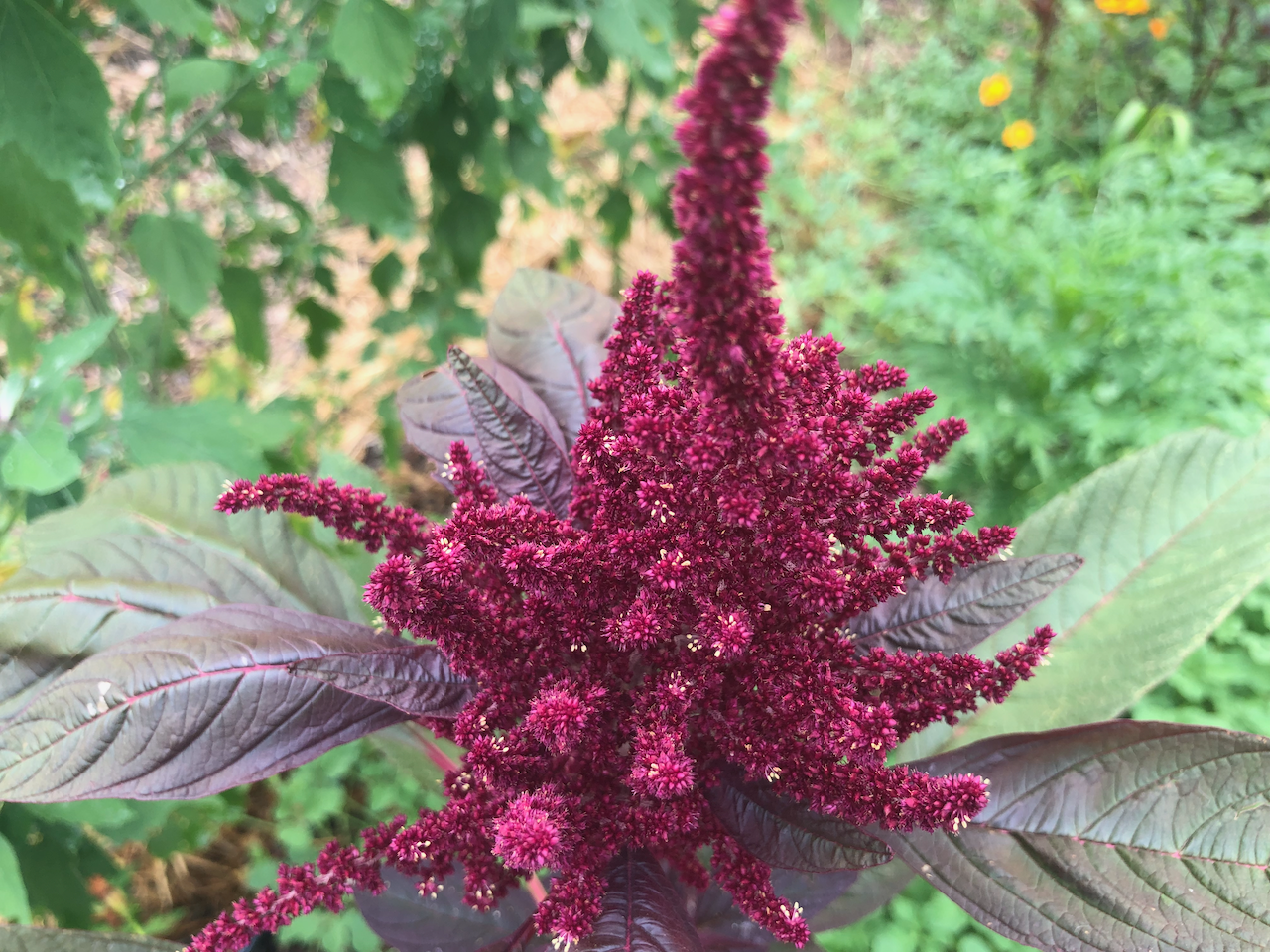
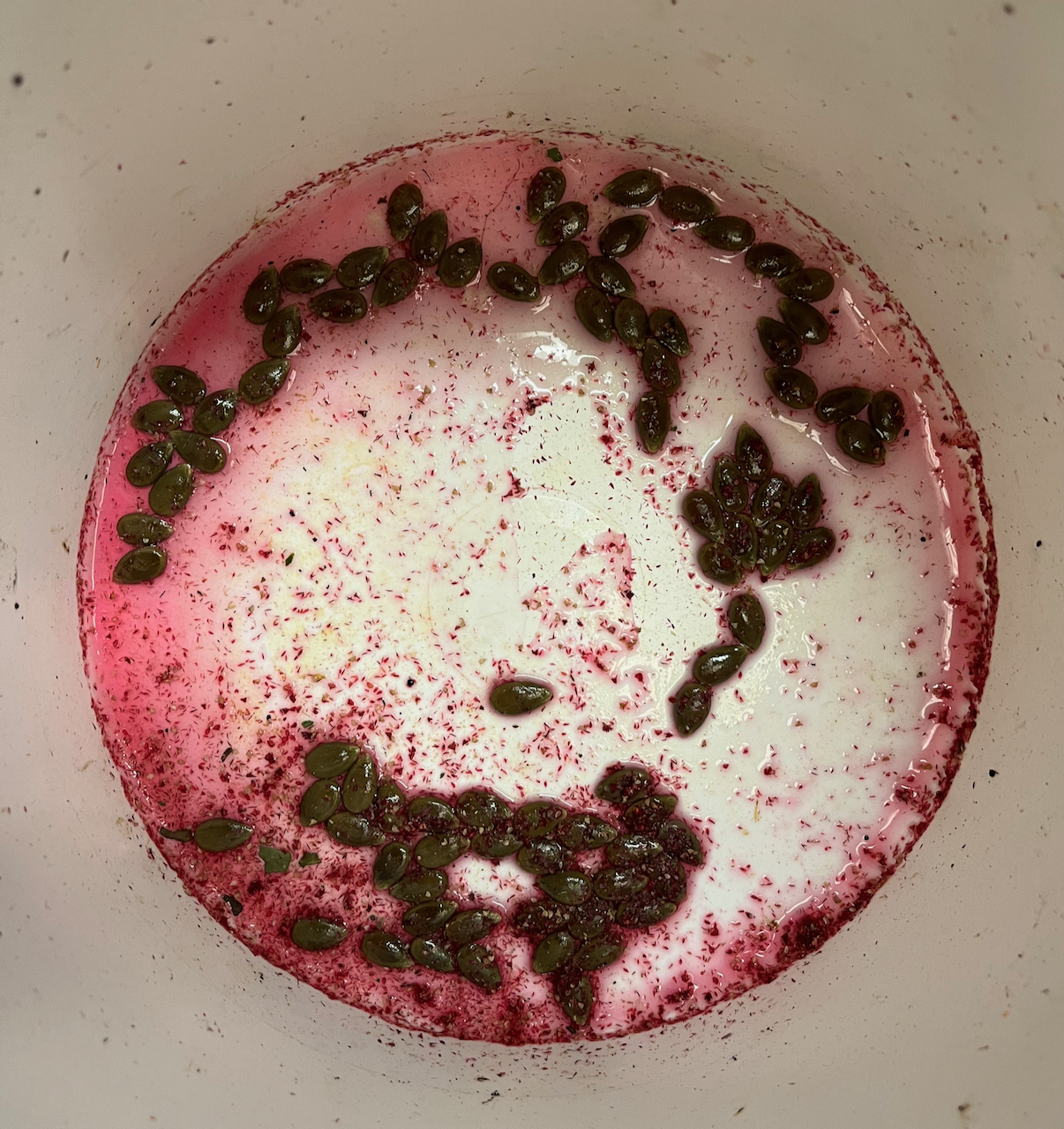
My first day back to work, I was cleaning up some Hopi Red Dye Amaranth seeds. I wanted a gentle and enjoyable re-entry to work, and seed cleaning is one of my favorite things to do. So I was glad when Sarah said that’s what she needed us to do. An accidental blowing of the lightweight chaff into a nearby bucket with some wet seeds, seemed to be a sign when I peeked inside: make some plant paint! 

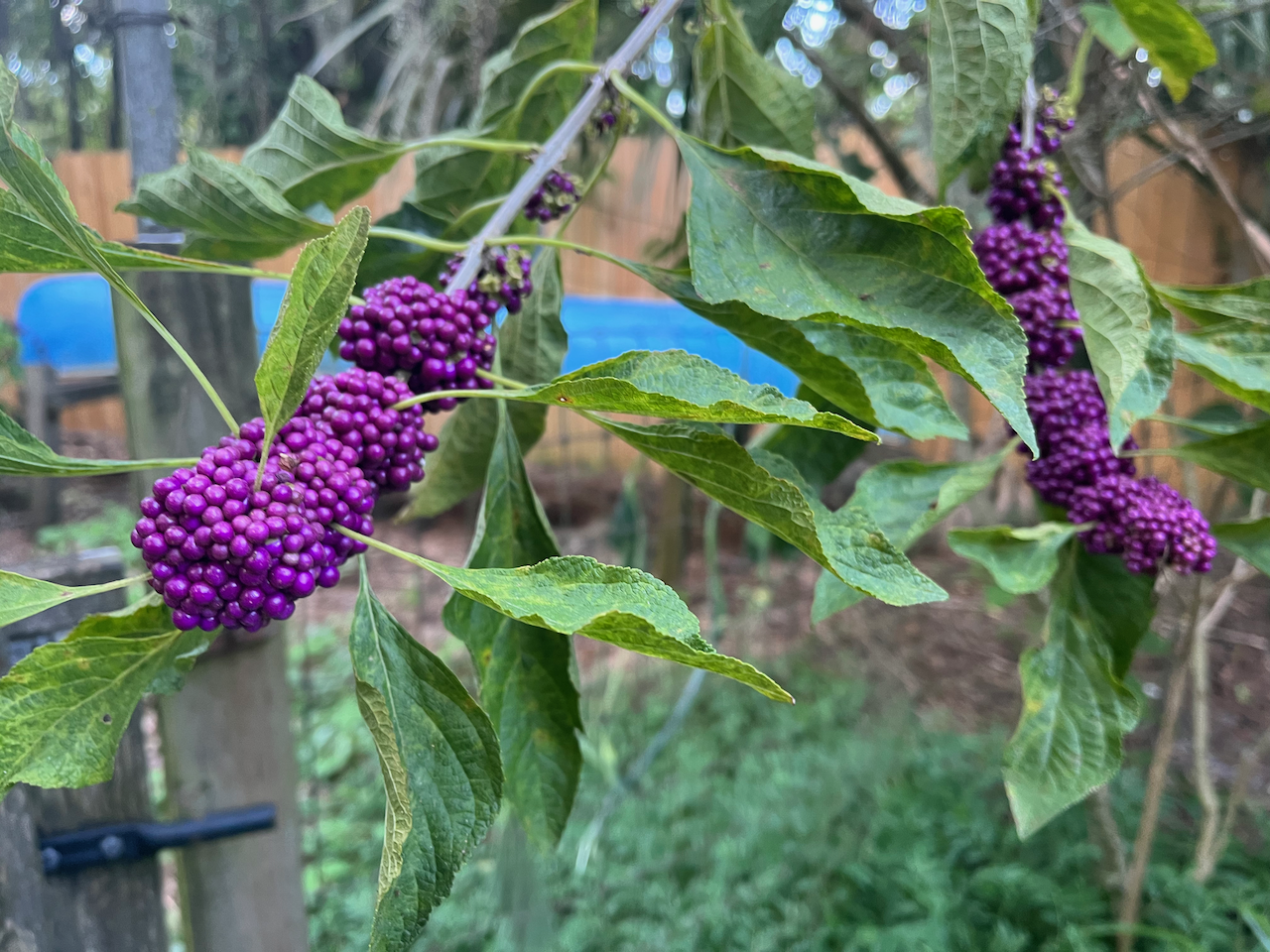
I collected all the chaff and played with it this weekend. I also made some paints from turmeric powder I’ve had on hand for a couple of years and played with some moringa and beauty berries a few different ways. They were all abundant and practically calling for me to  play with them from the backyard, just as the amaranth chaff was.

The birds and I couldn’t be happier about the plump beauty berries!

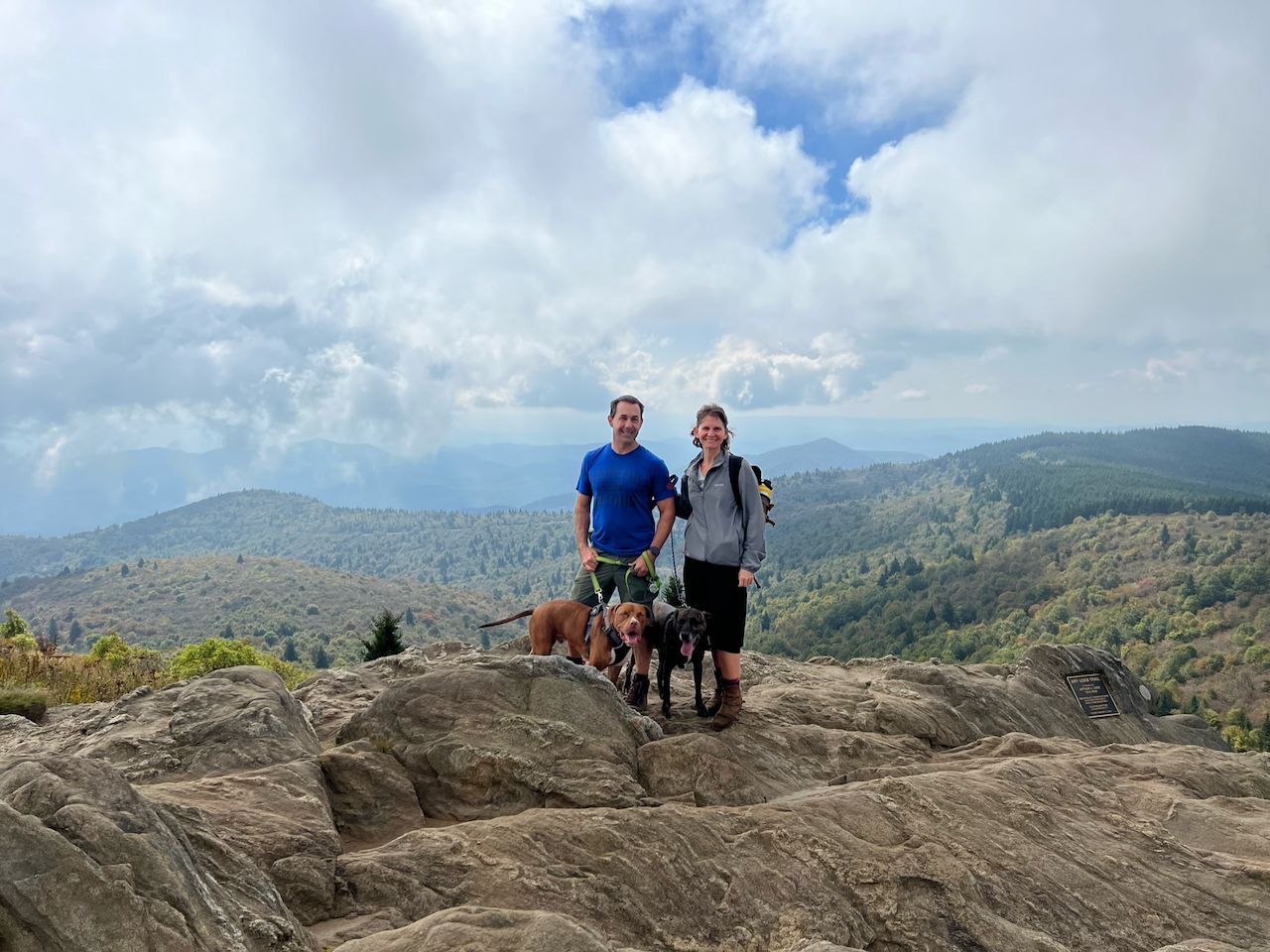
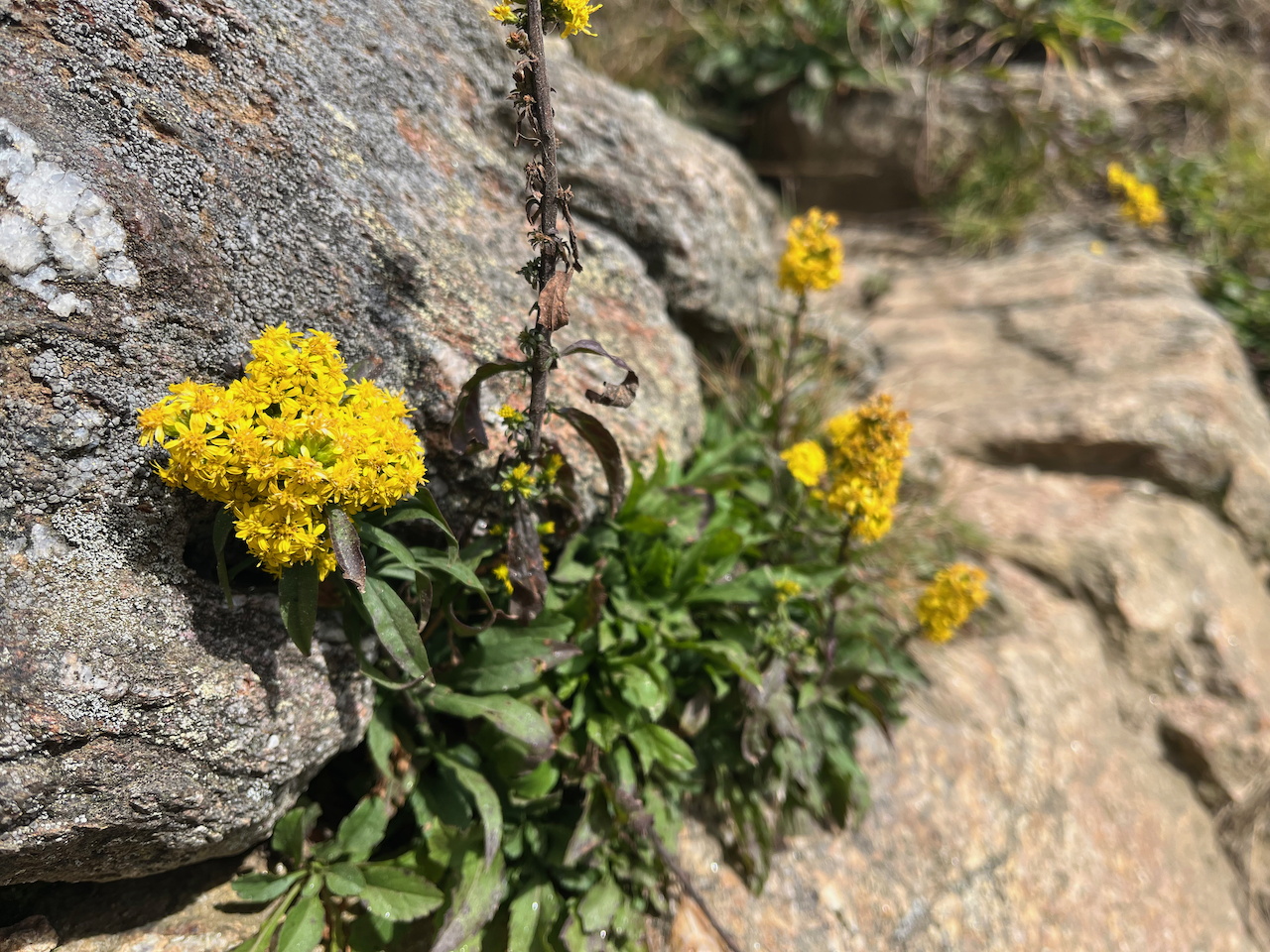
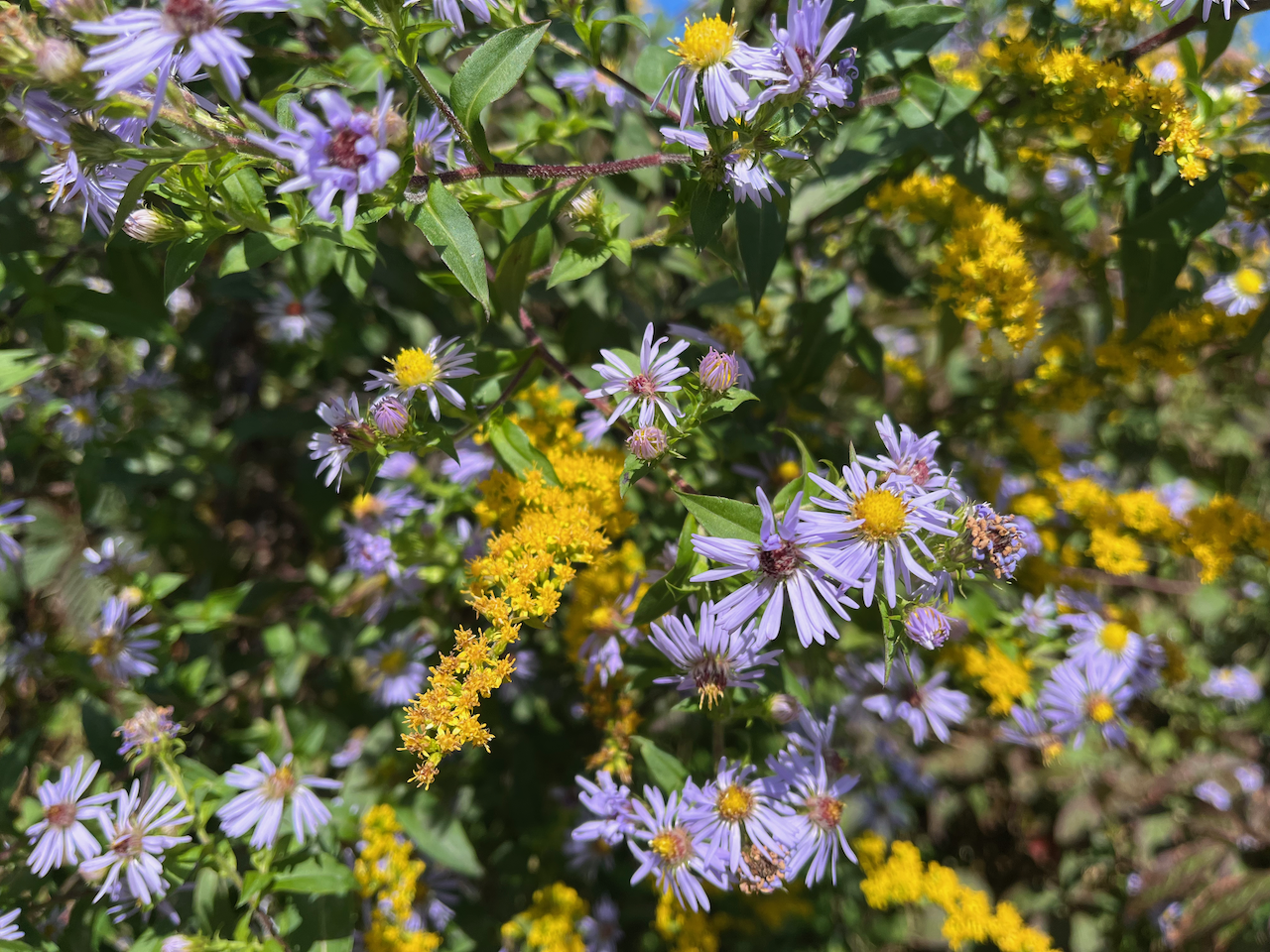
I was thinking a lot about the beautiful hikes Mike, Huxley, Okra and I did as we wound our way slowly south, stopping at Shenandoah and then Pisgah National Parks. From the mountains of Virginia to the coastal plains of Florida, goldenrod a was in full bloom! In the mountains, purple asters were also gloriously in full bloom, and were especially stunning when mingling with the goldenrods. 

Art Loeb trail head in Pisgah National Forest was loaded with asters and goldenrods, and amazing views.
Tough as nails growing on a rock face in the mountains. Pretty alone, but stunning together, below!

They reminded me of a chapter from Robin Wall Kimmerer’s book, Braiding Sweetgrass. An entire chapter is devoted to this stunning pair that often bloom together with showy fields of purples and yellows. It’s hard not to fall in love, and be drawn in. Robin wonders and marvels as have I, why they look so beautiful together? 

Basic color wheel theory has them at opposite sides – complementary or reciprocal colors. Putting them together makes each more vivid. Just a touch of one will bring out the other. 

Fun fact: although bee eyes perceive flowers much differently than human eyes, it turns out this reciprocal color display appears similar to us both! I’ve always wished I could have bee vision in a garden or field of flowers, and this might be the closest I get! Interestingly, when these two plants grow together, they both receive more pollinator visits than they do when growing alone. 

Better together, right?!

The pairing is lived reciprocity; wisdom that the beauty of one is illuminated by the radiance of the other. Reciprocity is a major theme throughout this book and one that I think, if we could all embrace and act upon, would give us a much kinder world. I’ve thought a lot about this word and what it means since reading this book.

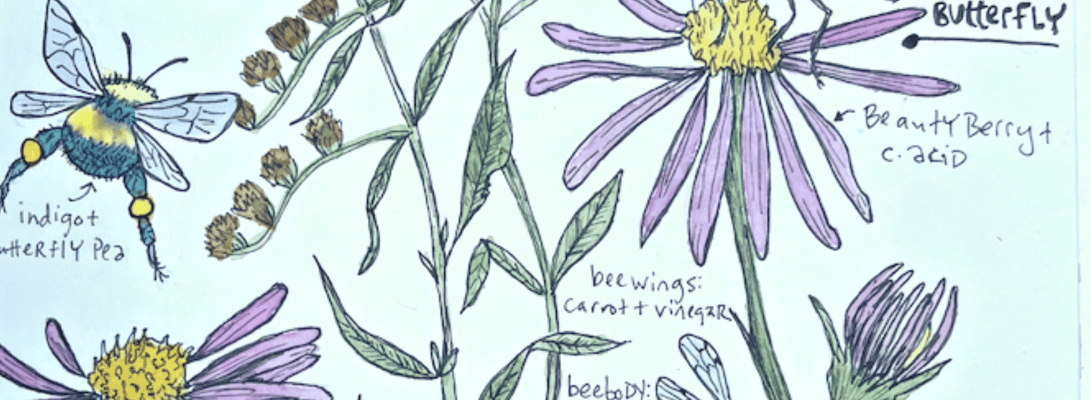
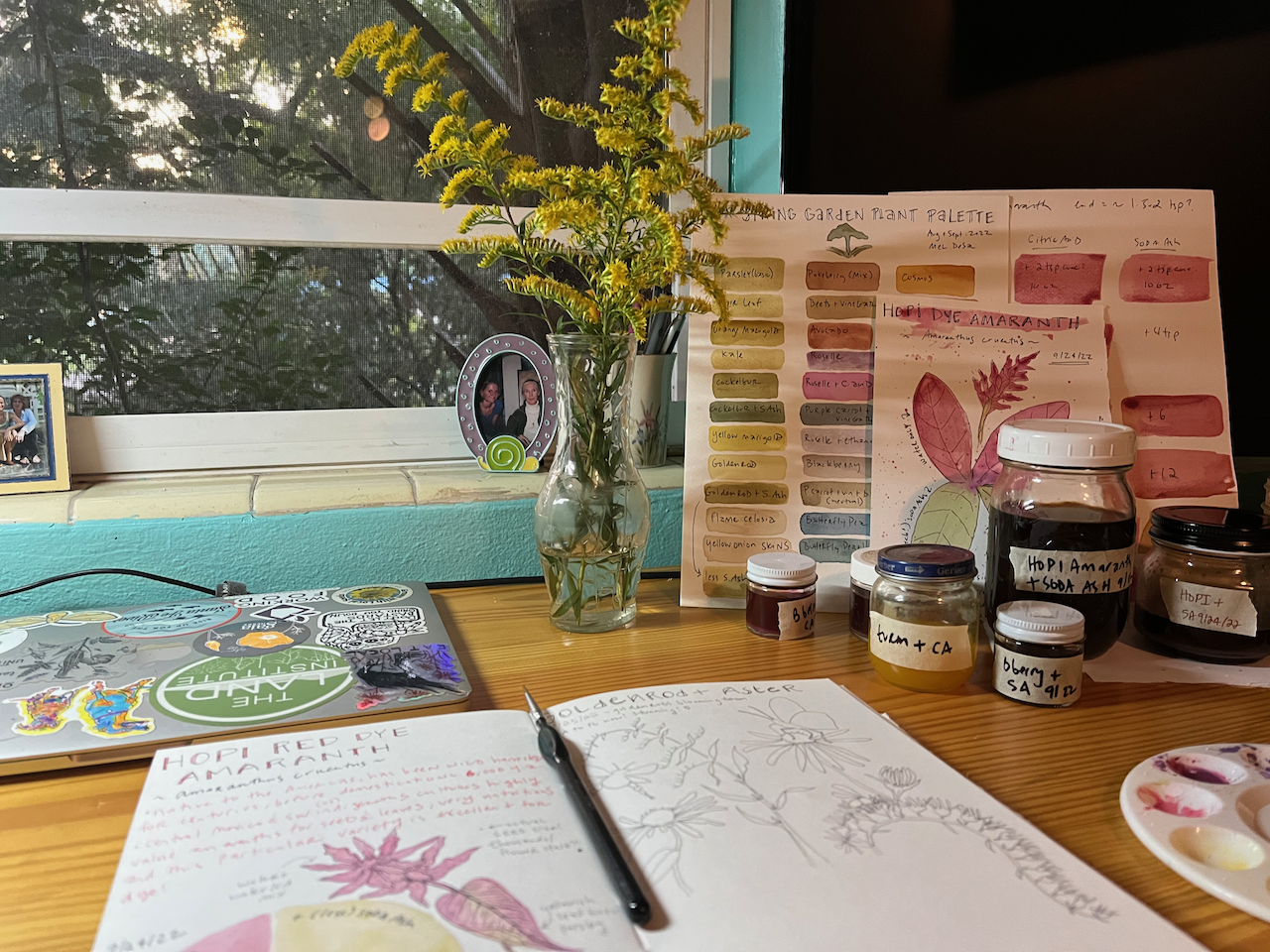
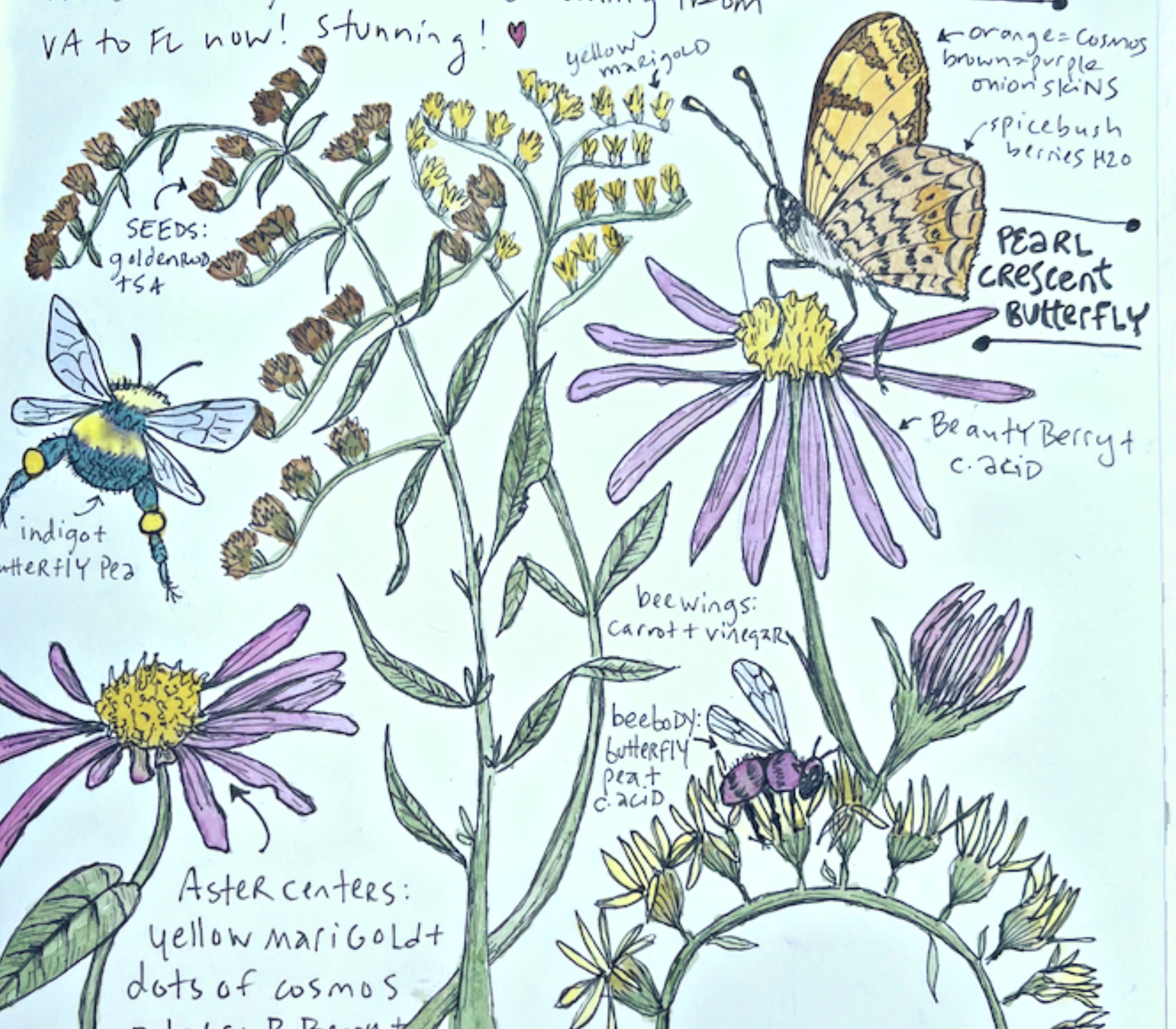
Back to the Florida yard- the beauty berries were fun and one way of preparing them led to a lovely purple hue – ASTERS! That might not seem surprising, but just on their own simmered in water created more of a grayish purple when dried. But a touch of citric acid turned it into a vibrant pink, that dried purple on the paper. I left plenty for the birds, just taking a couple big handfuls to experiment with. I had some decent yellow options already, plus some new turmeric hues-  GOLDENROD + ASTER CENTERS!

So I had the palette, and it was go time!

Set back up at home, re-creating Oak Spring Garden vibes with my plant palette, sketchbook, and goldenrod for inspiration!

I agreed with myself on Friday, that me and my creative bee would get some time to buzz and play this weekend, despite the somewhat long and pressing list of things to do and catch up on this coming week. Oh, and the hurricane we have been watching that might come visit us this coming week was also on my mind. But worrying less and creating more seemed like the better option.

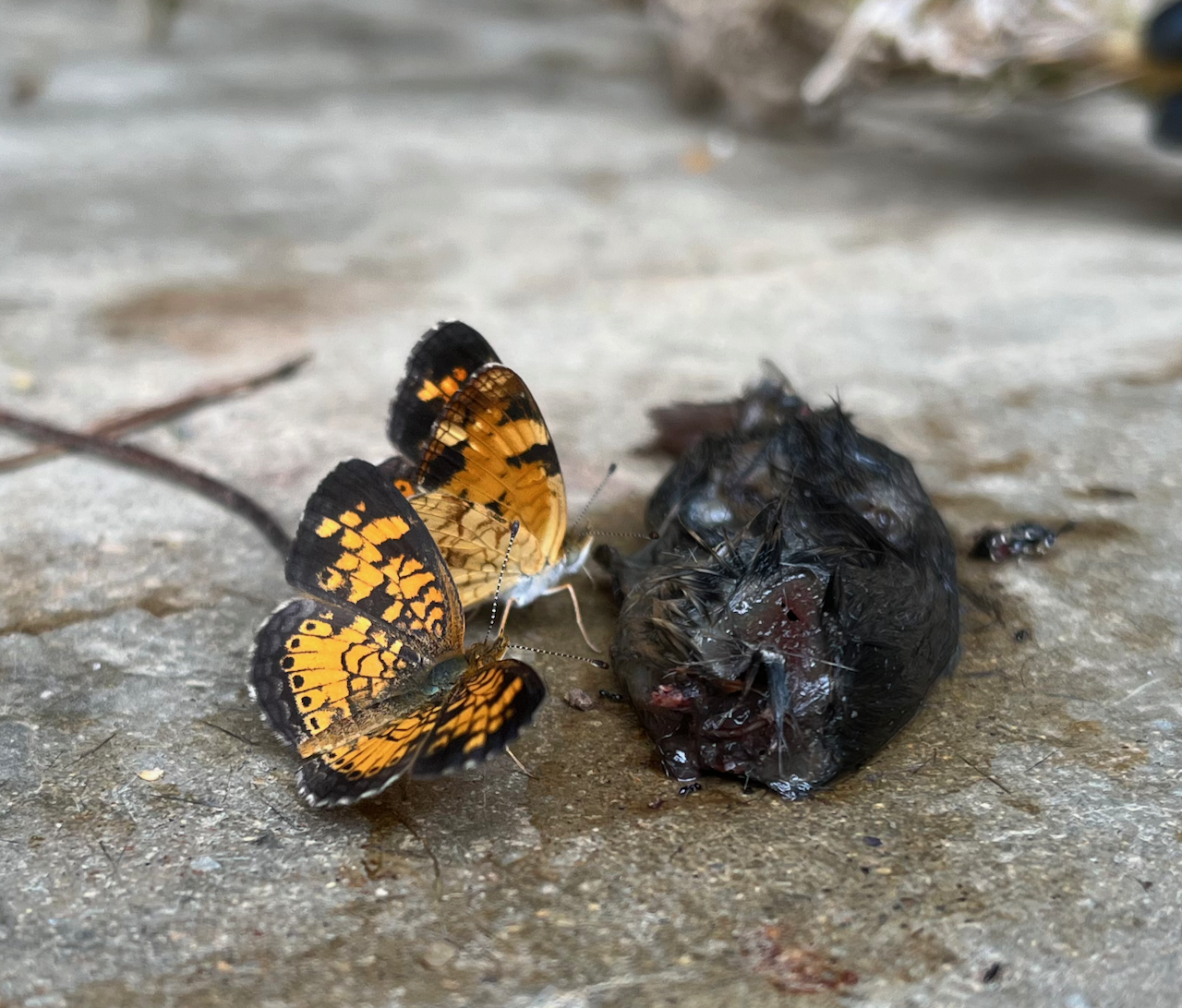
I included a Pearl Crescent Butterfly here among the pollinators. I first really noticed these small butterflies at Oak Spring Gardens in a way that some might find surprising for butterflies: swarming over a stinking mouse carcass. Many butterflies, even if they are pollinators, find value on carcasses and poop because of the salts and minerals they can’t get from a plant’s sugar water. I’d noticed them as well as some swallowtail and buckeye butterflies also enjoying some poop on the road. Nature doesn’t waste any waste! Is this reciprocity? I don’t know, but it’s neat!

Pearl Crescent butterflies finding sustenance on a decaying mouse. Funny story. I was calling into our monthly staff meeting when I noticed this scene as I was wandering, listening, and chiming in now and again. I guess I wasn’t muted because Sarah later said (when I sent her this picture), “is that what you gasped about during the meeting?” Oh she knows me so well! I didn’t know I gasped, but wouldn’t you if you saw this with your own eyes?

Nature never ceases to amaze me, and find me deep in wonder and curiosity; hunched over, on my knees, gazing up, or zooming in for a closer look at what most people pass by. A classic Mary Oliver poem that is pasted to the front inside cover of my sketchbook reflects this wonder in the small things so well.

The Summer Day

by Mary Oliver

Who made the world?
Who made the swan, and the black bear?
Who made the grasshopper?
This grasshopper, I mean —
the one who has flung herself out of the grass,
the one who is eating sugar out of my hand
who is moving her jaws back and forth instead of up and down —
who is gazing around with her enormous and complicated eyes.
Now she lifts her pale forearms and thoroughly washes her face.
Now she snaps her wings open, and floats away.
I don’t know exactly what a prayer is.
I do know how to pay attention, how to fall down
into the grass, how to kneel down in the grass,
how to be idle and blessed, how to stroll through the fields,
which is what I have been doing all day.
Tell me, what else should I have done?
Doesn’t everything die at last, and too soon?
Tell me, what is it you plan to do
with your one wild and precious life?

eventually we all turn brown

Part 4 of a series of posts about my artist in residency experience at Oak Spring Garden Foundation.

In my ongoing experimentation with creating paints from plants on site, I have learned what most people dabbling in or perfecting this art have as well: lots of things turn brown! It makes a whole lot of sense if you stop for a second and think about it. All living beings will eventually return to the soil and turn some shade of brown. Dying plants, seed pods, fallen leaves, decaying bones and flesh….

So macerating petals and simmering leaves with the hopes to preserve vibrant hues is not in line with nature just doing her thing. The trick is figuring out if it’s possible to capture the pigments and preserve them before they turn brownish. Some will oblige, others will not. For those that will not, the fleeting glimpse of their living pigments on paper is only meant to be enjoyed for a short period of time. Or perhaps best enjoyed on the living plant.

What’s our obsession with preserving things in perpetuity anyway? Avoiding change or worse – death! Why do we allow ridiculous things like embalming bodies in formaldehyde so they don’t rot and turn brown? I wrote about death awhile ago. It’s all around us, all of the time but our culture prefers to ignore it, and be afraid of it. You and me, and everyone we love are going to die one day and turn brown (if we go the natural way of things and avoid formaldehyde and cremation). I’m not being morbid, or pessimistic, or dark. Quite the contrary! Accepting that we are not here forever, allows us to fully embrace and love the hek out of this ephemeral life! This colorful, beautiful, ephemeral life. 

Trust me. As a cancer survivor, every precious day is more vibrant because of death.

In my early disappointment at watching vibrant green or yellows turn brown, I looked around me and realized – it’s just fine! Plenty of pretty beings living or dead are some shade, or many shades of brown. The Polyphemus moth, and actually most moths and many butterflies, rabbits, coyotes, milkweed and thistle seed pods, spiders a plenty, lots of birds fully brown or with brown bellies or throats, falling leaves, grasses going to seed…. So I embraced the browns and the shades of them I was getting. 

Anyhow, back to plant pigments! 

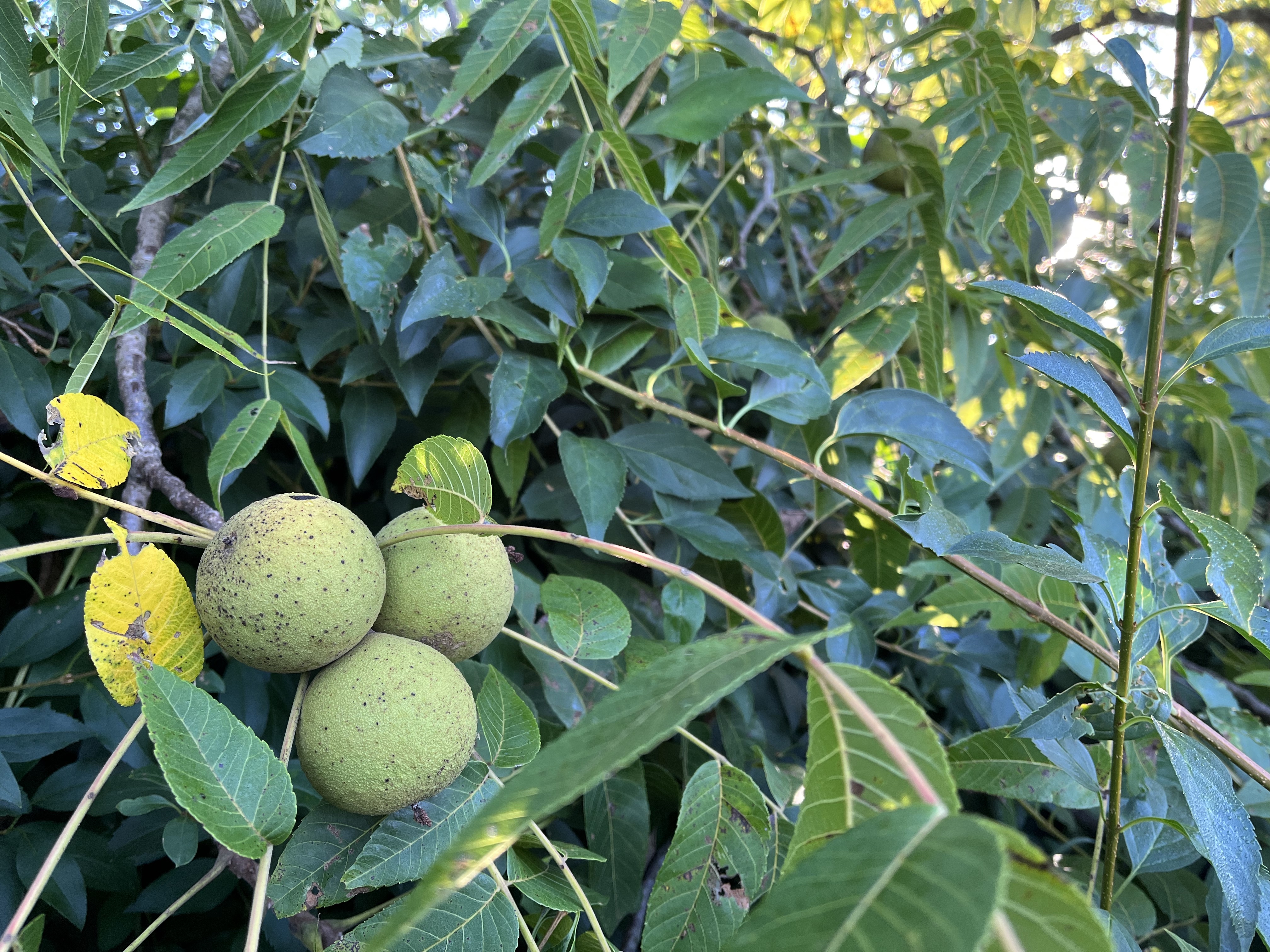
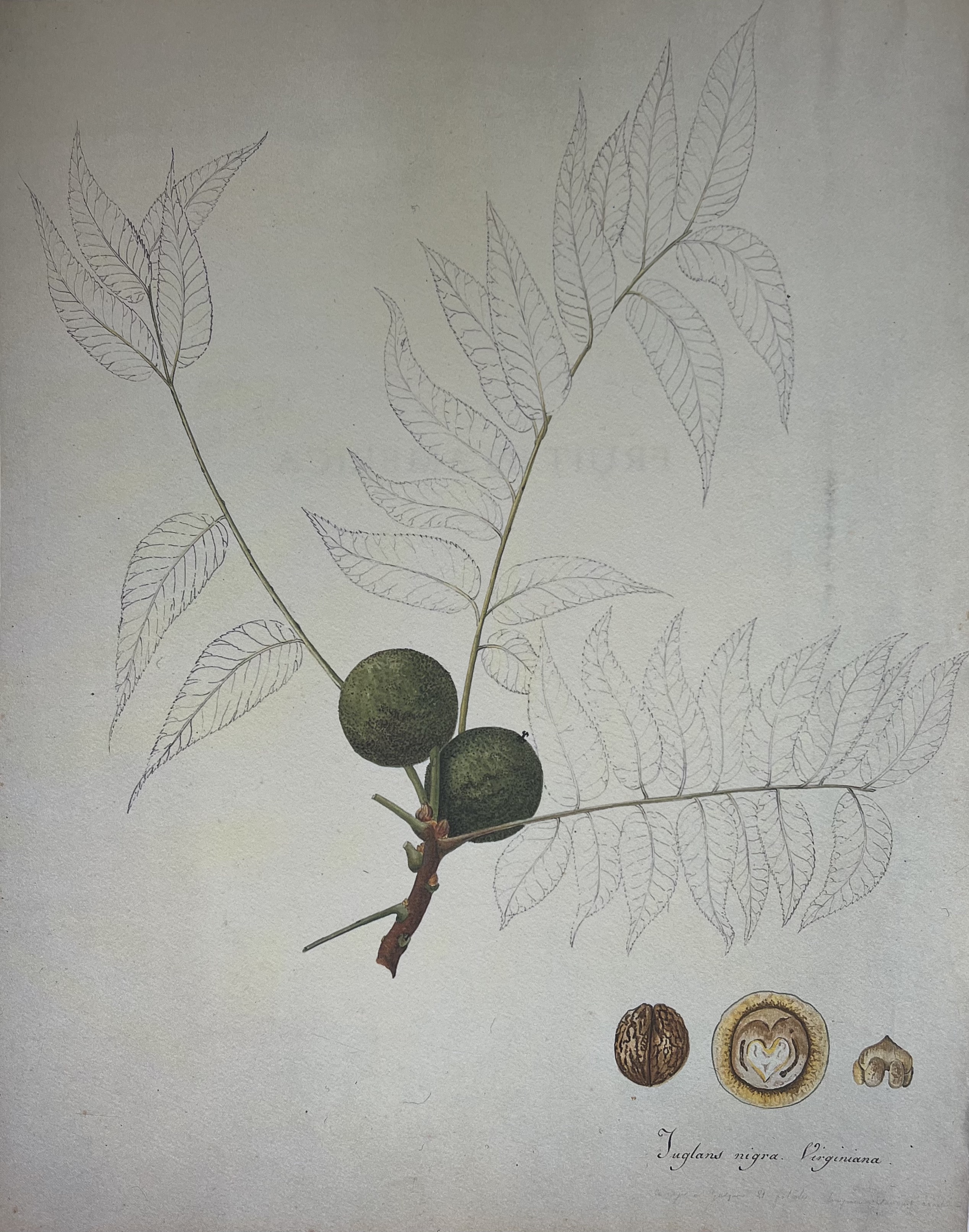
One that particularly made me happy was the Eastern Black Walnut. A common complaint is that the fallen fruits stain things when they drop. PAINT! In the same way I always spot SEEDS! whenever I’m out and about, I am now looking and wondering….PAINT?! One of our cohort mates here Jackie, a botanist from the Dominican Republic, found a Black Walnut tree here and brought me some of the fruits to play with. 

The Eastern Black Walnut is a native tree to the Eastern US, and considered a “pioneer” species meaning they are one of the first trees to establish in disturbed areas like along roadsides, in fields, and forest edges; places that are more open. They don’t thrive in forests with other trees and lots of shade. They must spread out in full sun to live their best life. They secrete a chemical into the soil called juglone which repels some species of plants. A partial list includes includes tomatoes, potatoes, peas, peppers, cabbage, alfalfa, serviceberry, chestnut, pine, arborvitae, apples, blueberry, blackberry, cherry, azalea, rhododendron, lilac, hydrangea, privet, and members of the heath family. But not all plants are poisoned by juglone, some will thrive and others can tolerate it. 

The tree is lovely in her own right, but of course as humans we need to know the uses for living beings to understand them or find value. So, it turns out that walnut trees makes fantastic lumber, the staining fruits are used to make dyes and inks, the nuts are edible for many wildlife and of course humans too, and the abrasive shells have many industrial uses for blasting, sanding and filtering things. 

The process of making paint from the Black Walnut fruits was simple. What I loved most is that it required nothing but time, water, and heat to prepare. 

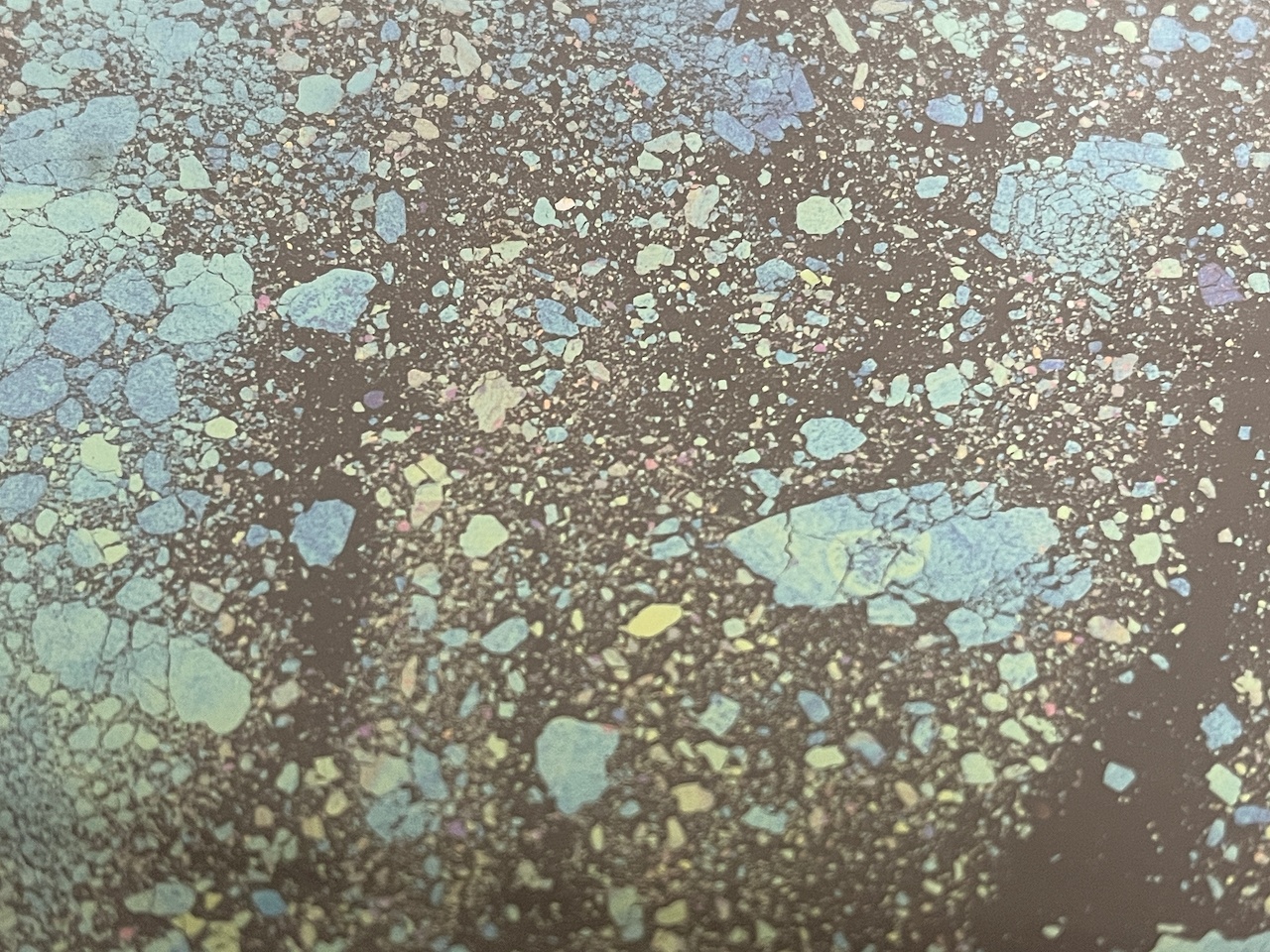
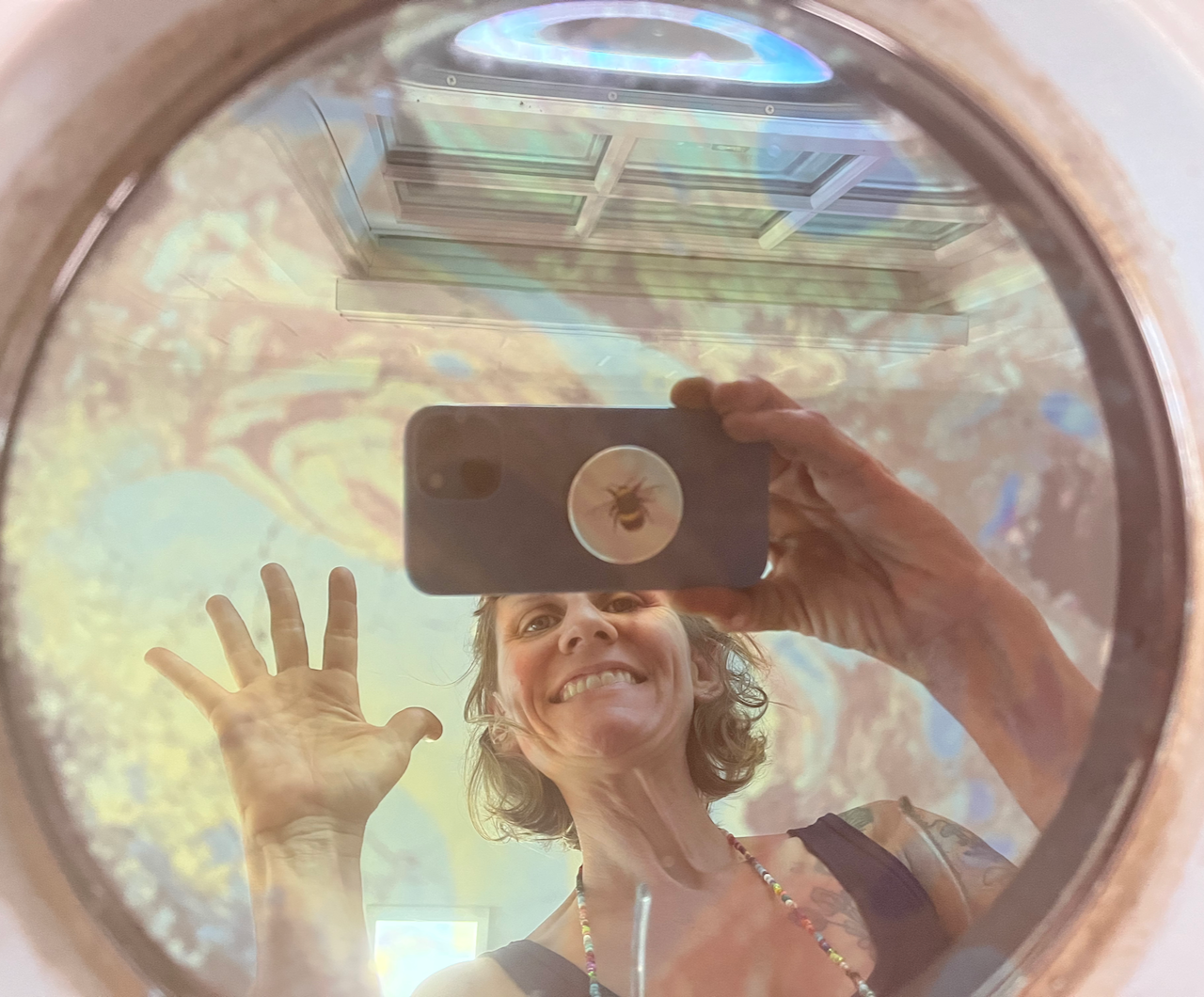
I cracked the fruits with a hammer against a hard floor, to remove the skin from the seed and shell. I broke the skin into as many pieces as possible and covered them with water. I did not wear gloves, but kind of wish I had. My hands were stained brown, fading to yellowish tan for many days. I don’t really care, but it was pretty obvious and perhaps something to consider next time! They soaked for 48 hours out in the sun while I was tinkering with other things in my studio. The water turned a lovely deep, iridescent mix of yellowish-greenish-brownish hues as the oils, pigments and tannins leached out. Then I strained out the chunks and gently simmered the solution for about 1 hour on the stove. I let it settle and tried to take a photo of the lovely design on the surface of the inky water, but only got my reflection! 

That’s it! Next up for all my paints, I will be adding a solution made of gum arabic, honey, thyme oil and glycerin that all together help bind the pigments to the paper, prevent decay, and slow the drying time of the paint. I’ll share my “recipes” later on once I’ve fiddled and had a chance to compile all my notes and color charts. 

Here are just a couple of lovely brown creatures I created. They are all using only paints I’ve made here from local plants! 

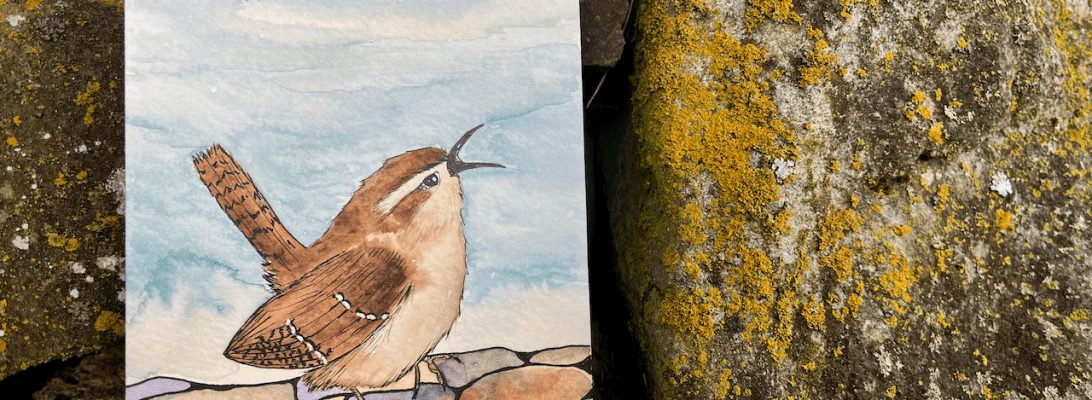
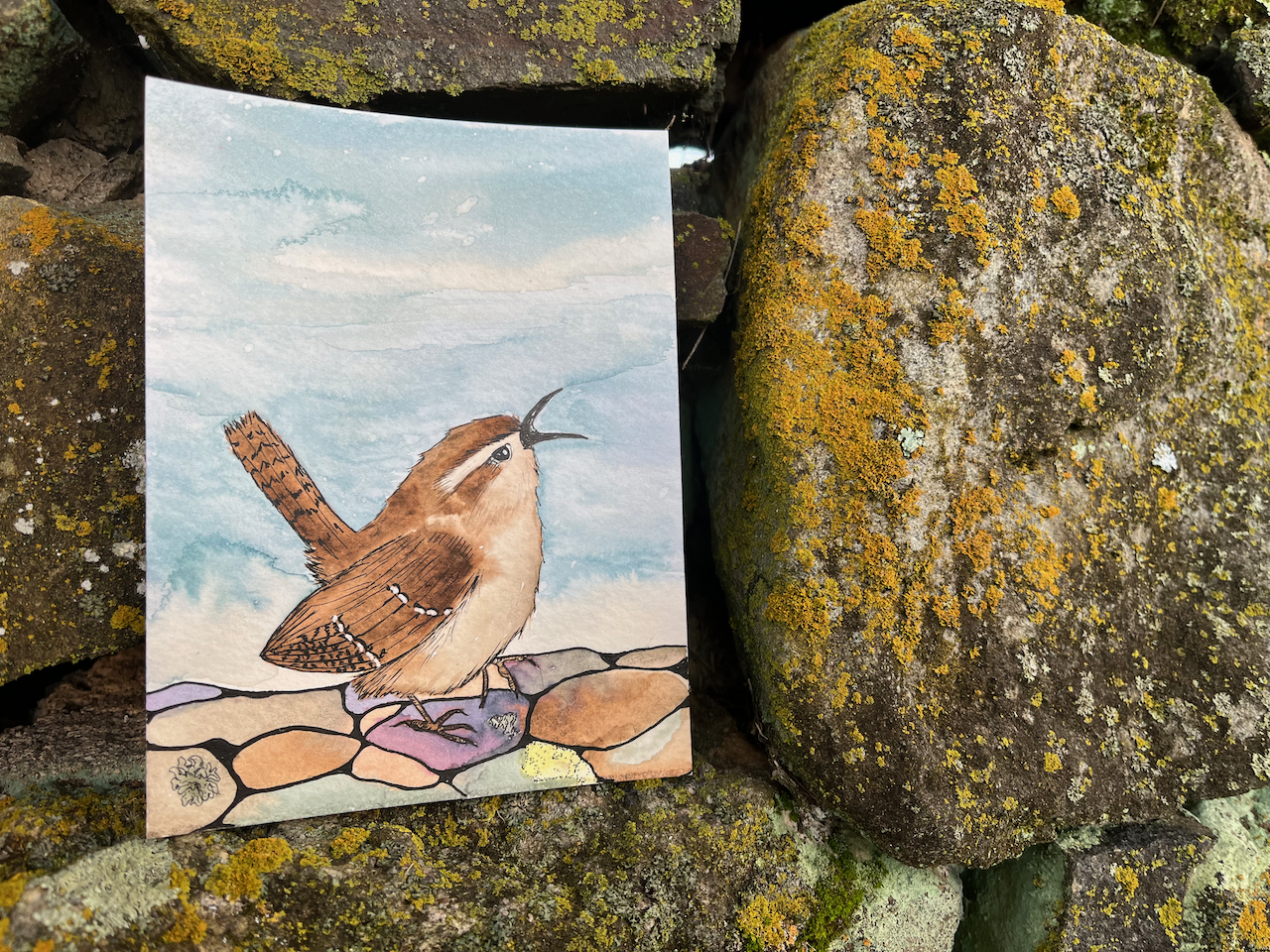
The iconic rock walls covered with lichens and mosses are familiar here, as are the familiar Carolina Wrens that belt out their tunes. Little Wren’s browns were created using Black Walnut’s Ink (the dark brown on his back), and brownish hues of Narrow-leaf plantain and yellow onion skins mixed to make his brownish belly. The rocks that are brown are various invasive plants from around here that I acquired during a workshop I attended.
Polyphemus moth. Those antennae get me every time! Various shades of brown used include pink onion skins, plantain leaf and Black Walnut fruits. The mossy inspired background is a wash of orange marigold with splashes of beets, yellow onion skins and butterfly pea.

impact vs. productivity

Today I woke up with anxiety over my giant to-do list and the weight of responsibility on my shoulders. This is normal for me, but this morning felt particularly heavy. So I did what I often do repeating to myself like a mantra….”You are not saving lives. It’s ok. If stuff doesn’t all get done today, so be it. It will be there tomorrow. It’s all going to be ok.”

It kind of helps, along with some deep ocean breaths, but on my bike ride to Grow Hub I was feeling a pang in my chest. Guess it wasn’t working enough. I talked to myself out loud all the way there, going over all the things I needed to do today, tomorrow, and next month to try to organize it. It’s  also common for me to talk out loud to myself and I’ve been observed doing this much to people’s amusement! I have entire conversations with someone, I’m not quite sure who. Like, all the time. 

I arrived, parked my bike, and greeted the smiling people that are always happy because they’re at Grow Hub! I passed off some of my list to Sarah, helped her wrangle some details and people, talked to a reporter there to do a story, ran around helping other folks get what they needed for their day, and then finally started trying to “get to work”. 

Well, it was one of those days where nothing would be checked off my list. I took a deep breath. But there is JUST. SO. MUCH. Deep ocean breath. Sometimes I get really frustrated and resentful in these moments. But not today.

I just surrendered. Crumpled up the list, to save for another day. Today was a day to lean in, and remember and revel in the why I work, and not obsess over the details. For the first time in a long time I said to myself and agreed- “It’s OK to just sit here with these folks who you care a lot about and simply enjoy their company. You don’t have to be here today to check things off your list. And anyway, why can’t this be something that’s on the list?”

Myself and 6 of the lovely people that work at Grow Hub chatted as we fiddled with a few seed packets on the front porch. Later a few other members of the Board of Directors wandered in for our monthly meeting. Everyone was chatty today. The weather has been a relief and so lovely, the sun shining, the sky super duper blue. Those Florida skies and fall days! So why not just forget the list and enjoy the day?!

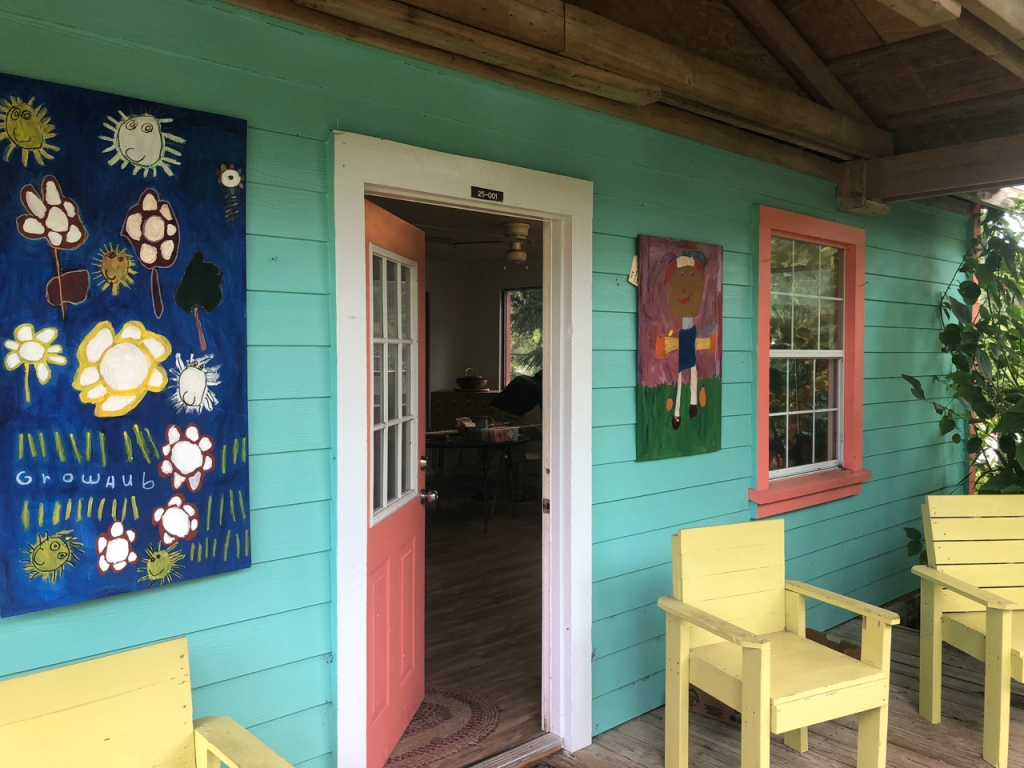
With a porch like this, why not enjoy it more especially on these gorgeous fall days?!

I realized as I was talking with one of the newest employees at Grow Hub, that we were all experiencing a profound moment together with her. At 30 -something with severe social anxiety (and somewhere on the autism spectrum I would presume but I don’t really know), smart as a whip- she had never been able to maintain employment. After a few weeks of coming out of her shell, slowly being coaxed to join us in the gardens, in the gallery, and on the porch, she was entirely comfortable- enthusiastic actually- to just sit and chat. Here, challenges are met with acceptance and kindness in a beautiful space. She was overflowing with ideas of how she could help Grow Hub, and was excited to share them all and know she was valued – as is. 

Gwen told me how much she loves packing seeds (I already know this, she tells me every time!) and to let her know when we do it again. Deal! Joan was so relaxed she nodded off sitting upright. I wish I could do that. Rosa quietly and attentively put little stickers on seed packets (also her favorite thing except maybe for crocheting little pot holders). She was happy to be back after a health scare that had her away from us for a couple of weeks. We missed her.

I didn’t know which way to go when I arrived, scattered and anxious. Then it became clear, when I was just able to let go.

After most of the rides came to get the crew and whisk them home,  it was just the new girl and I left sitting on the porch. She told me freely how much she loved it here. How much she looked forward to it, how it was the first job she had where she felt safe. Where she didn’t feel as though squashing herself down to try to fit in was necessary. Where she didn’t melt into a puddle of despair after a hard day. She was excited to come to work and share her ideas.

This is why I work. Today may not have been productive, but it sure was impactful. I accomplished and participated in some seriously important work today, and not one damn thing was checked off my list. 

However I will say, that while I sat and received this gift today, due to previous days of  organizing, discussing, coordinating, and calling….nearly 60 yards of compost was delivered to the gardens over at GRACE Grows and one of our youth program sites at Wilhelmina Johnson Center. Sarah and our awesome volunteers sowed hundreds of little seeds, watered them and loved on them, in the hopes they will grow into nourishing plants tucked into home, school, and community gardens around the city. That’s something! And someone’s life shifted today, having found a safe place not just to land, but to grow. And I was there to see it. 

After a day of impactful work, the bike ride home felt a lot different than it did coming in. I got home and changed quickly to head out for my annual check up from the oncologist. I don’t get scans anymore, just blood work, vitals, 20 questions, and a little poking and prodding. Everything was all clear. As expected, but you never know. 

Yep. Today was a day to just revel, surrender, and be grateful for this beautiful life and day. I had these lessons revealed to me loud and clear during my ordeal with cancer. But they have faded over time, as I slid back into the crazy world most of us inhabit that values productivity and busy-ness over all else. Today was a day to remember that life is too short to be dominated by an anxiety-inducing checklist.

Besides, every checklist for the day should have “enjoy!” written at the very top.

Ashley, Joan, Cyd, Shaquille and me. Love!

40th year and 4 wonderful things

This is my 40th year. In July I’ll officially have lived on this planet for 40 years. Lucky me! It’s been one hell of a ride.

I embrace aging, and they were right! All those wise people told me growing up that it gets better, and at this point at least, I’d have to agree! The lines deep around my eyes are testament to my time outdoors observing wildlife, sowing seeds, and smiling and laughing a lot. The past 5 years in particular have really been powerful, aging me sublimely like a good wine. If it gets better than this, I’m ready for more!

In my 40th year, there are FOUR big things I’ve recognized as powerful driving forces and milestones. In no particular order:

ONE

It’s the first time in 7 years, that I will not have to lie in a CT scanning tunnel, wondering what the machine is seeing inside my body. I’m cured of cancer, and this is the first year I won’t have to schedule that appointment. As you may have read in previous posts, despite the insanity of navigating a life with cancer, I am grateful for the experience, the lessons, the perspectives. The greatest, most fucked up gift I’ve ever received. But this year, I won’t devote one minute to sitting in a scrubbed sterile, cramped, dreadful medical facility.

Peace out, hope to never come back here again unless I’m volunteering or something.

TWO

I’ll become a US citizen next week! Don’t get emotional on me, or assume I’ve made a huge mistake with this awful political climate here. I WANT to be here. Even though I am from Canada- a safe, polite, and typically more liberal country, this is home. Gainesville, Florida has it’s wild and succulent roots growing throughout me and there is no way I can leave. I want to vote, I want to know I will not be evicted from this place. Home is where Mike, Huxley, Gwen, my friends, my nature, my gardens, my seeds, my life is.

Yay!!! I’ll do my part to make America stay great and maybe get a little bit better? USA!

THREE

The non-profit business I’ve incubated for years with Anna, and more recently Maya, Sarah and now Jesse (holy women powerhouse team!) is really, like really, growing this year. For years I’ve built this seed program little by little, and as we slowly made our way to the national scene-we have reached a point where two major federal projects were funded to help us magnify the work we do with regional seed.

Little, little me in my Gainesville bubble, is sought out by people around the country to help write project proposals, plan national conferences, serve on advisory boards, and collaborate on powerful projects. So many beautiful threads have been woven along the way that are too long to list but suffice it to say, have created this tapestry of community, food, seed, art….that is beyond what I could have imagined.

Well. That’s not entirely true. These things were on my vision board for sure. I dreamed them and worked really fucking hard to make them happen. But in reality, in the flesh, in our office, in our gardens, in our event space – they are so real, so beautiful, so beyond what is contained within them, that it was impossible to know what this felt like. I almost can’t believe it, and pinch myself. Is this really happening?

So many things to grow, so little time!

FOUR

Corn. Yes, corn. Let me explain. Clearly you know by now I’m a seed freak. Early in my gardening days, I advocated against people growing and eating corn. It wasn’t good for you, required a lot of fertilizer and water, often presented itself as mono-cropped GMOS sucking out the rich prairie soils and eliminating habitat in the mid-west, purely to be sold as high fructose corn syrup and ethanol.

That’s all true, but corn is SO much more. I learned over the years from very wise people about the true nature and story of corn, as an ancestral crop that sustained people over many thousands of years, coaxed from the wild into unimaginable diverse varieties spanning the globe. Corn was beyond good for you if treated respectfully. Then I learned about seeds and saving them…and corn frightened me. It seemed the most daunting: easily crossed with other corns within miles, required a really high number of plants to grow in order to have good genetic diversity, and then the giant ears, the shucking….naaaaa. I was saving that project for later. Some time down the road when I was ready.

Well this year, after a few years of dabbling, it’s happening and I didn’t really see it coming. A valuable, endangered, heirloom that only a few in our community have been passionately and desperately trying to keep alive—really needs my help. I won’t be growing it myself like I did last year or 3 years prior, but I am connecting the dots, to the right people to do it. This year it’s not me. I can’t. But I know who can.

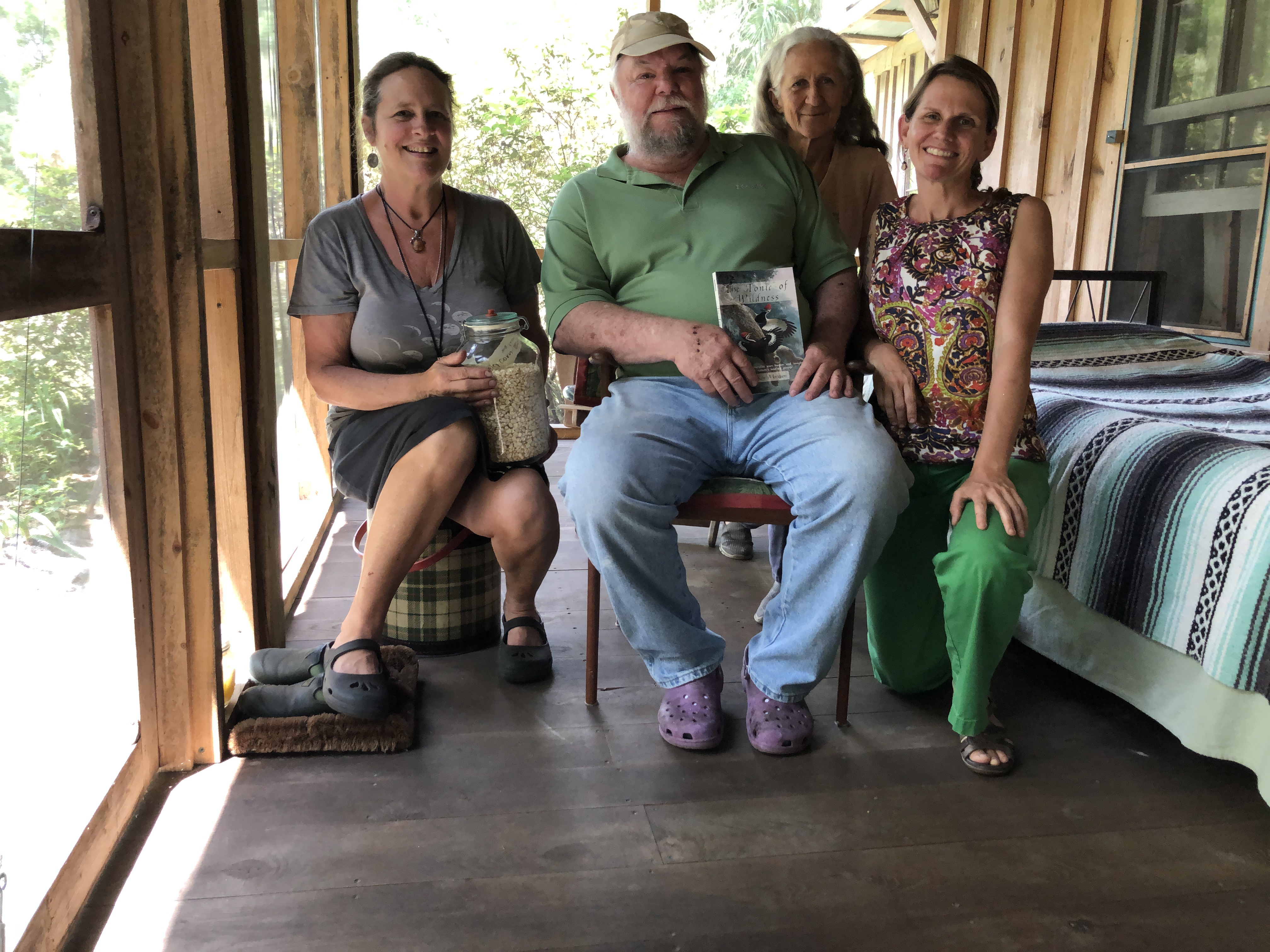
Yesterday, in a quaint old Florida home, nestled in the back woods of Cross Creek, where it feels like you’ve stepped way back in time, I convened with 3 other beautiful people to discuss the plight, opportunity, and plan of attack for saving this corn. Like me, it belongs here. So I’ll fight to save it. If we can successfully revive it and share it, it will surely make once again as it did as far back as the 1800’s, the finest grits, the best bourbon, and the tastiest cornbread.

Community, responsibility, corn! Left to right: Karen Sherwood, Jack Simmons, Sally Morrison and me!

So 40 is looking great! Cancer-free, the rights and responsibilities of citizenship, a meaningful career, and corn! What more is a girl to want? Oh, I also learned how to floss (the dance, not the dental hygiene practice), and my sweet little niece will be turning 1!


death happens

I’ve been attuned to death lately. As a cancer survivor, and someone that has experienced many times, the loss that death brings, it’s not a scary or uncomfortable topic. My dad and his brother died tragically when I was only 3. My mother died 8 years ago. That same month, my best friend’s dad was killed. My grandparents on my mother’s side are both gone. Two friends recently left this Earth after a struggle with cancer. Another friend this year, to suicide. I’ve been in enough close calls throughout my life in vehicles, airboats, and doing field work, to feel like a cat tallying up its count towards 9 lives.

I have friends deeply involved with the local conservation cemetery that dig graves and manage the land. I got a good sense of that place, when I thought my number might possibly be up, scouting for the best plot. Full sun, so wildflowers could grow. Or maybe in a shady spot, for the comfort of any future visitors to my last little resting spot.

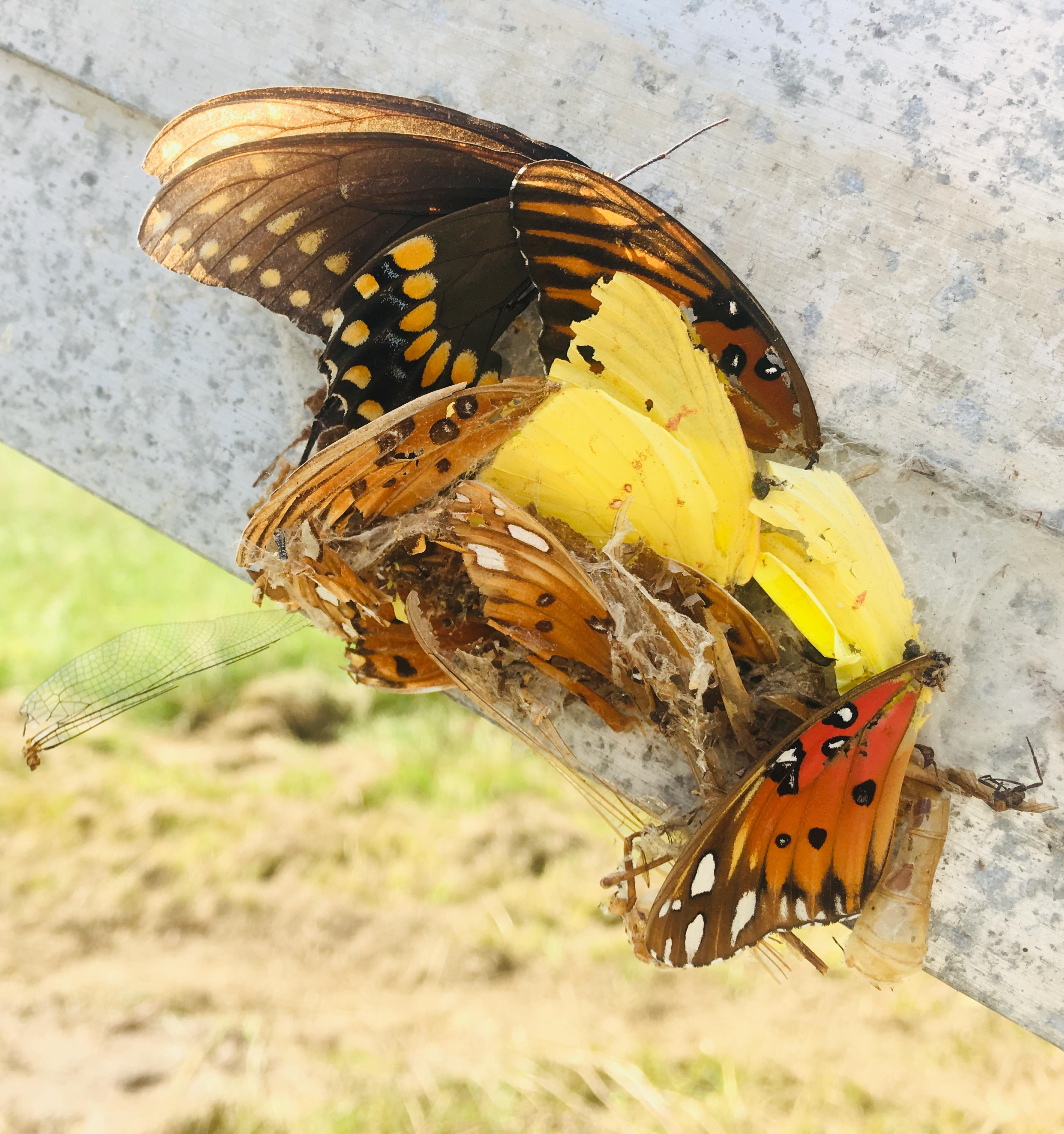
Loving the outdoors, and all the things that fly, crawl, and run, I notice death everywhere. Deer bone remains scattered in the woods, butterflies snagged by a lynx spider, song birds killed from flying into a window, mangled raccoons on the side of the road. I love nature shows, but since childhood and to this day, have trouble watching a prey animal be hunted. I feel horror for them, and see the pain and panic in their eyes. But if they escape, I feel equally horrible for the hungry predator and its family, that may starve to death.

Sadly, butterflies become trapped in my greenhouse. I always try to rescue them, but inevitably, some are missed.

I worked at a vet clinic for many years throughout high school and college, and contributed to lots of animal deaths, holding a beloved family pet in its final moments. I’ve held my own beloved fur balls in their last moments too, shedding tears onto their soft fur and limp bodies.

I know the horrors of factory farming, and have participated in local, small scale humane chicken butchering. I talk to food producer friends, about the challenges of raising and slaughtering their own animals, and dealing with their predators. It’s not easy, and usually fraught with heartache.

I feel grief for the deaths of ecosystems. I remember soaring over this beautiful state in a plane several years ago after a terrible oil leak, weeping for the widespread loss of animals, soil, plants, and human livelihoods. The guilt was not lost on me, that I was flying in a gas guzzling plane that demands the same oil, that was gushing into the Gulf killing everything.

I kill plants all the time, and feel a bit of sadness when I do. Does the kale I raised tenderly from a seed, recoil when I rip it’s stems off, week after week? Recently, when a large oak in our yard had to be removed, I felt an ache and emptiness when standing where it once was, like I had lost a friend. I wondered if the tree, and all the critters living within it had suffered, as chain saws tore through the tissue that took years to build. I don’t know…with all that science is discovering about the sophistication of plants in their environment, I can’t help but feel kinship and responsibility toward them.

Death is just always something I am aware of. But the past couple of months have been particularly heavy with the reminders.

Recently, I had to say good bye to my beloved Arthur Kitty, the famous Squash Cat. In the past 3 days, 3 of our chickens died. One brutally by an opossum which was dreadful to witness, and another after two days of me trying to nurse her to health.

My friend PJ died unexpectedly this week. While we weren’t particularly close, PJ meant a lot to me, and I had assumed we’d be working on projects together for many years to come. He started a little seed library with just a bit of my help and some starter seeds. A man after my own heart! He was just the sweetest person. What the hell.

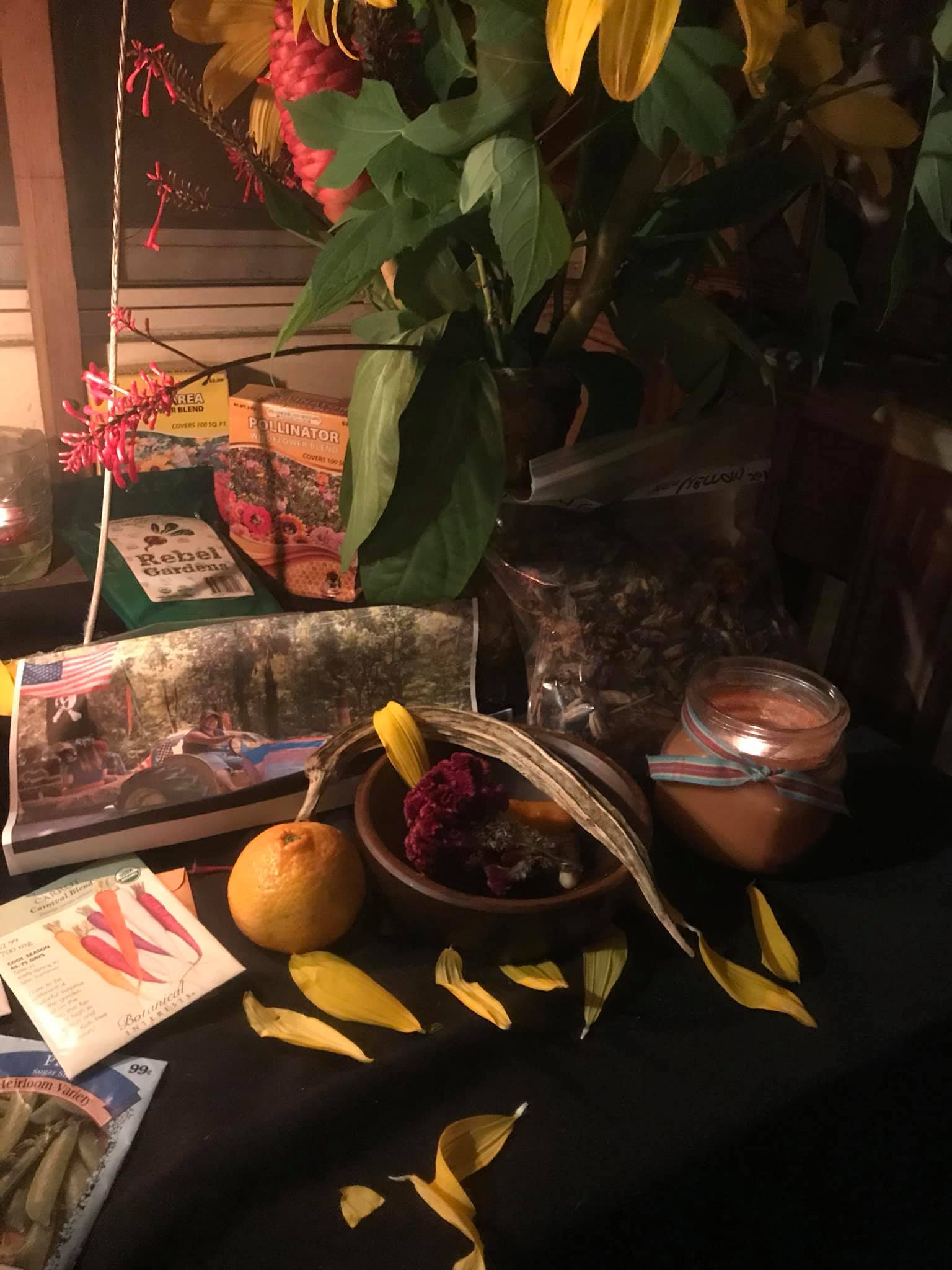
The beautiful altar for PJ that friends adorned with gifts and mementos.

Today, an acquaintance I see regularly out and about at various events we cross paths at, spent time with me in the sugarcane field (killing plants with a machete). He shared with me that for over a year, he’d been wanting to tell me that the love of his life, died from cancer 20 years ago. He told me their story, both the beautiful parts, and the tragic end. Three squeezes of the hand was their signal to say “I love you”. She gave 3 squeezes in her last moments. He wanted to share this, after reading my blog and learning of my cancer story. I was so grateful he told me, opening up his heart to mine.

I don’t mind all the reminders of death, which is omnipresent and hand in hand with life itself. I don’t mind, because they invoke gratitude, love, and respect for life, at the same time that they leave me feeling broken.

Life’s worth is more tangible and heartfelt, because of death. The sun wouldn’t be as glorious, if it never rained. Flowers wouldn’t be so special, if they were always in bloom. The loss of a friend, a pet, a place, wouldn’t be so painful, if we hadn’t loved them so much.

So don’t miss a chance to express your gratitude and love. You never know when the last time to give or get three squeezes will be.


gardening is more than just growing things

Recently, our organization Working Food had the honor to partner with Guts & Glory GNV to bring storytelling and the love of food and gardening together. I elected myself as one of the storytellers, figuring it would be easy enough to come up with something on the theme, and helped Anna think of who else would be good to recruit.

As the time came closer and closer to present, I started feeling….I don’t know… not nervous, not afraid. Vulnerable? While I speak in front of people all the time teaching classes and workshops, making announcements, and giving talks; this was very different. This was little me in front of a lot of people, some of whom I know and many I don’t, basically sharing my blog in spoken word. Very different. It was choppy sometimes when I rehearsed, forgetting some parts that connected to the next piece, and I was crying every-time I practiced it in front of someone.

But I’ve done much harder things, and know that challenging life experiences are good and should be accepted. I was honored to be onstage with 4 other storytellers, 3 of which I consider close friends and respected individuals that have enriched my life. It was a magical evening and the positive feedback we felt from our community felt really awesome! I was grateful for my husband to be there and share the experience, and for Maya yelling out “We love you Melissa!” when the tears came on stage and I needed the change of focus for a moment to catch my breath and begin speaking again.

So here it is, what I shared publicly about how gardening and my life have been so interconnected and inseparable over the years.

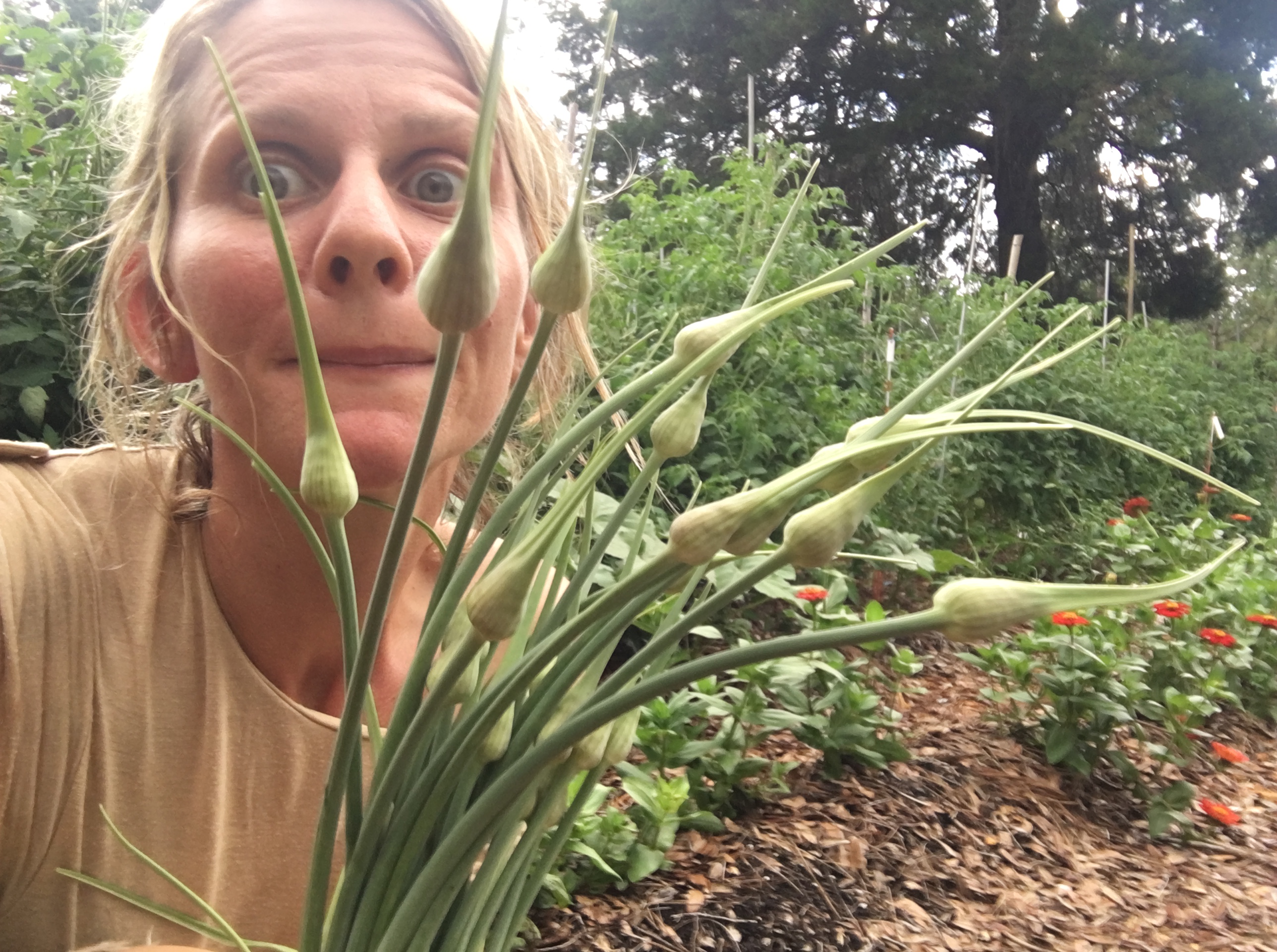
On Memorial Day, in the midst of sub tropical storm Alberto, I was in the garden pulling up elephant garlic. It was an emergency harvest, otherwise I would have been enjoying the storm at home with a cat on my lap, and a good book! The weeks of non-stop rain with no end in sight, meant that my precious bulbs planted 7 months ago, might rot in the wet soil.

I worked in solitude under a deluge of rain bands, that periodically lifted, so that I too could lift back my rain hood to hear again, and feel air on my skin. It’s stifling and noisy under a rain jacket in Florida. I worked for an hour pulling up the sturdy and large roots and leaves, along with the soil they had bonded with over the past 7 months. Up with them also came lots of earthworms that were woven among the roots, now wriggling to escape the light and my hands. One garlic root system was connected to a neighboring bright orange cosmo flower. I had to perform careful surgery to extract the two without causing harm. I was surprised by the the large holes left behind in the earth after removing the giant bulbs.

I thought about the large holes I’ve felt in my life when someone I love has left me, or hurt me. Eventually it heals over, just like the soil and worms that fill in where the garlic once was. I thought about all the connections I have with people and animals that run deep and interconnected, like the cosmo and garlic roots that shared space with earthworms.

I’ve learned a lot about my life in the garden, and have found her to be the very best therapist. Her beauty, life force, surprises, disappointments, and heartaches have helped me process profound life experiences. But most of the time, she allows me to simply be consumed by only that which is in front of me. A rare treat in today’s busy world, pulling from all directions. There is a reason horticulture therapy is a legitimate occupation and practice that heals people.

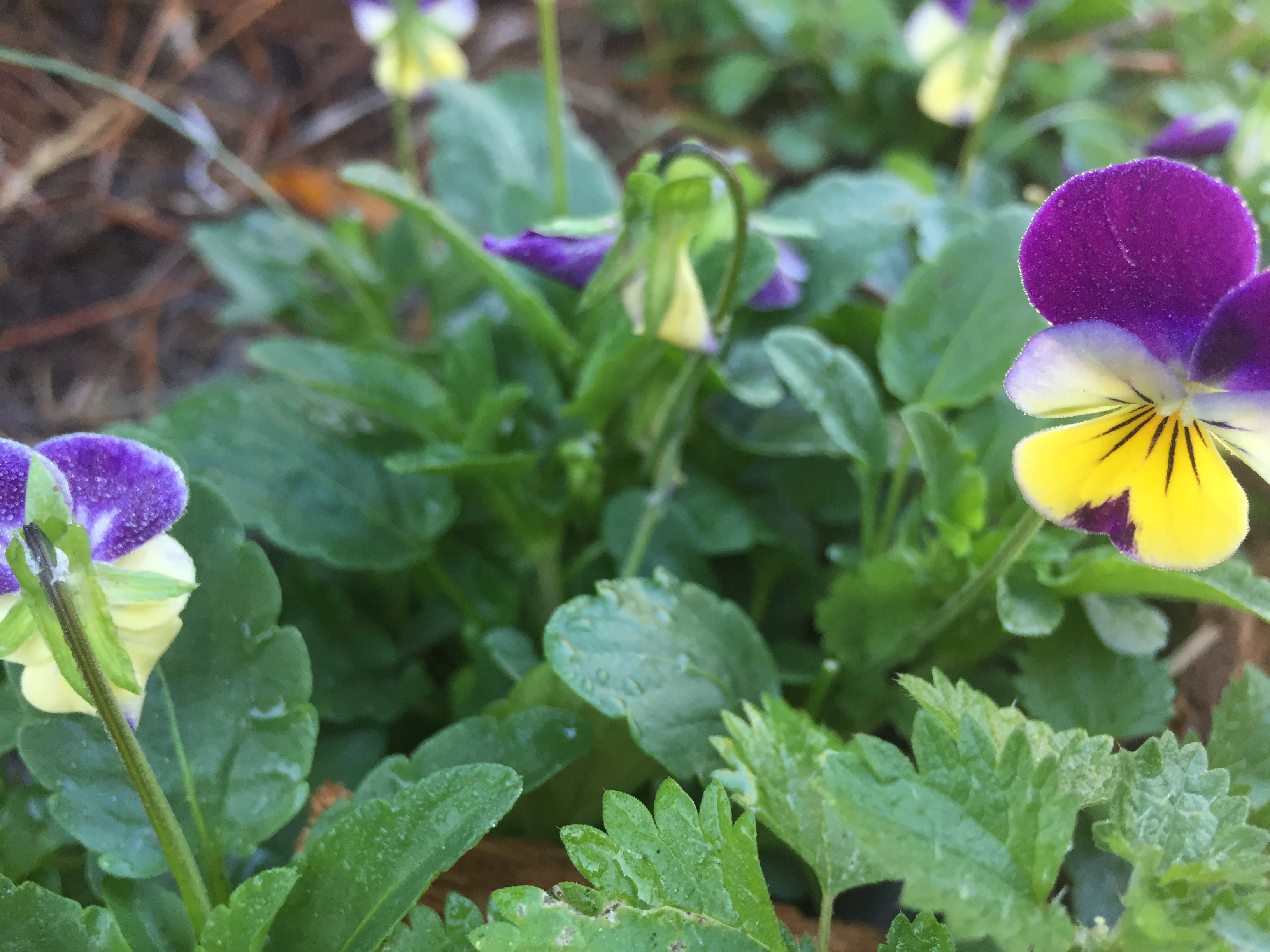
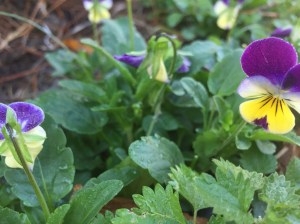
Johnny jump ups are dainty little purple violets, that grow in my garden every year. Planted from seed years ago, they jump up wherever they please year after year. They are a welcome visitor each fall, not only for their beauty and ease of care, but because they remind me of the alleyways they sprawled out into in my childhood; my mother and I returning with trowels to dig up a few for the garden at home. Her affection for the pretty little flowers has stayed with me all these years. I have a couple tattooed on my arm.

She passed away 8 years ago, she was only 51. Still bright, vibrant and full of life, she was gone, just like that. She was my best friend, yet someone I didn’t fully know. Grief has a way of grinding your life to a halt, and in my heartache I desperately wanted everything else to just stop along with me, giving me the time and space to process my grief and this new life without her in it.
But every November when I’m on my knees in the garden, planting garlic cloves in neat little rows with 12” spacing, and I look to the sky to greet that first wave of sandhill cranes trumpeting their arrival, I am reminded of the tremendous life force that keeps on going. Despite difficulties and setbacks, the cranes keep migrating, and the plants keep growing. I keep returning to the garden with my dreams, my troubles, and all of my awesome seeds.

Perhaps you’ve heard the popular quote:

For a seed to achieve its greatest expression, it must come completely undone. The shell cracks, its insides come out, and everything changes. To someone who doesn’t understand growth, it would look like complete destruction.

As SeedEO of our little non-profit company Working Food, I can attest to the power of the story of a seed. I am fascinated by them, and immersed nearly 365 days a year in them. I grow, gather, clean, store and share them with anyone who needs them. I spend a lot of time studying them, and staying up late at night writing grants to find money to protect them. I venture out  into tropical storms to save them from ruin.

In short they have control over me, and I some control over them. Which is how plants and people have always worked together. We need them as much as they need us. This is how most relationships, functional ones anyway, seem to work. I feel that way about my closest friends, my husband, family. A mutual relationship where one gives what the other needs and so it goes round and round; we are better together.
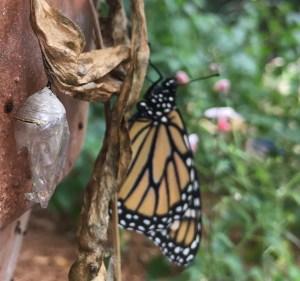
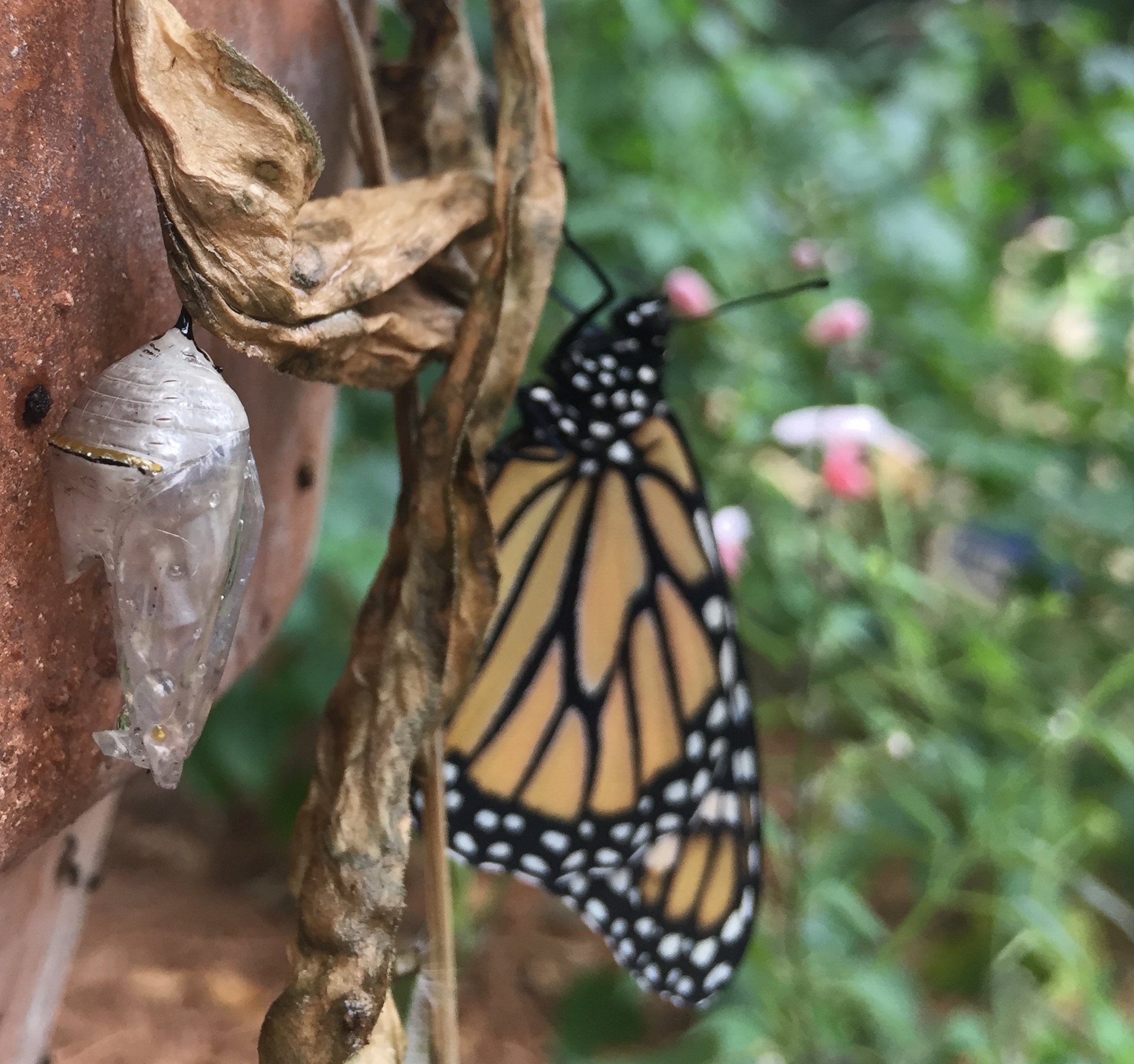
Monarch butterflies are one of my favorite garden visitors, because like Johnny Jump Ups they remind me of mom. Each time one flies past, it’s a celebration, a moment of pause to remember someone I still love. I have a couple of those tattooed on my arm, too. They will always share the garden with me, along with the hundreds of other pollinators I adore, because there will always be flowers for them. Like Johnny Jump Ups and Cosmos.

I think what fascinates me most, aside from their beauty and memories they conjure, is the great process of metamorphosis they undergo in their short life. On occasion, I am fortunate to notice where the caterpillars have crawled off to pupate after their assault on my plants nears an end. Wendy taught me to always plant a row for the hungry, and it’s part of my garden protocol to share. 

The pupa stage which seems inactive and often goes unnoticed by most of us, is a fascinating process. Inside the little pupas, some of which look like jewels and some disguised as bird poop, a slew of chemical and physical changes are bubbling inside, as cells reorganize and rebuild for their new life ahead.

The new butterfly is now a creature of noticeable beauty with the ability to ride the air currents in search of  food and mates, and go on great migrations. They are no longer confined to a particular plant in a particular place. They are free.

I had an incredibly metamorphic experience about 6 years ago, when on June 27, 2012 I heard the dreaded words, “you have cancer”. In the process, I learned to accept the things I couldn’t change as I entered this new phase of life; while tackling head on and with honesty and compassion for myself, the challenges that I was able to address. These were my own cells in my own body undergoing change. I knew I would re-emerge in some way, and so I couldn’t dwell on the injustices and unknowns of the situation. I could only lean in, learn, and hope to grow stronger and more beautiful because of it.  

I was fortunate to make it out alive, with a fresh perspective and as a better person. My cancer experience was a really fucked up way for life to offer me the gift of metamorphosis. I’m grateful for this gift however, and for how it transformed me. I wonder though, if the two friends I lost recently to cancer felt the same.

Life can be so damn messy and heartbreaking. Gardening is no different, but it is there I get to grieve, heal, and rejoice.

I wish sometimes I had the perfect and tidy garden! One with clearly defined walkways heavily mulched with wood chips. Neatly weeded and planted rows. A garden free from the threat of a devastating frost or a deadly disease. Where no army worm outbreaks happen, and armadillo invasions aren’t a thing. Like the picture perfect garden on the cover of a fancy garden magazine.

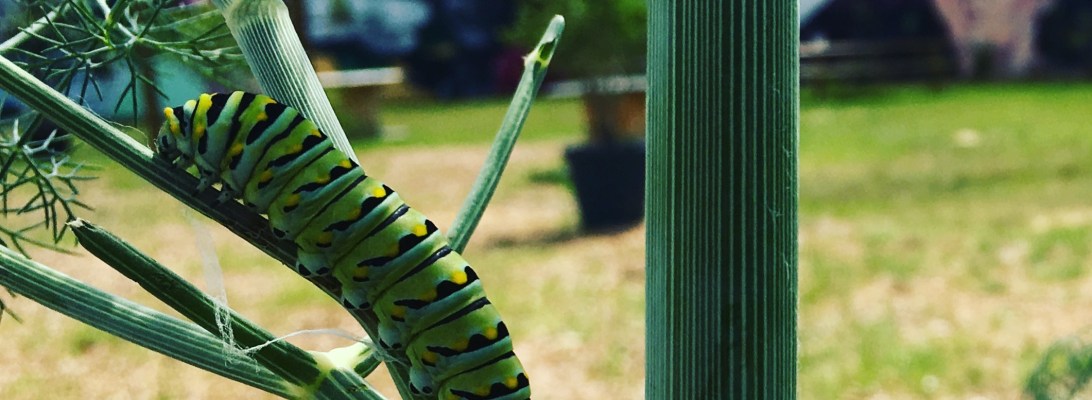
But the reality is that most of the time, the garden is in some transitional and messy phase. I’ve stopped apologizing for the disorder when visitors come. Instead, I point out that brown and dead-looking plants are actually loaded with life-giving seeds. That the chewed up, ragged fennel plants just recently had caterpillars feasting on them, and soon we would have swallowtail butterflies. That the empty and upheaved rows once grew beautiful garlic, that were roommates with earthworms, and propped up the cosmos.

This is the real life garden with hard yet beautiful life lessons, a sympathetic ear, and much to admire and share. This is the garden I will proudly pose in front of, when I’m on the cover of Southern Living or Garden and Gun one day.


to bloom, you must first be a seed

Everything on this planet and in our lives is intertwined. In the words of John Muir, “When we try to pick out anything by itself, we find it hitched to everything else in the Universe.”

As an ecologist and gardener, I fully understand and witness this daily. The patterns and cycles of growth and decay in the natural world easily parallel human life experiences.

It’s fascinating how similar in pattern lung tissue, tree branches, blood vessels and river deltas look. (Borrowed form the interwebs)

Seeds in particular have become a focus of my life, both professionally and personally. Their biology and magic have lended plenty of analogies and life lessons. I’m not unique in this thinking. A quick Google search for “seed quotes”offers plenty. One of my favourites:

“For a seed to achieve its greatest expression, it must come completely undone. The shell cracks, its insides come out and everything changes. To someone who doesn’t understand growth, it would look like complete destruction.” ~ Cynthia Occelli

Last fall, I was fortunate to attend an intensive 5 day Seed School Teacher Training offered by the Rocky Mountain Seed Alliance. It was a life-altering experience for me. As my plane home was speeding down the runway, my mind was racing along with it, and an unexpected cascade of tears started flowing over my cheeks. I was a raw and weepy mess. I didn’t see this coming. I think my seed coat was coming undone.

Seed School Peeps
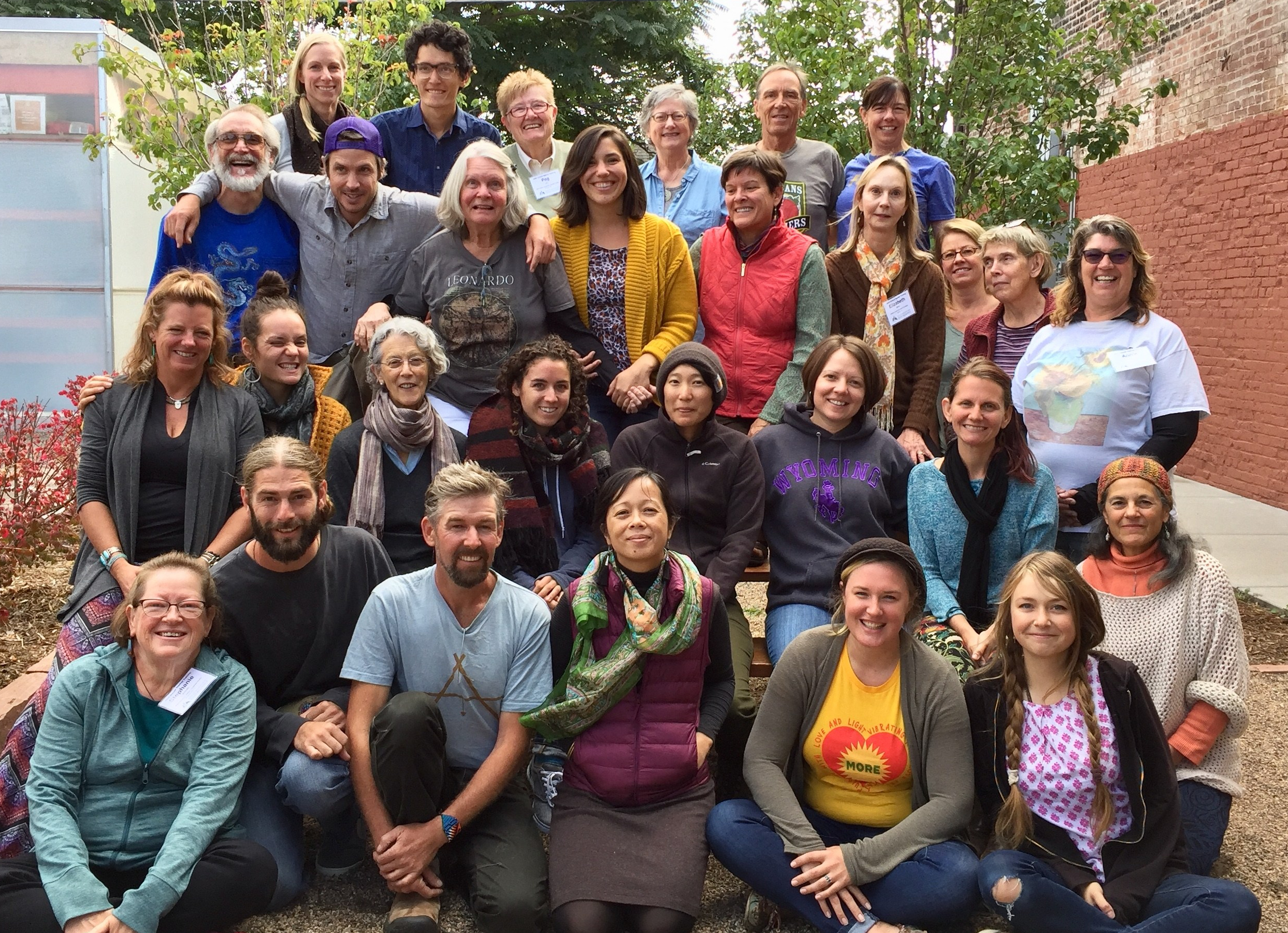
These are some of the beautiful souls I connected with at Seed School Teacher Training.

The yin and the yang of emotions sweet and sorrowful interplayed as soon as the plane had lifted from the ground. A heavy weight of sadness flooded over me. As the plane got faster and higher, I was being pulled from my seed people with whom I had made a lasting connection. I was getting grand views of our Earth, blistering and disfigured at the hands of humans. I thought about all the seed biodiversity lost, and the people from whom it was stolen.

I was reliving grief from my past; my cancer journey and my mother who I’ve missed terribly for 8 years now. I was sad for Ann (one of our classmates), as I thought of her bravely struggling with cancer and still showing up for seed school; and for Torrie (another classmate), who had two family members shot by a lunatic gunman in Las Vegas, while we were in school. For her, there was no better place than to process this tragedy than with her seed people.

At the same time, I was overflowing, heart wide open, and receiving gratitude and exhilaration! The earth viewed from above is beyond breathtaking. To soar through the clouds and feel our Mother Earth pulsing and breathing strongly, even though she is ill, consumed me. Our time together in Seed School, “vibing with our peeps” (inside joke!), created a shift within. I felt raw and vulnerable, but ready. Like a seed mustering up the forces to begin growth, swelling and energizing, finally shedding the seed coat to show myself.

Actually, no. I’ve already been there.

It’s more like my radicle, the first root structure a seed produces, was shooting out getting ready to dig in and get to work.

Actually, I’ve already been there too. I’ve built an elaborate root system already that is still growing.

Perhaps it was my first true leaves unfurling and receiving strength from the energy of the world around me. True leaves are the first time that a seedling must start receiving energy from the sun, water, and soil. They are no longer able to draw from the seed for sustenance.

After contemplating successive growth phase analogies that best reflected my experience (plant people, sheesh!), I finally realized.

I have already bloomed and gone to seed multiple times. An endless and evolving progression of adaptation, growth, and improvement with each moment, day, or year.

Mel mustards
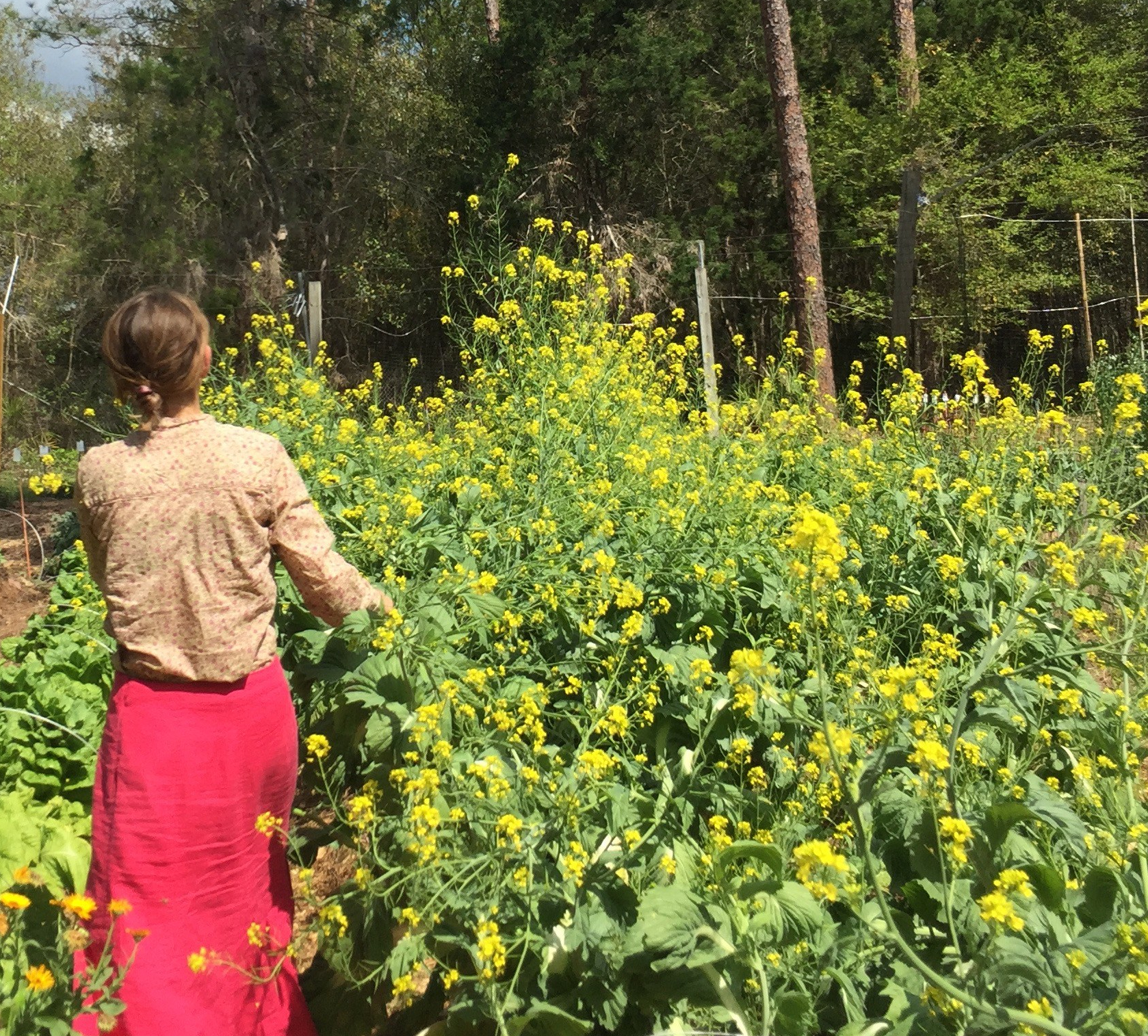
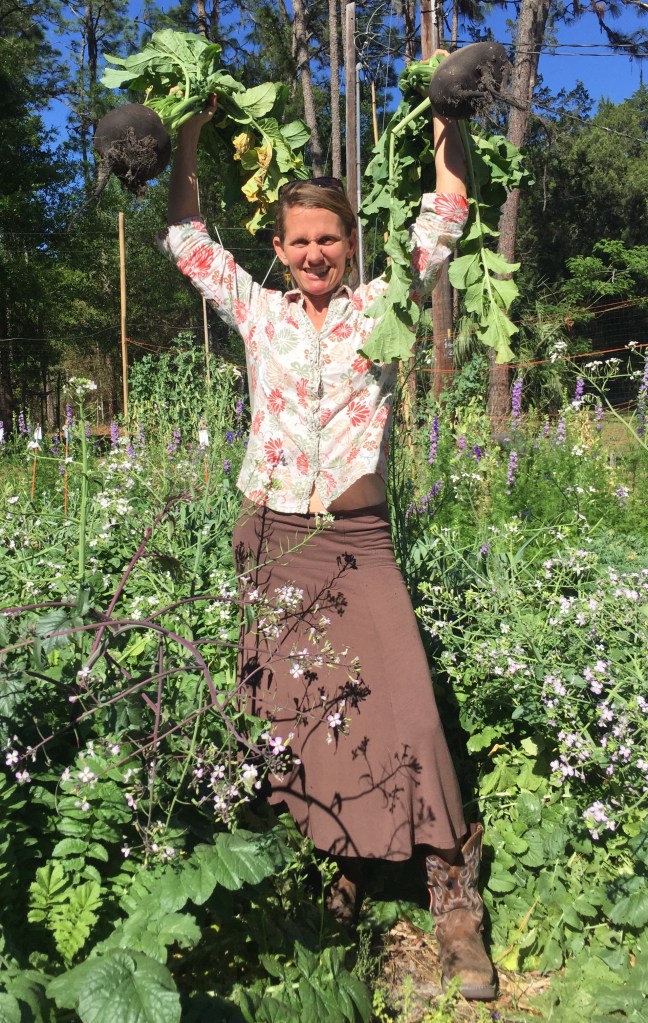
Going to seed is a beautiful thing. It always involves flowers! This is me in a sea of Feaster Family Heirloom Mustard Flowers. There’s something indescribable about being surrounded by such life force.

The experience of Seed School, and significant life events contemplated from thousands of feet above the beautiful Earth shuffled me up a bit, and sent me off like a seed in the wind speeding off on the runway. Up, up, and away! One more phase of evolution, carrying hope and excitement for the future, but a little anxious of the unknown journey. Just like a seed.
Thank goodness for window seats. To process the weight of such magnitude while soaring quietly above the clouds gazing at our planet was a privilege I am grateful for. It was almost too much to bear, to be honest.

And so, the continual process of growing, evolving, and going to seed continues. It’s not easy work. There have been many times I’ve contemplated letting go. Growing is hard work, y’all. But when there is so much energy and life force, it’s unstoppable. This the energy that helped me overcome cancer, that brought me through the depths of grief, that keeps me pushing daily for the work I love.

Take wisdom from the life of a seed. Understand that it’s ok to shed things and let go, shuffle up a bit, unfurl and bloom. Keep solace in the reminder that life goes on in cycles, that we are are always learning and re-inventing ourselves, like a seed.

Charlotte Kesl for Working Food
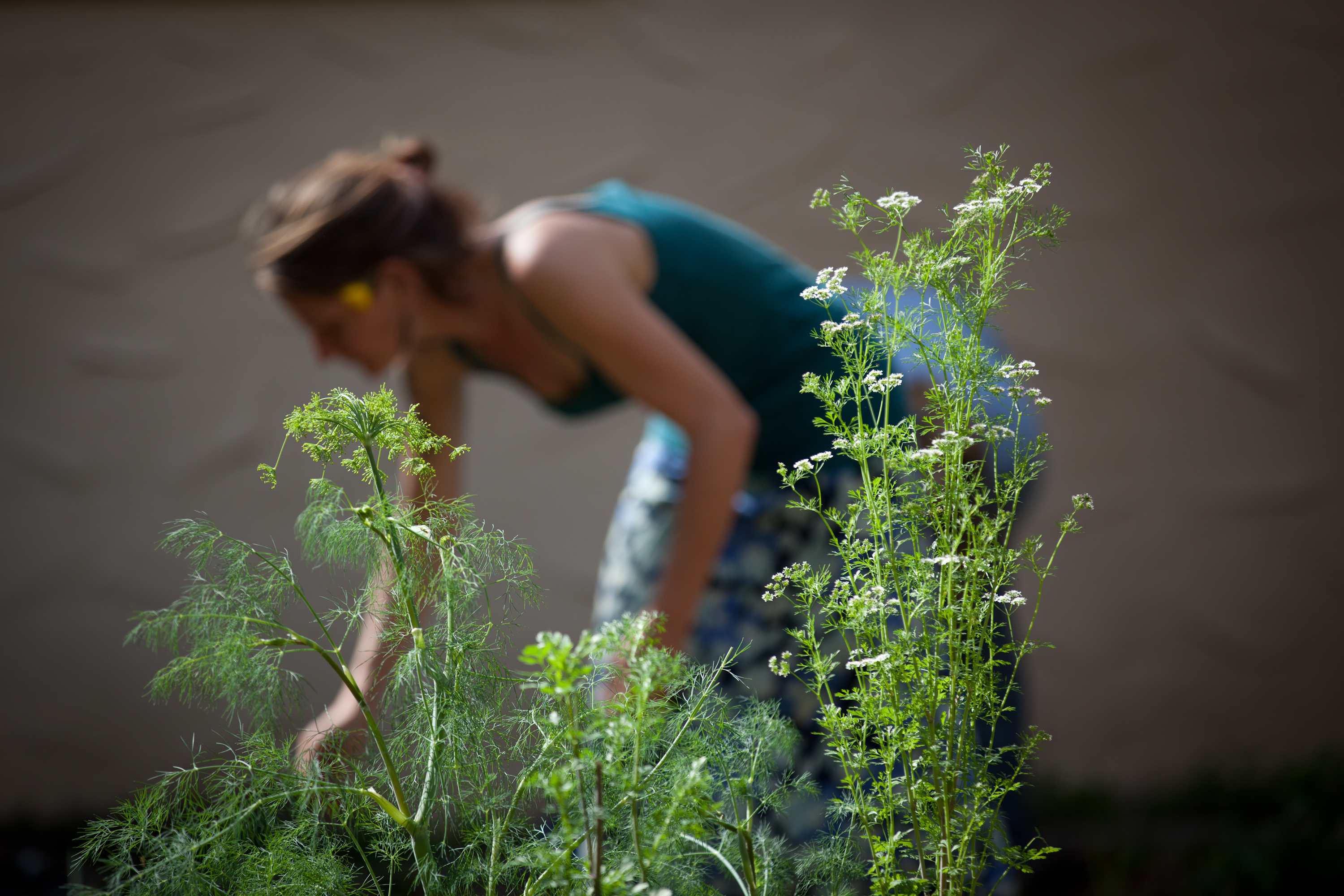
Tending the garden alongside cilantro going to seed. (Charlotte Kesl Photography).