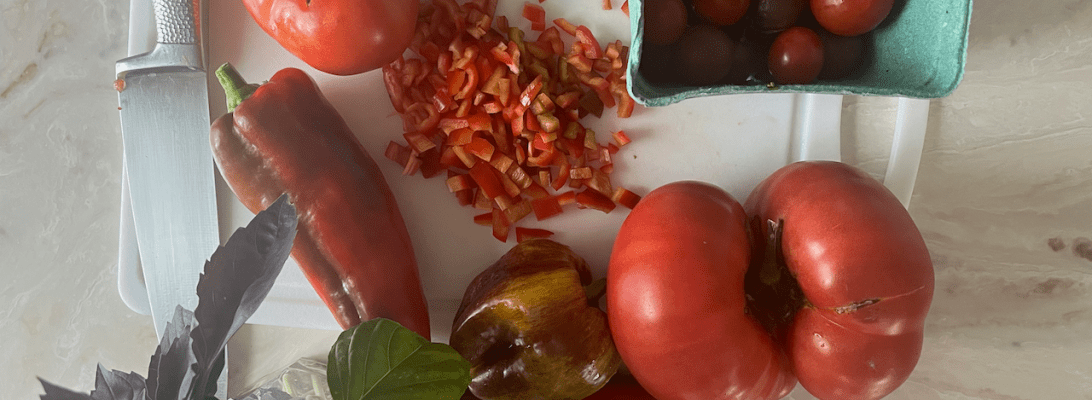
the farm & kitchen

Part 2 of a series of posts about my artist in residency experience at Oak Spring Garden Foundation.

I really love that this place has a working farm, an educational + artist’s garden, and a seed conservation component. If you know me, you know this is my jam! I feel right at home except for having to hold any responsibility or accountability! These are what I call my “working vacations”. 

The first chance I had to volunteer, I signed up to help with the Indigo harvest. I’ll write more about that later, but basically we harvested a row of Japanese Indigo, Polygonum tinctorium that is currently fermenting, the first step of the careful practice of extracting indigo pigment. The following day, I came out for another harvesting activity, this time for veggies and herbs. I helped the crew pick peppers, basil, sage, and kale. 

It’s really a lovely space! Very well maintained and laid out. Although as a fellow farmer, I admit to easily seeing the things they do too when I praise the aesthetic of it all but they kind of sigh and look around, saying yeah but….the weeds, the disease, the never ending list of chores, the pests! In some strange twisted way it’s comforting that even on well resourced and managed farms, nothing is perfect and there will always be weedy sections and some kind of pest that keeps the farmers awake at night. We’re a collective support group, commiserating on the challenges of growing! 
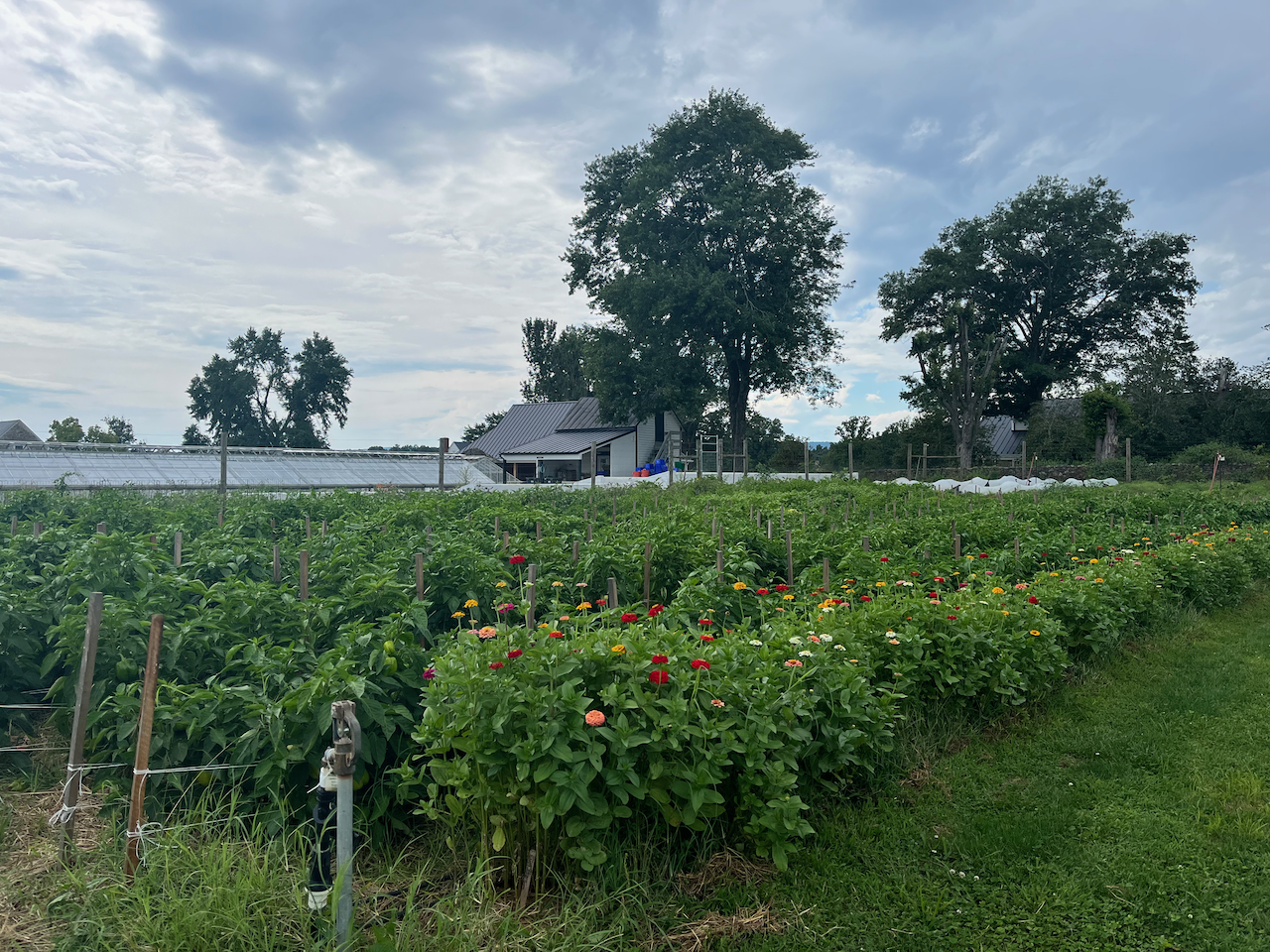
Zinnias and peppers adjacent to the greenhouses and packing shed.

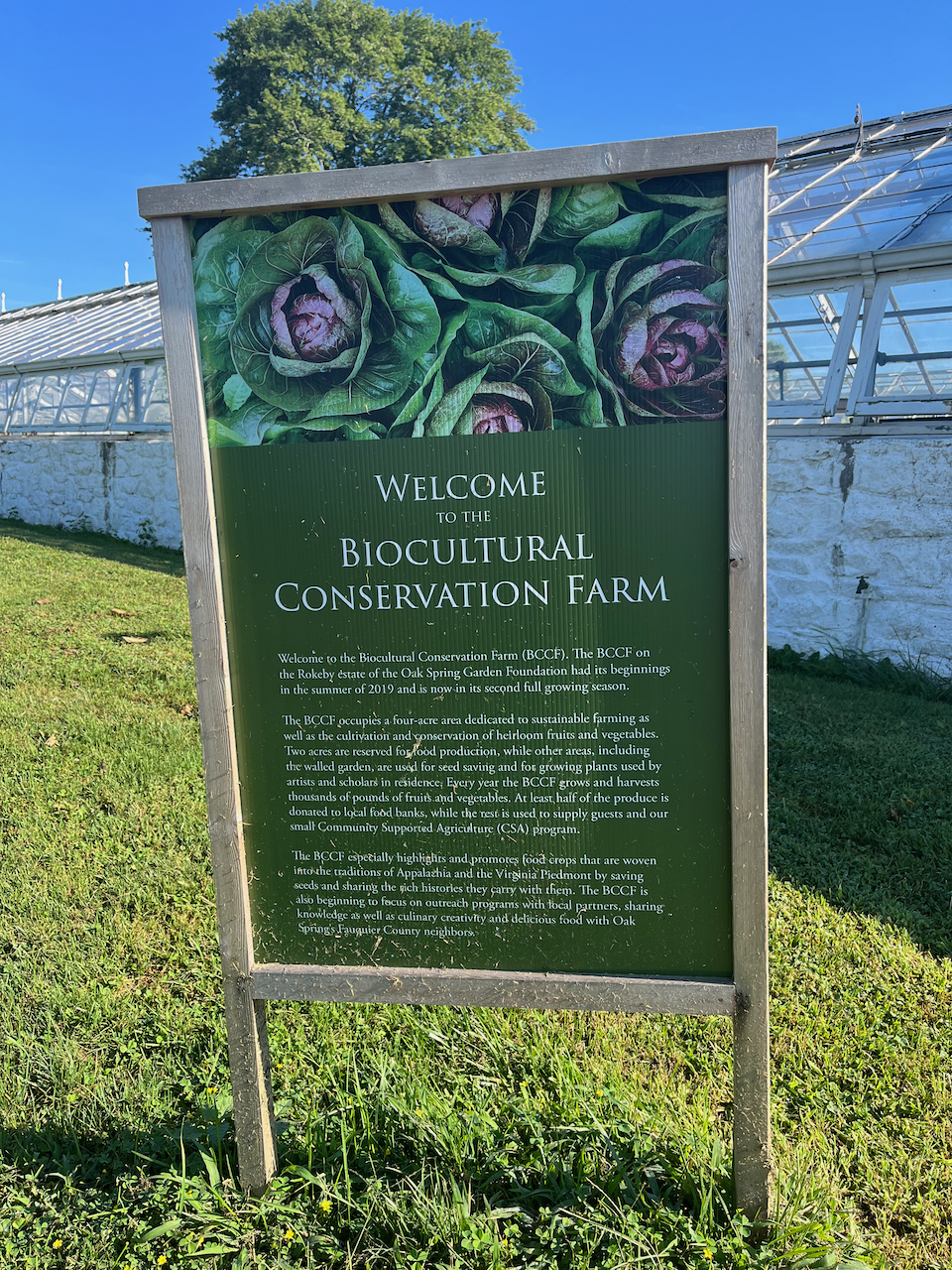
The part of the operation that is focused on food production, is separate but adjacent to the educational and seed gardens, which all together are part of the Rokeby Farm side of the Oak Springs Garden landscape and referred to as the Biocultural Conservation Farm (BCCF). 

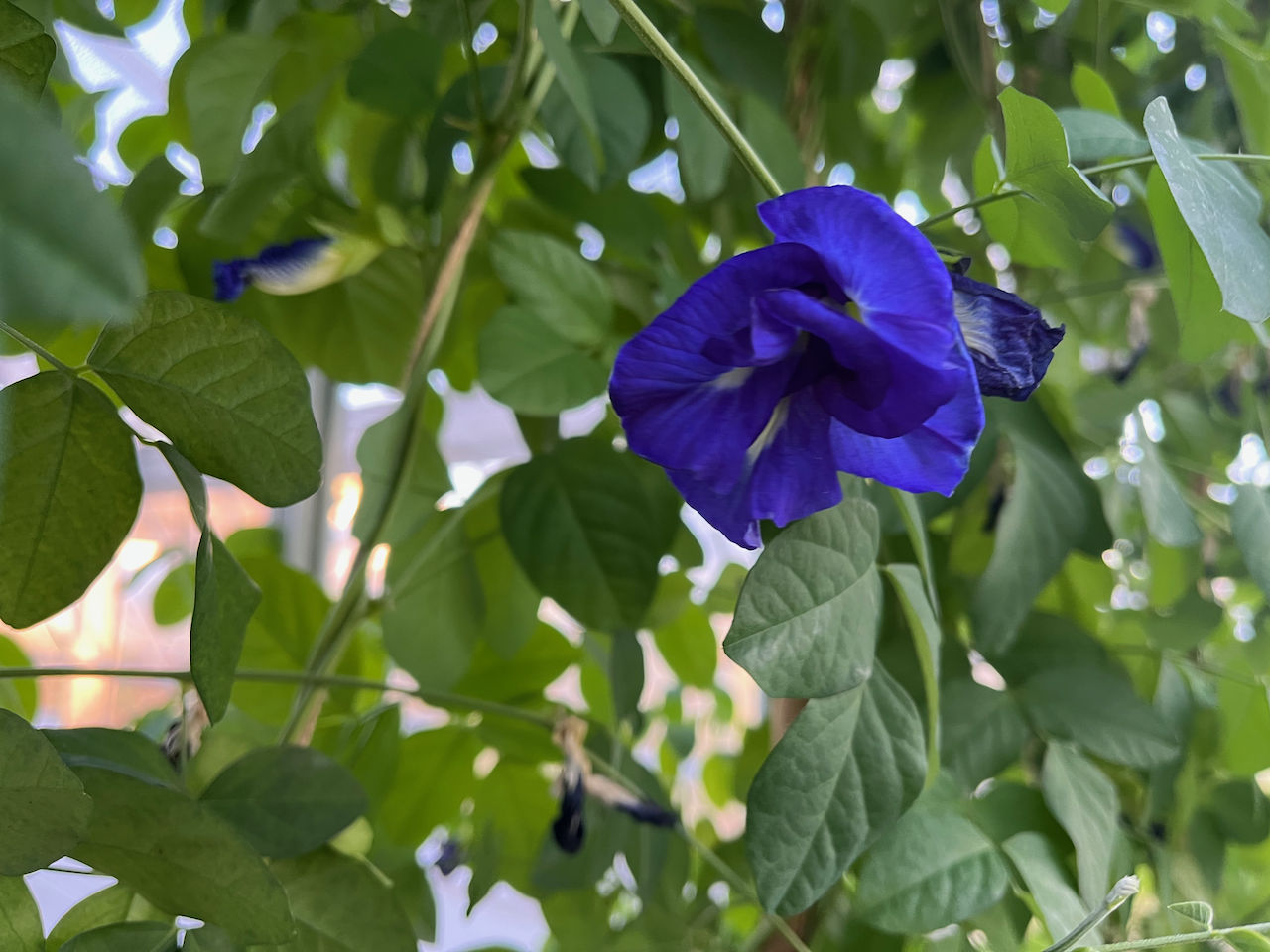
A series of glass covered greenhouses feature more tropical plants that are pushing the limits here for outdoor cultivation in Virginia. Many familiars: turmeric, ginger, basil, butterfly pea, and malabar spinach. The butterfly pea variety they have is stunning, very convoluted and deep blue petals. I’ll definitely be keeping an eye on her for any available seeds before I leave. 

Their little office is adorable and as you might expect, stocked with books, jars and packets of seeds, and found objects like birds’ nests. I was able to get a sneak peek at the new art seed packets that just came in, filled with seeds from the plants they stewarded just outside the office doors: sorghum, tomatoes and corn. Specifically these are heirloom varieties significant to the Appalachian area that were passed onto them from a nearby family that has been keeping them for many generations.

Art packets featuring previous artists in residency’s work, and filled with goodness from seeds saved onsite!

I’m excited to learn more about their seed conservation work and how we might be partner-friends. The folks from Southern Exposure Seed Exchange are going to come visit me here in early September and it will be nice for us seed heads to geek out together! 

The production part of the operation donates most of the produce to the local food pantry, provides a community CSA program (weekly farm share box for sale), and provides ample produce for the residents and staff onsite. Three times a week we are treated to dinner by Chef Jason, who is creative at making tasty dishes with what’s available.

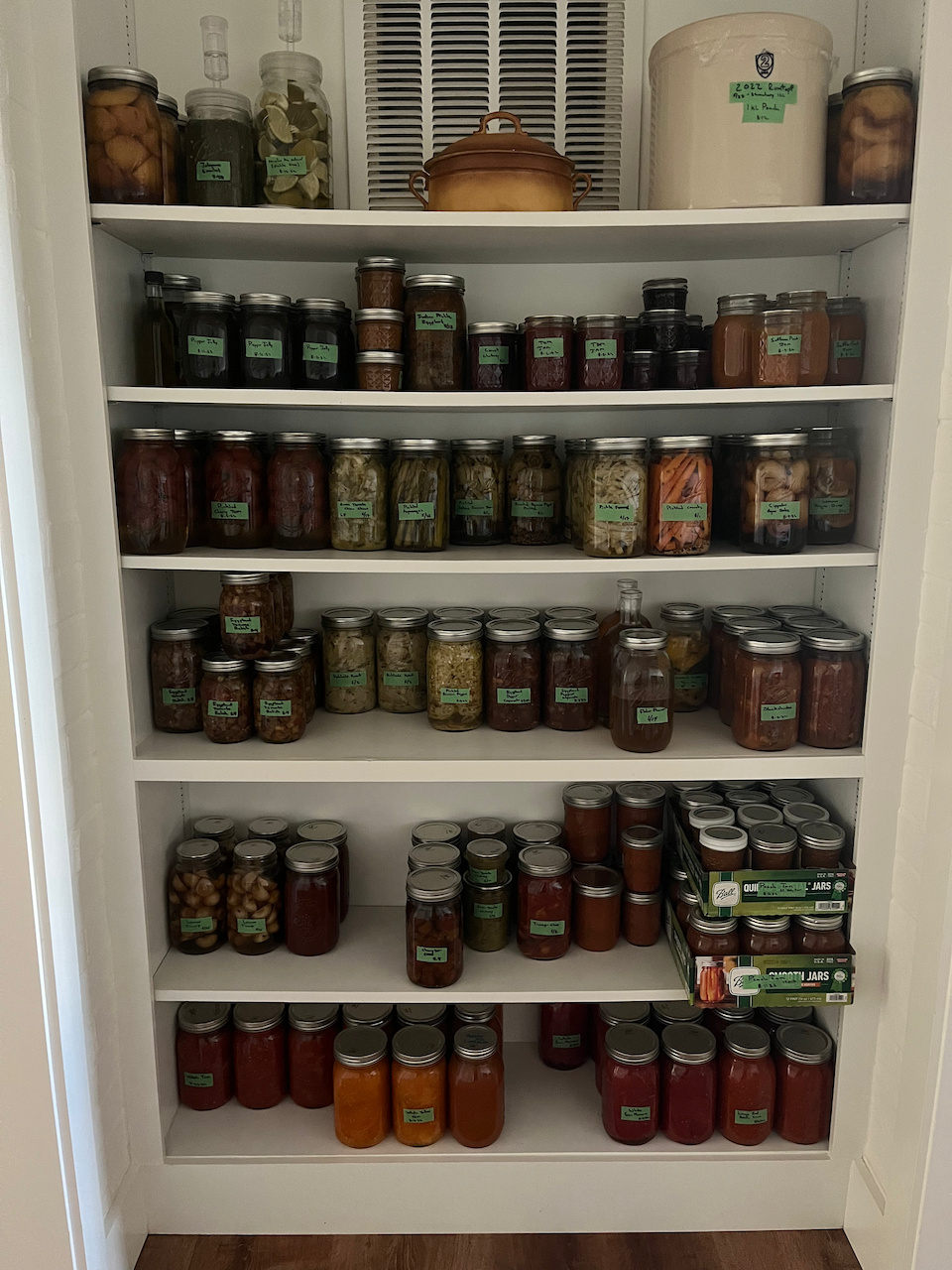
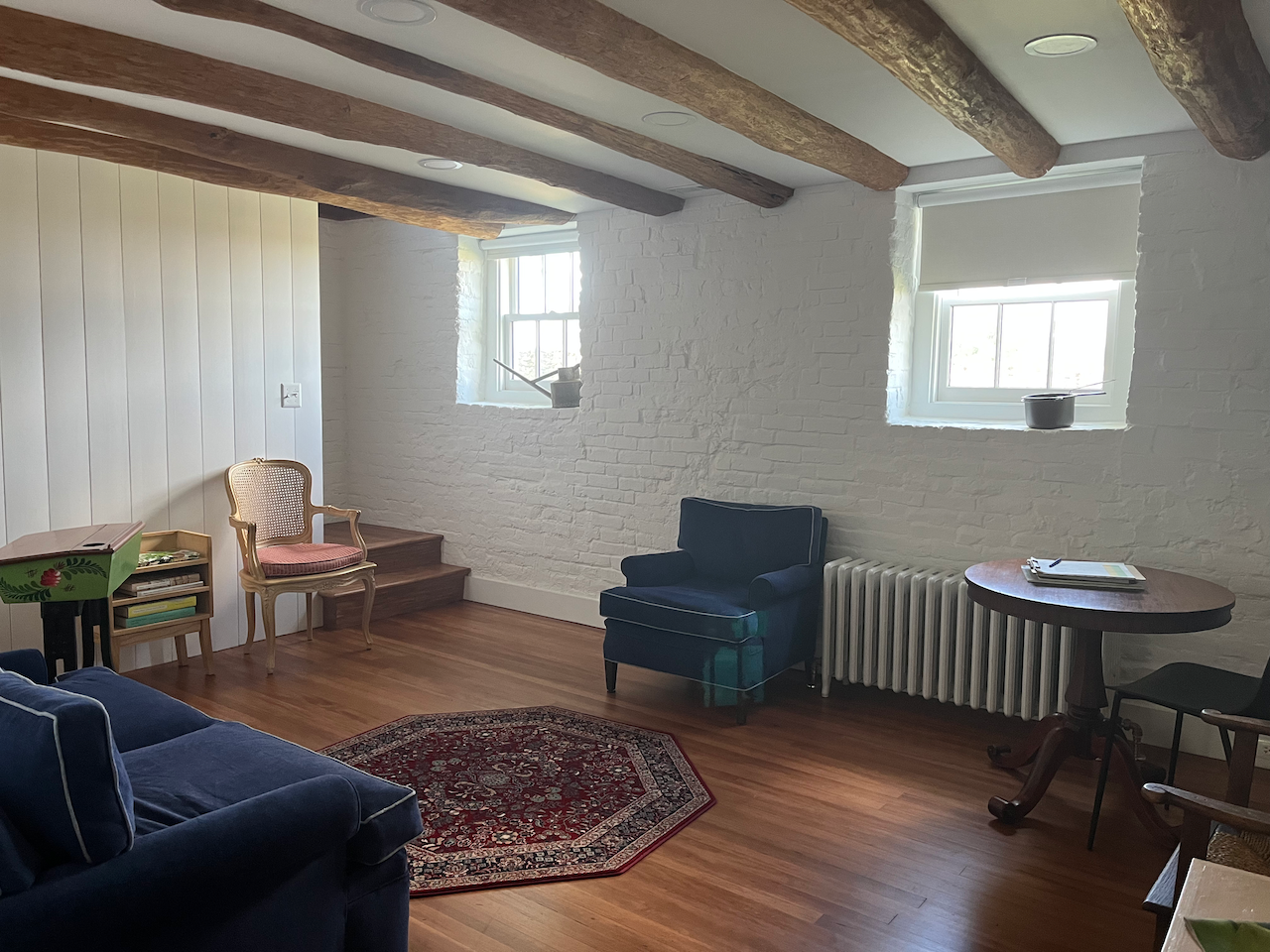
We eat communal meals in the historic school house, which has a cozy little downstairs area with a small sitting room, a few books, and better internet than most of the resident houses. Here is where the chef’s larder exists, a work of art in and of itself! It drew my eye the minute I walked in. I sampled Chef Jason’s homemade tomato jam and I approve, but I still like mine better! 
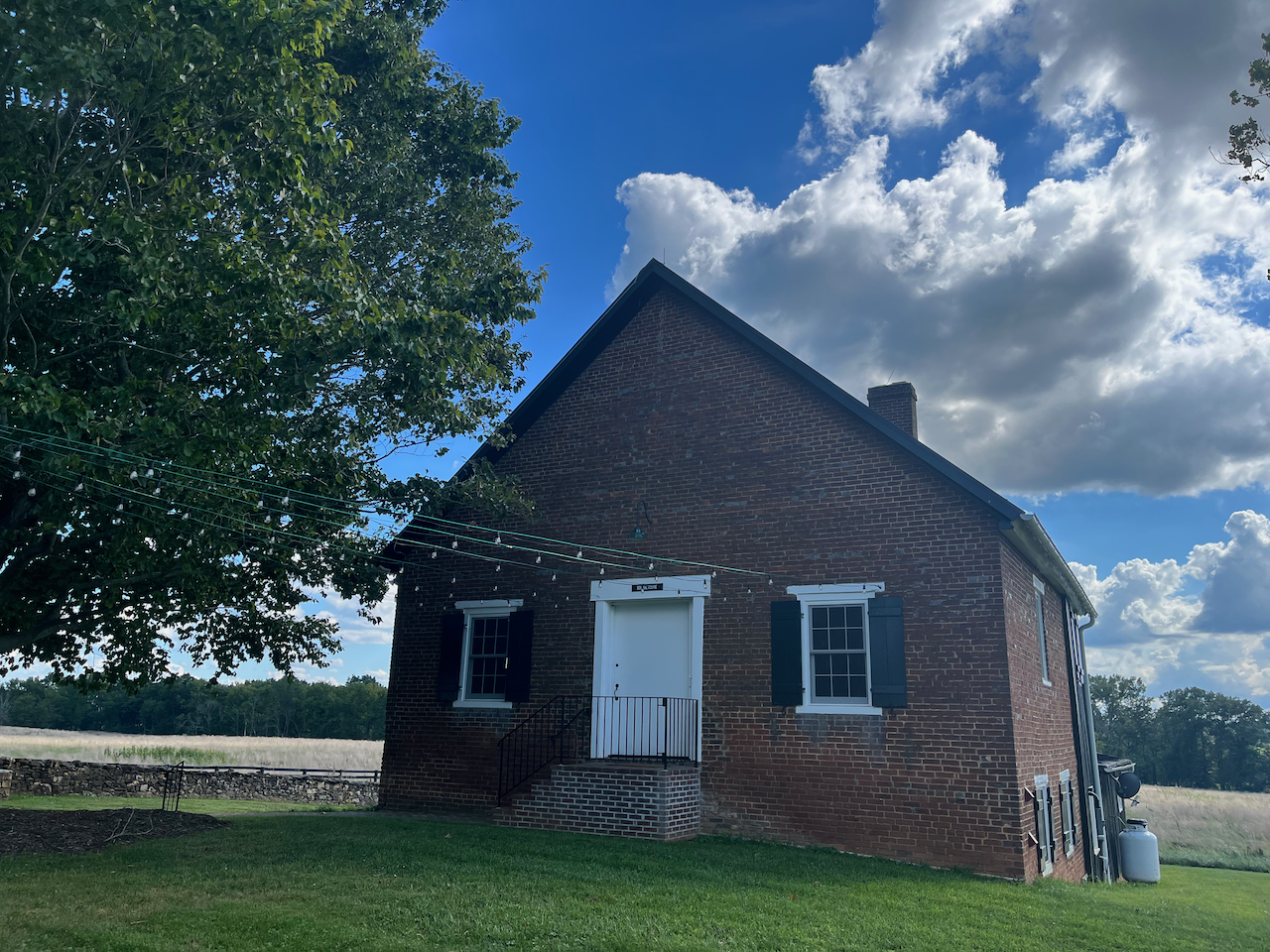
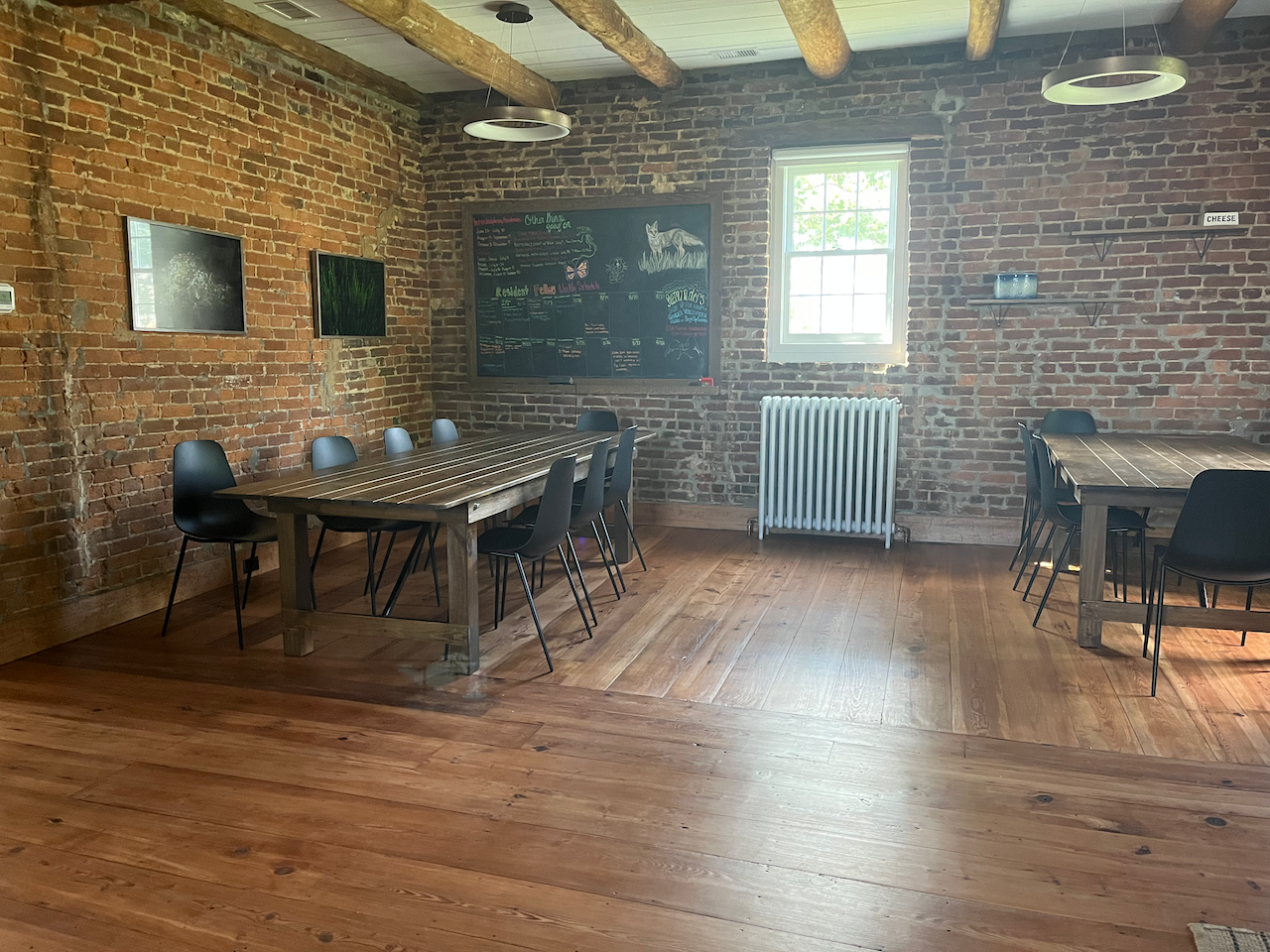
Upstairs is the kitchen and main dining area, cute and well stocked. There is even  enough open space after hours for pop-up mini Zumba workouts! 

Over the weekend, I received notice that extra tomatoes were up for grabs. Figuring no one else would need that many, that some were already starting to go bad, and that I just can’t let good food go to waste, I rescued several pounds of cherry tomatoes and giant heirlooms, which we just don’t get in Florida with regular success. 

I guess old habits die hard, because I immediately went home (after the impromptu chance for a 20 minute Zumba dance workout!) and started making sauce. I used most of it for our Sunday potluck brunch roasting it with eggplants and basil we got in our CSA box. There was extra we used to dip cassava bread into, that Jackie brought from the Dominican Republic, where she’s from. Yum! 

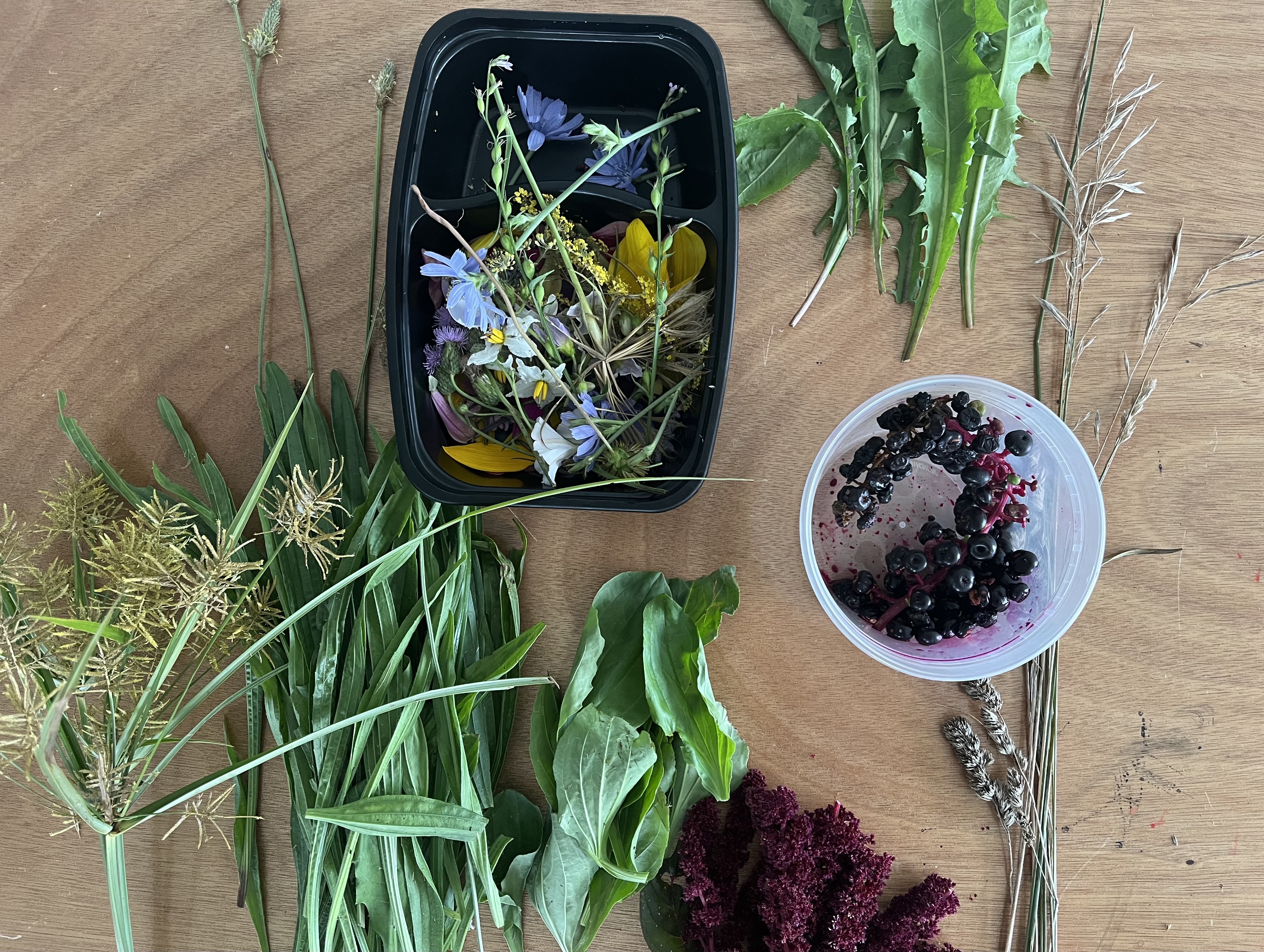
It’s a blessing to be able to eat well while traveling, when it can be easier or unavoidable to eat poorly. I’ve really been enjoying the weekly farm produce and the opportunity to also go pick a few additional items (I ask first!), forage some nutritious local plants, and eat the leftovers from Jason’s incredible meals. 

Every evening, after dinner and doing some art, I wander over to the gardens to see what’s happening. There is always something new to see, even though I’ve now visited multiple times. The first evening, 3 very active Sphinx moths were cruising the lilies and four o’clocks. I felt them before I saw them. They came so close a few times that I felt their wings and wind near my face, and heard their distinctive vibrations. Their proboscis is so long, specialized for a deep drink into long tunneled flowers. I imagine they came from the tomatoes nearby, where their previous life as a tomato hornworm started out. Although I did search and couldn’t find evidence. 

Amazing I could get one clear-ish photo of these active moths! Look at that proboscis!

Other daily observations: The Goldfinches seem exuberant over the wild thistles going to seed everywhere; Kestrels swoop in for the cornucopia of field insects and small birds; sparrows are snacking on plants going to seed in the gardens; rabbits are hopping about being cute little naughty garden pests; an array of pollinators are visiting the diverse buffet of flowering crops; and the indigo vat nearby bubbles silently its blue riches, filled with leaves picked just a few days ago. It really feels like home even though the seasons are off by a bit, and some of the flora and fauna are different.

There are a lot of rabbits, ground hogs, and squirrels that are serious farm pests, but they say Buddy the 15 year old black cat does a formidable job of keeping them in check. Of course he’s likely also eating birds and frogs, but hopefully his belly is mostly full of organically fed, free ranging rabbit and squirrel. 

Naughty little garden bunny better watch out for Buddy.

Being here for a total of 5 weeks I’ll get to observe a lot of changes as the microseasons shift from late summer to early fall. I’m excited to volunteer at the farm at least one morning a week and help out. I always appreciate volunteers that help us at our gardens at GROW HUB, especially those that kinda know their way around a garden. It’s a lot of work to maintain these spaces, and it shows. 

I am so grateful for this backdrop and canvas of both inspiration and beauty, while I am provided ample time to explore, create and rest.
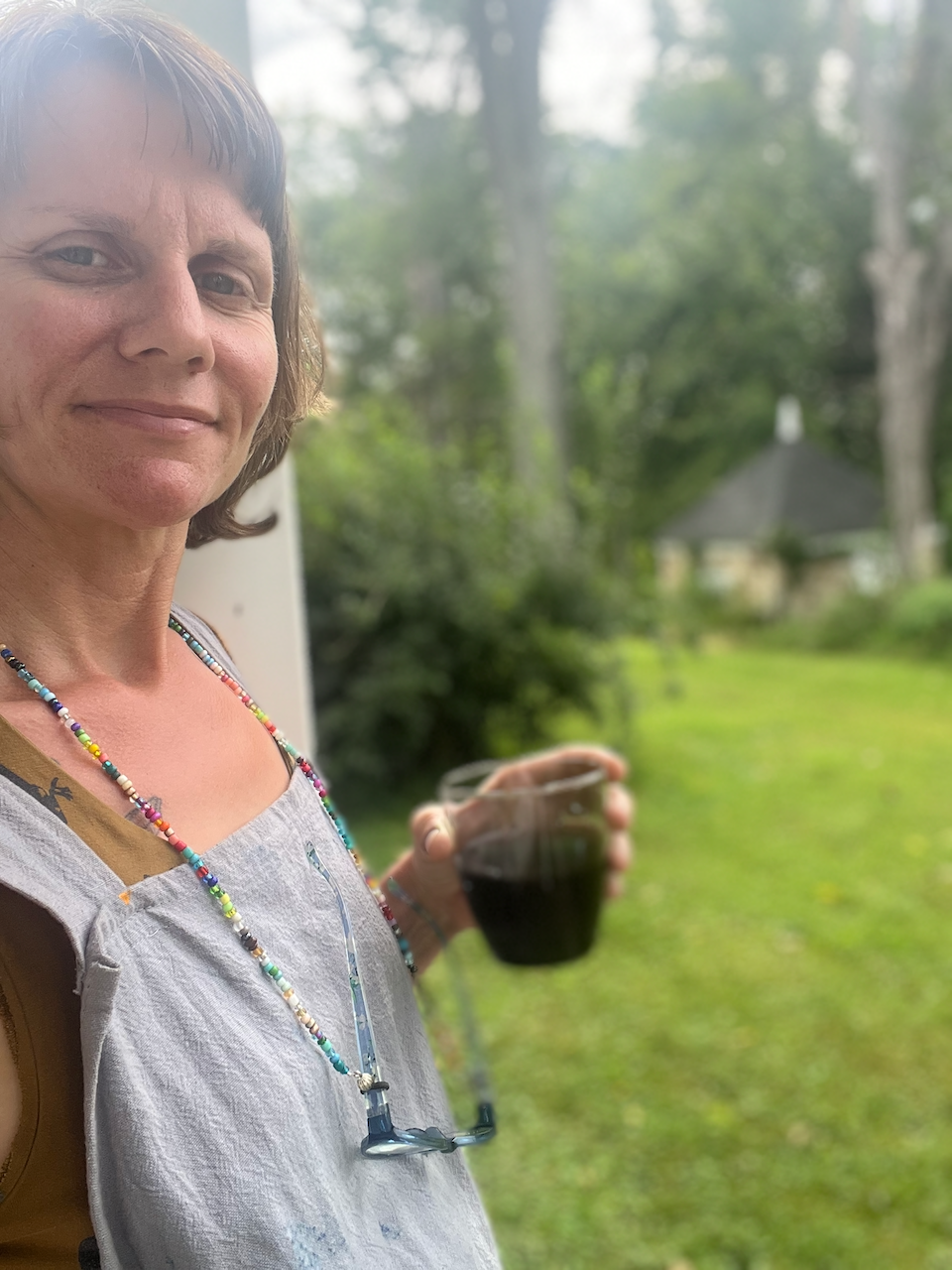
Butterfly pea + tulsi tea, art smock on, reading glasses, ready to paint!

taming the feral everglades currant tomato

A few years ago after the culmination of several inspiring events and ideas, I decided it would be fun to try taming the wild and beloved Everglades currant tomato. It’s a prolific plant in our sub tropical climate that otherwise mocks and torments other tomatoes and their attempts to make it here. But there are a few issues with these tiny maters I’ll explain later. Let’s just say that farmers would never grow them, and gardeners with small spaces would probably regret it!

Tasty but tiny and need picking daily, prone to cracking.

I met Craig LeHoullier, a self-taught plant breeder, tomato lover, author, and gardener at the annual Seed Savers Exchange Conference and Campout several years ago. His love for tomatoes and creating new varieties was infectious, and I caught the bug! Then a couple of years later, I went on a road trip to visit his driveway tomato lab in Raleigh, NC. I took my friend Tim, an aspiring plant breeder and tomato lover because they had to meet and become friends. I listened to them blabber on excitedly about things I didn’t understand as we rocked in our chairs on Craig’s amazing back porch, overlooking his garden and bird feeders.

Tim (left) and Craig in the driveway tomato lab in Raleigh, NC.

I had an aha moment, when I realized that this kind of work doesn’t require one to have a degree or any experience with plant breeding at all to try it! Craig learned how to do this on his own with an unrelated professional background in pharmaceuticals. And he did it in his driveway. In pots. While facilitating with others across the globe, the creation of so many new varieties that you can now buy online in many seed catalogs (check out the Dwarf Tomato Breeding Project). Tim taught himself as well, and so has nearly every human in previous generations that grew food and saved seeds. Which was most people, because we didn’t have the luxury not to procure our own sustenance.

Inspired but not quite ready, I just let that planted seed rest. A few years later at the Organic Seed Growers Conference put on by Organic Seed Alliance in early 2020, I then caught the “landrace plant breeding” bug from Joseph Lofthouse. Joseph is a Utah farmer who turned modern plant breeding standards upside down by advocating for highly promiscuous plants and strategies to encourage lots of genetic diversity and resilience. His crops and seeds are beautiful. He just wrote a book about it, and a signed copy is on it’s way to my house now! I can’t wait!!

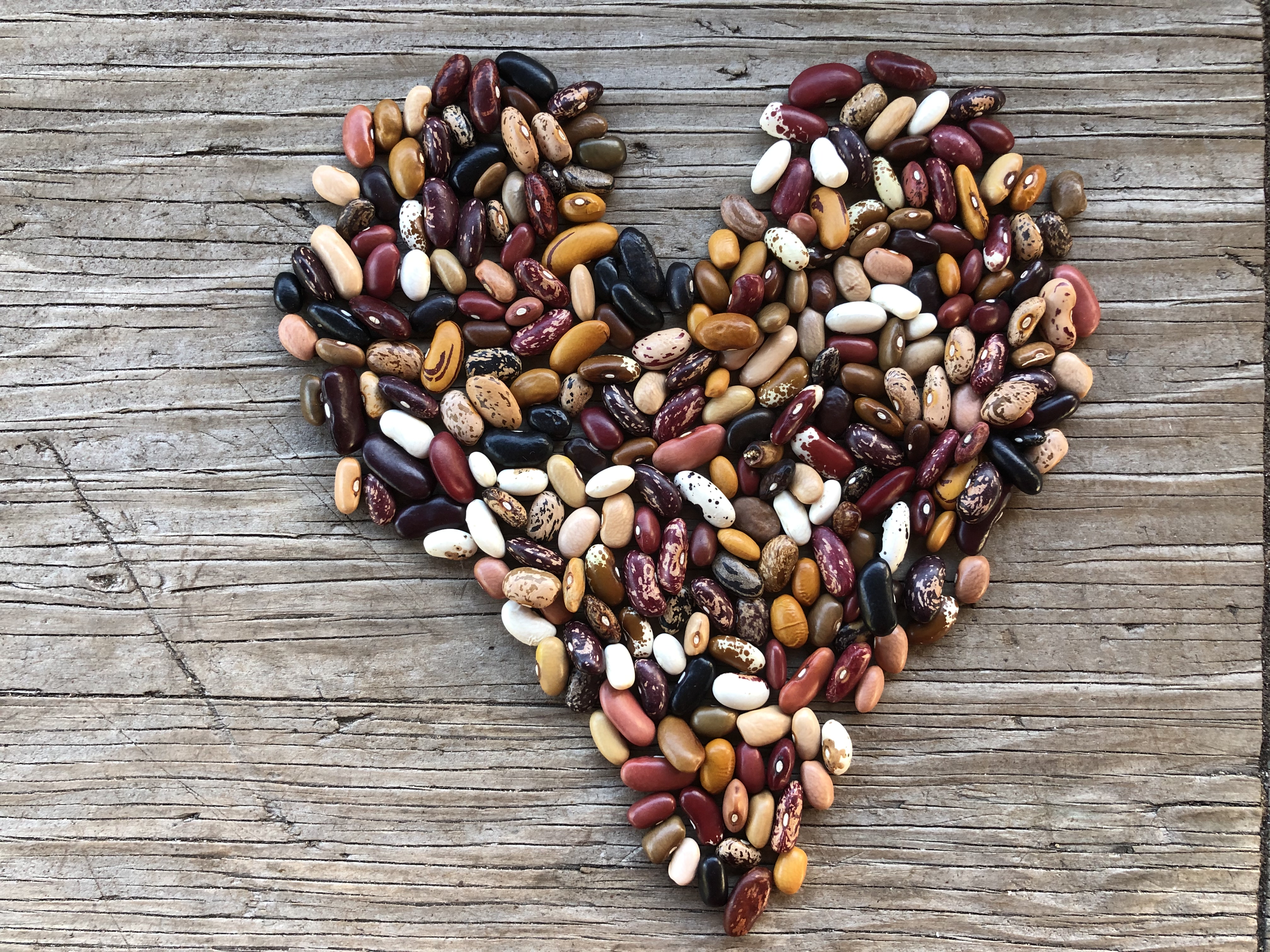
The Lofthouse Landrace Bush Bean “variety”. Note: not uniform.

Many years ago as a new grower and seed saver, I had fallen in love with the Everglades currant tomato. It’s a different species (Solanum pimpinellifolium) than your regular garden tomato (Solanum lycopersicum). Supposedly naturalized in South Florida, this feral plant is spread by birds. I have seen it with my own eyes, the red birds feast on them and poop them out in my yard! I don’t have to plant them anymore.They are tasty and abundant little flavor packed little fruits, and certainly the most resilient tomato I had ever grown.

The cardinals in our backyard are comfortable enough with me to let me watch their babies grow up. I can’t be sure, but I’m pretty sure they are fed a diet partially including Everglades currant tomatoes.

When you have success as a gardener, it makes you feel pretty good. I like saving seeds from successful feel-good plants and sharing them with others so they may feel good too, and have food to eat and share.

But. She is too wild and takes up lots of space, fruits are arguably too small even though they make up for it in flavor. Halp! I want the flavor and resilience in our climate but a more tame plant with larger fruit.

Call in my friend Craig! He hand-pollinated a Florida Everglades Tomato with a dwarf variety Tanuda Red and ta-da!!! A breeding project begins!

So we are now as they say in the industry…in the F4 phase. That is the fourth generation of saved seeds from the original cross, are in the ground growing now. The season is nearly over and we are narrowing down our selection to move forward. Each week Sarah and I ranked each of 46 plants we could cram into our seed saving gardens at Grow Hub. We ranked them on overall vigor, health, disease resistance, sprawl, and of course- flavor!

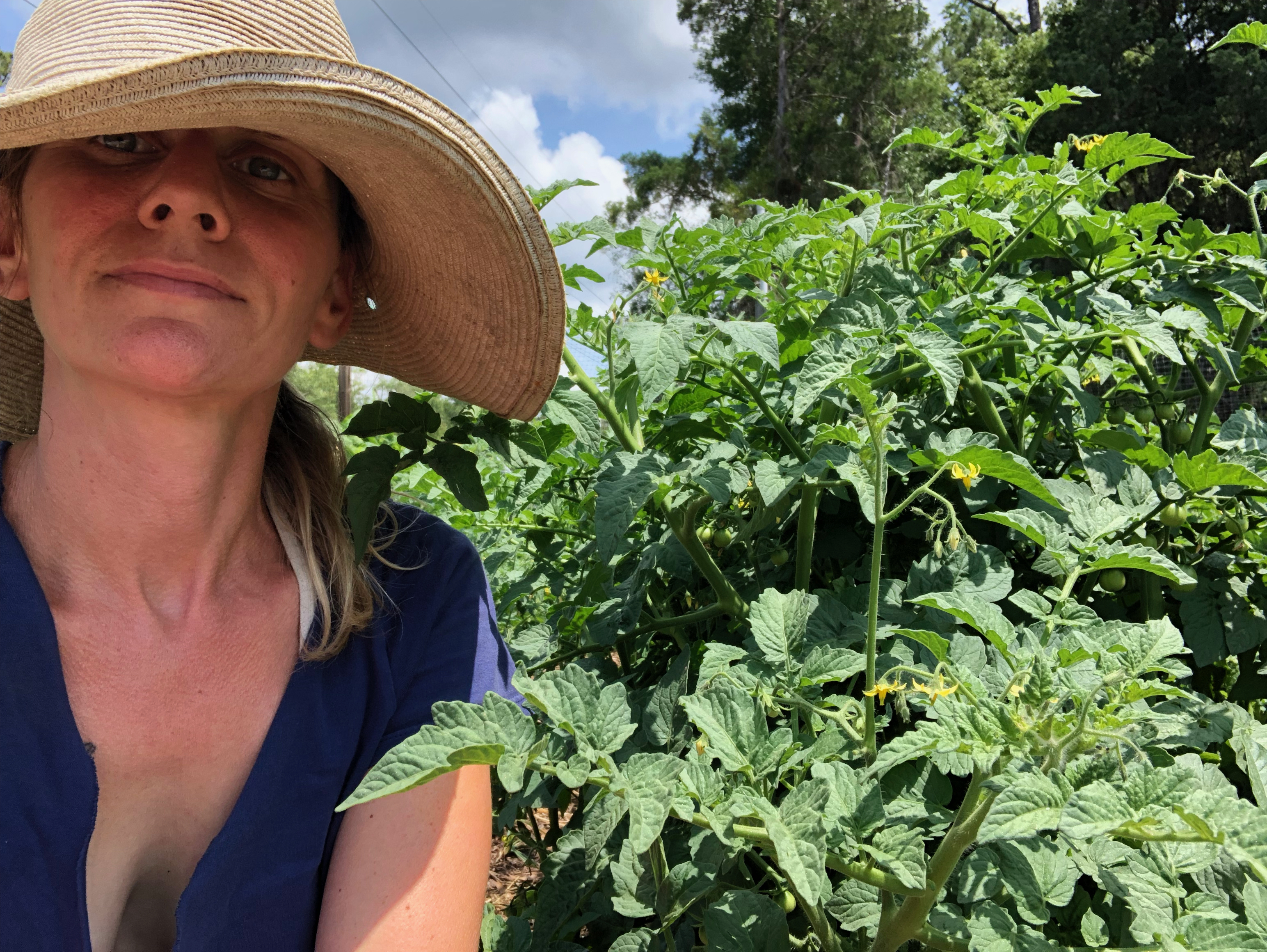
Rookie mistake: we planted them too close. I *thought* since they should be “dwarfier” that we could get away with 3′ spacing like a regular tomato and still have plenty of room to see each individual plant. WRONG!!! It was a jungle and we had issues. Next year, 4 or 5′ (mostly because we are evaluating and need to see) and every other row! Plus it was a bad/good year depending how you look at, for venomous moccasins that we found TWICE in the tomato patch.

We farmed the tasting part out to many of our Working Food friends and followers. Flavor is subjective and if it were just up to me to rate them, we’d be in trouble. One person’s spit-yuck pile, is another’s #1, so we had a lot of people provide input. We are winnowing down our selection based on overall plant vigor and community input on flavor.

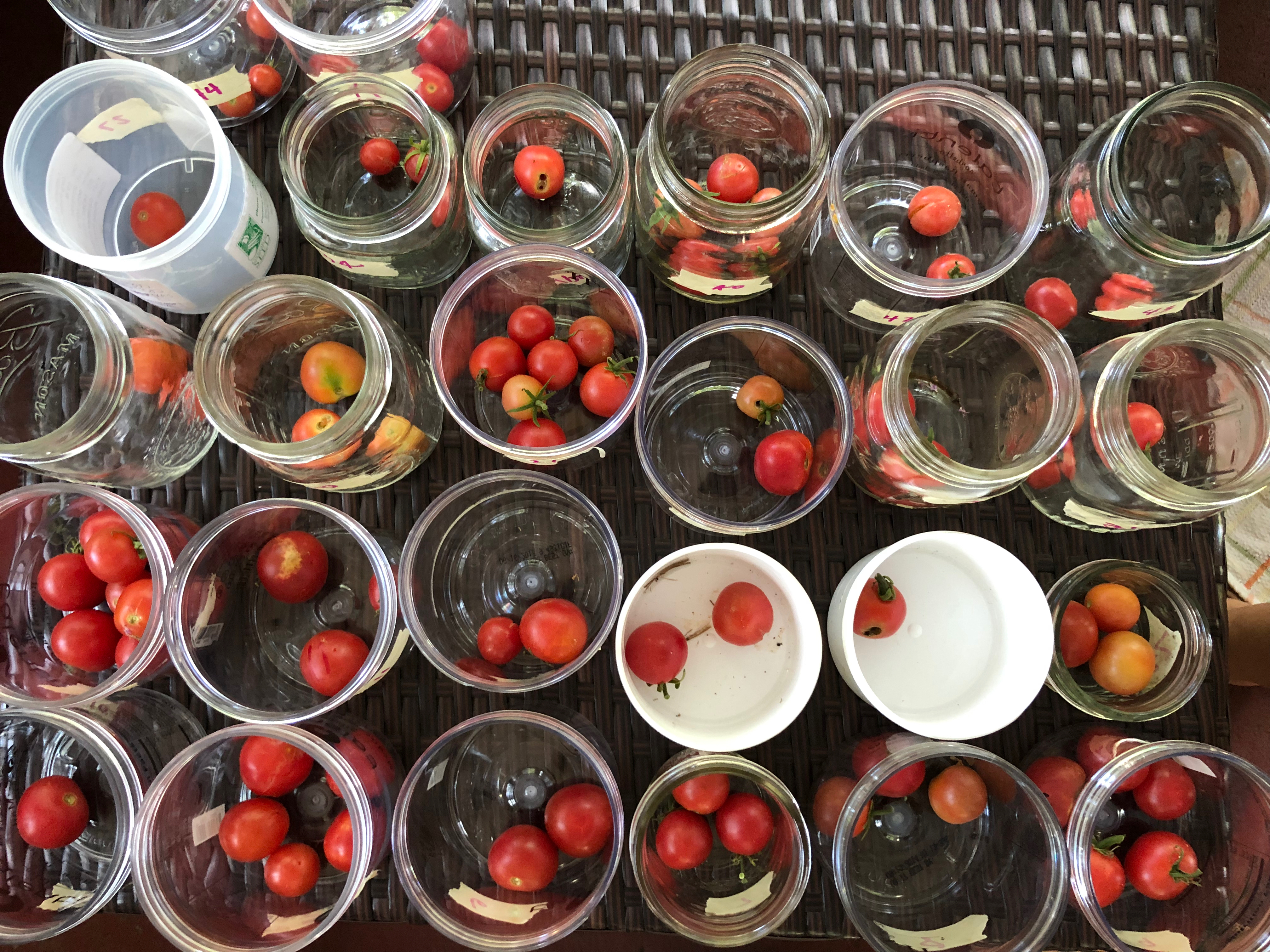
46 plants (all from ONE plant’s seeds saved earlier (plant # 16) in total, each of which was kept separate so we could save seeds, admire the fruits and take notes, and taste them. It was ALOT. OF. WORK. I am so grateful for Sarah and Jenna helping keep all these sorted and organized.

We had a lot of plants that couldn’t hide their mother’s feral tendencies. While the fruits were much larger (think regular to very large cherry size), the plants were still a bit much! A few were true dwarfs. So we’ll narrow it down soon, and get excited for next season, F5. The fifth generation.

It takes about 8 generations to get a stable new variety. So we are getting closer! Soon we hope to release an open-source seed for you to enjoy! Grow it, save your own seeds, make your own new varieties. We’ll never hold any patents or power over seeds, they are a common good for everyone.

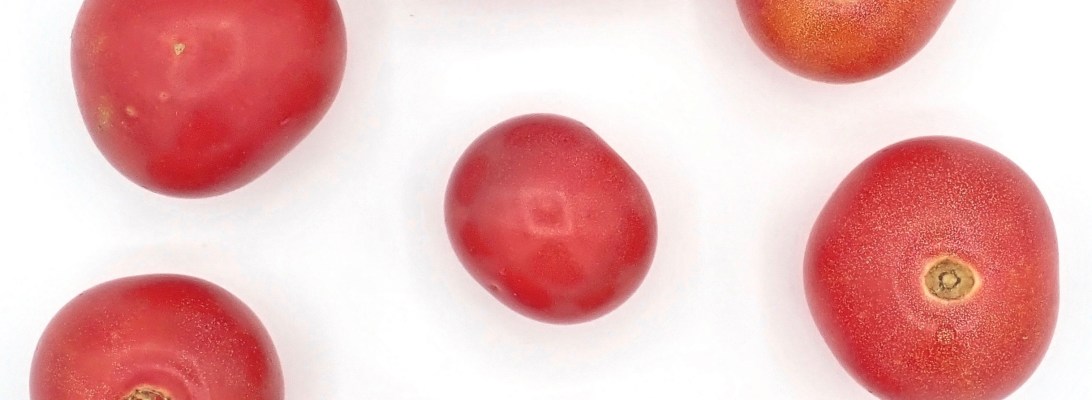
One of our tasters and friends Wendy, also takes these glorious photos of plants. These are a few different fruits. Hard to tell the scale, but they are much larger fruits than the Everglades.

40th year and 4 wonderful things

This is my 40th year. In July I’ll officially have lived on this planet for 40 years. Lucky me! It’s been one hell of a ride.

I embrace aging, and they were right! All those wise people told me growing up that it gets better, and at this point at least, I’d have to agree! The lines deep around my eyes are testament to my time outdoors observing wildlife, sowing seeds, and smiling and laughing a lot. The past 5 years in particular have really been powerful, aging me sublimely like a good wine. If it gets better than this, I’m ready for more!

In my 40th year, there are FOUR big things I’ve recognized as powerful driving forces and milestones. In no particular order:

ONE

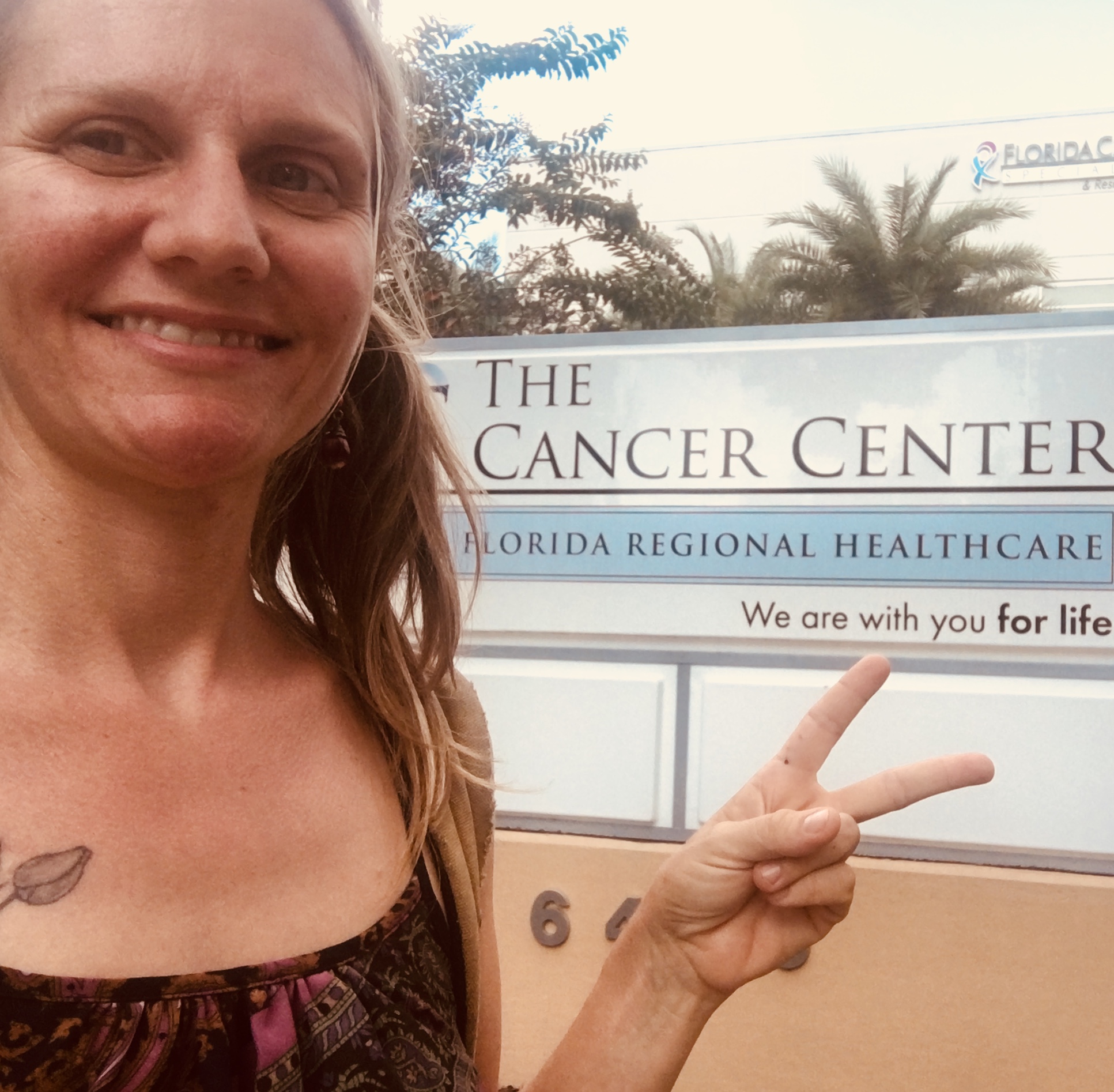
It’s the first time in 7 years, that I will not have to lie in a CT scanning tunnel, wondering what the machine is seeing inside my body. I’m cured of cancer, and this is the first year I won’t have to schedule that appointment. As you may have read in previous posts, despite the insanity of navigating a life with cancer, I am grateful for the experience, the lessons, the perspectives. The greatest, most fucked up gift I’ve ever received. But this year, I won’t devote one minute to sitting in a scrubbed sterile, cramped, dreadful medical facility.

Peace out, hope to never come back here again unless I’m volunteering or something.

TWO

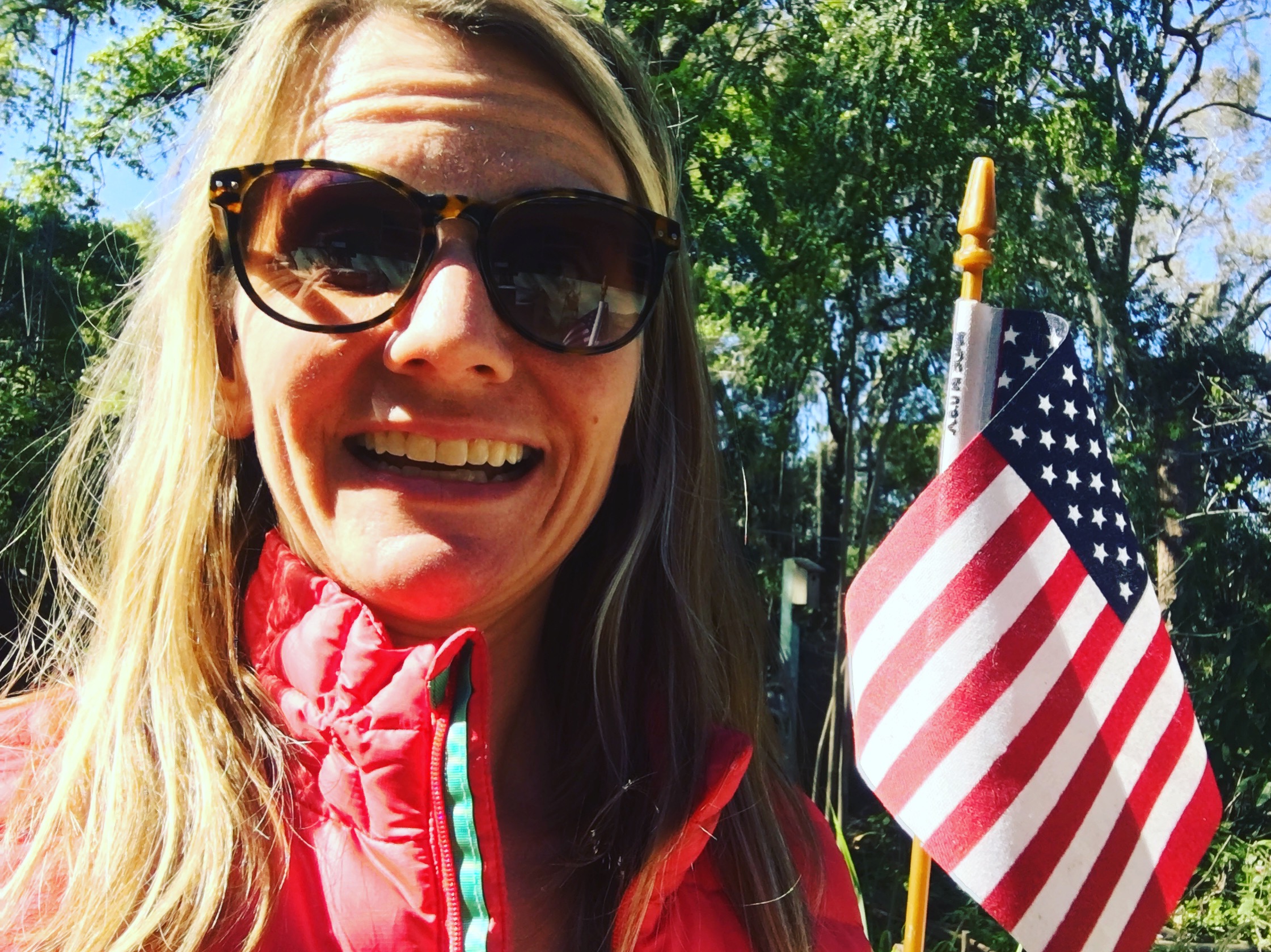
I’ll become a US citizen next week! Don’t get emotional on me, or assume I’ve made a huge mistake with this awful political climate here. I WANT to be here. Even though I am from Canada- a safe, polite, and typically more liberal country, this is home. Gainesville, Florida has it’s wild and succulent roots growing throughout me and there is no way I can leave. I want to vote, I want to know I will not be evicted from this place. Home is where Mike, Huxley, Gwen, my friends, my nature, my gardens, my seeds, my life is.

Yay!!! I’ll do my part to make America stay great and maybe get a little bit better? USA!

THREE

The non-profit business I’ve incubated for years with Anna, and more recently Maya, Sarah and now Jesse (holy women powerhouse team!) is really, like really, growing this year. For years I’ve built this seed program little by little, and as we slowly made our way to the national scene-we have reached a point where two major federal projects were funded to help us magnify the work we do with regional seed.

Little, little me in my Gainesville bubble, is sought out by people around the country to help write project proposals, plan national conferences, serve on advisory boards, and collaborate on powerful projects. So many beautiful threads have been woven along the way that are too long to list but suffice it to say, have created this tapestry of community, food, seed, art….that is beyond what I could have imagined.

Well. That’s not entirely true. These things were on my vision board for sure. I dreamed them and worked really fucking hard to make them happen. But in reality, in the flesh, in our office, in our gardens, in our event space – they are so real, so beautiful, so beyond what is contained within them, that it was impossible to know what this felt like. I almost can’t believe it, and pinch myself. Is this really happening?

So many things to grow, so little time!

FOUR

Corn. Yes, corn. Let me explain. Clearly you know by now I’m a seed freak. Early in my gardening days, I advocated against people growing and eating corn. It wasn’t good for you, required a lot of fertilizer and water, often presented itself as mono-cropped GMOS sucking out the rich prairie soils and eliminating habitat in the mid-west, purely to be sold as high fructose corn syrup and ethanol.

That’s all true, but corn is SO much more. I learned over the years from very wise people about the true nature and story of corn, as an ancestral crop that sustained people over many thousands of years, coaxed from the wild into unimaginable diverse varieties spanning the globe. Corn was beyond good for you if treated respectfully. Then I learned about seeds and saving them…and corn frightened me. It seemed the most daunting: easily crossed with other corns within miles, required a really high number of plants to grow in order to have good genetic diversity, and then the giant ears, the shucking….naaaaa. I was saving that project for later. Some time down the road when I was ready.

Well this year, after a few years of dabbling, it’s happening and I didn’t really see it coming. A valuable, endangered, heirloom that only a few in our community have been passionately and desperately trying to keep alive—really needs my help. I won’t be growing it myself like I did last year or 3 years prior, but I am connecting the dots, to the right people to do it. This year it’s not me. I can’t. But I know who can.

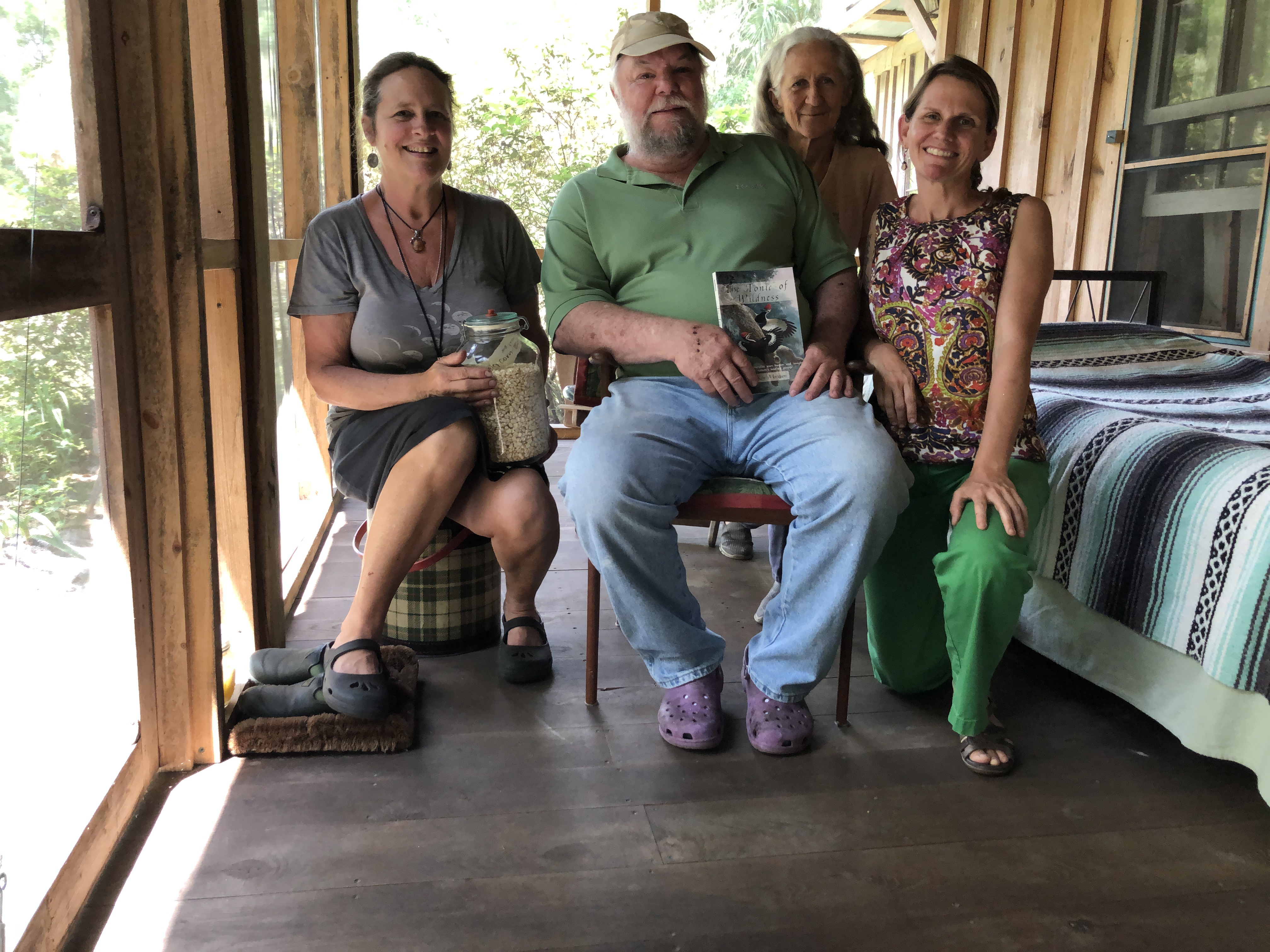
Yesterday, in a quaint old Florida home, nestled in the back woods of Cross Creek, where it feels like you’ve stepped way back in time, I convened with 3 other beautiful people to discuss the plight, opportunity, and plan of attack for saving this corn. Like me, it belongs here. So I’ll fight to save it. If we can successfully revive it and share it, it will surely make once again as it did as far back as the 1800’s, the finest grits, the best bourbon, and the tastiest cornbread.

Community, responsibility, corn! Left to right: Karen Sherwood, Jack Simmons, Sally Morrison and me!

So 40 is looking great! Cancer-free, the rights and responsibilities of citizenship, a meaningful career, and corn! What more is a girl to want? Oh, I also learned how to floss (the dance, not the dental hygiene practice), and my sweet little niece will be turning 1!


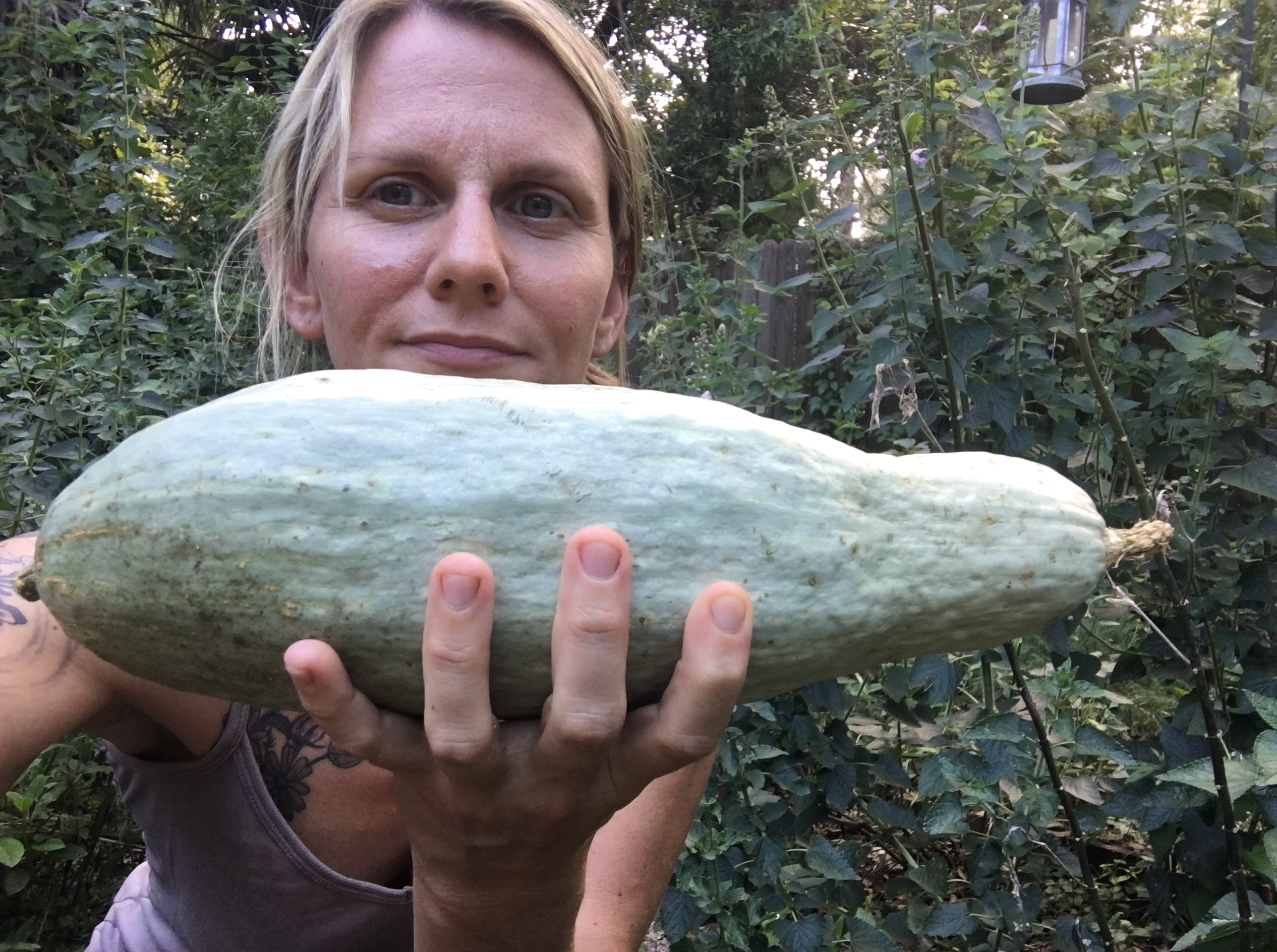
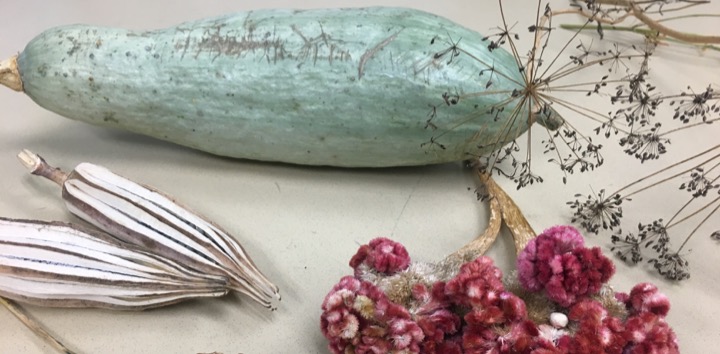
Guatemalan Blue Squash!

I love interesting and unique plants, that make people oooh and ahhh when you describe it, or better yet show it off. As a seed steward, I especially like the plants that let me have my cake and eat it too, so to speak. Winter squash is one of them; the seeds are ripe at the same time that the fruits are ready to eat. Win, win!

My friend Joe is also a fan of the weird stuff and tips me off when he finds something cool. Usually he’ll give me a sample, or a tour of the beautiful jungle that is his perennial food forest behind Mosswood Farm Store in Micanopy.

About a month ago, he handed me this beautiful light blue-ish green squash.  Basically he said: “This is delicious, grows like a weed, takes over the garden. You really need to offer this in the seed collective.

Behold! She was a real beauty! I left her to sit on the kitchen table for awhile to let the seeds plump up, and the flesh sweeten. Plus I wanted to admire it a bit longer. It’s kind of my thing to let vegetables sit on the table as long as possible. That’s why I have a whole series of “Arthur & The Squash” photos of my kitty lounging amongst squashes of different kinds throughout the year.

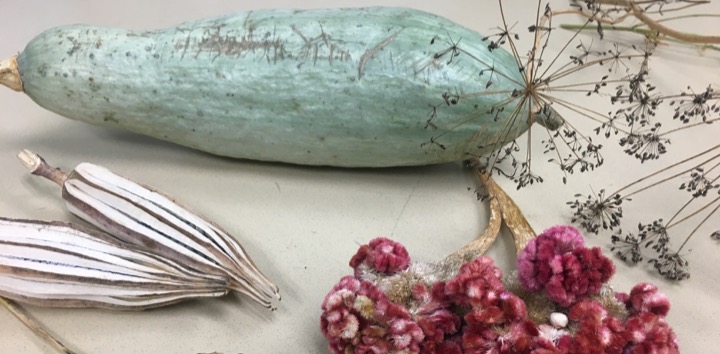
I conveniently received this gift on the day I was to give a talk at a local library about summer gardening. I always like to have a pretty display with me. Perfect! She went well with my other treasures, some dried okra, celosia, and dill.

Today, I finally got around to eating it. I’ve been busy and in a cooking slump lately, so it took me a long time to get my butt in gear! I cut it into chunky rounds and removed the seeds, which ended up being pretty easy to clean compared to other squashes.

I baked at 400F for about 40 minutes and covered lightly with a piece of foil. I also had some butternut squash and so I roasted that too. I was way too tired and uncreative to make anything awesome with them, so I simply spooned out the flesh and ate it, as is.

The texture was super smooth and creamy, with great squashy flavor. In my opinion it had much better texture and flavor than it’s butternut cousin. The butternut is more fibrous and not nearly as flavorful. This would make a great ingredient for a pie, bread, soup, or curry.

I let the seeds sit in water for about 4 hours to do a light ferment (not necessary but some like to do it), then dried them out on a napkin for several days before storing them. Ideally, I’d have seeds from a dozen or so different squashes, but I’ll get some more from Joe, mix em up, and plant a crop sometime next season. Fortunately because it’s a Cucurbita maxima and not C. moschata, I don’t need to worry about them cross-pollinating with my precious Seminole Pumpkin. So I can grow both. IF there is room! Both are vigorous vining, climbing beasts.


a seed waits for no one

This time of year in our seed saving gardens, there are many long days. Many, many long days! When seeds are mature, particularly those with no protective casing from the elements or predators, it is critical to capture them as soon as possible. After an entire season of keeping plants healthy all the way through their reproductive cycle, I can’t skip a beat. Or I will have wasted all that effort. All those aphids squished, all the weeds pulled, the off-types pulled, the side-dressing of compost, the spreadsheets and planning that organized that garden in the first place. Wasted!

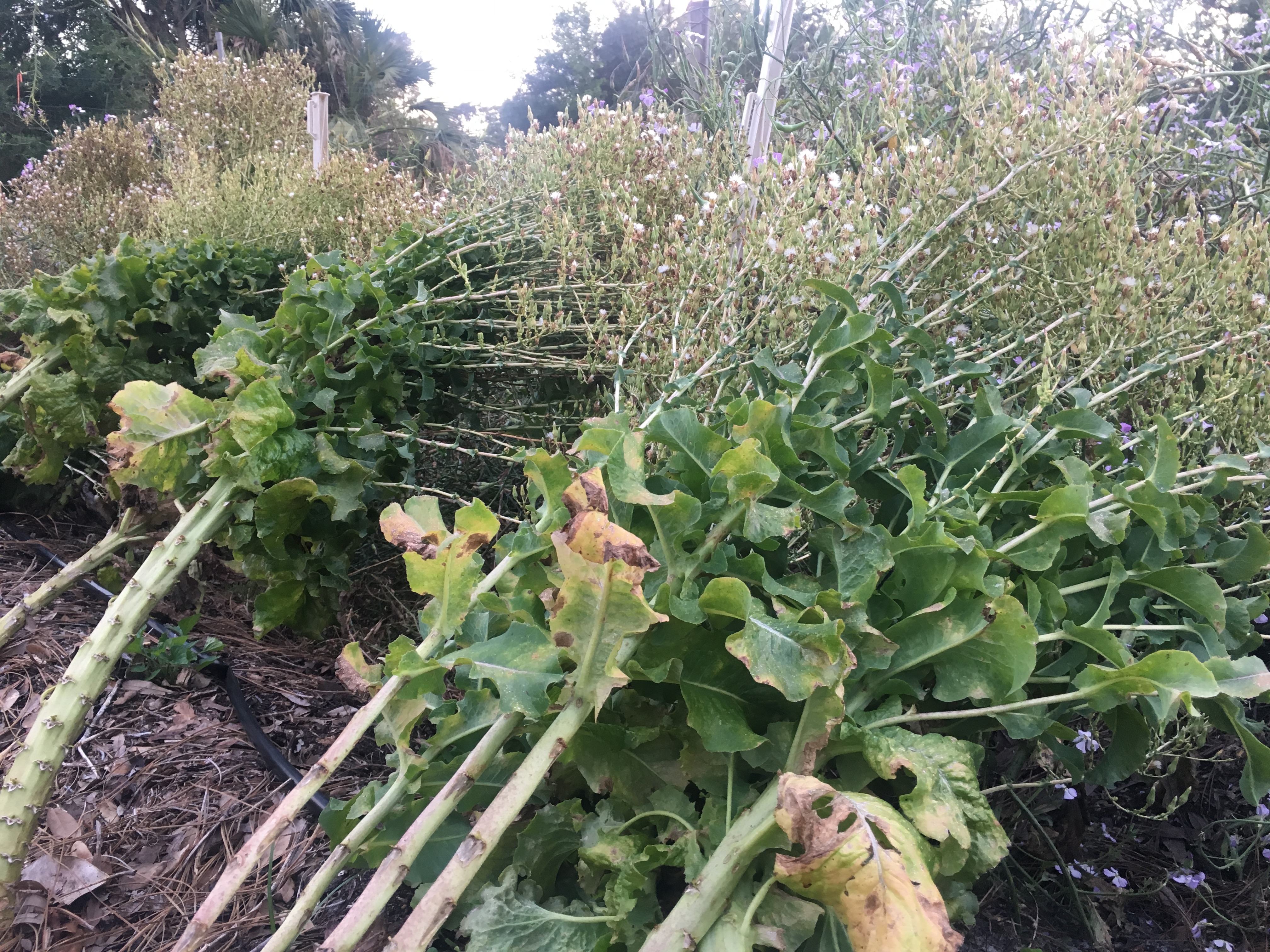
Lettuce plants long past the edible stage, heavy with seed and ready for harvest. Waits for no one.

So every year, about this time depending on the daily weather and overall climate patterns (really keeping us growers on edge), I am working long hours. Long and happy hours to be clear. This is the part that excites me the most! Sometimes I actually forget I can eat the things I grow, because I’m just awaiting their seed, all the while watching them grow and making sure they deserve to enter my seed bank. The sounds of seed plinking into a bucket, the satisfaction of sifting chaff from seed, and watching a pile of chaos and panicked insects (unavoidably just gathered up along with the seed) turn into clean, beautiful seed is what I live for.

Obsessive checking of the seed’s maturity in the field, and the weather (about 3 times a day) begins in earnest. Will it rain tomorrow? Oh shoot, better make sure I get those mustard seeds tonight then! It’s reaching into the low 90s next few days? Drat, better get those seeds out of the hot barn loft where they are drying. More lettuce seeds are ready now? We’ll need to clean up the others that are drying to make room for the next batch. Oh SHOOT, the cool-bot just malfunctioned and made the cooler ice up…. aaaaand Mr. Feaster just called and needs help collecting seeds. Now. Because rain might be coming.

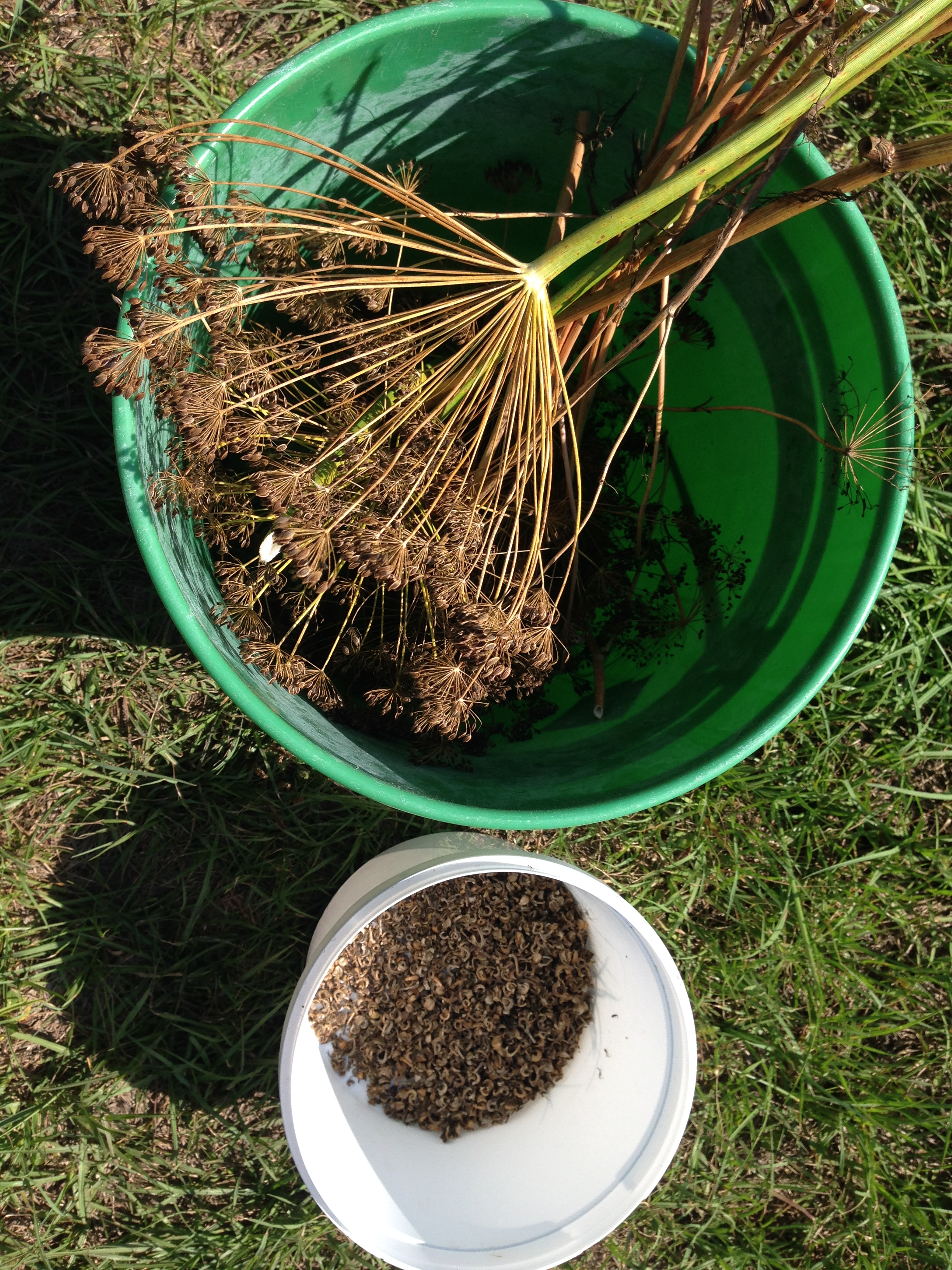
With no pods for protection many seeds, like dill must be gathered before our humidity gets to them.

Evenings are spent shaking seeds into buckets. Weekends are spent rotating drying piles of plants in front of fans, making sure they don’t get too hot, or not get enough air. Afternoons, after myriad other things in the day of a life of a non-profit employee, are spent driving out of town down a bumpy and washed out country road to gather seeds at a friend’s place, who is helping with the effort to steward local varieties.

A seed will not wait for when it’s convenient for me to gather it. It could blow away on the wind, drop to the ground, or become moldy, infected with disease, or eaten by insects or birds before I get to it on time. This is where the ancient dance between domesticated crops and humans plays out. They need us as much as we need them. Sure, some of our crops especially the kind I like to play with, have enough determination to come up on their own next year, somewhere, without my help. Others will not. And if the goal is seed for the community, and preservation of our agricultural biodiversity, then I can’t dilly dally. Otherwise they disappear from our gardens, our memories, and our culture.

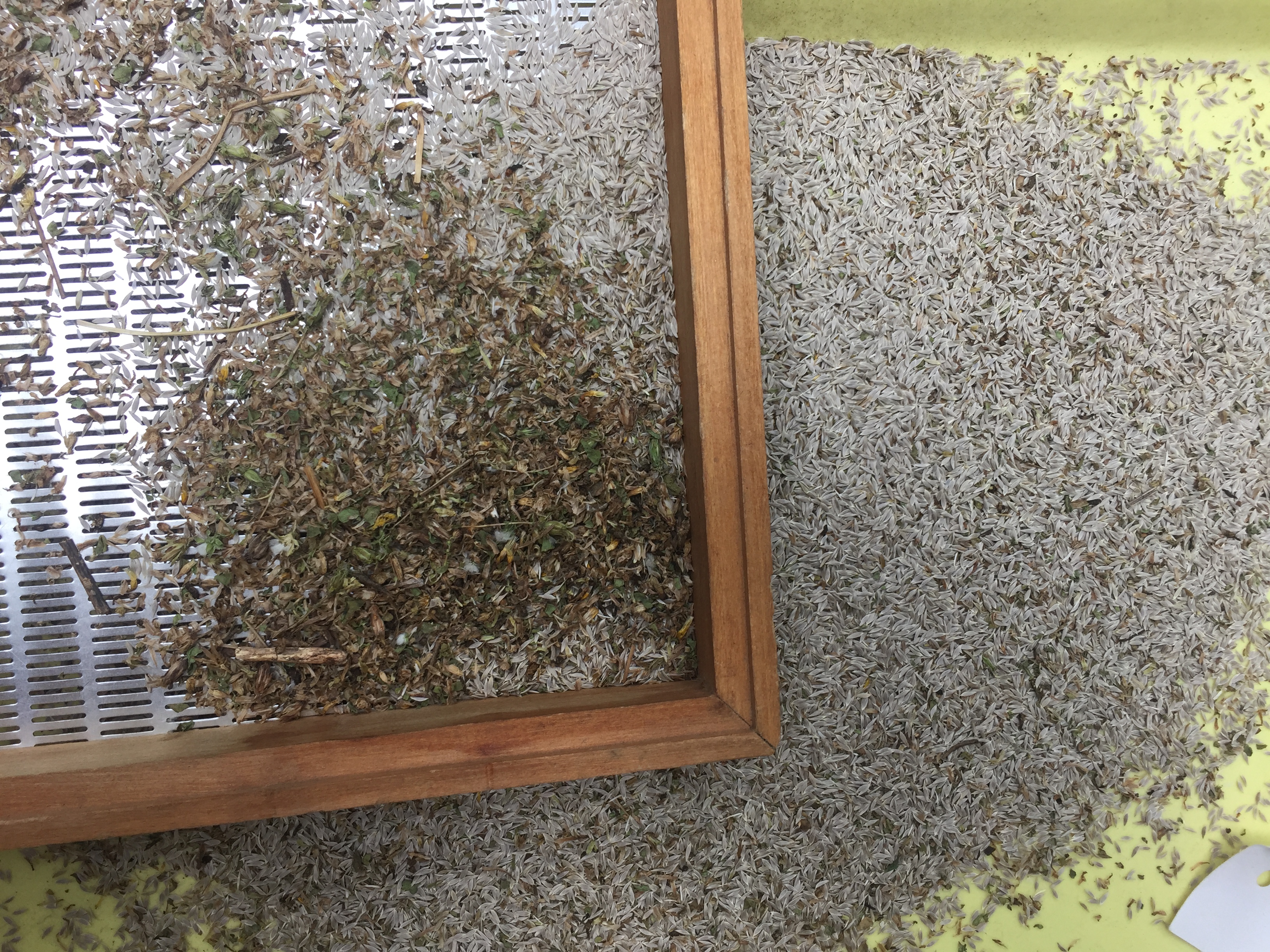
Sifting satisfaction. So much fluff and chaff threshed, winnowed and sifted from a lettuce plant finally reveals the little seeds.

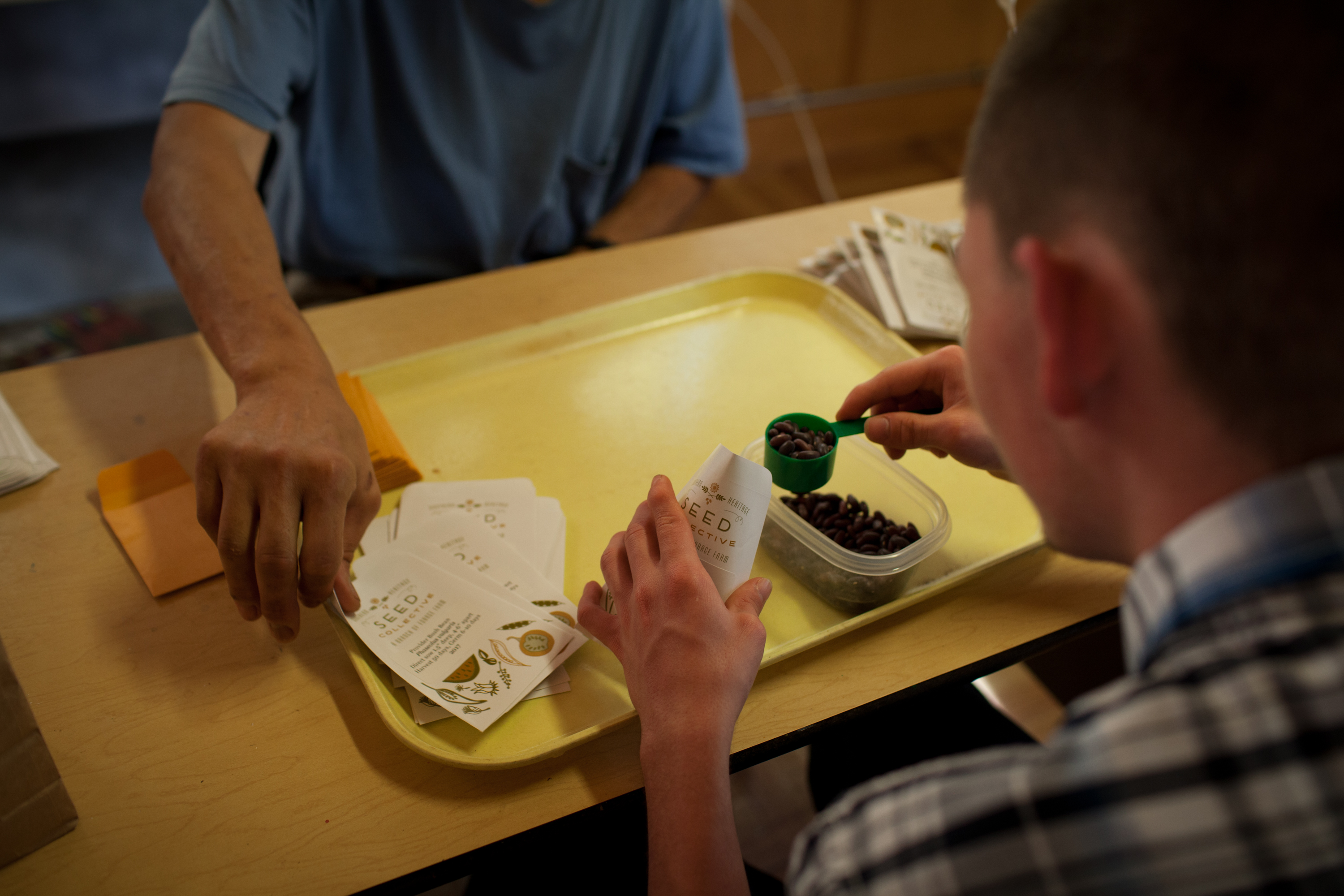
As our Southern Heritage Seed Collective has grown, so too has the responsibility, workload, and infrastructure needed to keep an impressive seed collection alive. It takes a village!

Scoop, label, bag, repeat. Thanks Charlotte Kesl Photography for the killer photo.

I am so grateful to the other growers who accept responsibility for helping trial varieties, or save seeds. I am grateful for the many hands that labor in the gardens all year to tend the crops, harvest them from the fields, and haul them up to the hot loft to dry. I am grateful for those that get dust, chaff, and fluff in their eyes and up their noses as we winnow the seeds clean. I am grateful to the countless hours spent with people I cherish, packing, labeling, and distributing these little miracles.  I am grateful to the men who have helped install the very thing we need to keep our seed cool, dark, and dry: our new seed cooler! I am grateful to Grow Hub, that allows our seed collective to live and breathe there.

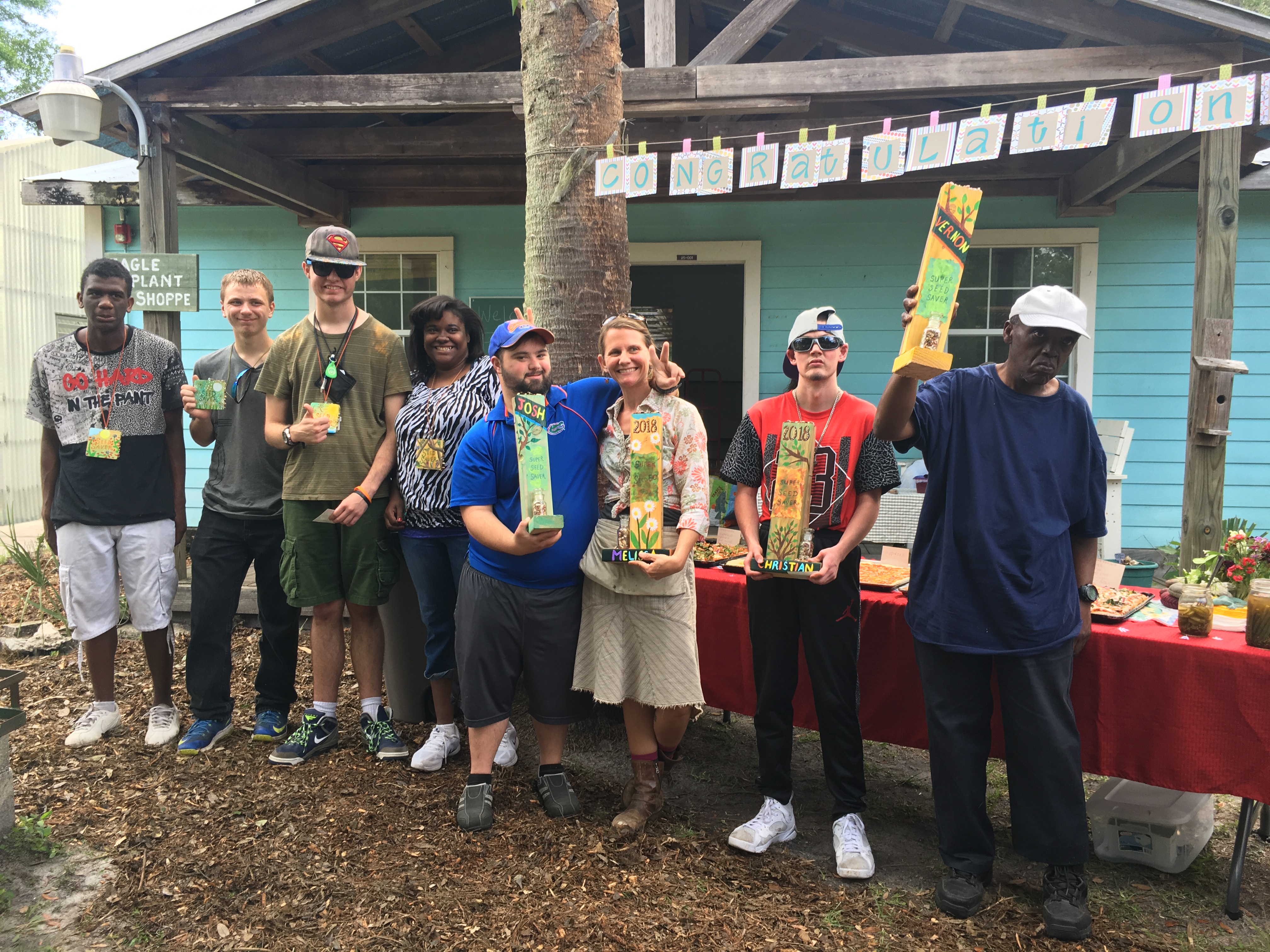
It takes a village and this is a part of that little village! We work with people of all abilities, who find purpose and calm, working in the garden and with seeds. Last month, we honored them with homemade pizza and trophies for their “Super Seed Saving!”

Angie Minno, Timothy Noyes,Charley Lybrand, Brett Caudill and Stephan Barron (Beaten Path Garden), Jerome Feaster, University of Florida Field and Fork, Gina Z., Tom Bankhead, Tom Wootton, Sarah Sterling, Shaquille Johnson, Deb Mize, Bill Wong, Richard Pushaw, Daniel Barerra, Jasmine Angelini-Knoll, Cydney Robbins, Brandi Sadler, Cindy Harris, Joseph Pearce….and probably so many more I am forgetting. Thank you. From me, and from all of us, for helping get seeds from one place to another so that we can may enjoy them!


to bloom, you must first be a seed

Everything on this planet and in our lives is intertwined. In the words of John Muir, “When we try to pick out anything by itself, we find it hitched to everything else in the Universe.”

As an ecologist and gardener, I fully understand and witness this daily. The patterns and cycles of growth and decay in the natural world easily parallel human life experiences.

It’s fascinating how similar in pattern lung tissue, tree branches, blood vessels and river deltas look. (Borrowed form the interwebs)

Seeds in particular have become a focus of my life, both professionally and personally. Their biology and magic have lended plenty of analogies and life lessons. I’m not unique in this thinking. A quick Google search for “seed quotes”offers plenty. One of my favourites:

“For a seed to achieve its greatest expression, it must come completely undone. The shell cracks, its insides come out and everything changes. To someone who doesn’t understand growth, it would look like complete destruction.” ~ Cynthia Occelli

Last fall, I was fortunate to attend an intensive 5 day Seed School Teacher Training offered by the Rocky Mountain Seed Alliance. It was a life-altering experience for me. As my plane home was speeding down the runway, my mind was racing along with it, and an unexpected cascade of tears started flowing over my cheeks. I was a raw and weepy mess. I didn’t see this coming. I think my seed coat was coming undone.

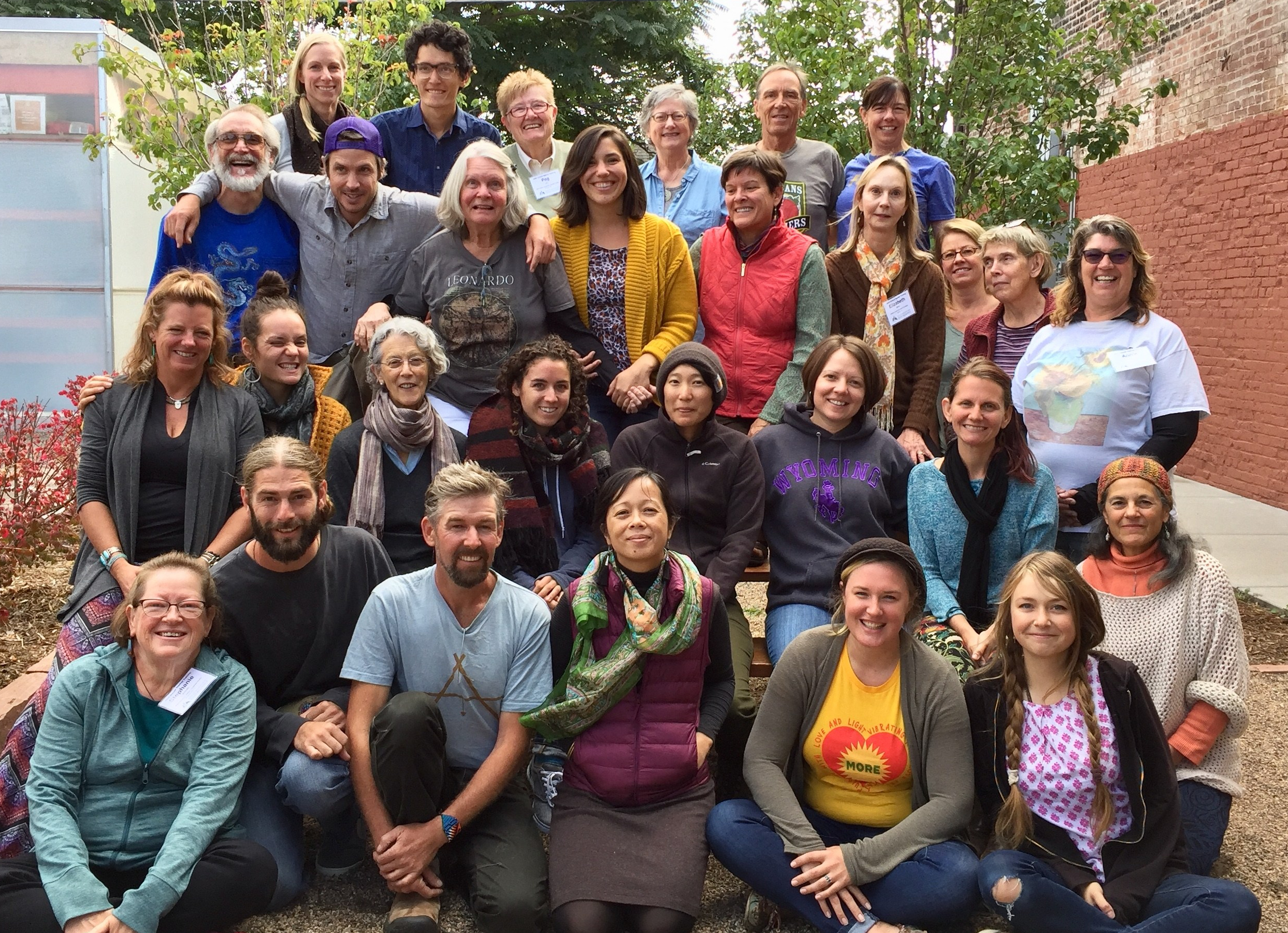
Seed School Peeps
These are some of the beautiful souls I connected with at Seed School Teacher Training.

The yin and the yang of emotions sweet and sorrowful interplayed as soon as the plane had lifted from the ground. A heavy weight of sadness flooded over me. As the plane got faster and higher, I was being pulled from my seed people with whom I had made a lasting connection. I was getting grand views of our Earth, blistering and disfigured at the hands of humans. I thought about all the seed biodiversity lost, and the people from whom it was stolen.

I was reliving grief from my past; my cancer journey and my mother who I’ve missed terribly for 8 years now. I was sad for Ann (one of our classmates), as I thought of her bravely struggling with cancer and still showing up for seed school; and for Torrie (another classmate), who had two family members shot by a lunatic gunman in Las Vegas, while we were in school. For her, there was no better place than to process this tragedy than with her seed people.

At the same time, I was overflowing, heart wide open, and receiving gratitude and exhilaration! The earth viewed from above is beyond breathtaking. To soar through the clouds and feel our Mother Earth pulsing and breathing strongly, even though she is ill, consumed me. Our time together in Seed School, “vibing with our peeps” (inside joke!), created a shift within. I felt raw and vulnerable, but ready. Like a seed mustering up the forces to begin growth, swelling and energizing, finally shedding the seed coat to show myself.

Actually, no. I’ve already been there.

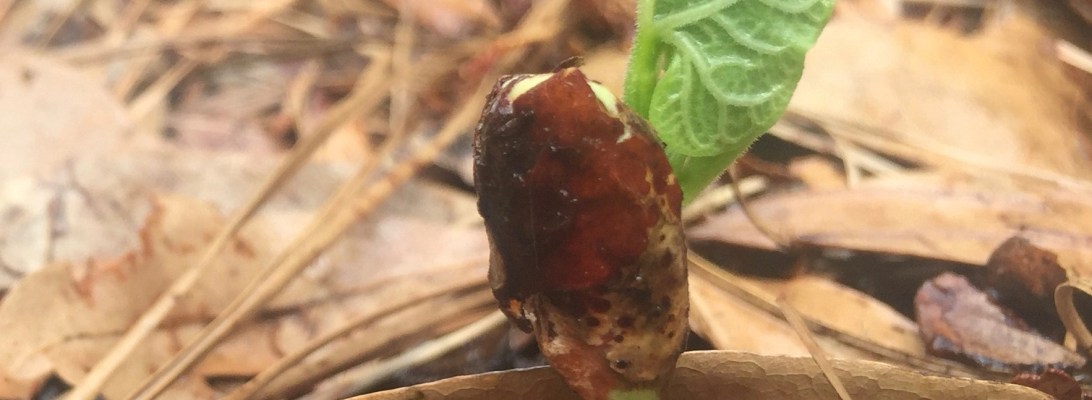
It’s more like my radicle, the first root structure a seed produces, was shooting out getting ready to dig in and get to work.

Actually, I’ve already been there too. I’ve built an elaborate root system already that is still growing.

Perhaps it was my first true leaves unfurling and receiving strength from the energy of the world around me. True leaves are the first time that a seedling must start receiving energy from the sun, water, and soil. They are no longer able to draw from the seed for sustenance.

After contemplating successive growth phase analogies that best reflected my experience (plant people, sheesh!), I finally realized.

I have already bloomed and gone to seed multiple times. An endless and evolving progression of adaptation, growth, and improvement with each moment, day, or year.

Mel mustards
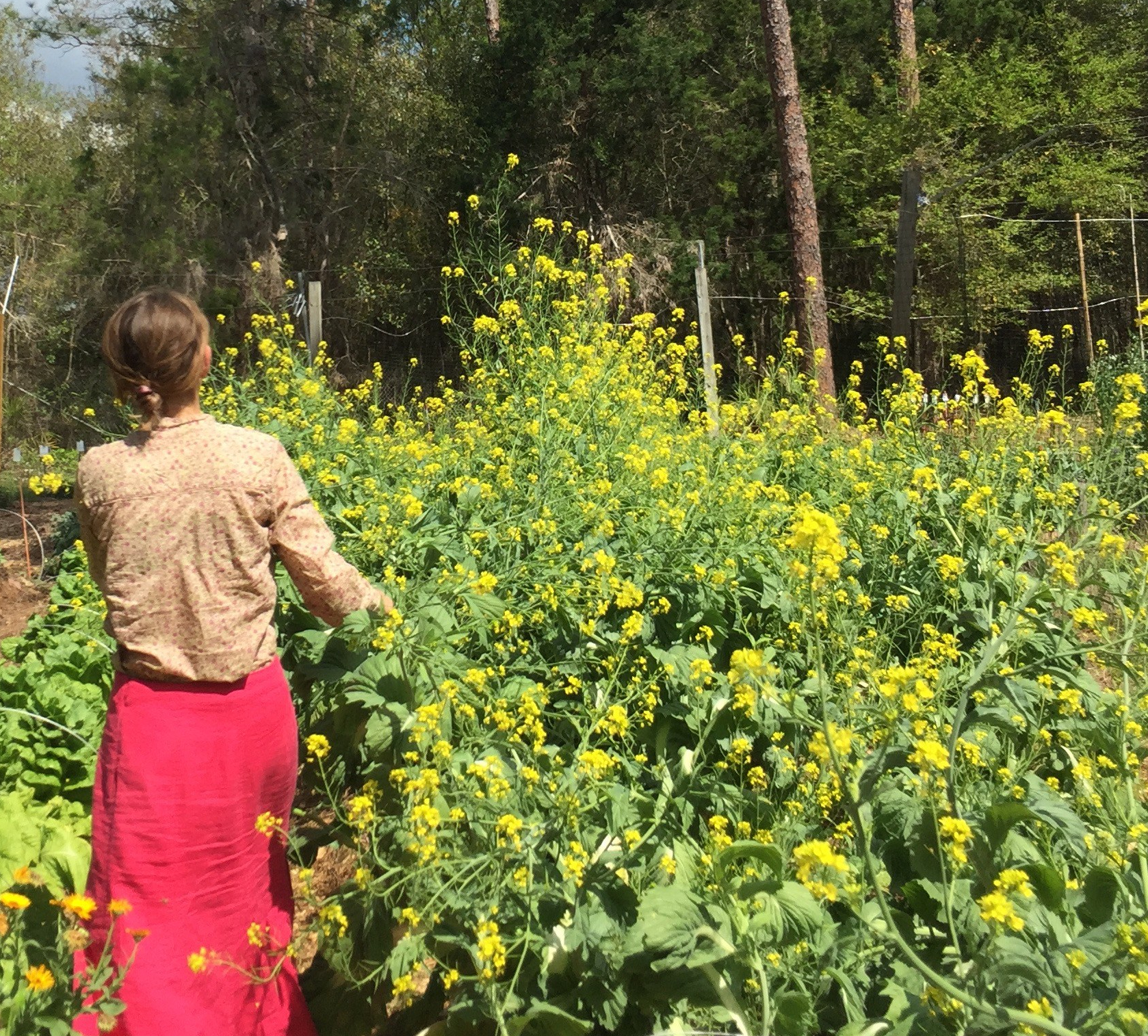
Going to seed is a beautiful thing. It always involves flowers! This is me in a sea of Feaster Family Heirloom Mustard Flowers. There’s something indescribable about being surrounded by such life force.

The experience of Seed School, and significant life events contemplated from thousands of feet above the beautiful Earth shuffled me up a bit, and sent me off like a seed in the wind speeding off on the runway. Up, up, and away! One more phase of evolution, carrying hope and excitement for the future, but a little anxious of the unknown journey. Just like a seed.

Thank goodness for window seats. To process the weight of such magnitude while soaring quietly above the clouds gazing at our planet was a privilege I am grateful for. It was almost too much to bear, to be honest.

And so, the continual process of growing, evolving, and going to seed continues. It’s not easy work. There have been many times I’ve contemplated letting go. Growing is hard work, y’all. But when there is so much energy and life force, it’s unstoppable. This the energy that helped me overcome cancer, that brought me through the depths of grief, that keeps me pushing daily for the work I love.

Take wisdom from the life of a seed. Understand that it’s ok to shed things and let go, shuffle up a bit, unfurl and bloom. Keep solace in the reminder that life goes on in cycles, that we are are always learning and re-inventing ourselves, like a seed.

Charlotte Kesl for Working Food
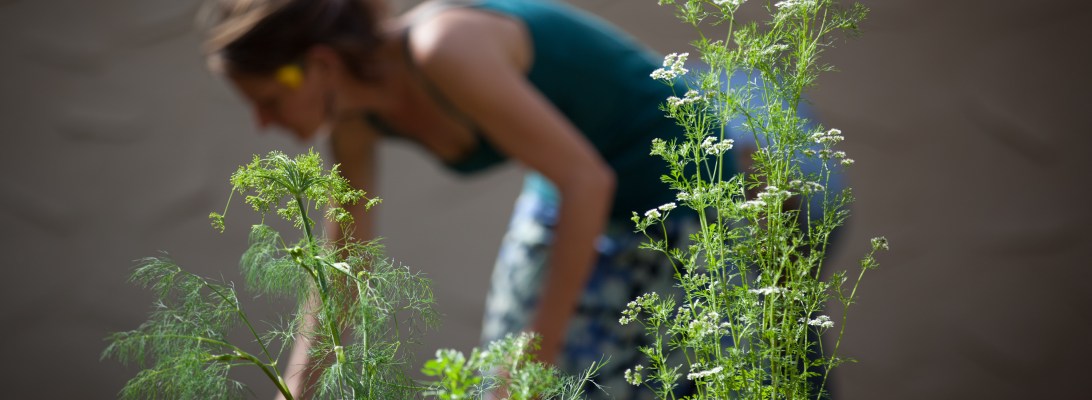
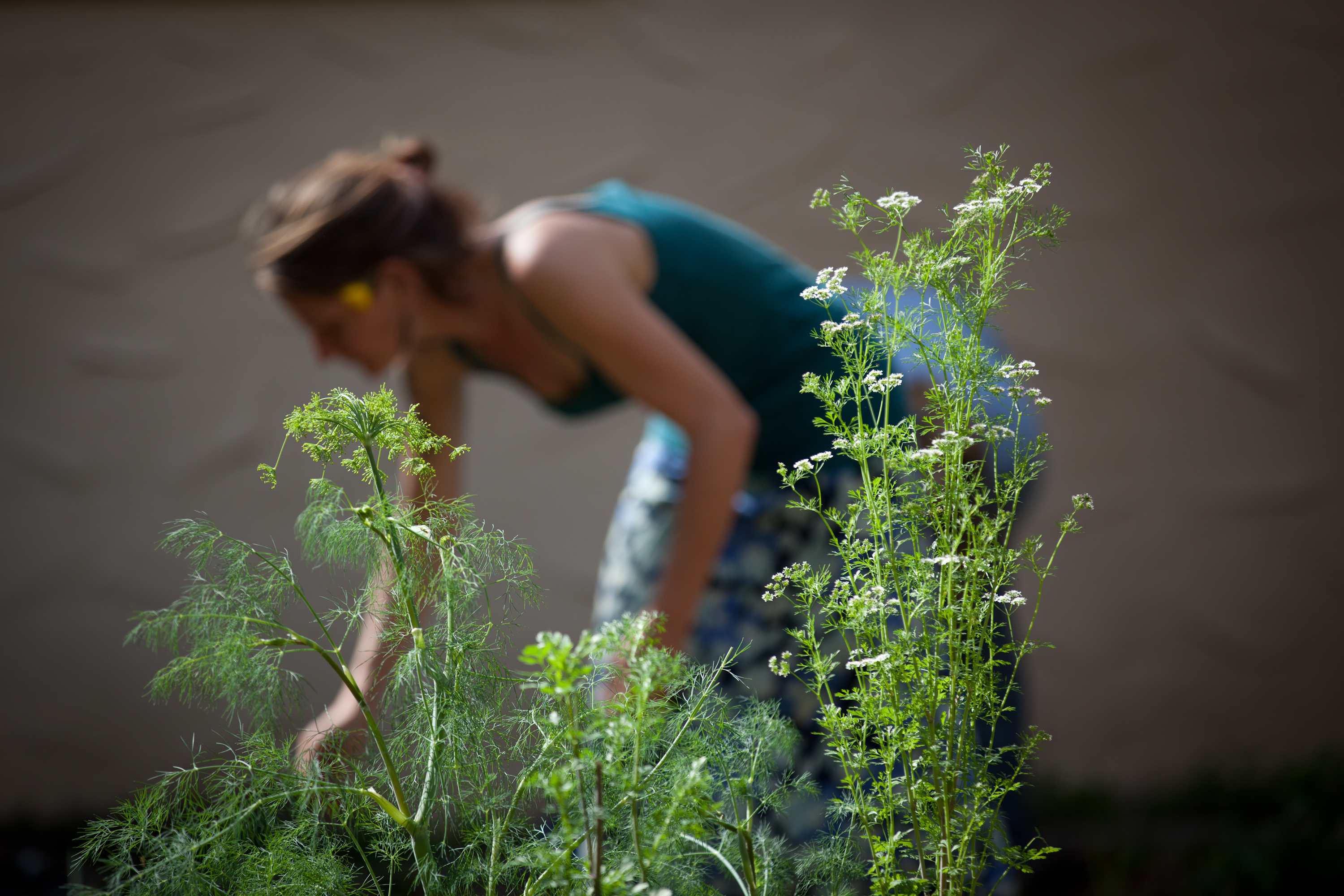
Tending the garden alongside cilantro going to seed. (Charlotte Kesl Photography).