I’m excited to share that I’ll be participating in an upcoming online writing course with Janisse Ray, an award-winning Southern author whose writing is deeply rooted in the land and in the rhythms of her daily life.
Janisse believes in the power of stories—to change the world, to help address the climate crisis, and to create a more just society. Notably, she was a major inspiration for me early in my career around seeds and seed saving, after I read The Seed Underground: A Growing Revolution to Save Food. Her work helped shape how I think about stewardship, nature, and attention to place.
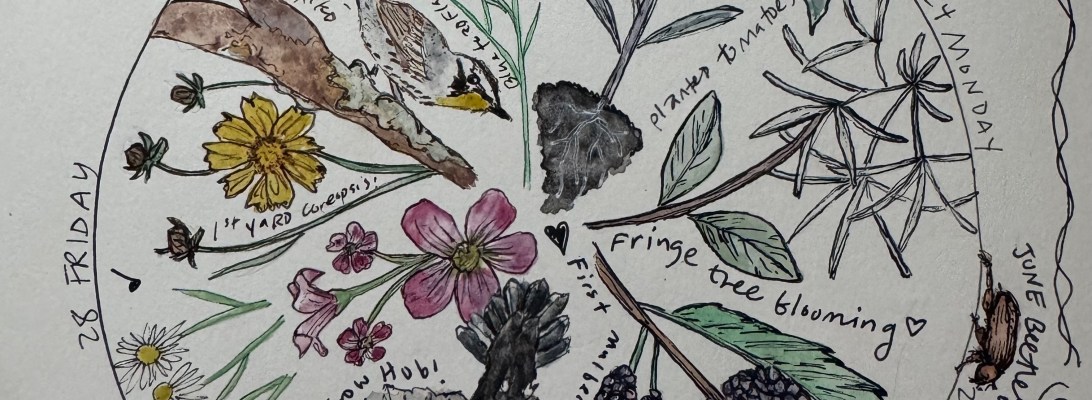
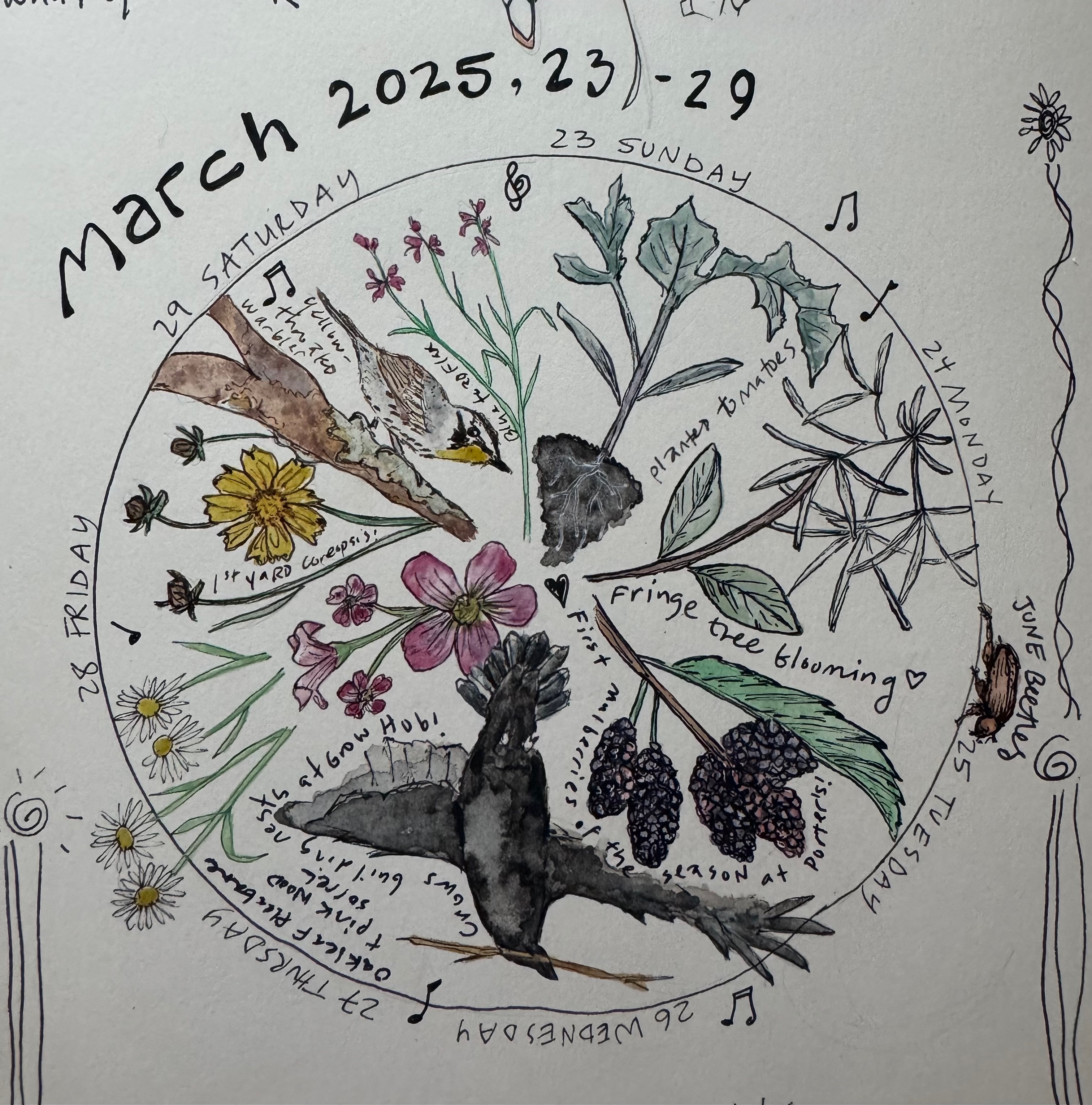
I took a previous online offering with Janisse, and it inspired me to begin creating phenology wheels. For me, they’ve become a perfect way to gather and reflect on my observations—what’s happening, when it’s happening and how it’s all woven together, what I see both in the natural world and in my garden. They give me space to practice sketching and painting skills, while sharpening my ability to notice patterns and seasonal change.
This is just one of many creative practices that will be shared in the course. I’ll be joining 10 other creatives, each offering ideas to support your own journaling practice, including:
nature observation and writing
simple art exercises
shapes, borders, corners, spirals, dividers, banners, and other page designs
weather, mapping, perspective
what place means to us …and so much more.
Registration is by donation, so you can pay what you’re able and what the experience feels worth to you.
The Winter 2026 series focuses on Place—our complicated, ancestral, and modern relationships with the places that matter to us.
The course meets 7 Sundays in a row, from January 11 through February 22, 2026, on Zoom from 5–6 pm Eastern.
Part 6 of a series of posts about my artist in residency experience at Oak Spring Garden Foundation.
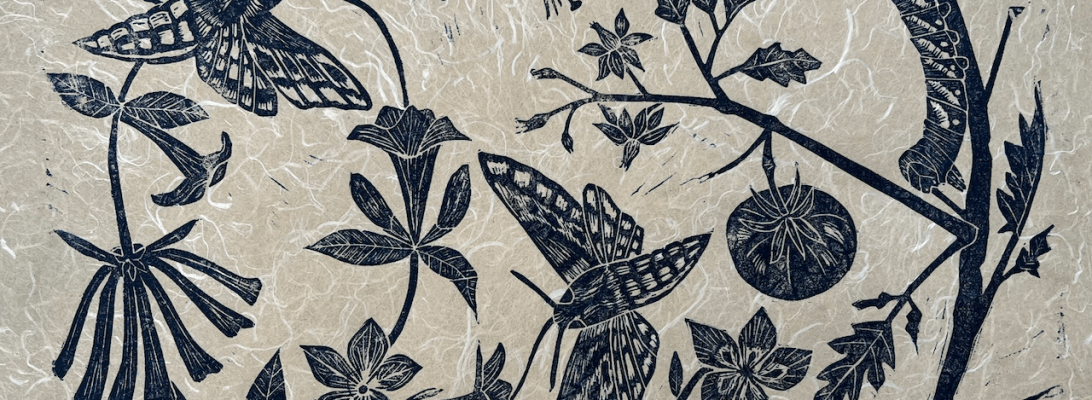
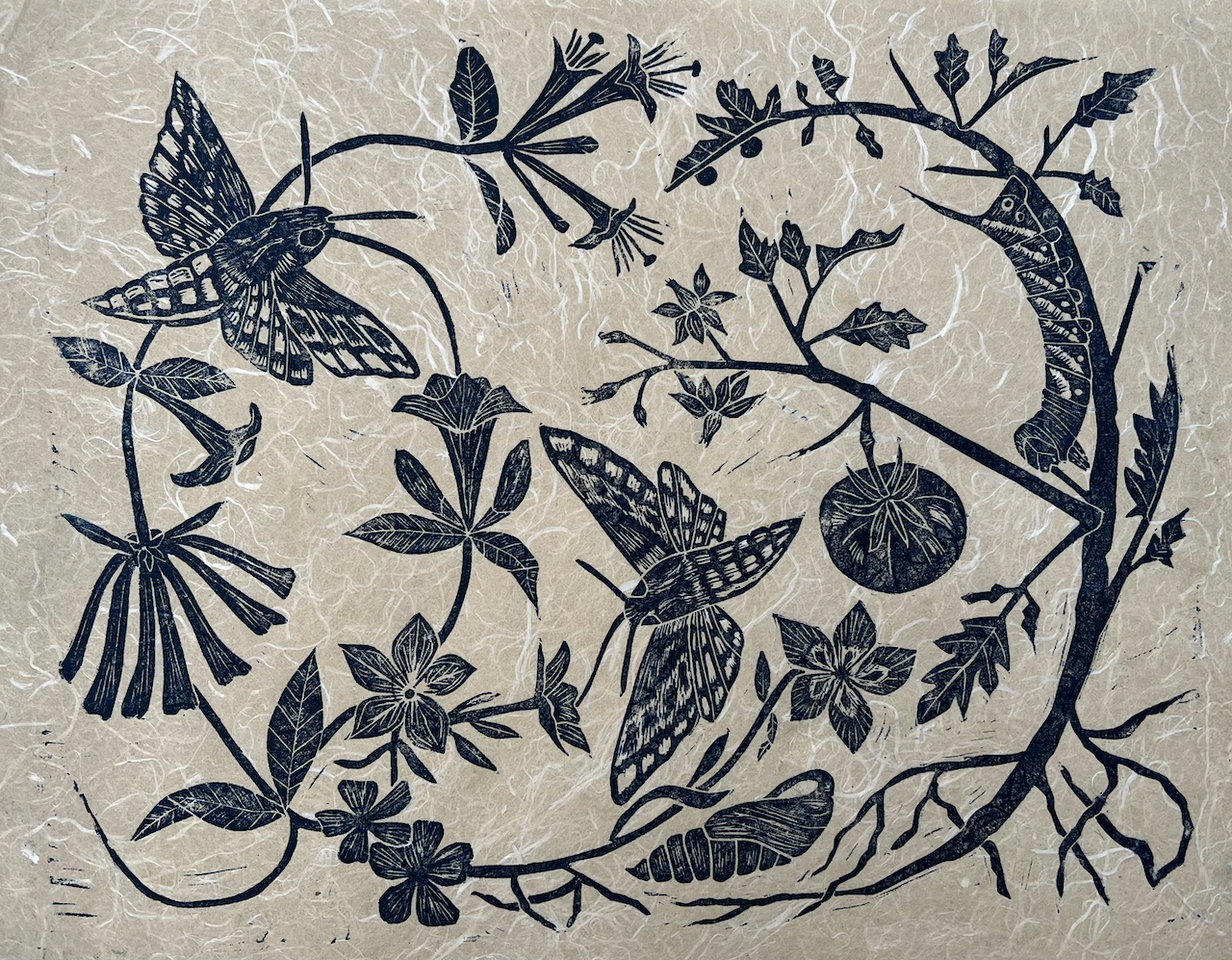
It’s been about a year since I picked up my linoleum tiles and carving tools to make a print. It felt good! I’ve wanted to create this lifecycle piece for awhile now, but had forgotten about it. I was reminded while here at the lovely Oak Spring Garden Foundation for my artist in residency stay, and had the time to dig in.
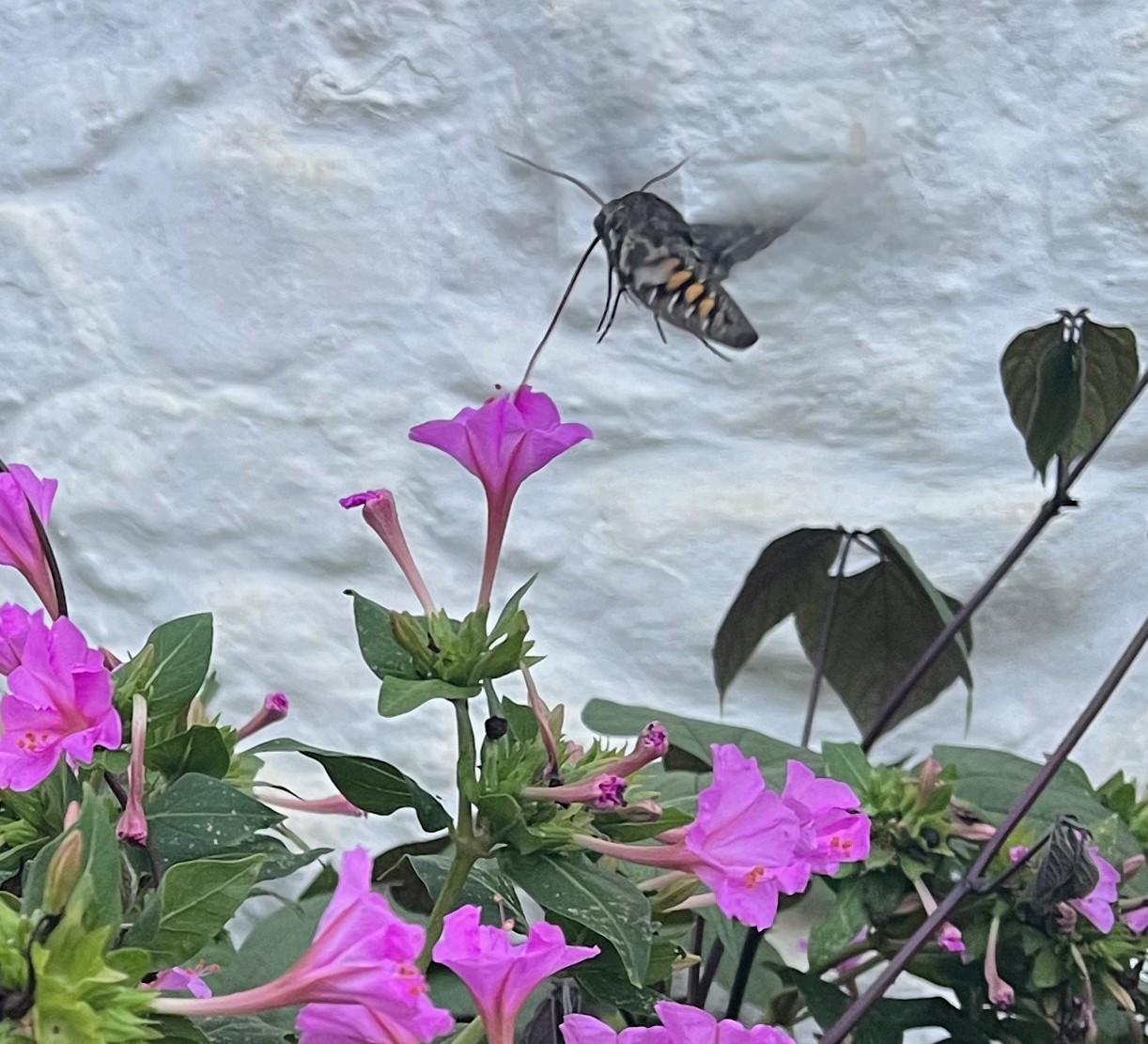
During my evening walks and meanderings about the gardens, I’ve been entertained by the flurry of hawk moth activity. We met in the lilies, and I followed them out to the 4 o’clocks- both very pronounced and tubular flowers.
This piece is inspired by the complicated relationships we have with insects. As a farmer and seed saver, growing tomatoes is important to me. As an ecologist and lover of all life, insects are also important to me. The process of metamorphosis so many insects undergo is marvelous. From a caterpillar to a pupae to a moth or butterfly. I wrote about metamorphosis awhile ago.
Oh my! It’s something spectacular.
My latest linoleum carving + print showcasing all stages of this insects life from egg to moth.
But when a tomato hornworm shows up, things get really complicated.
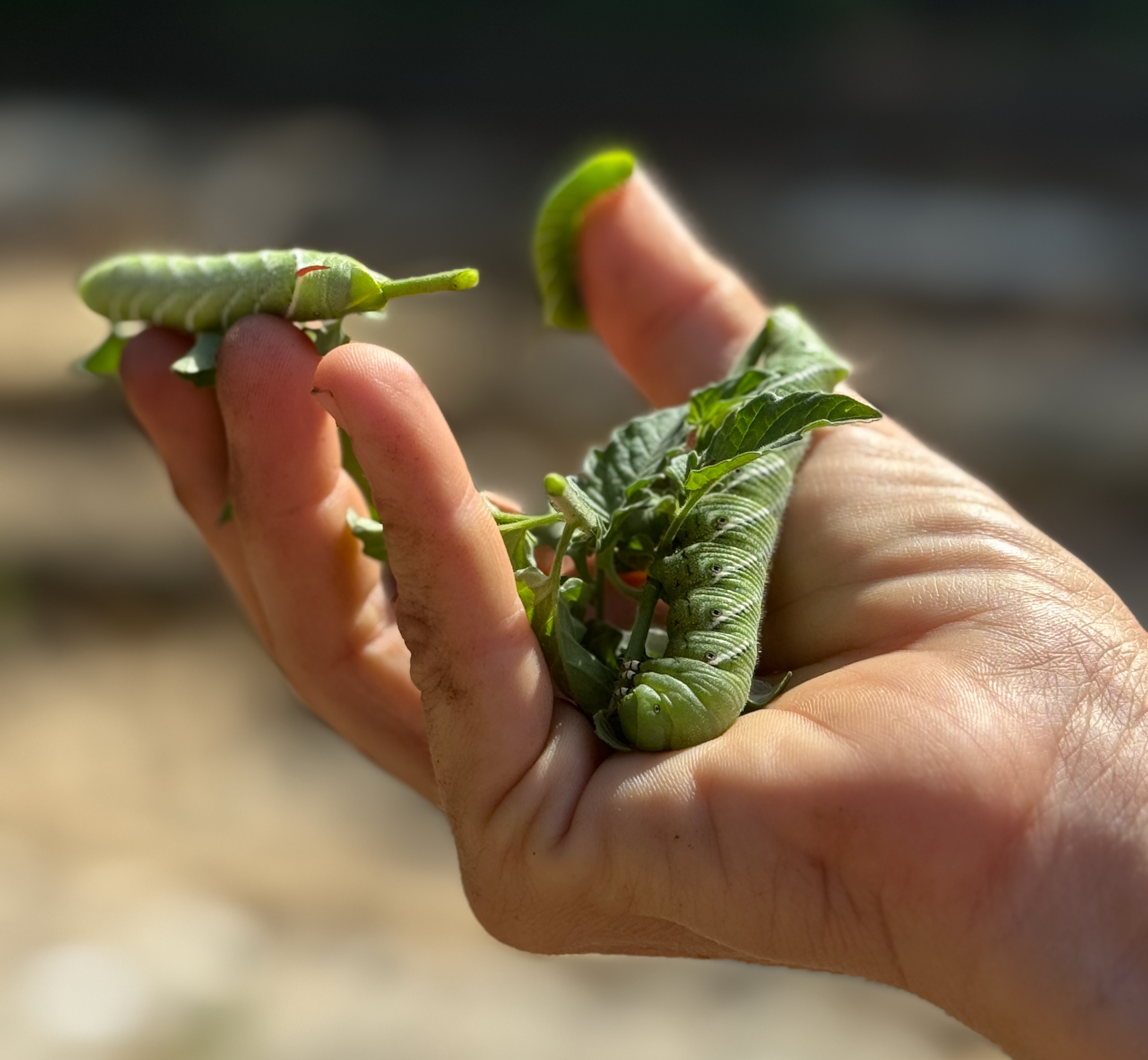
I think the bright green caterpillars are cute! Soft and silky, I like to pet them gently. After a few strokes, they settle in, and I think they might actually like the little massage. The horn on their back is a bluff. They are gentle, tomato-loving creatures. But they are ravenous for tomato plants and can do quite a bit of damage before going noticed.
Once they are fat and satiated on tomato leaves, flowers, and even fruits, they crawl to the soil and pupate underground. This is where metamorphosis magic happens. Cells liquefy and re-organize themselves. Crawling muscles swapped for flight muscles, extra legs swapped for wings, and so on.
The emerging pupa are gorgeous moths, known as the 5-spotted hawk moth. Their exquisitely long proboscis (tongue) is specially designed to sip from flowers with similarly long and tubular necks. They need each other. They are so large and so fast, they are often mistaken for hummingbirds. And so they are also colloquially referred to as hummingbird moths.
An Oak Spring Garden resident visiting the 4 o’clocks.
I’ve seen them consistently every evening here at Oak Spring Gardens. I imagine back down in Florida, they are finding some great native plants like jessamine, phlox, trumpet vine and coral honeysuckle, which are depicted in this piece. Long tubular flowers with a sweet nectar treat waaaaay down in there, waiting for the pollinator match to arrive. Lots of ornamental garden plants are also likely to attract them.
Unlike hummingbirds, these nectar feeding pollinators are mostly active at dusk and night time. They lay their eggs singly on the host plant- tomatoes- starting the cycle all over again. Each tiny egg will hatch into a teeny tiny caterpillar that will successfully grow into larger and larger versions of themselves – as they devour tomato plants. We often won’t spot them till significant damage is done and they are quite fat. At this point, they are close to going into life phase 3: underground pupae.
Farmers and gardeners typically reach for a bottle of something or other to “take care” of the problem. And they are not necessarily wrong in doing so. Tomato hornworms have the ability to destroy a crop of tomatoes if it gets out of hand.
I have found a balance.
I will let a few get large enough to successfully become pupae, depending on the size of my tomato plant population. The little tiny caterpillars (if I can find them!) might be squished, along with an apology and a prayer if I feel the plants can’t sustain their own growth and that of the hungry, hungry caterpillars.
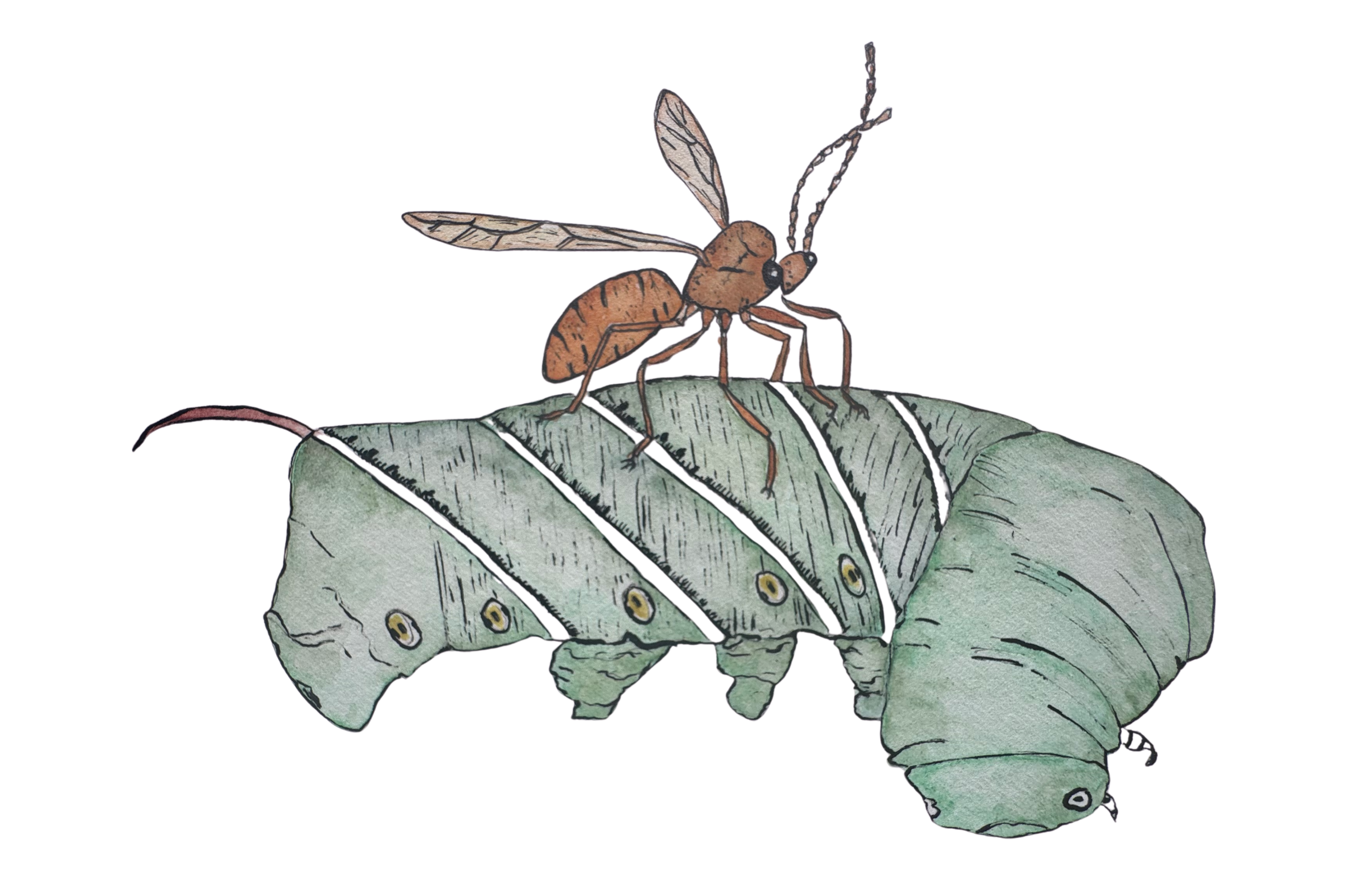
Sometimes nature swoops in on horrifying wings and takes care of things. Braconid parasitoid wasps lay their eggs inside a living hornworm caterpillar, and the hatched larvae literally eat the poor caterpillar alive. So if you ever see white rice-like things protruding out the back of a caterpillar, best leave it alone and let Mother Nature do her thing.
I may resort to spraying with Bt, a fairly harmless and organic approved spray (harmless for all but caterpillars of course) on select plants. Tilling can reduce pupa in the soil by about 90%, but tilling has its own issues for soil health too.
Part 4 of a series of posts about my artist in residency experience at Oak Spring Garden Foundation.
In my ongoing experimentation with creating paints from plants on site, I have learned what most people dabbling in or perfecting this art have as well: lots of things turn brown! It makes a whole lot of sense if you stop for a second and think about it. All living beings will eventually return to the soil and turn some shade of brown. Dying plants, seed pods, fallen leaves, decaying bones and flesh….
So macerating petals and simmering leaves with the hopes to preserve vibrant hues is not in line with nature just doing her thing. The trick is figuring out if it’s possible to capture the pigments and preserve them before they turn brownish. Some will oblige, others will not. For those that will not, the fleeting glimpse of their living pigments on paper is only meant to be enjoyed for a short period of time. Or perhaps best enjoyed on the living plant.
What’s our obsession with preserving things in perpetuity anyway? Avoiding change or worse – death! Why do we allow ridiculous things like embalming bodies in formaldehyde so they don’t rot and turn brown? I wrote about death awhile ago. It’s all around us, all of the time but our culture prefers to ignore it, and be afraid of it. You and me, and everyone we love are going to die one day and turn brown (if we go the natural way of things and avoid formaldehyde and cremation). I’m not being morbid, or pessimistic, or dark. Quite the contrary! Accepting that we are not here forever, allows us to fully embrace and love the hek out of this ephemeral life! This colorful, beautiful, ephemeral life.
Trust me. As a cancer survivor, every precious day is more vibrant because of death.
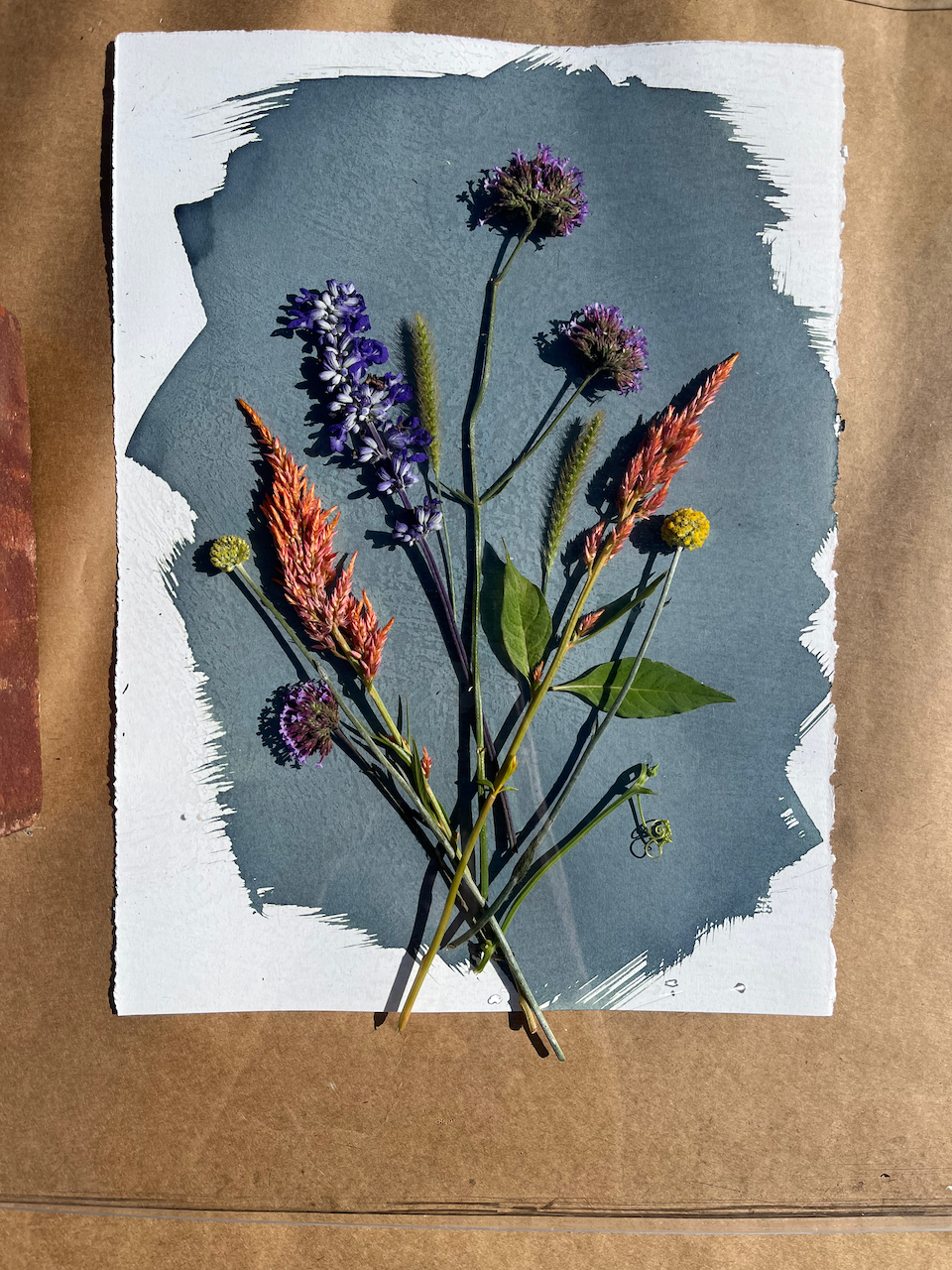
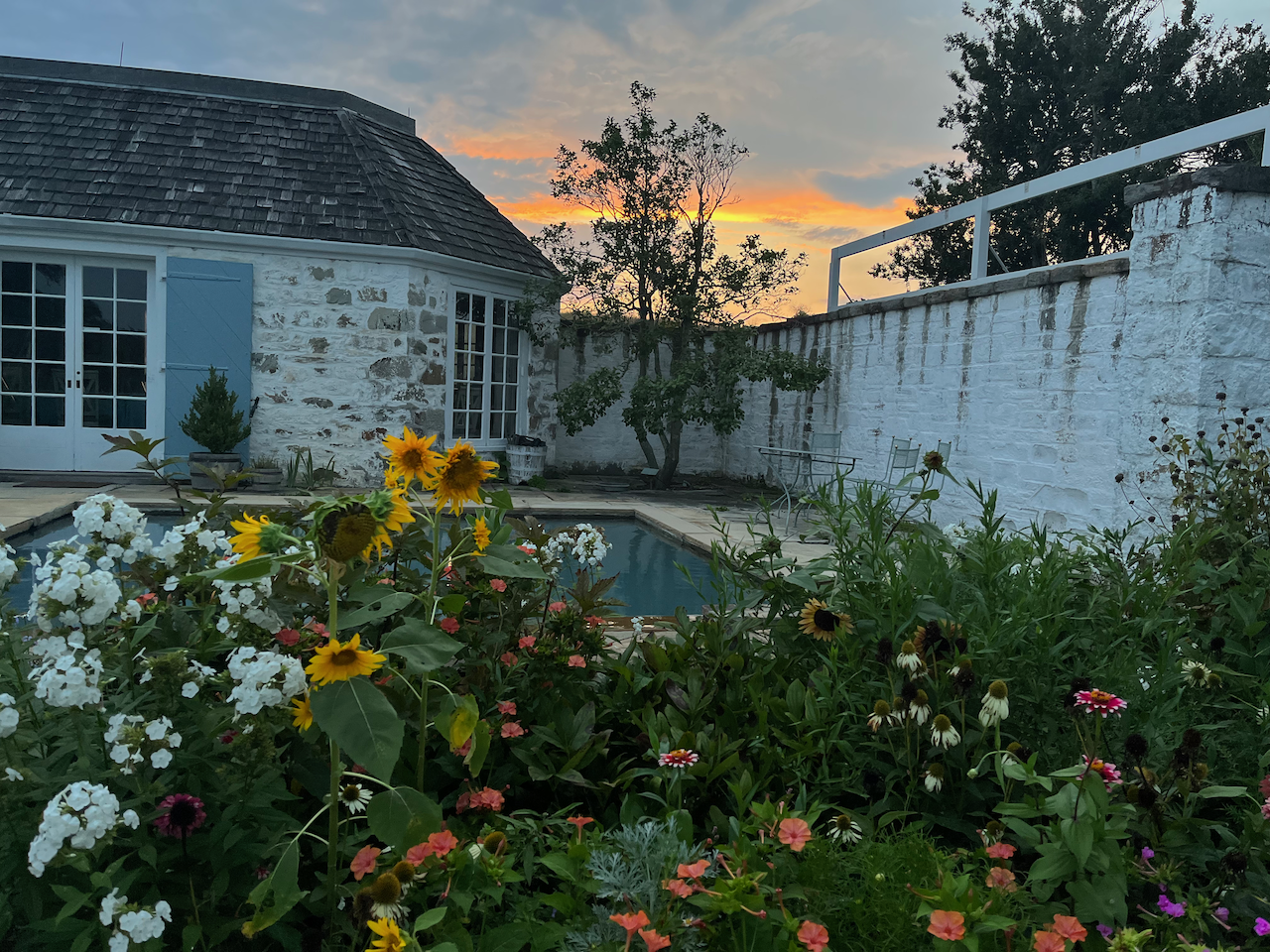
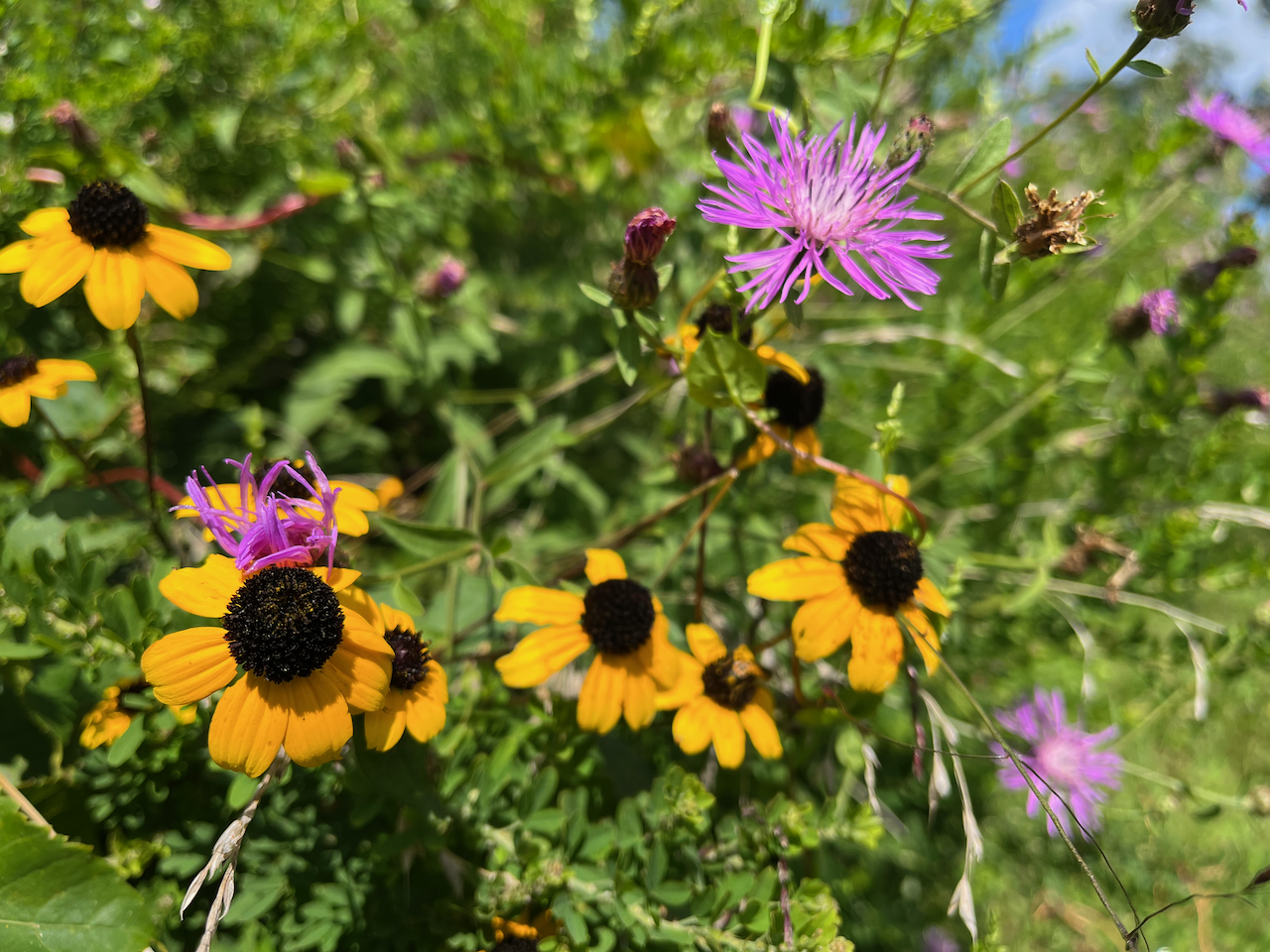
An abundance of vibrant colors that will all one day…turn brown! Top left to bottom right: Black Swallowtail butterfly on Thistle, making cyanotypes with garden flowers, the formal garden at Little Oak Springs, plant based paints, Rudbeckia and Aster(?) along the Appalachian Trail.
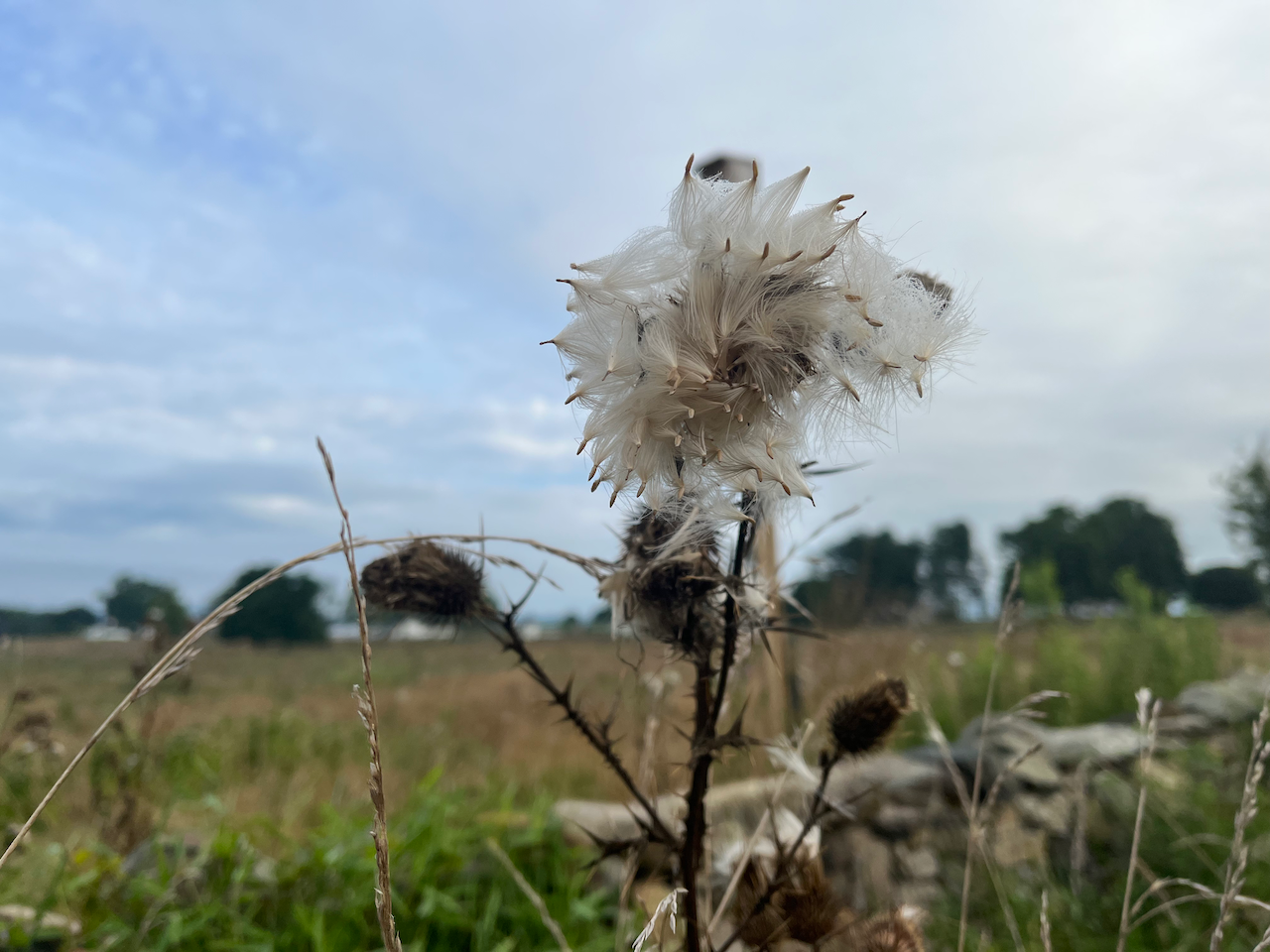
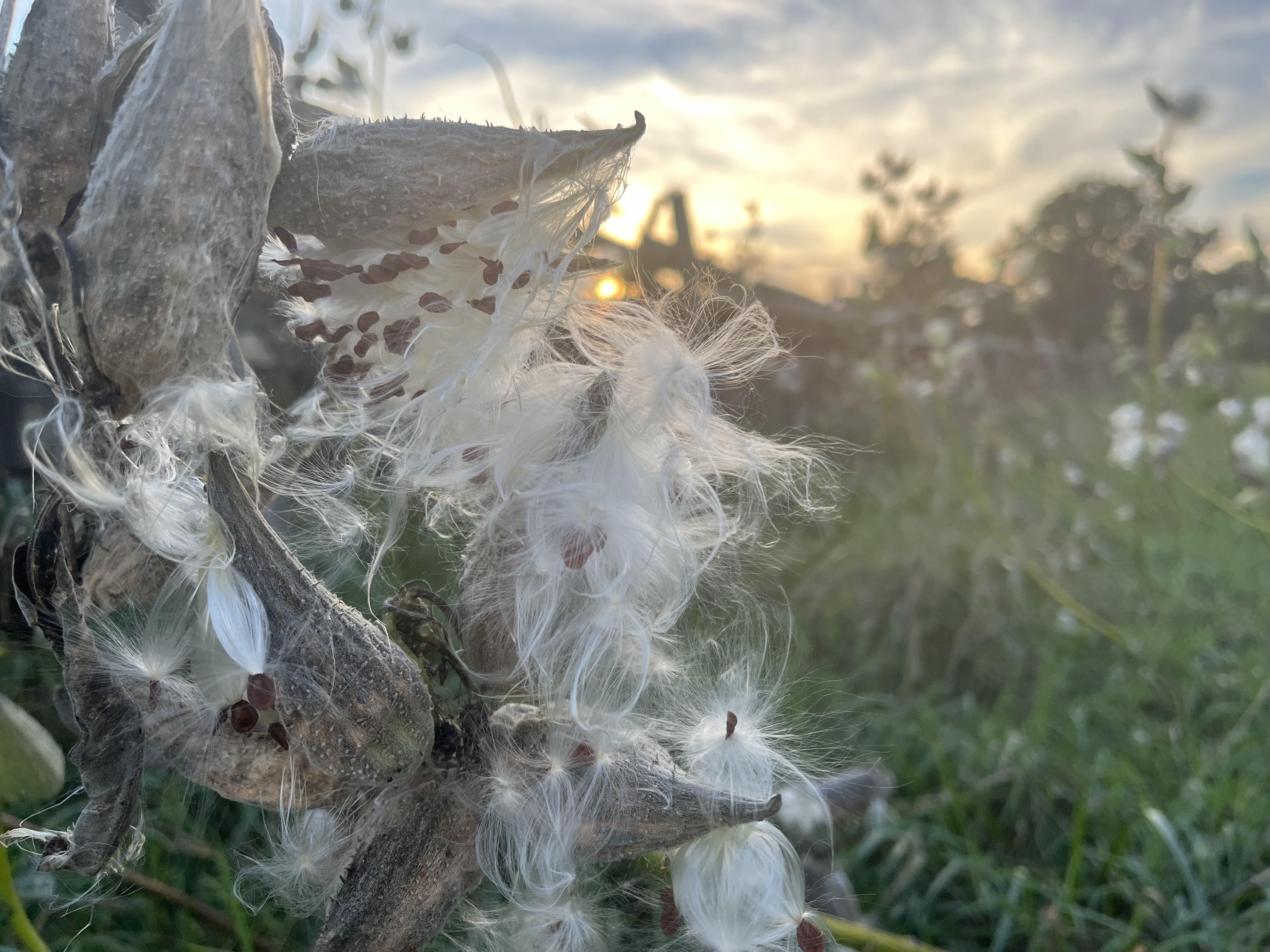
In my early disappointment at watching vibrant green or yellows turn brown, I looked around me and realized – it’s just fine! Plenty of pretty beings living or dead are some shade, or many shades of brown. The Polyphemus moth, and actually most moths and many butterflies, rabbits, coyotes, milkweed and thistle seed pods, spiders a plenty, lots of birds fully brown or with brown bellies or throats, falling leaves, grasses going to seed…. So I embraced the browns and the shades of them I was getting.
Everyone turns brown. Top left to bottom right. Polyphemus moth and Dobson fly, Crab spider on grass, Thistles going to seed, and Common Milkweed seed pods all at once went POOF!
Anyhow, back to plant pigments!
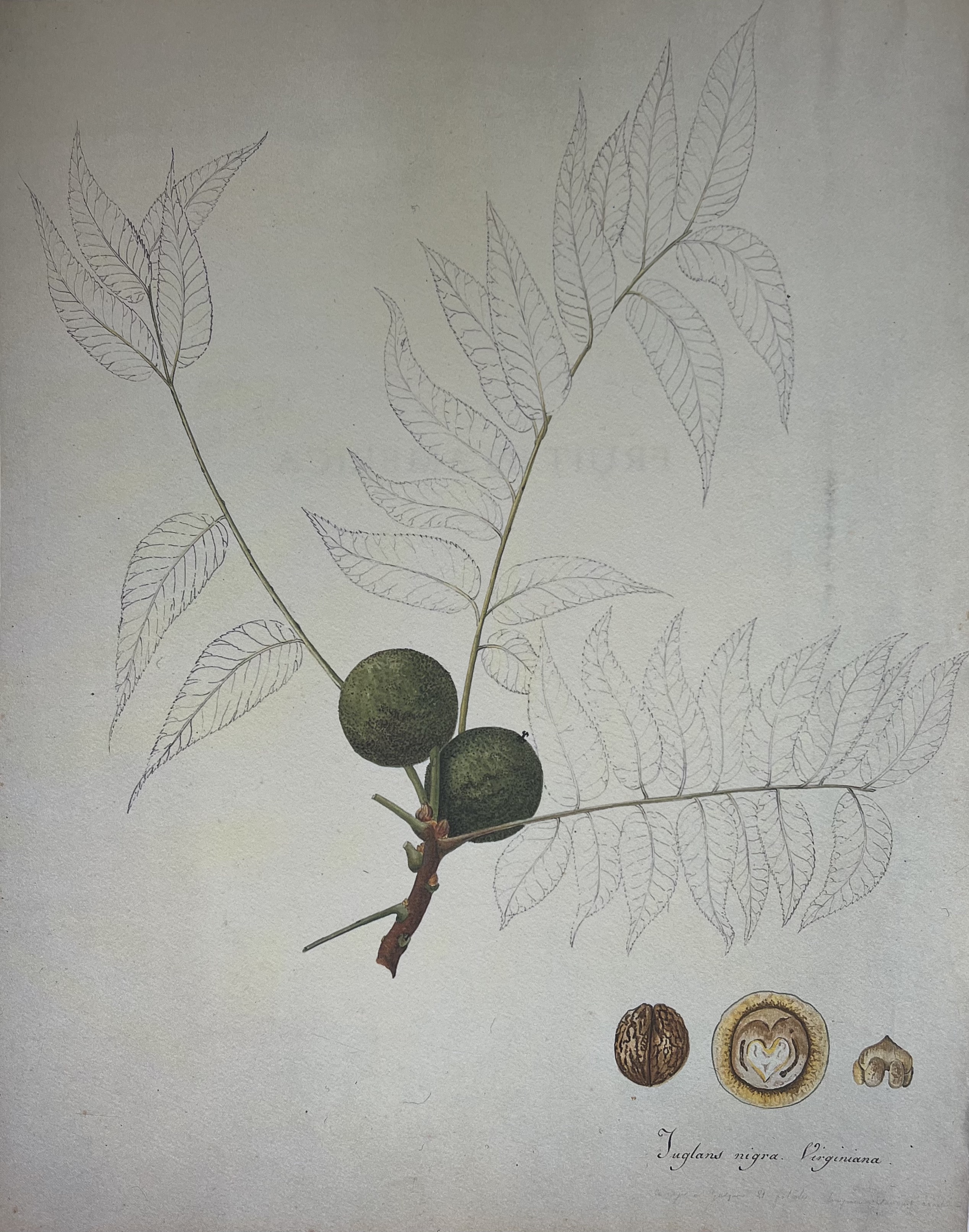
One that particularly made me happy was the Eastern Black Walnut. A common complaint is that the fallen fruits stain things when they drop. PAINT! In the same way I always spot SEEDS! whenever I’m out and about, I am now looking and wondering….PAINT?! One of our cohort mates here Jackie, a botanist from the Dominican Republic, found a Black Walnut tree here and brought me some of the fruits to play with.
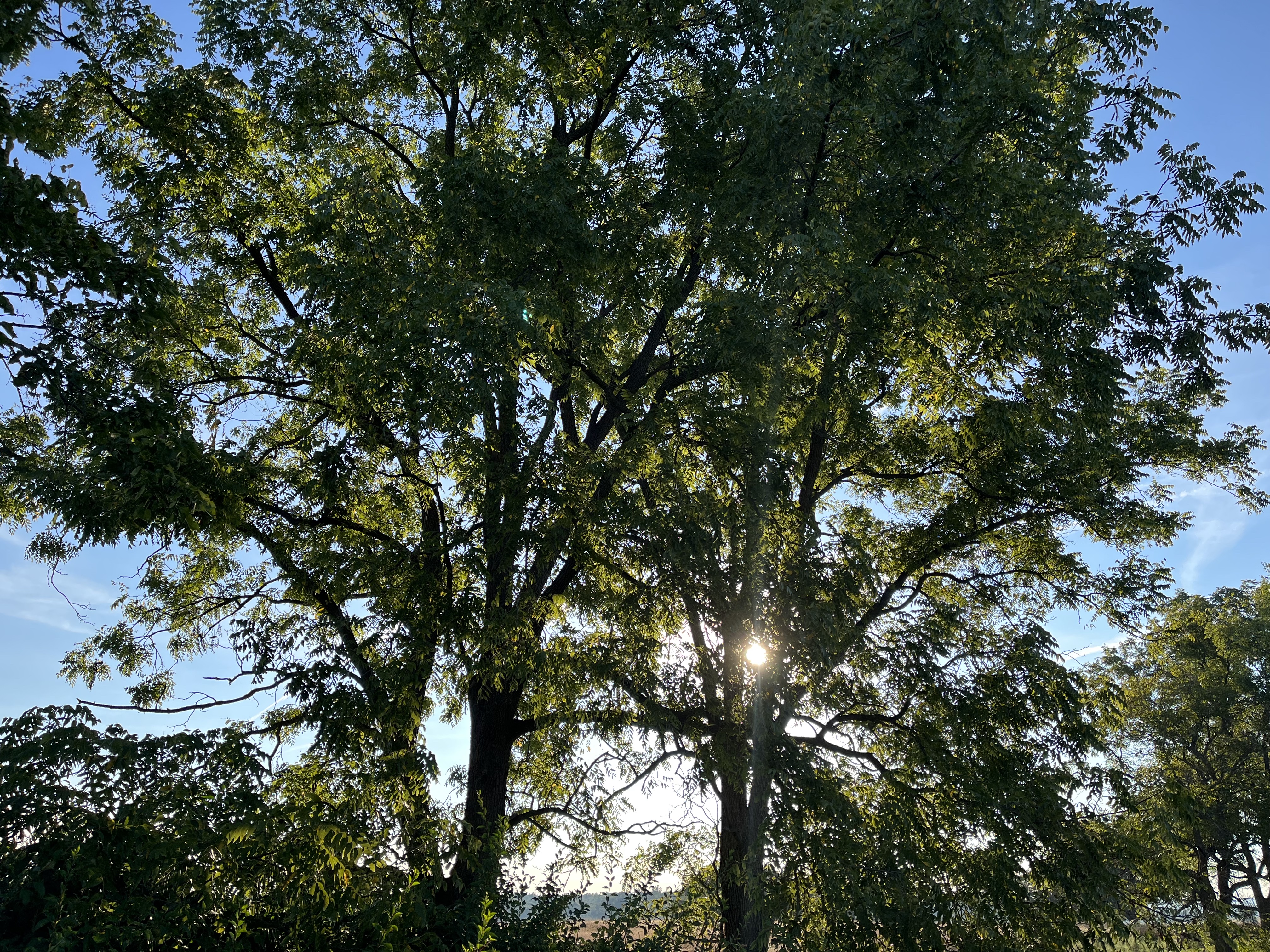
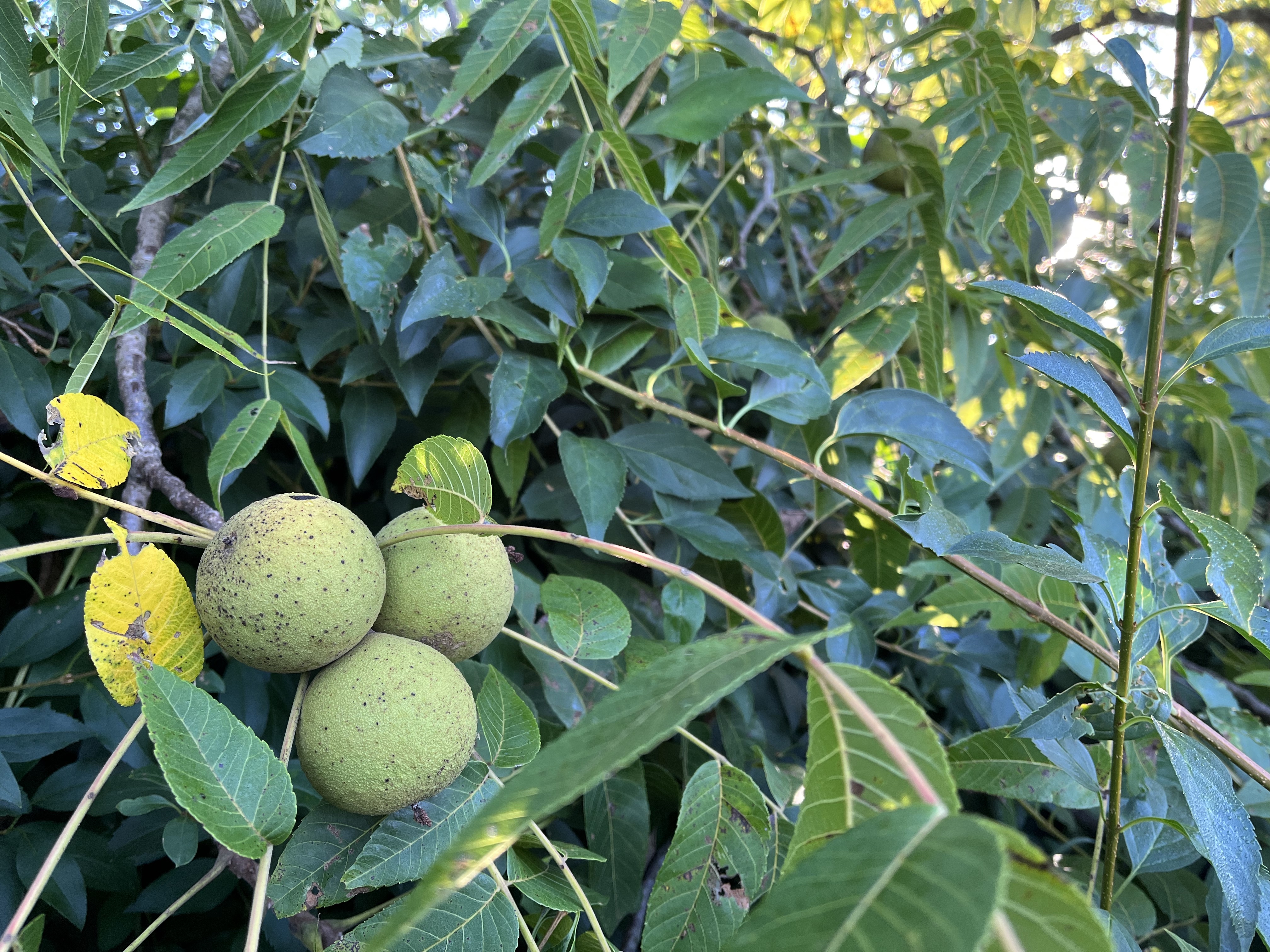
Eastern Black Walnut tree in the early morning sun, and their fruits!
The Eastern Black Walnut is a native tree to the Eastern US, and considered a “pioneer” species meaning they are one of the first trees to establish in disturbed areas like along roadsides, in fields, and forest edges; places that are more open. They don’t thrive in forests with other trees and lots of shade. They must spread out in full sun to live their best life. They secrete a chemical into the soil called juglone which repels some species of plants. A partial list includes includes tomatoes, potatoes, peas, peppers, cabbage, alfalfa, serviceberry, chestnut, pine, arborvitae, apples, blueberry, blackberry, cherry, azalea, rhododendron, lilac, hydrangea, privet, and members of the heath family. But not all plants are poisoned by juglone, some will thrive and others can tolerate it.
The tree is lovely in her own right, but of course as humans we need to know the uses for living beings to understand them or find value. So, it turns out that walnut trees makes fantastic lumber, the staining fruits are used to make dyes and inks, the nuts are edible for many wildlife and of course humans too, and the abrasive shells have many industrial uses for blasting, sanding and filtering things.
An anonymous French watercolor of a Black Walnut from Virginia, made early the nineteenth century when the tree was being naturalized in France. Photo courtesy of An Oak Spring Pomona by Sandra Raphael. Oak Spring Garden Library in Upperville, Virginia, 1990.
The process of making paint from the Black Walnut fruits was simple. What I loved most is that it required nothing but time, water, and heat to prepare.
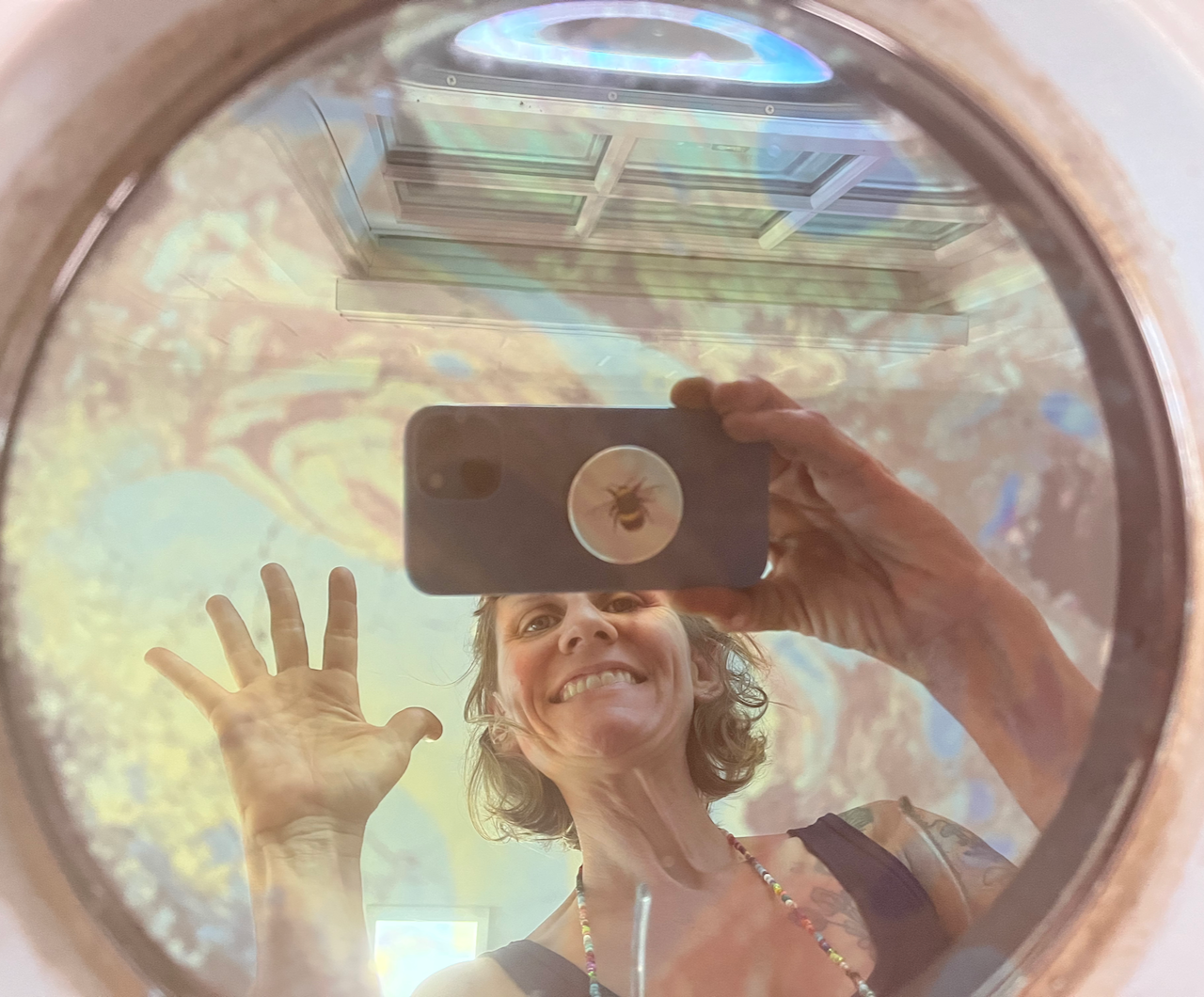
I cracked the fruits with a hammer against a hard floor, to remove the skin from the seed and shell. I broke the skin into as many pieces as possible and covered them with water. I did not wear gloves, but kind of wish I had. My hands were stained brown, fading to yellowish tan for many days. I don’t really care, but it was pretty obvious and perhaps something to consider next time! They soaked for 48 hours out in the sun while I was tinkering with other things in my studio. The water turned a lovely deep, iridescent mix of yellowish-greenish-brownish hues as the oils, pigments and tannins leached out. Then I strained out the chunks and gently simmered the solution for about 1 hour on the stove. I let it settle and tried to take a photo of the lovely design on the surface of the inky water, but only got my reflection!
Soaking the fruit skins, the strained and simmered solution sitting awhile, and me trying to take a photo of the last phase and seeing my silly self in the reflective liquid. Lovely, lovely, browns and friends along the way.
That’s it! Next up for all my paints, I will be adding a solution made of gum arabic, honey, thyme oil and glycerin that all together help bind the pigments to the paper, prevent decay, and slow the drying time of the paint. I’ll share my “recipes” later on once I’ve fiddled and had a chance to compile all my notes and color charts.
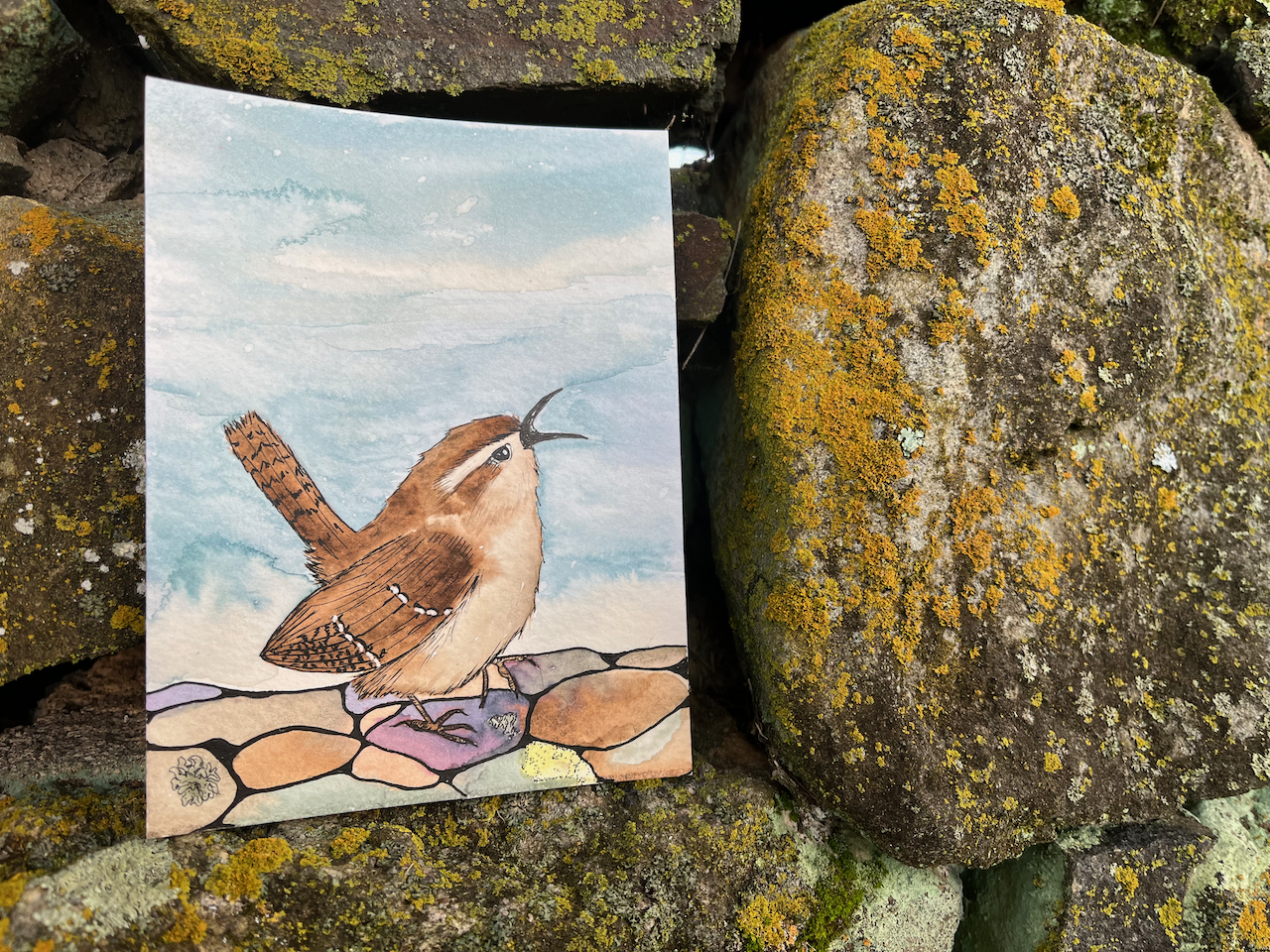
Here are just a couple of lovely brown creatures I created. They are all using only paints I’ve made here from local plants!
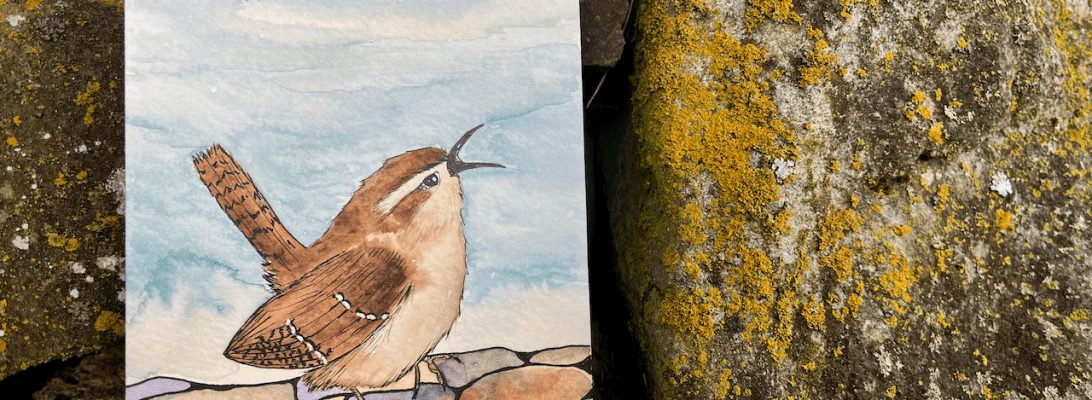
The iconic rock walls covered with lichens and mosses are familiar here, as are the familiar Carolina Wrens that belt out their tunes. Little Wren’s browns were created using Black Walnut’s Ink (the dark brown on his back), and brownish hues of Narrow-leaf plantain and yellow onion skins mixed to make his brownish belly. The rocks that are brown are various invasive plants from around here that I acquired during a workshop I attended. Polyphemus moth. Those antennae get me every time! Various shades of brown used include pink onion skins, plantain leaf and Black Walnut fruits. The mossy inspired background is a wash of orange marigold with splashes of beets, yellow onion skins and butterfly pea.
Part 2 of a series of posts about my artist in residency experience at Oak Spring Garden Foundation.
I really love that this place has a working farm, an educational + artist’s garden, and a seed conservation component. If you know me, you know this is my jam! I feel right at home except for having to hold any responsibility or accountability! These are what I call my “working vacations”.
The first chance I had to volunteer, I signed up to help with the Indigo harvest. I’ll write more about that later, but basically we harvested a row of Japanese Indigo, Polygonum tinctorium that is currently fermenting, the first step of the careful practice of extracting indigo pigment. The following day, I came out for another harvesting activity, this time for veggies and herbs. I helped the crew pick peppers, basil, sage, and kale.
It’s really a lovely space! Very well maintained and laid out. Although as a fellow farmer, I admit to easily seeing the things they do too when I praise the aesthetic of it all but they kind of sigh and look around, saying yeah but….the weeds, the disease, the never ending list of chores, the pests! In some strange twisted way it’s comforting that even on well resourced and managed farms, nothing is perfect and there will always be weedy sections and some kind of pest that keeps the farmers awake at night. We’re a collective support group, commiserating on the challenges of growing!
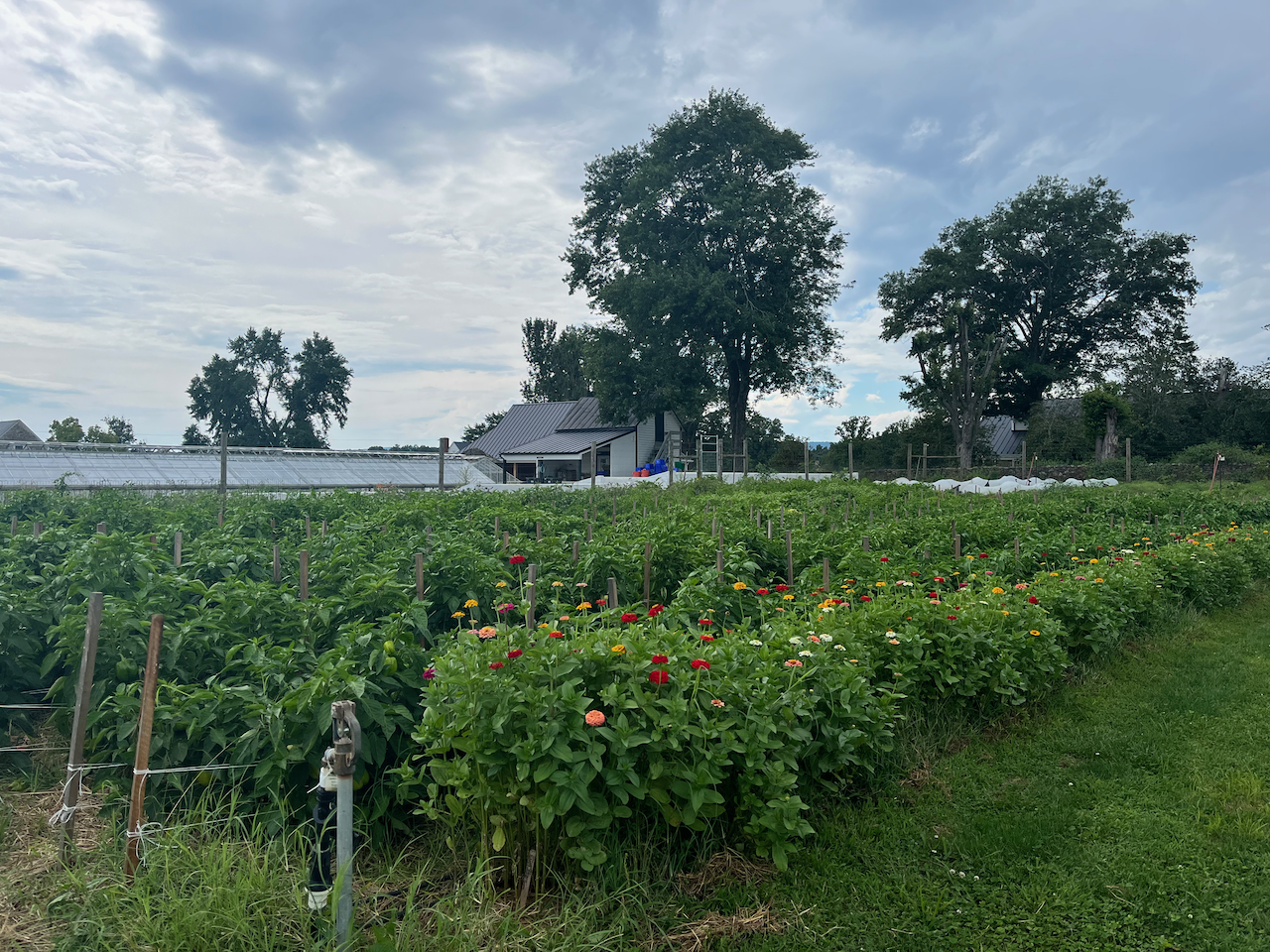
Zinnias and peppers adjacent to the greenhouses and packing shed.
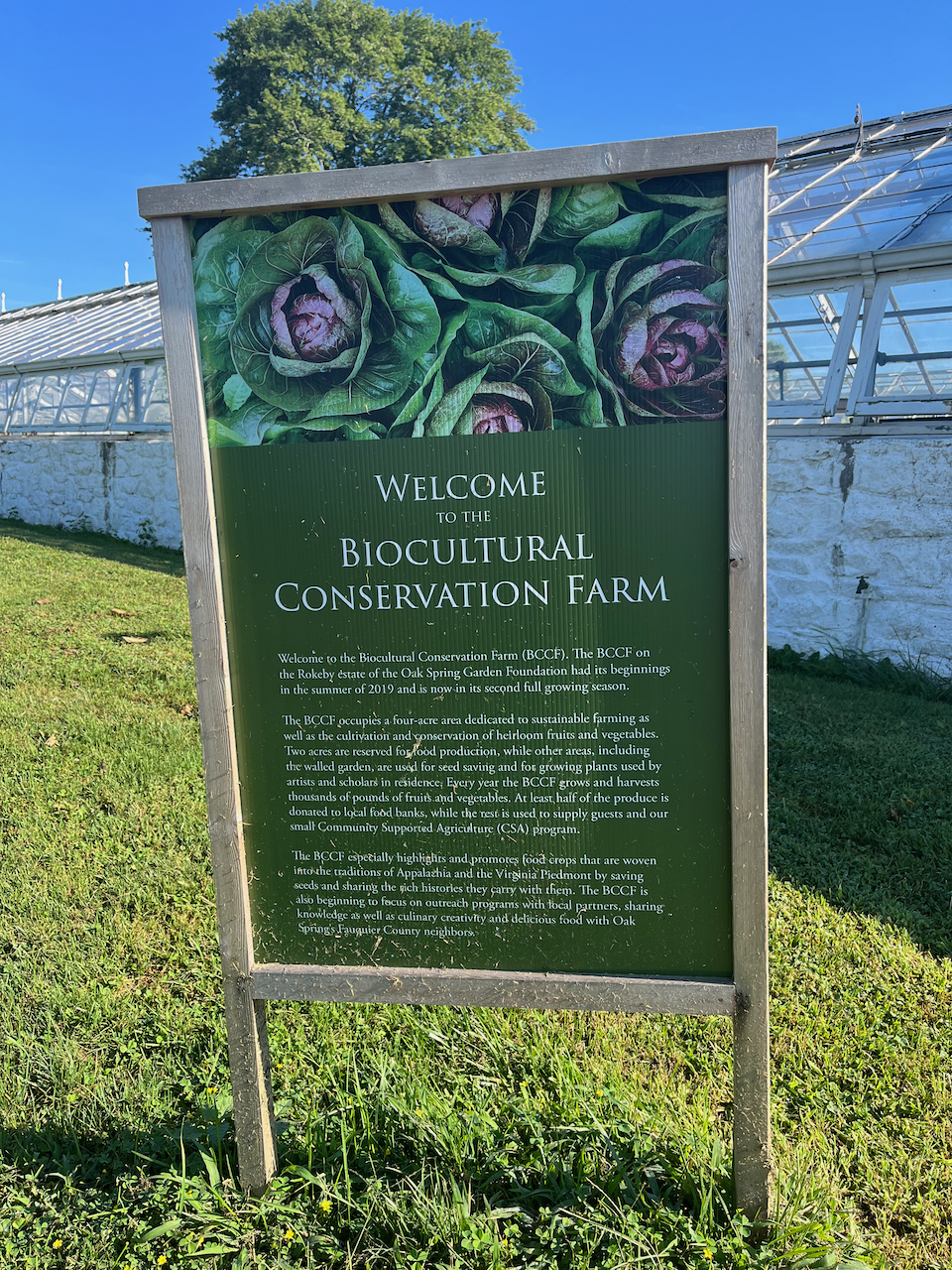
The part of the operation that is focused on food production, is separate but adjacent to the educational and seed gardens, which all together are part of the Rokeby Farm side of the Oak Springs Garden landscape and referred to as the Biocultural Conservation Farm (BCCF).
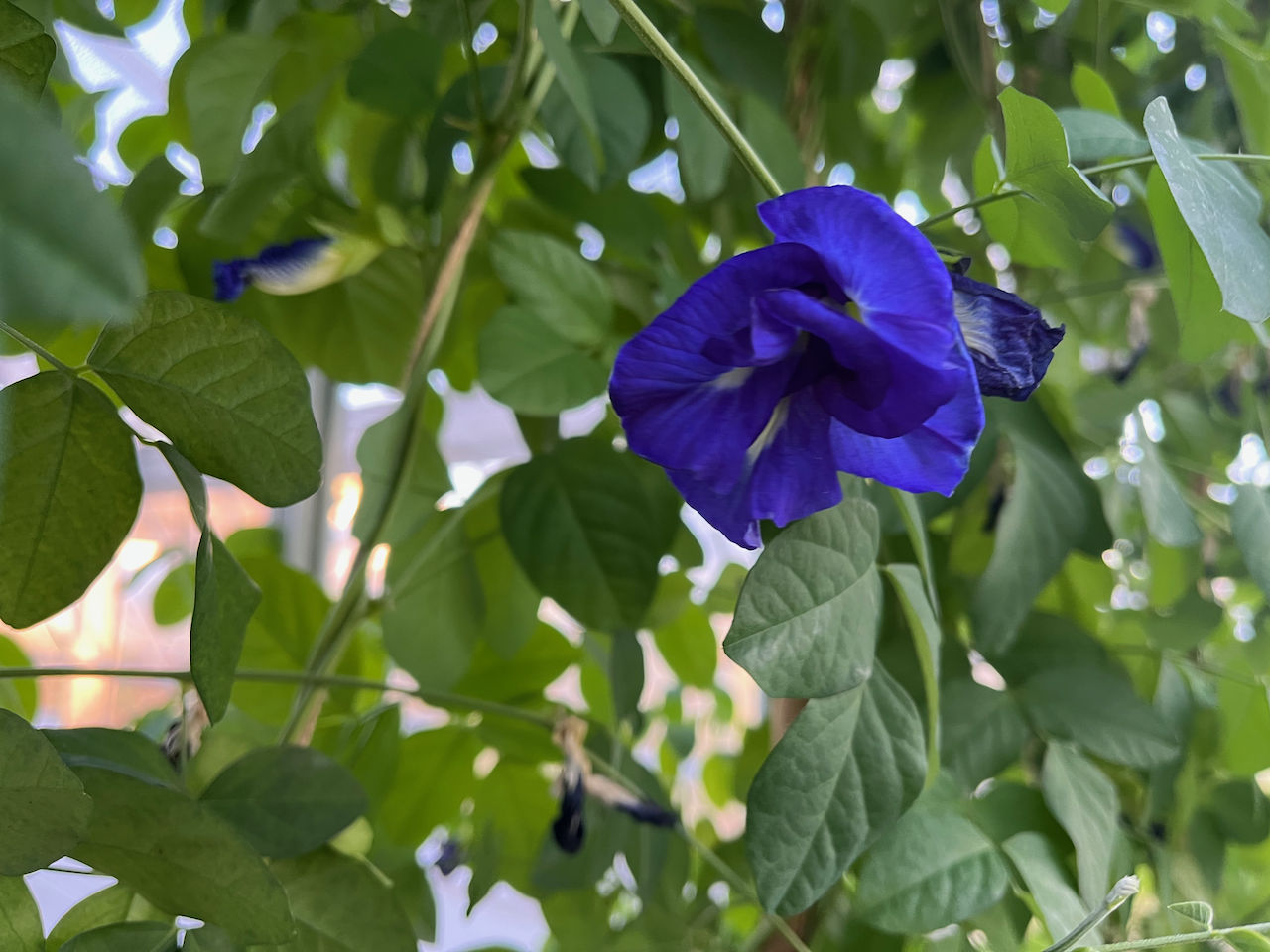
A series of glass covered greenhouses feature more tropical plants that are pushing the limits here for outdoor cultivation in Virginia. Many familiars: turmeric, ginger, basil, butterfly pea, and malabar spinach. The butterfly pea variety they have is stunning, very convoluted and deep blue petals. I’ll definitely be keeping an eye on her for any available seeds before I leave.
Their little office is adorable and as you might expect, stocked with books, jars and packets of seeds, and found objects like birds’ nests. I was able to get a sneak peek at the new art seed packets that just came in, filled with seeds from the plants they stewarded just outside the office doors: sorghum, tomatoes and corn. Specifically these are heirloom varieties significant to the Appalachian area that were passed onto them from a nearby family that has been keeping them for many generations.
Art packets featuring previous artists in residency’s work, and filled with goodness from seeds saved onsite!
I’m excited to learn more about their seed conservation work and how we might be partner-friends. The folks from Southern Exposure Seed Exchange are going to come visit me here in early September and it will be nice for us seed heads to geek out together!
The production part of the operation donates most of the produce to the local food pantry, provides a community CSA program (weekly farm share box for sale), and provides ample produce for the residents and staff onsite. Three times a week we are treated to dinner by Chef Jason, who is creative at making tasty dishes with what’s available.
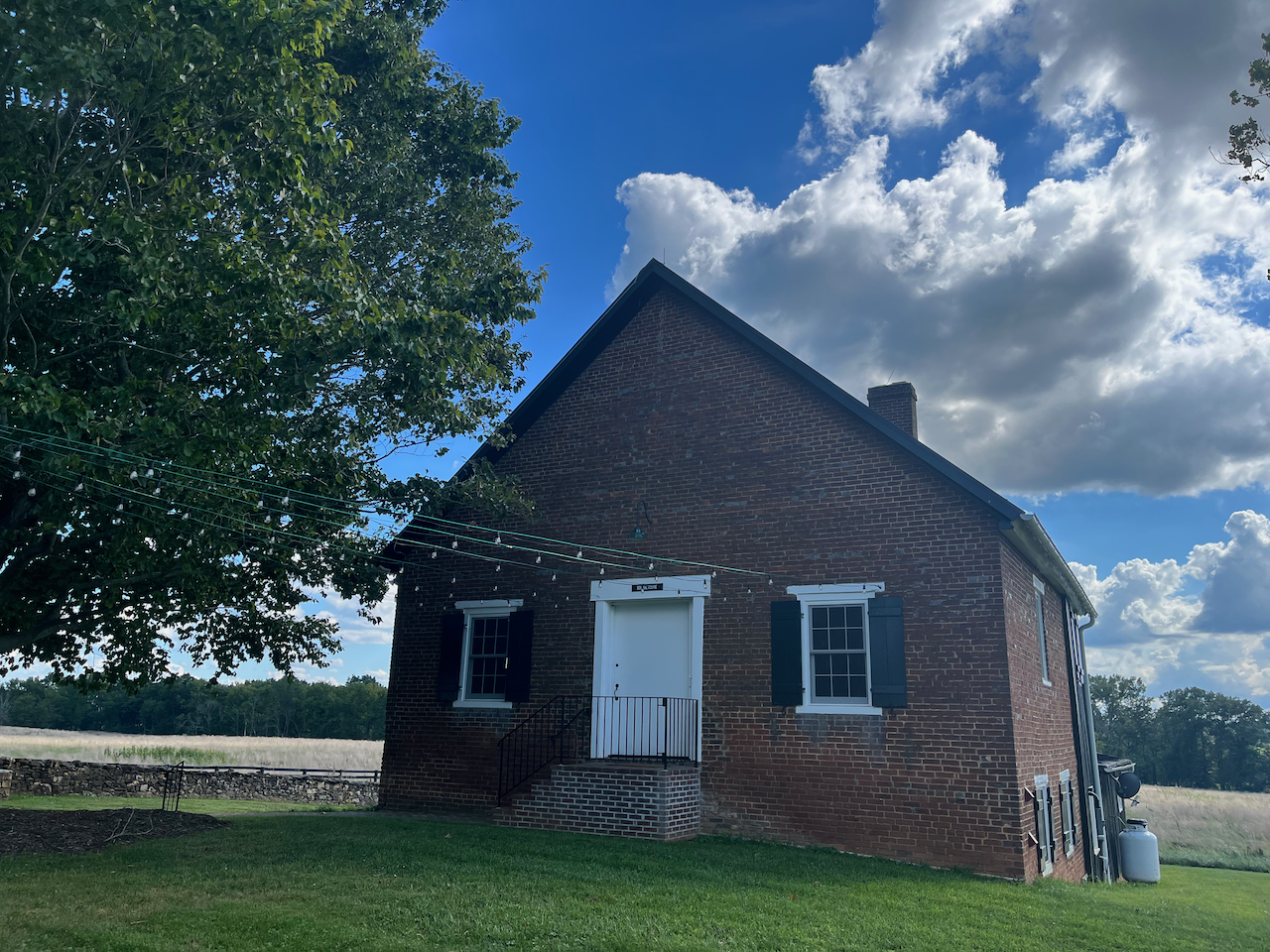
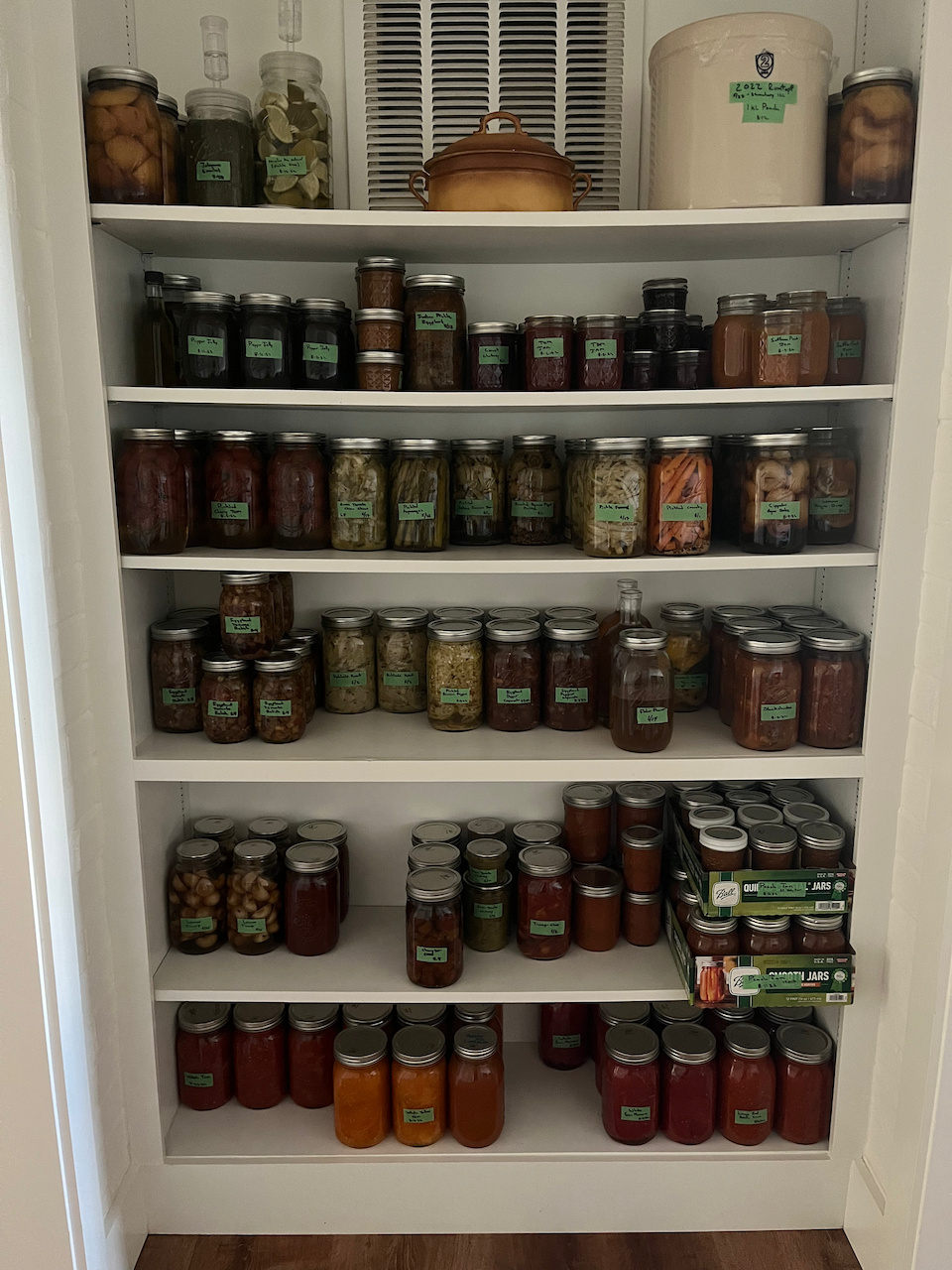
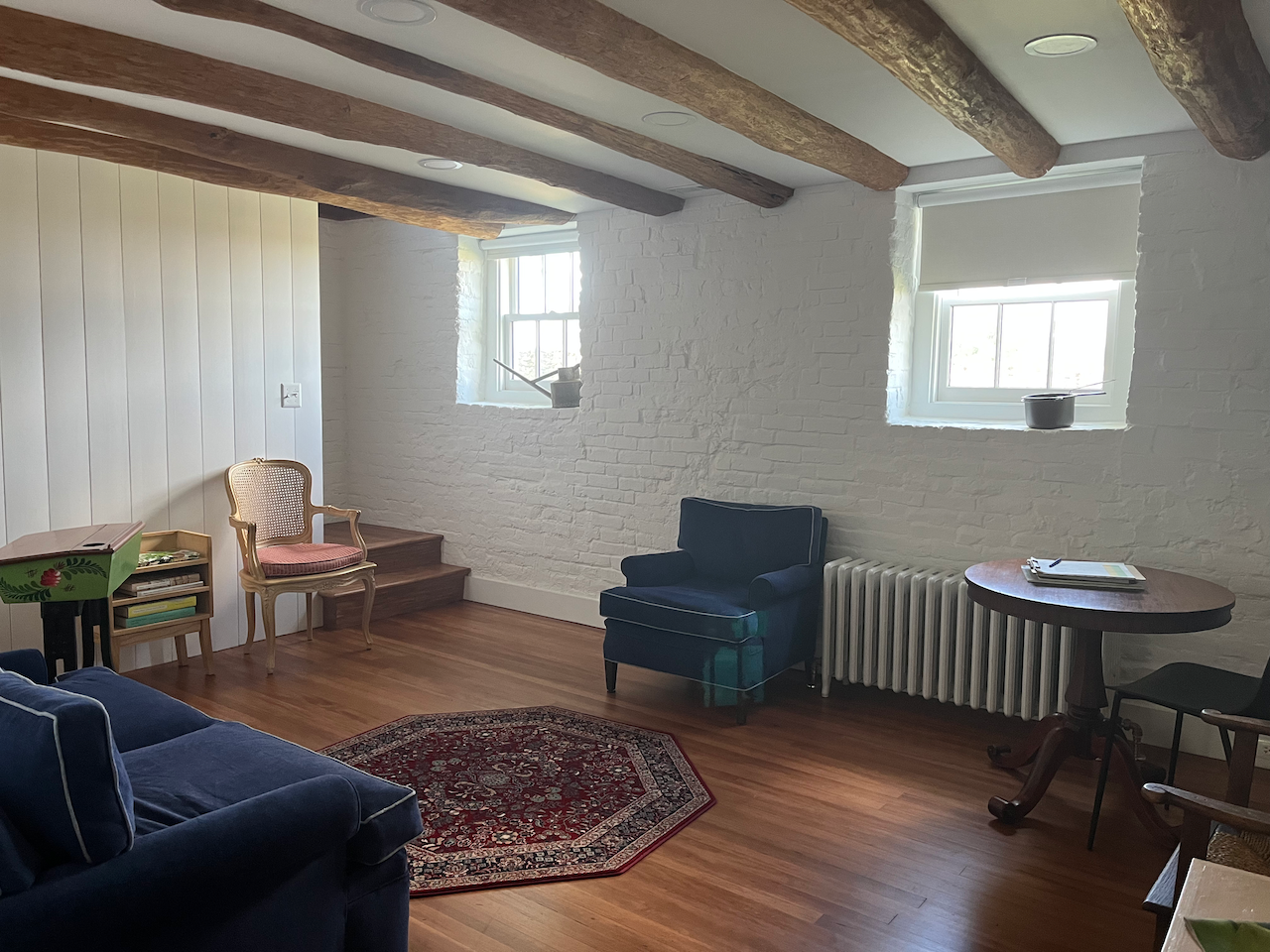
We eat communal meals in the historic school house, which has a cozy little downstairs area with a small sitting room, a few books, and better internet than most of the resident houses. Here is where the chef’s larder exists, a work of art in and of itself! It drew my eye the minute I walked in. I sampled Chef Jason’s homemade tomato jam and I approve, but I still like mine better!
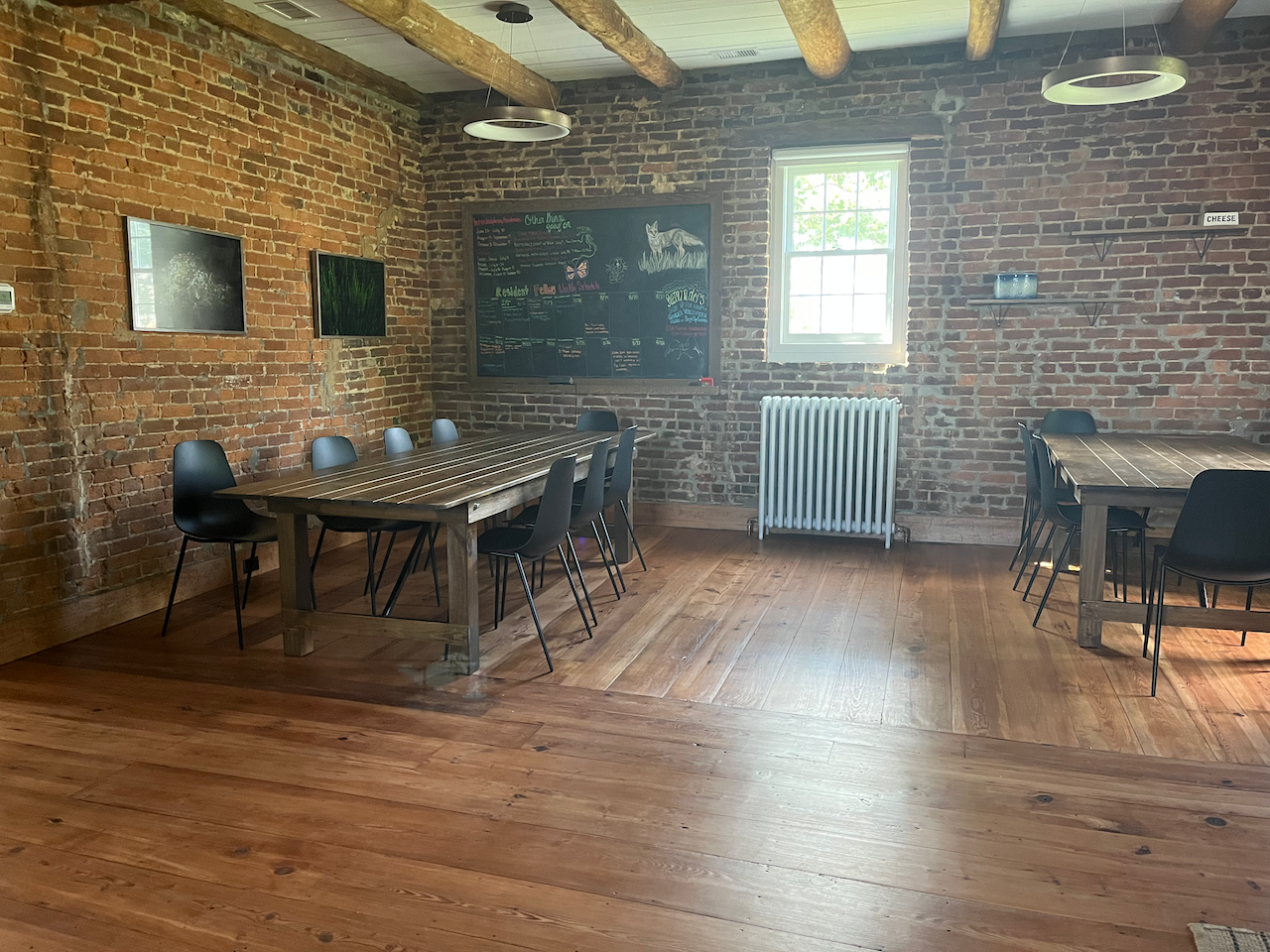
The school houseChef’s larderDownstairs reading roomThe common dining area
Upstairs is the kitchen and main dining area, cute and well stocked. There is even enough open space after hours for pop-up mini Zumba workouts!
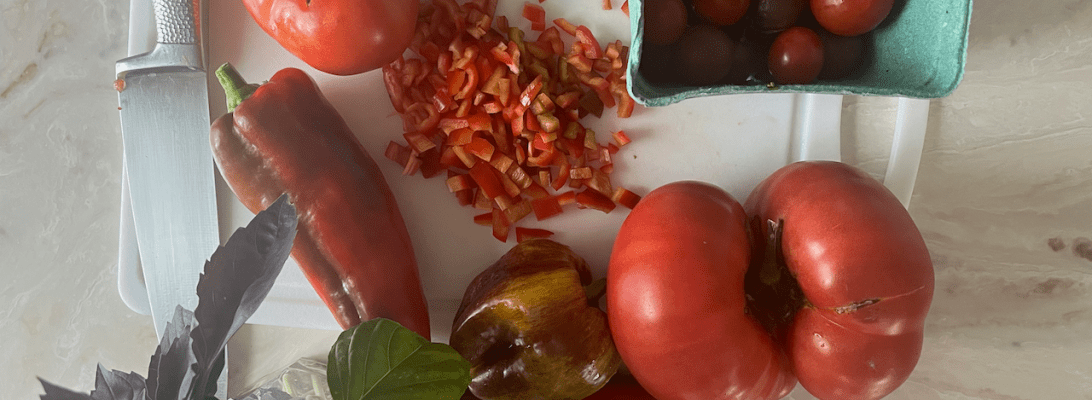
Over the weekend, I received notice that extra tomatoes were up for grabs. Figuring no one else would need that many, that some were already starting to go bad, and that I just can’t let good food go to waste, I rescued several pounds of cherry tomatoes and giant heirlooms, which we just don’t get in Florida with regular success.
I guess old habits die hard, because I immediately went home (after the impromptu chance for a 20 minute Zumba dance workout!) and started making sauce. I used most of it for our Sunday potluck brunch roasting it with eggplants and basil we got in our CSA box. There was extra we used to dip cassava bread into, that Jackie brought from the Dominican Republic, where she’s from. Yum!
It’s a blessing to be able to eat well while traveling, when it can be easier or unavoidable to eat poorly. I’ve really been enjoying the weekly farm produce and the opportunity to also go pick a few additional items (I ask first!), forage some nutritious local plants, and eat the leftovers from Jason’s incredible meals.
Every evening, after dinner and doing some art, I wander over to the gardens to see what’s happening. There is always something new to see, even though I’ve now visited multiple times. The first evening, 3 very active Sphinx moths were cruising the lilies and four o’clocks. I felt them before I saw them. They came so close a few times that I felt their wings and wind near my face, and heard their distinctive vibrations. Their proboscis is so long, specialized for a deep drink into long tunneled flowers. I imagine they came from the tomatoes nearby, where their previous life as a tomato hornworm started out. Although I did search and couldn’t find evidence.
Amazing I could get one clear-ish photo of these active moths! Look at that proboscis!
Other daily observations: The Goldfinches seem exuberant over the wild thistles going to seed everywhere; Kestrels swoop in for the cornucopia of field insects and small birds; sparrows are snacking on plants going to seed in the gardens; rabbits are hopping about being cute little naughty garden pests; an array of pollinators are visiting the diverse buffet of flowering crops; and the indigo vat nearby bubbles silently its blue riches, filled with leaves picked just a few days ago. It really feels like home even though the seasons are off by a bit, and some of the flora and fauna are different.
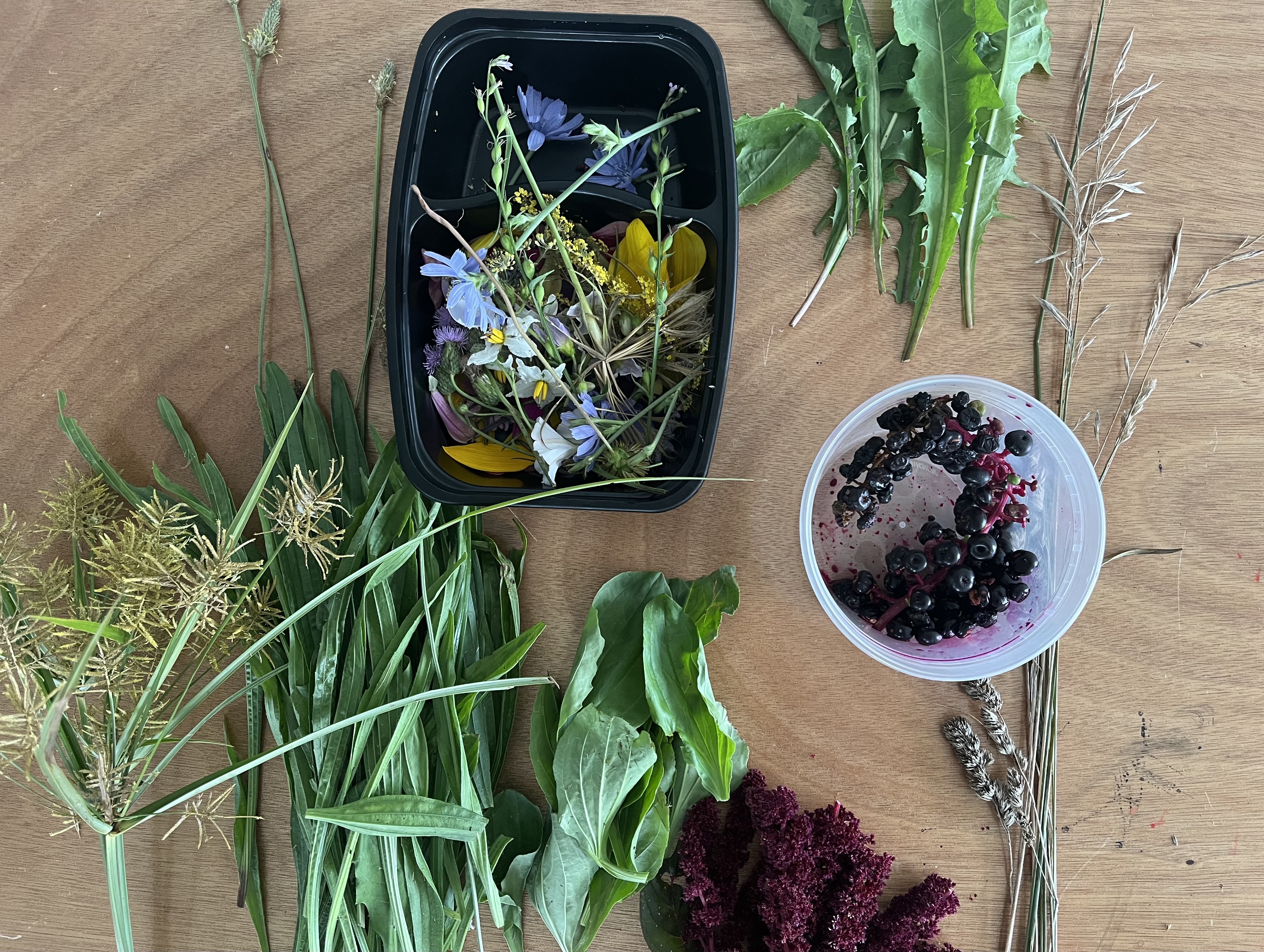
Monarch on thistleView from my studioFermenting indigo plantsButterfly peaA foraging collection for tea, pressing and making paints
There are a lot of rabbits, ground hogs, and squirrels that are serious farm pests, but they say Buddy the 15 year old black cat does a formidable job of keeping them in check. Of course he’s likely also eating birds and frogs, but hopefully his belly is mostly full of organically fed, free ranging rabbit and squirrel.
Naughty little garden bunny better watch out for Buddy.
Being here for a total of 5 weeks I’ll get to observe a lot of changes as the microseasons shift from late summer to early fall. I’m excited to volunteer at the farm at least one morning a week and help out. I always appreciate volunteers that help us at our gardens at GROW HUB, especially those that kinda know their way around a garden. It’s a lot of work to maintain these spaces, and it shows.
I am so grateful for this backdrop and canvas of both inspiration and beauty, while I am provided ample time to explore, create and rest.
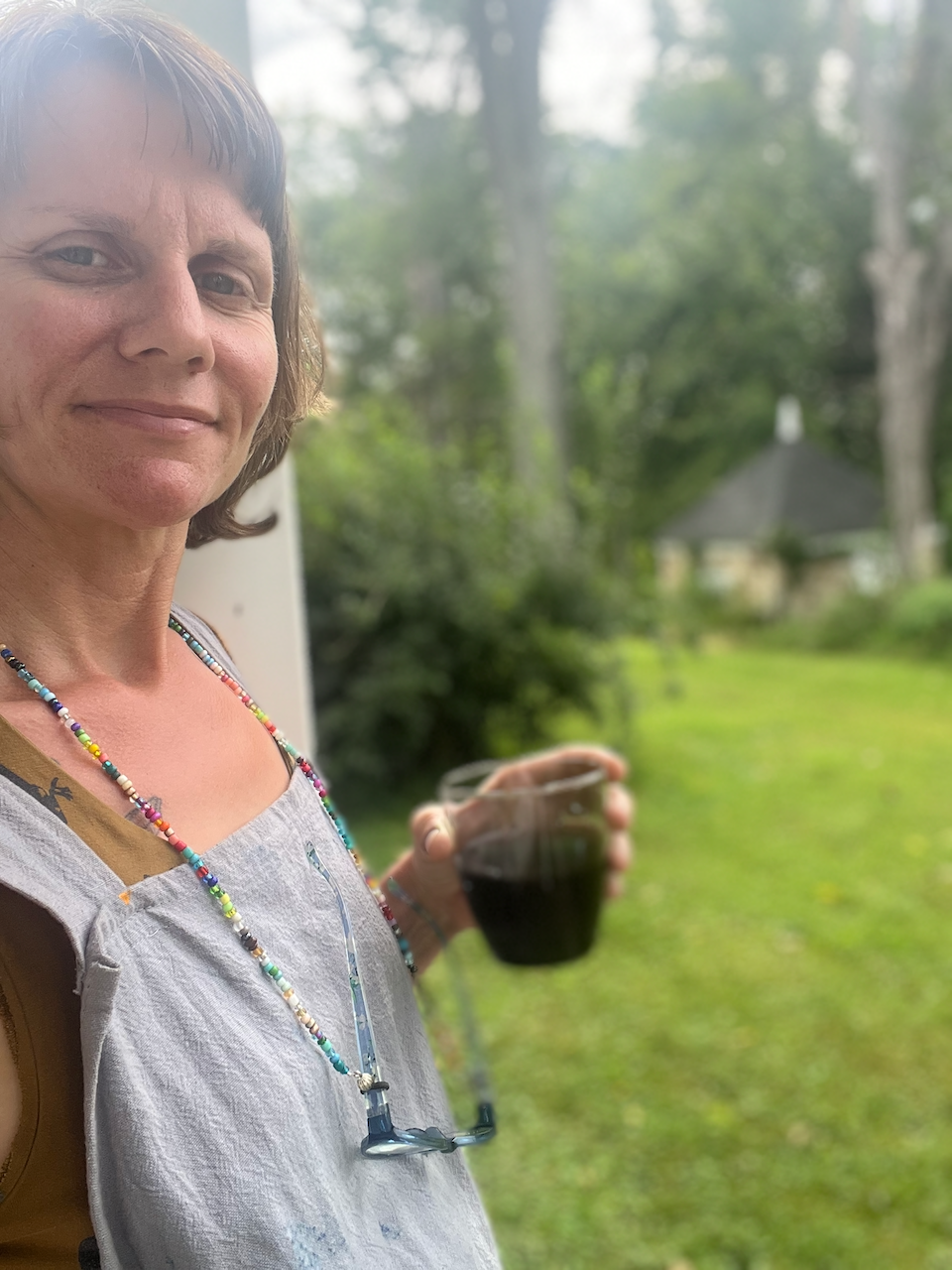
Butterfly pea + tulsi tea, art smock on, reading glasses, ready to paint!
Today I woke up with anxiety over my giant to-do list and the weight of responsibility on my shoulders. This is normal for me, but this morning felt particularly heavy. So I did what I often do repeating to myself like a mantra….”You are not saving lives. It’s ok. If stuff doesn’t all get done today, so be it. It will be there tomorrow. It’s all going to be ok.”
It kind of helps, along with some deep ocean breaths, but on my bike ride to Grow Hub I was feeling a pang in my chest. Guess it wasn’t working enough. I talked to myself out loud all the way there, going over all the things I needed to do today, tomorrow, and next month to try to organize it. It’s also common for me to talk out loud to myself and I’ve been observed doing this much to people’s amusement! I have entire conversations with someone, I’m not quite sure who. Like, all the time.
I arrived, parked my bike, and greeted the smiling people that are always happy because they’re at Grow Hub! I passed off some of my list to Sarah, helped her wrangle some details and people, talked to a reporter there to do a story, ran around helping other folks get what they needed for their day, and then finally started trying to “get to work”.
Well, it was one of those days where nothing would be checked off my list. I took a deep breath. But there is JUST. SO. MUCH. Deep ocean breath. Sometimes I get really frustrated and resentful in these moments. But not today.
I just surrendered. Crumpled up the list, to save for another day. Today was a day to lean in, and remember and revel in the why I work, and not obsess over the details. For the first time in a long time I said to myself and agreed- “It’s OK to just sit here with these folks who you care a lot about and simply enjoy their company. You don’t have to be here today to check things off your list. And anyway, why can’t this be something that’s on the list?”
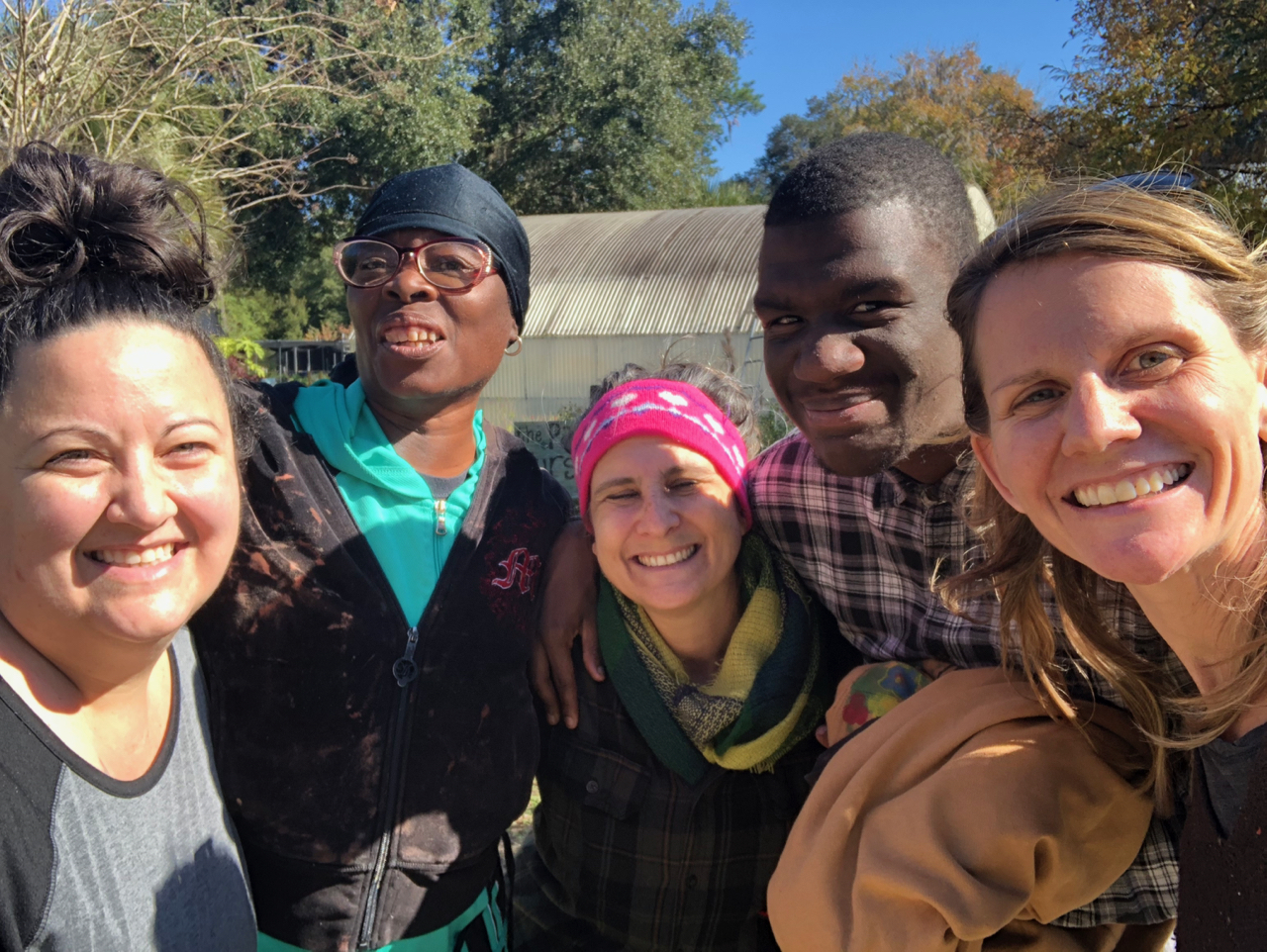
Myself and 6 of the lovely people that work at Grow Hub chatted as we fiddled with a few seed packets on the front porch. Later a few other members of the Board of Directors wandered in for our monthly meeting. Everyone was chatty today. The weather has been a relief and so lovely, the sun shining, the sky super duper blue. Those Florida skies and fall days! So why not just forget the list and enjoy the day?!
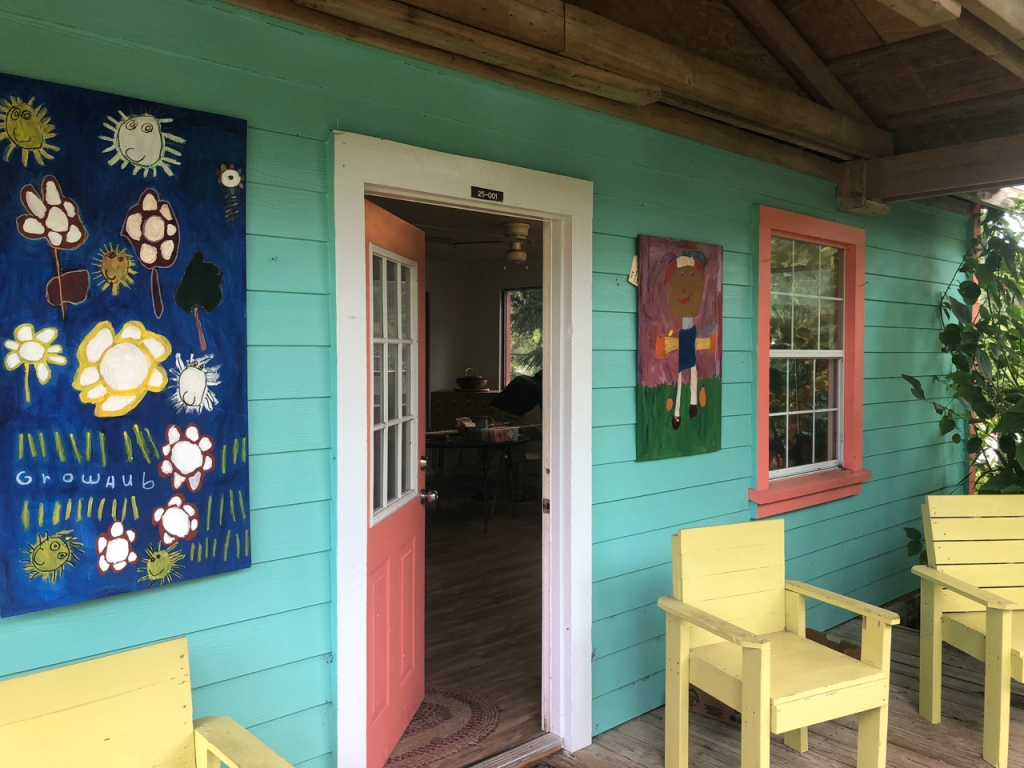
With a porch like this, why not enjoy it more especially on these gorgeous fall days?!
I realized as I was talking with one of the newest employees at Grow Hub, that we were all experiencing a profound moment together with her. At 30 -something with severe social anxiety (and somewhere on the autism spectrum I would presume but I don’t really know), smart as a whip- she had never been able to maintain employment. After a few weeks of coming out of her shell, slowly being coaxed to join us in the gardens, in the gallery, and on the porch, she was entirely comfortable- enthusiastic actually- to just sit and chat. Here, challenges are met with acceptance and kindness in a beautiful space. She was overflowing with ideas of how she could help Grow Hub, and was excited to share them all and know she was valued – as is.
Gwen told me how much she loves packing seeds (I already know this, she tells me every time!) and to let her know when we do it again. Deal! Joan was so relaxed she nodded off sitting upright. I wish I could do that. Rosa quietly and attentively put little stickers on seed packets (also her favorite thing except maybe for crocheting little pot holders). She was happy to be back after a health scare that had her away from us for a couple of weeks. We missed her.
I didn’t know which way to go when I arrived, scattered and anxious. Then it became clear, when I was just able to let go.
After most of the rides came to get the crew and whisk them home, it was just the new girl and I left sitting on the porch. She told me freely how much she loved it here. How much she looked forward to it, how it was the first job she had where she felt safe. Where she didn’t feel as though squashing herself down to try to fit in was necessary. Where she didn’t melt into a puddle of despair after a hard day. She was excited to come to work and share her ideas.
This is why I work. Today may not have been productive, but it sure was impactful. I accomplished and participated in some seriously important work today, and not one damn thing was checked off my list.
However I will say, that while I sat and received this gift today, due to previous days of organizing, discussing, coordinating, and calling….nearly 60 yards of compost was delivered to the gardens over at GRACE Grows and one of our youth program sites at Wilhelmina Johnson Center. Sarah and our awesome volunteers sowed hundreds of little seeds, watered them and loved on them, in the hopes they will grow into nourishing plants tucked into home, school, and community gardens around the city. That’s something! And someone’s life shifted today, having found a safe place not just to land, but to grow. And I was there to see it.
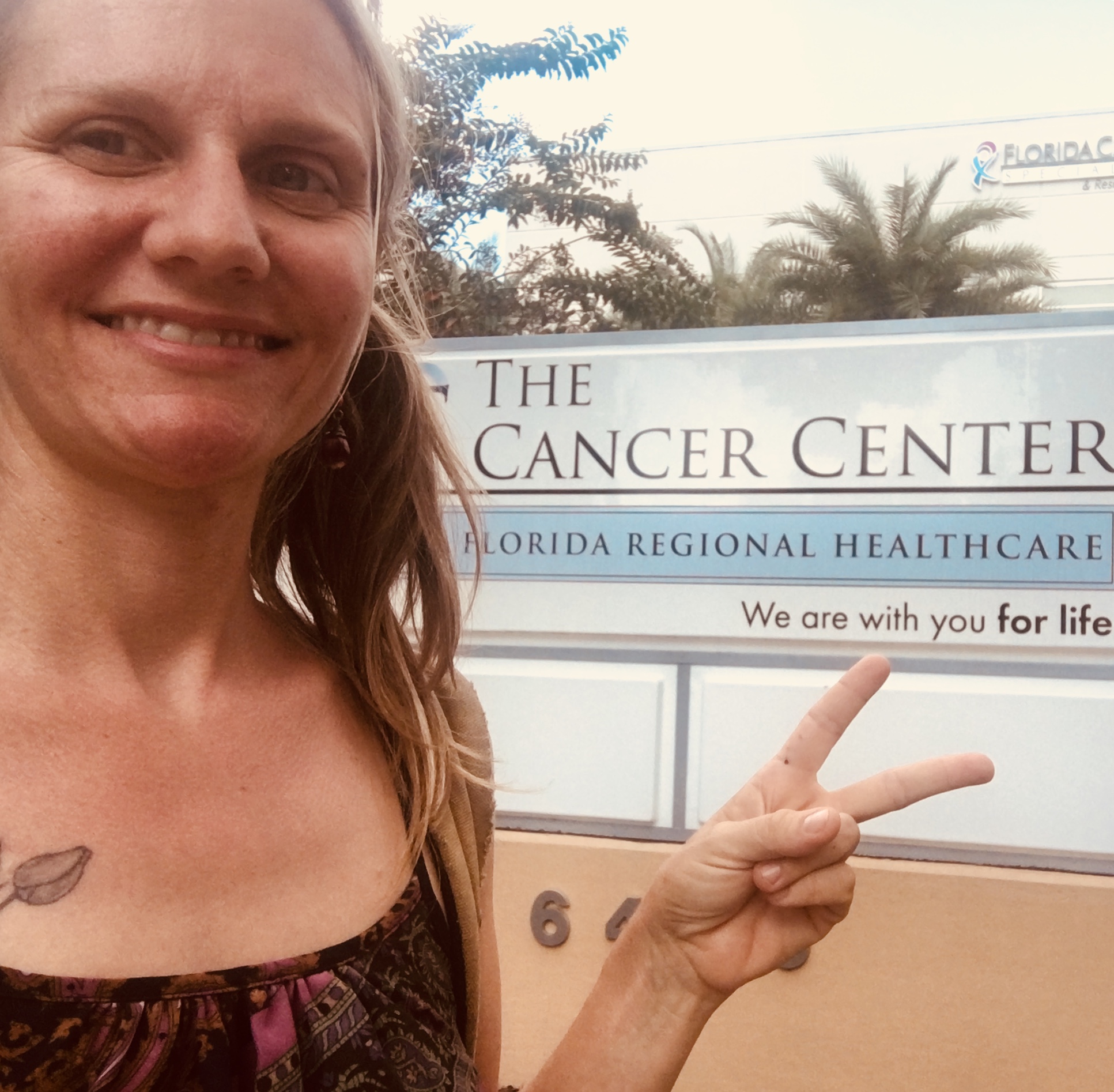
After a day of impactful work, the bike ride home felt a lot different than it did coming in. I got home and changed quickly to head out for my annual check up from the oncologist. I don’t get scans anymore, just blood work, vitals, 20 questions, and a little poking and prodding. Everything was all clear. As expected, but you never know.
Yep. Today was a day to just revel, surrender, and be grateful for this beautiful life and day. I had these lessons revealed to me loud and clear during my ordeal with cancer. But they have faded over time, as I slid back into the crazy world most of us inhabit that values productivity and busy-ness over all else. Today was a day to remember that life is too short to be dominated by an anxiety-inducing checklist.
Besides, every checklist for the day should have “enjoy!” written at the very top.
A few years ago after the culmination of several inspiring events and ideas, I decided it would be fun to try taming the wild and beloved Everglades currant tomato. It’s a prolific plant in our sub tropical climate that otherwise mocks and torments other tomatoes and their attempts to make it here. But there are a few issues with these tiny maters I’ll explain later. Let’s just say that farmers would never grow them, and gardeners with small spaces would probably regret it!
Tasty but tiny and need picking daily, prone to cracking.
I met Craig LeHoullier, a self-taught plant breeder, tomato lover, author, and gardener at the annual Seed Savers Exchange Conference and Campout several years ago. His love for tomatoes and creating new varieties was infectious, and I caught the bug! Then a couple of years later, I went on a road trip to visit his driveway tomato lab in Raleigh, NC. I took my friend Tim, an aspiring plant breeder and tomato lover because they had to meet and become friends. I listened to them blabber on excitedly about things I didn’t understand as we rocked in our chairs on Craig’s amazing back porch, overlooking his garden and bird feeders.
Tim (left) and Craig in the driveway tomato lab in Raleigh, NC.
I had an aha moment, when I realized that this kind of work doesn’t require one to have a degree or any experience with plant breeding at all to try it! Craig learned how to do this on his own with an unrelated professional background in pharmaceuticals. And he did it in his driveway. In pots. While facilitating with others across the globe, the creation of so many new varieties that you can now buy online in many seed catalogs (check out the Dwarf Tomato Breeding Project). Tim taught himself as well, and so has nearly every human in previous generations that grew food and saved seeds. Which was most people, because we didn’t have the luxury not to procure our own sustenance.
Inspired but not quite ready, I just let that planted seed rest. A few years later at the Organic Seed Growers Conference put on by Organic Seed Alliance in early 2020, I then caught the “landrace plant breeding” bug from Joseph Lofthouse. Joseph is a Utah farmer who turned modern plant breeding standards upside down by advocating for highly promiscuous plants and strategies to encourage lots of genetic diversity and resilience. His crops and seeds are beautiful. He just wrote a book about it, and a signed copy is on it’s way to my house now! I can’t wait!!
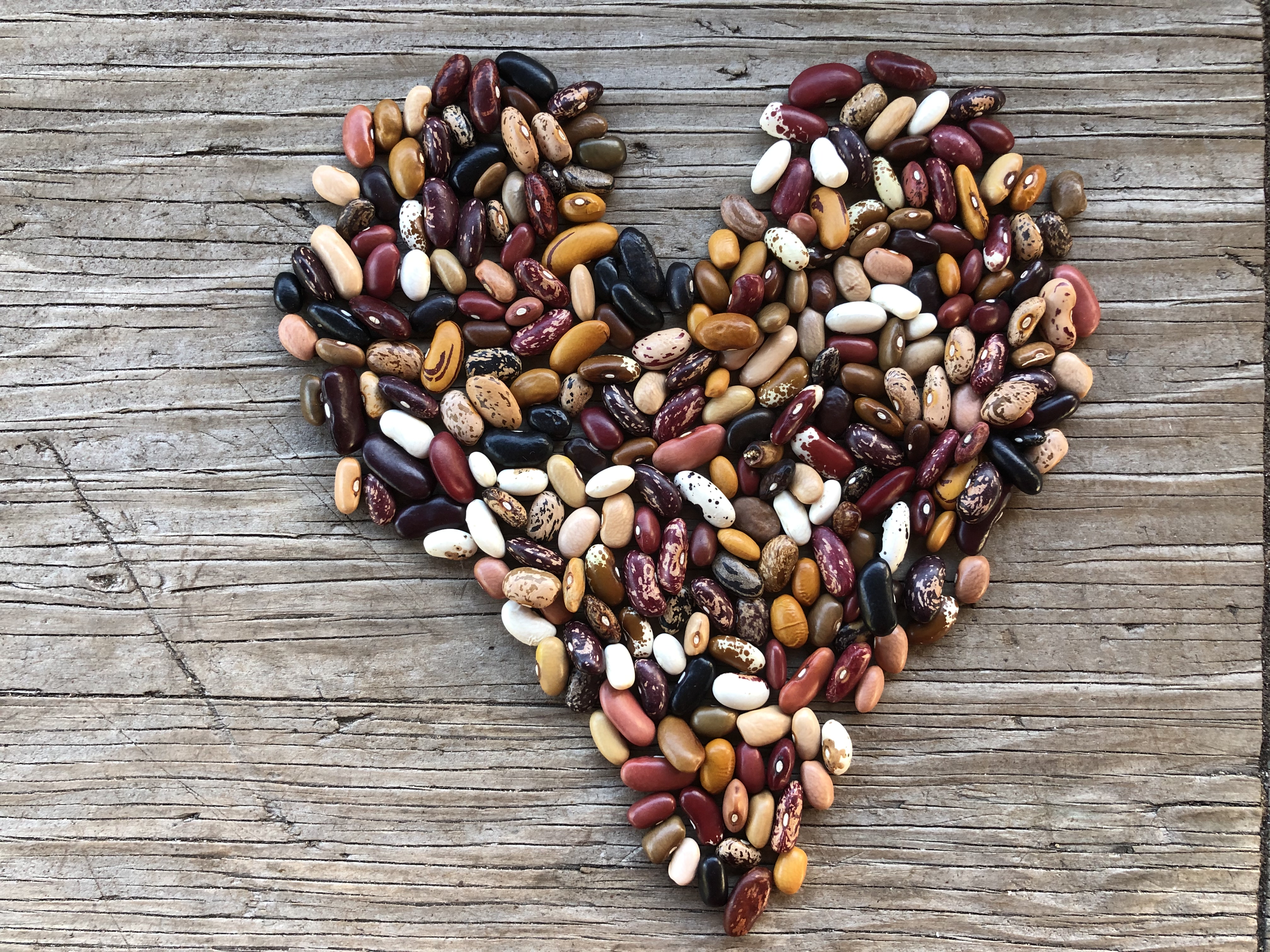
The Lofthouse Landrace Bush Bean “variety”. Note: not uniform.
Many years ago as a new grower and seed saver, I had fallen in love with the Everglades currant tomato. It’s a different species (Solanum pimpinellifolium) than your regular garden tomato (Solanum lycopersicum). Supposedly naturalized in South Florida, this feral plant is spread by birds. I have seen it with my own eyes, the red birds feast on them and poop them out in my yard! I don’t have to plant them anymore.They are tasty and abundant little flavor packed little fruits, and certainly the most resilient tomato I had ever grown.
The cardinals in our backyard are comfortable enough with me to let me watch their babies grow up. I can’t be sure, but I’m pretty sure they are fed a diet partially including Everglades currant tomatoes.
When you have success as a gardener, it makes you feel pretty good. I like saving seeds from successful feel-good plants and sharing them with others so they may feel good too, and have food to eat and share.
But. She is too wild and takes up lots of space, fruits are arguably too small even though they make up for it in flavor. Halp! I want the flavor and resilience in our climate but a more tame plant with larger fruit.
Call in my friend Craig! He hand-pollinated a Florida Everglades Tomato with a dwarf variety Tanuda Red and ta-da!!! A breeding project begins!
So we are now as they say in the industry…in the F4 phase. That is the fourth generation of saved seeds from the original cross, are in the ground growing now. The season is nearly over and we are narrowing down our selection to move forward. Each week Sarah and I ranked each of 46 plants we could cram into our seed saving gardens at Grow Hub. We ranked them on overall vigor, health, disease resistance, sprawl, and of course- flavor!
Rookie mistake: we planted them too close. I *thought* since they should be “dwarfier” that we could get away with 3′ spacing like a regular tomato and still have plenty of room to see each individual plant. WRONG!!! It was a jungle and we had issues. Next year, 4 or 5′ (mostly because we are evaluating and need to see) and every other row! Plus it was a bad/good year depending how you look at, for venomous moccasins that we found TWICE in the tomato patch.
We farmed the tasting part out to many of our Working Food friends and followers. Flavor is subjective and if it were just up to me to rate them, we’d be in trouble. One person’s spit-yuck pile, is another’s #1, so we had a lot of people provide input. We are winnowing down our selection based on overall plant vigor and community input on flavor.
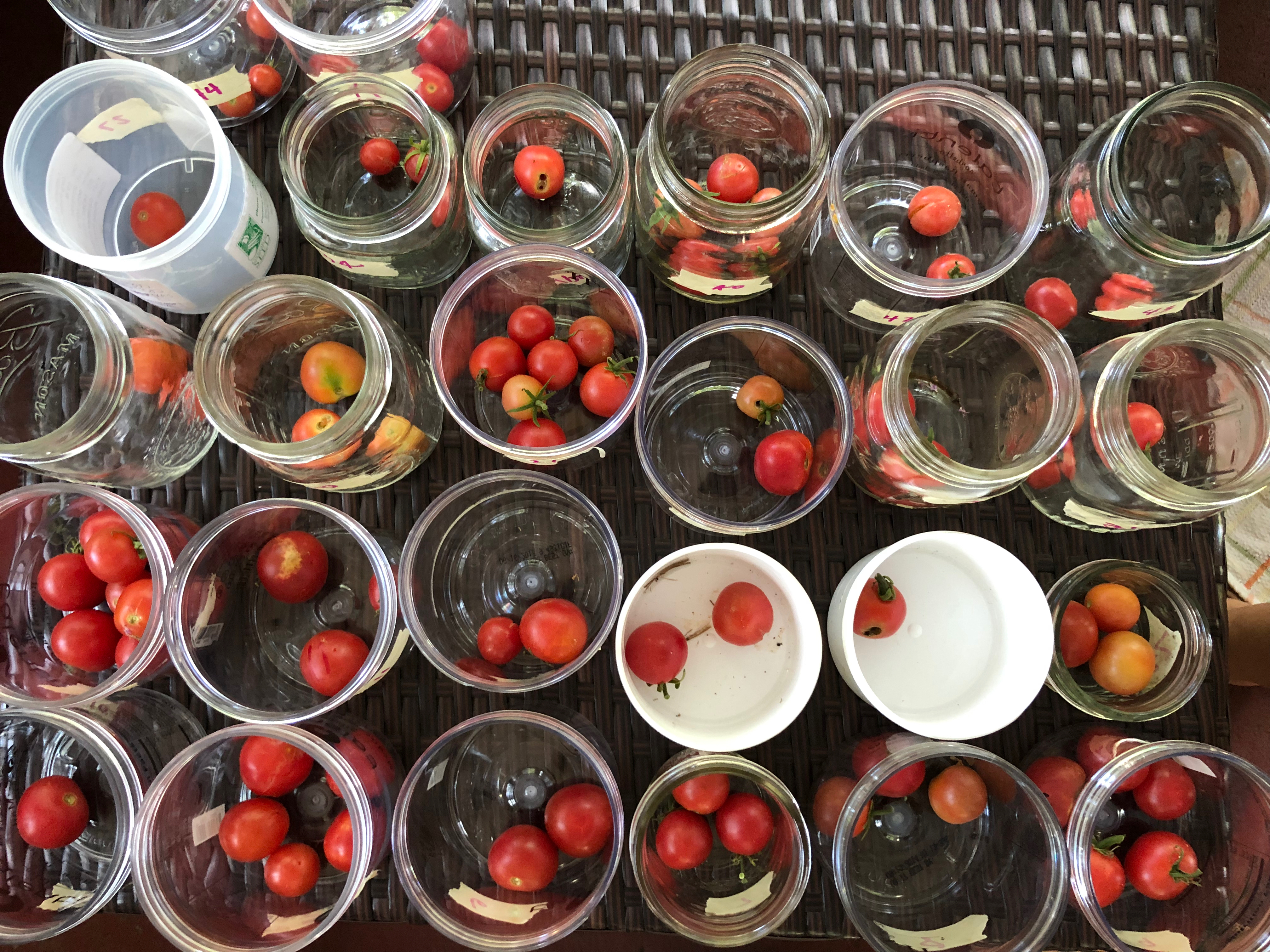
46 plants (all from ONE plant’s seeds saved earlier (plant # 16) in total, each of which was kept separate so we could save seeds, admire the fruits and take notes, and taste them. It was ALOT. OF. WORK. I am so grateful for Sarah and Jenna helping keep all these sorted and organized.
We had a lot of plants that couldn’t hide their mother’s feral tendencies. While the fruits were much larger (think regular to very large cherry size), the plants were still a bit much! A few were true dwarfs. So we’ll narrow it down soon, and get excited for next season, F5. The fifth generation.
It takes about 8 generations to get a stable new variety. So we are getting closer! Soon we hope to release an open-source seed for you to enjoy! Grow it, save your own seeds, make your own new varieties. We’ll never hold any patents or power over seeds, they are a common good for everyone.
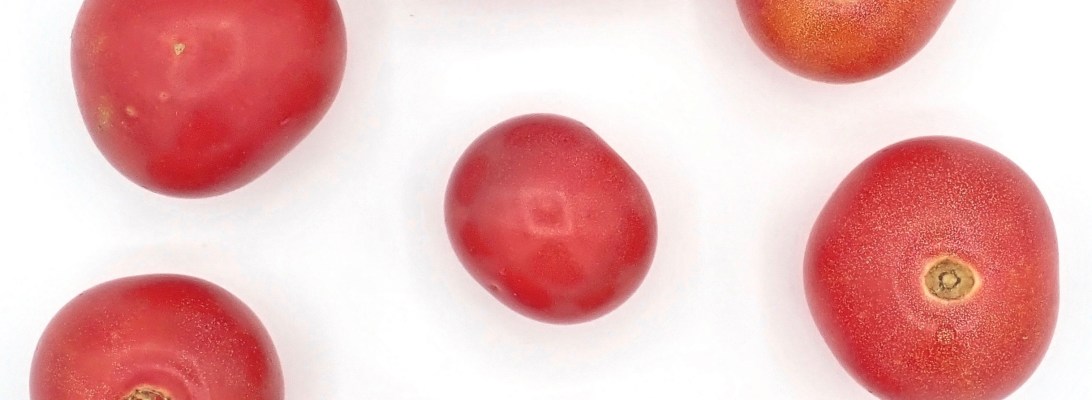
One of our tasters and friends Wendy, also takes these glorious photos of plants. These are a few different fruits. Hard to tell the scale, but they are much larger fruits than the Everglades.
This is my 40th year. In July I’ll officially have lived on this planet for 40 years. Lucky me! It’s been one hell of a ride.
I embrace aging, and they were right! All those wise people told me growing up that it gets better, and at this point at least, I’d have to agree! The lines deep around my eyes are testament to my time outdoors observing wildlife, sowing seeds, and smiling and laughing a lot. The past 5 years in particular have really been powerful, aging me sublimely like a good wine. If it gets better than this, I’m ready for more!
In my 40th year, there are FOUR big things I’ve recognized as powerful driving forces and milestones. In no particular order:
ONE
It’s the first time in 7 years, that I will not have to lie in a CT scanning tunnel, wondering what the machine is seeing inside my body. I’m cured of cancer, and this is the first year I won’t have to schedule that appointment. As you may have read in previous posts, despite the insanity of navigating a life with cancer, I am grateful for the experience, the lessons, the perspectives. The greatest, most fucked up gift I’ve ever received. But this year, I won’t devote one minute to sitting in a scrubbed sterile, cramped, dreadful medical facility.
Peace out, hope to never come back here again unless I’m volunteering or something.
TWO
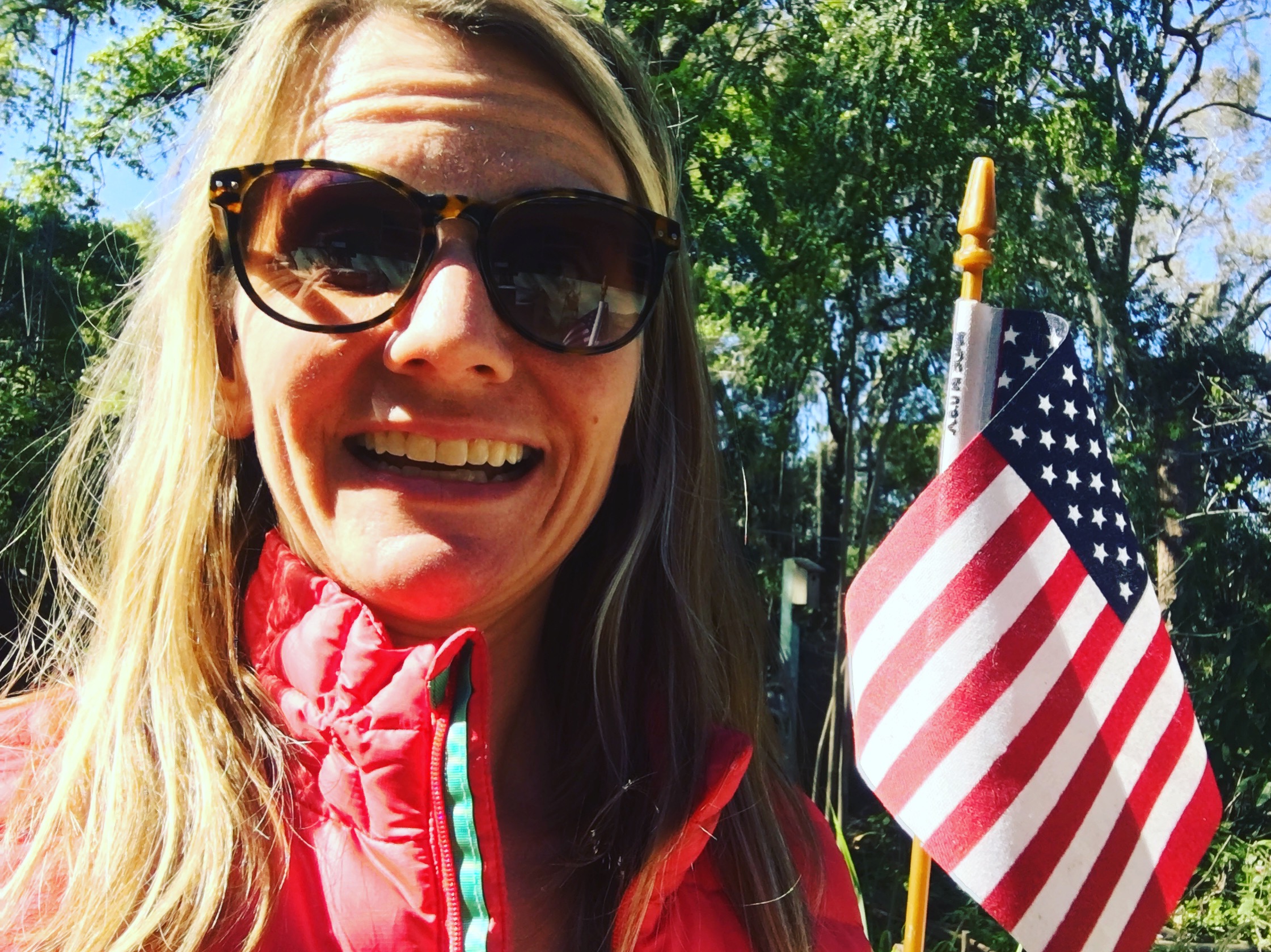
I’ll become a US citizen next week! Don’t get emotional on me, or assume I’ve made a huge mistake with this awful political climate here. I WANT to be here. Even though I am from Canada- a safe, polite, and typically more liberal country, this is home. Gainesville, Florida has it’s wild and succulent roots growing throughout me and there is no way I can leave. I want to vote, I want to know I will not be evicted from this place. Home is where Mike, Huxley, Gwen, my friends, my nature, my gardens, my seeds, my life is.
Yay!!! I’ll do my part to make America stay great and maybe get a little bit better? USA!
THREE
The non-profit business I’ve incubated for years with Anna, and more recently Maya, Sarah and now Jesse (holy women powerhouse team!) is really, like really, growing this year. For years I’ve built this seed program little by little, and as we slowly made our way to the national scene-we have reached a point where two major federal projects were funded to help us magnify the work we do with regional seed.
Little, little me in my Gainesville bubble, is sought out by people around the country to help write project proposals, plan national conferences, serve on advisory boards, and collaborate on powerful projects. So many beautiful threads have been woven along the way that are too long to list but suffice it to say, have created this tapestry of community, food, seed, art….that is beyond what I could have imagined.
Well. That’s not entirely true. These things were on my vision board for sure. I dreamed them and worked really fucking hard to make them happen. But in reality, in the flesh, in our office, in our gardens, in our event space – they are so real, so beautiful, so beyond what is contained within them, that it was impossible to know what this felt like. I almost can’t believe it, and pinch myself. Is this really happening?
So many things to grow, so little time!
FOUR
Corn. Yes, corn. Let me explain. Clearly you know by now I’m a seed freak. Early in my gardening days, I advocated against people growing and eating corn. It wasn’t good for you, required a lot of fertilizer and water, often presented itself as mono-cropped GMOS sucking out the rich prairie soils and eliminating habitat in the mid-west, purely to be sold as high fructose corn syrup and ethanol.
That’s all true, but corn is SO much more. I learned over the years from very wise people about the true nature and story of corn, as an ancestral crop that sustained people over many thousands of years, coaxed from the wild into unimaginable diverse varieties spanning the globe. Corn was beyond good for you if treated respectfully. Then I learned about seeds and saving them…and corn frightened me. It seemed the most daunting: easily crossed with other corns within miles, required a really high number of plants to grow in order to have good genetic diversity, and then the giant ears, the shucking….naaaaa. I was saving that project for later. Some time down the road when I was ready.
Well this year, after a few years of dabbling, it’s happening and I didn’t really see it coming. A valuable, endangered, heirloom that only a few in our community have been passionately and desperately trying to keep alive—really needs my help. I won’t be growing it myself like I did last year or 3 years prior, but I am connecting the dots, to the right people to do it. This year it’s not me. I can’t. But I know who can.
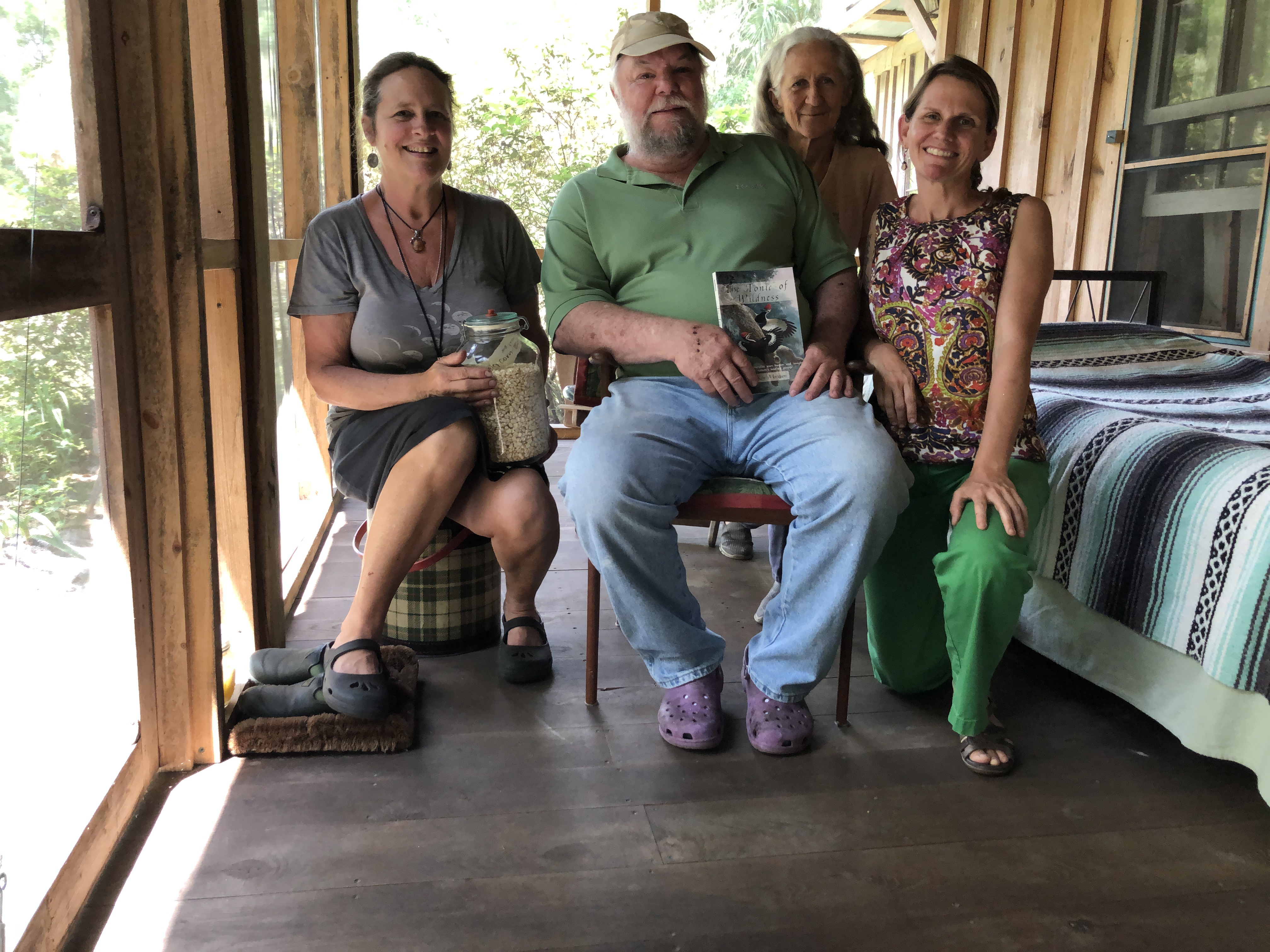
Yesterday, in a quaint old Florida home, nestled in the back woods of Cross Creek, where it feels like you’ve stepped way back in time, I convened with 3 other beautiful people to discuss the plight, opportunity, and plan of attack for saving this corn. Like me, it belongs here. So I’ll fight to save it. If we can successfully revive it and share it, it will surely make once again as it did as far back as the 1800’s, the finest grits, the best bourbon, and the tastiest cornbread.
Community, responsibility, corn! Left to right: Karen Sherwood, Jack Simmons, Sally Morrison and me!
So 40 is looking great! Cancer-free, the rights and responsibilities of citizenship, a meaningful career, and corn! What more is a girl to want? Oh, I also learned how to floss (the dance, not the dental hygiene practice), and my sweet little niece will be turning 1!
I’ve always been fascinated by the beauty and diversity of nature. Fairly frequently, she amazes me with outright weirdness, bizarre forms, gooey structures, foul smells, stunning beauty, and unexpected features.
I’ve been spending a lot of time in my garden lately, and walking Huxley in the woods. There has been plenty to observe and admire, immersed in these two places that are teeming with things I can’t look away from!
So these past few weeks, here have been a few of my favorite things!
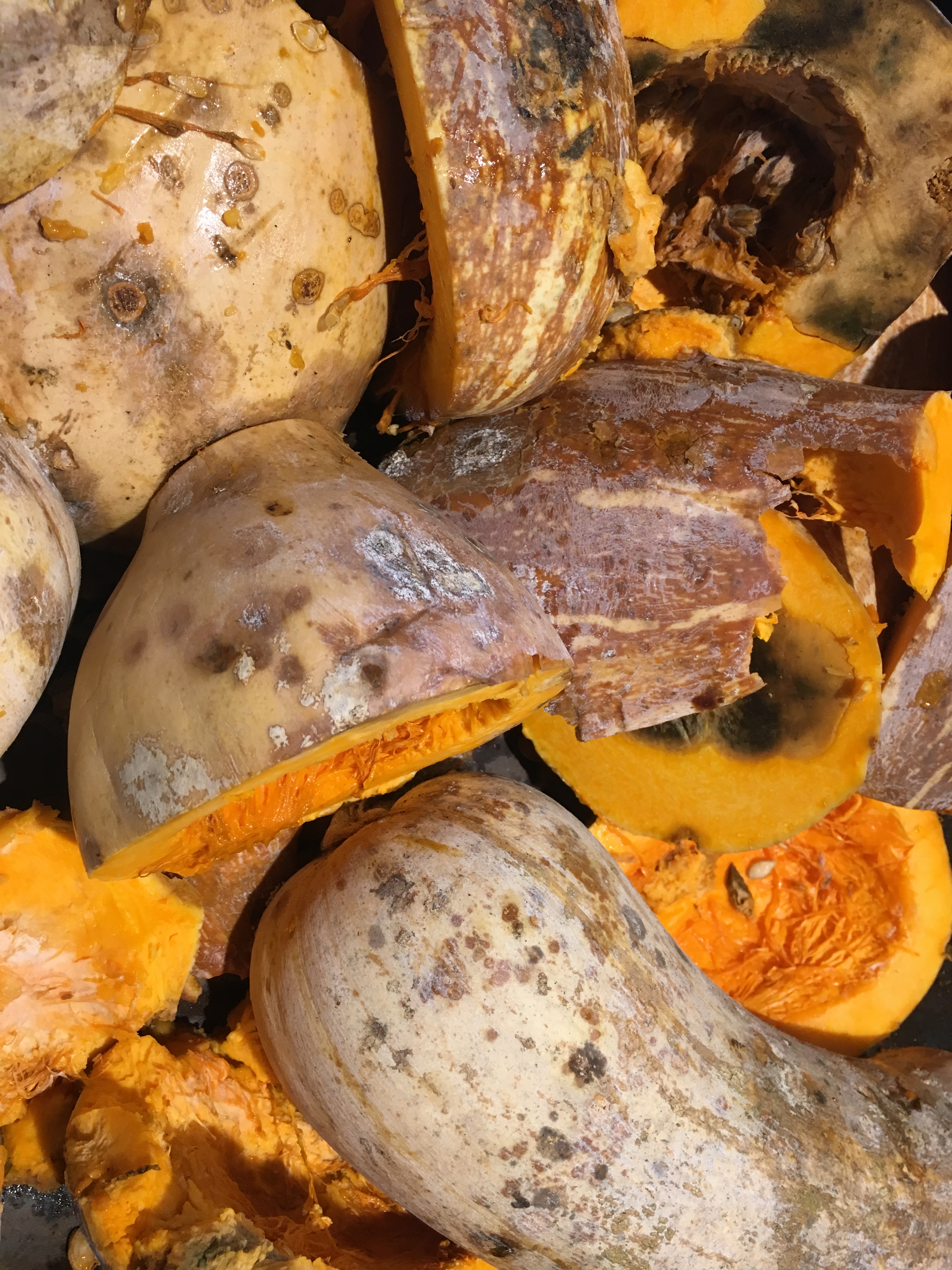
Stinking, rotting calabaza squash being harvested for seed. The massive fruits are impressive, as is the smell and feel of some of them that have gone foul. I love the patterns they decay forms on the skins.
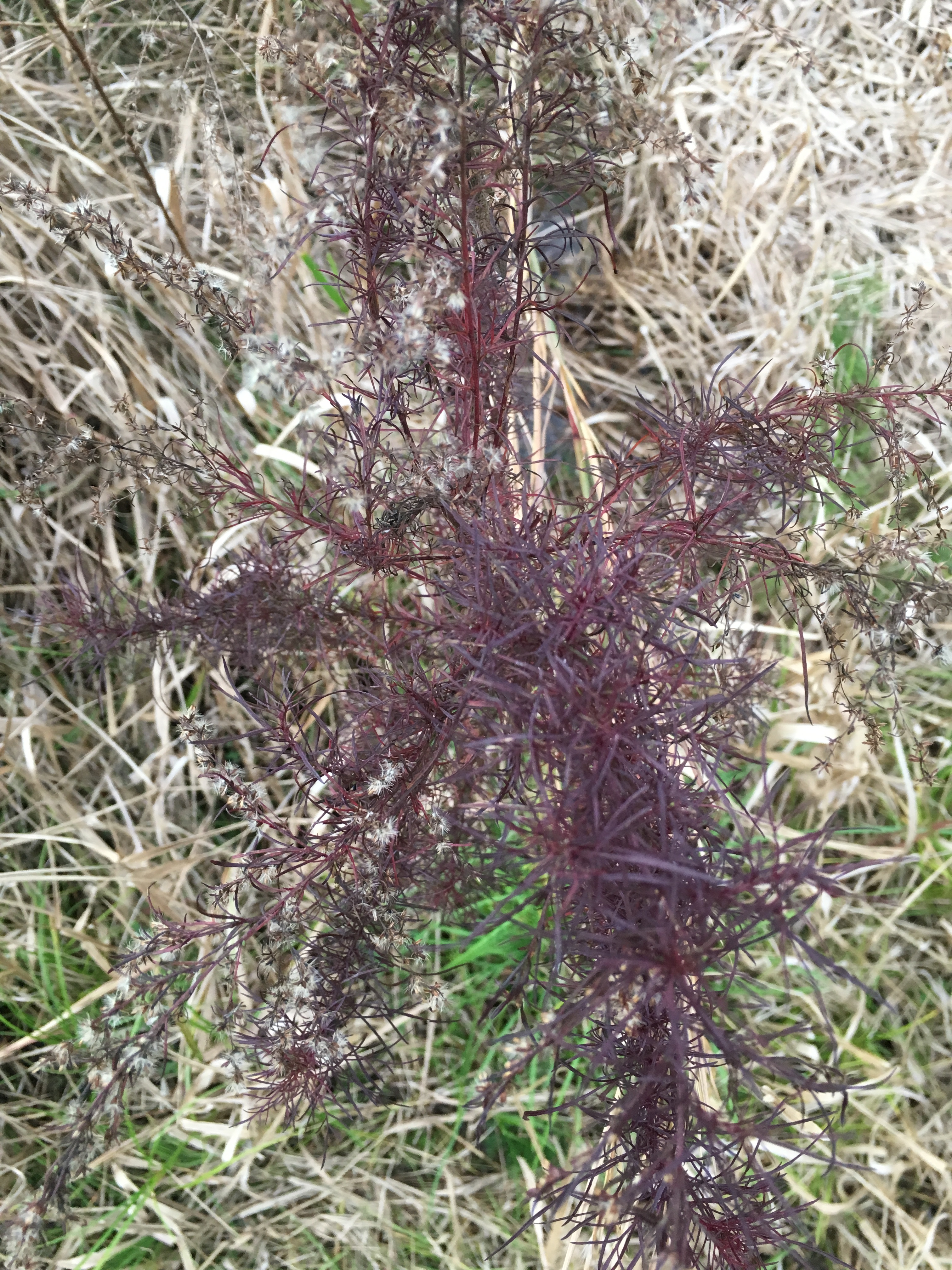
Maroon-colored dog fennel in the woods. Never seen it before. It’s not due to cold or anything obvious, all surrounding dog fennel is green as usual. Gorgeous!
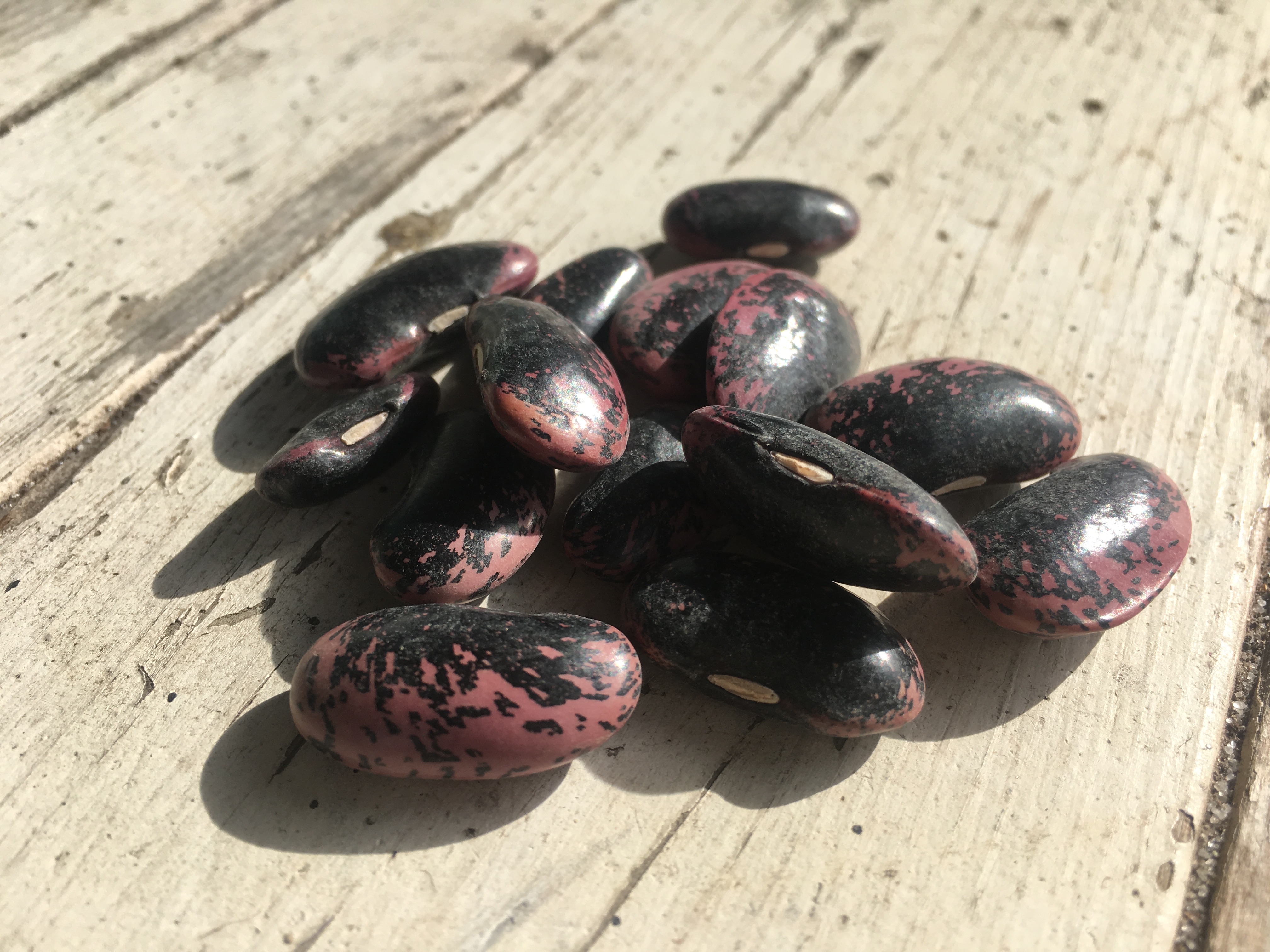
Beautiful purple and black bean seeds, I can’t wait to grow these Scarlet Runner Beans! They are like magic beans. This large seed will grow into a gorgeous plant, prolific with red flowers that pollinators love, and the pods are edible too.
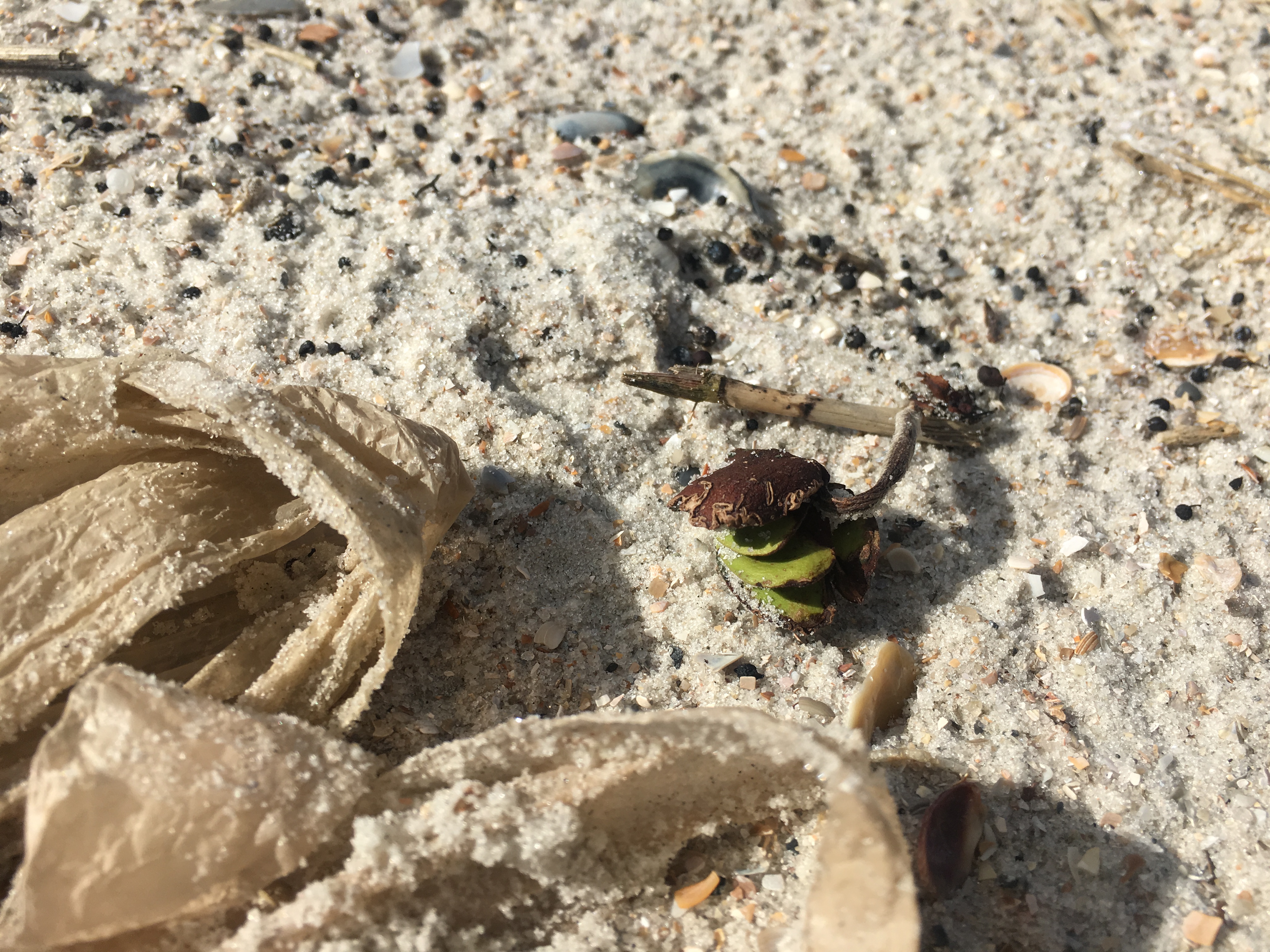
Amazing adaptation to a tough environment, as a little seedling on the salty beach sand, makes a go for it, nestled among plastic waste.
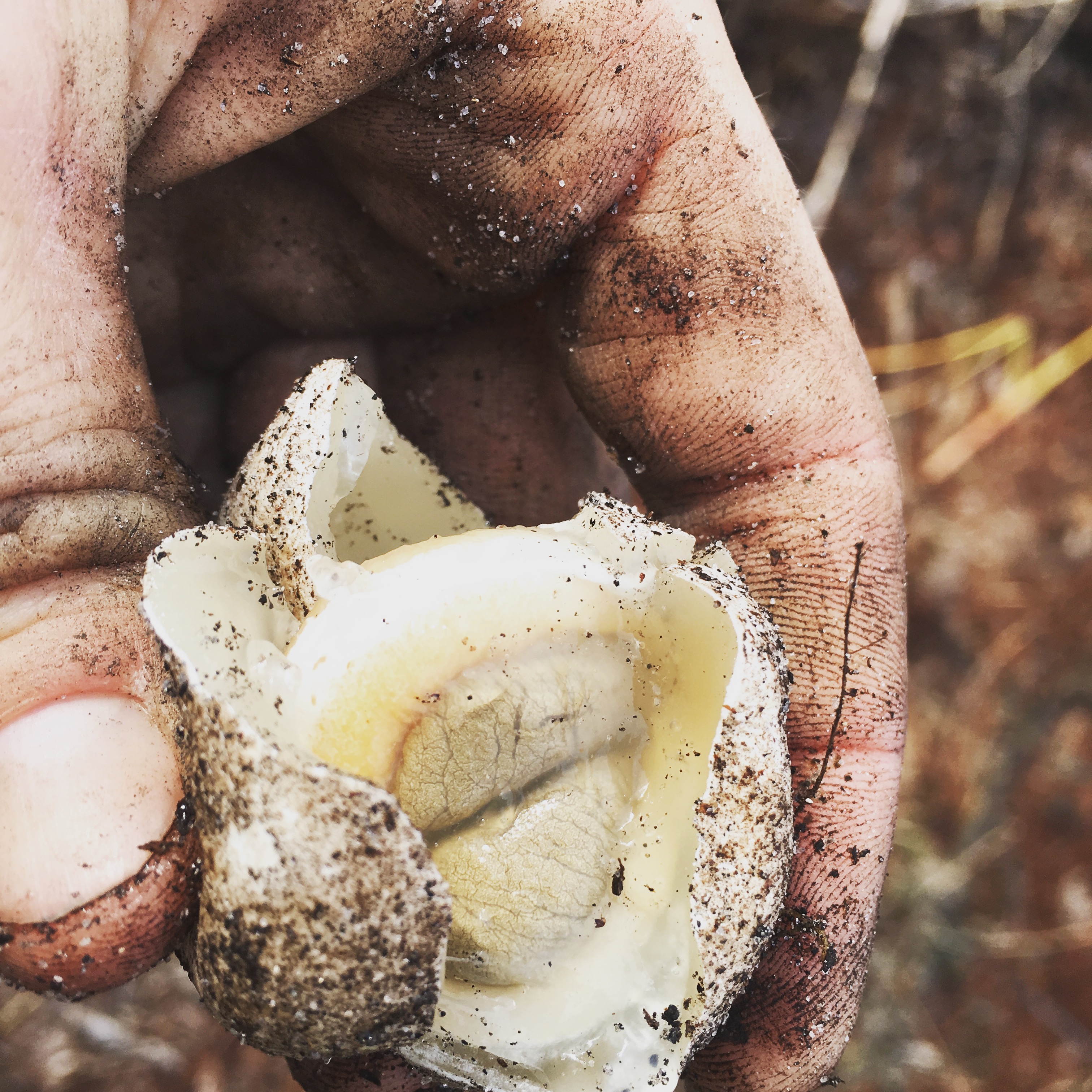
The underground (supposedly edible) precursor to the stinky, putrid stinkhorn fungus that has been prevalent this winter with all the rain. Inside, it is like a brain, with two hemispheres, vein or neuron-like patterning, and a gelatinous sac.
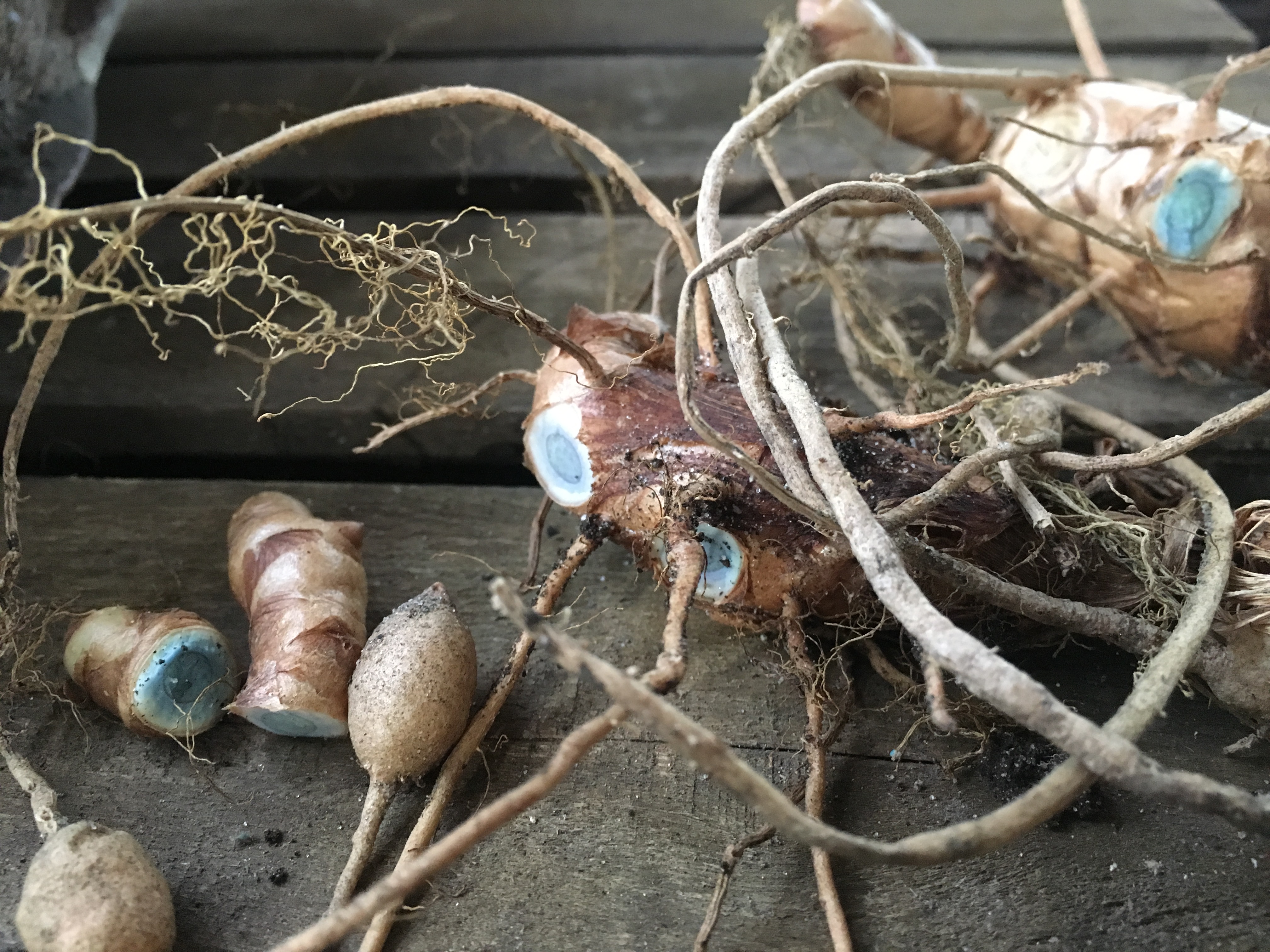
Blue-colored turmeric! A very rare thing, and one of my new favorites. I’ve been learning about it through osmosis lately, since the photos I posted on Facebook have triggered a lot of interest and conversation. Apparently it’s endangered and very rare, its super duper medicinal.
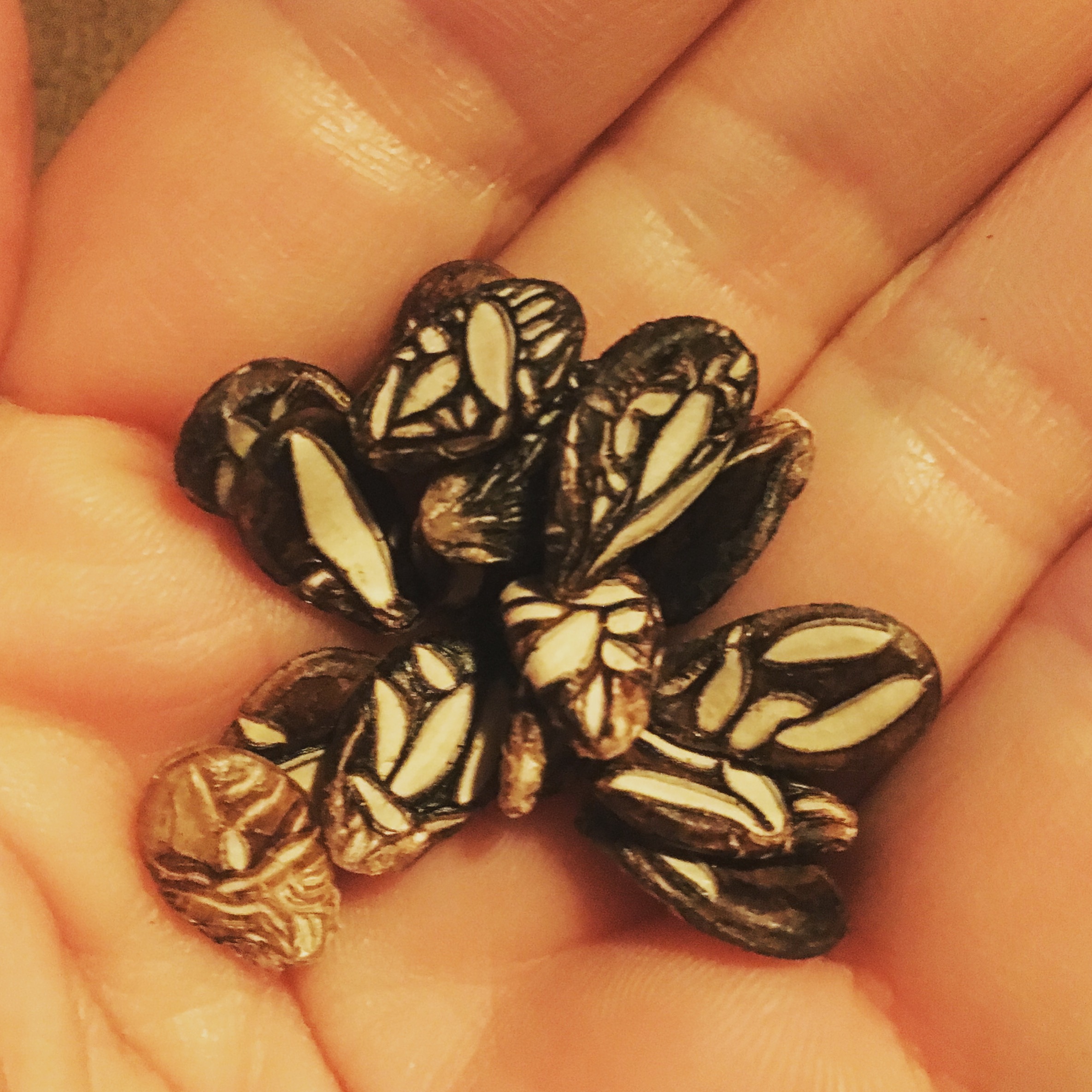
Gorgeous patterned watermelon seeds, from Mehmet. A Turkish heirloom variety called Cekirdegi Oyali, which means crocheted seed. When the seeds dry, they form these unique patterns. Can’t wait to grow this in the spring!
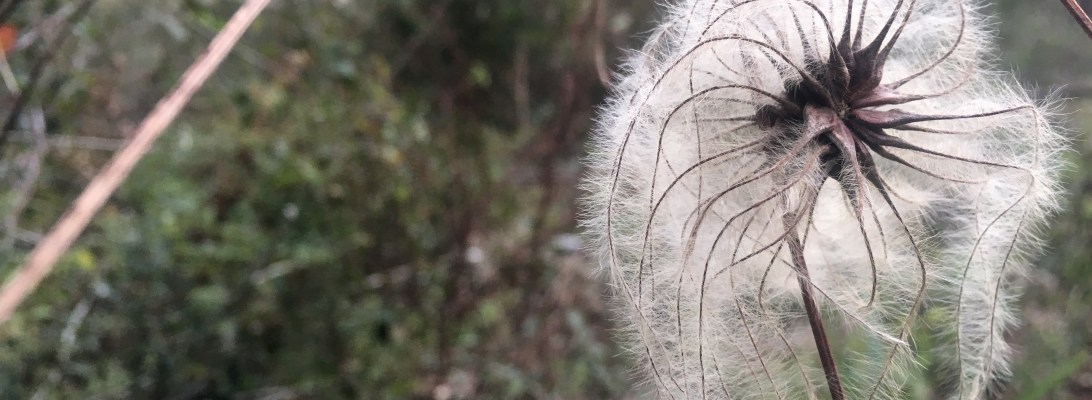
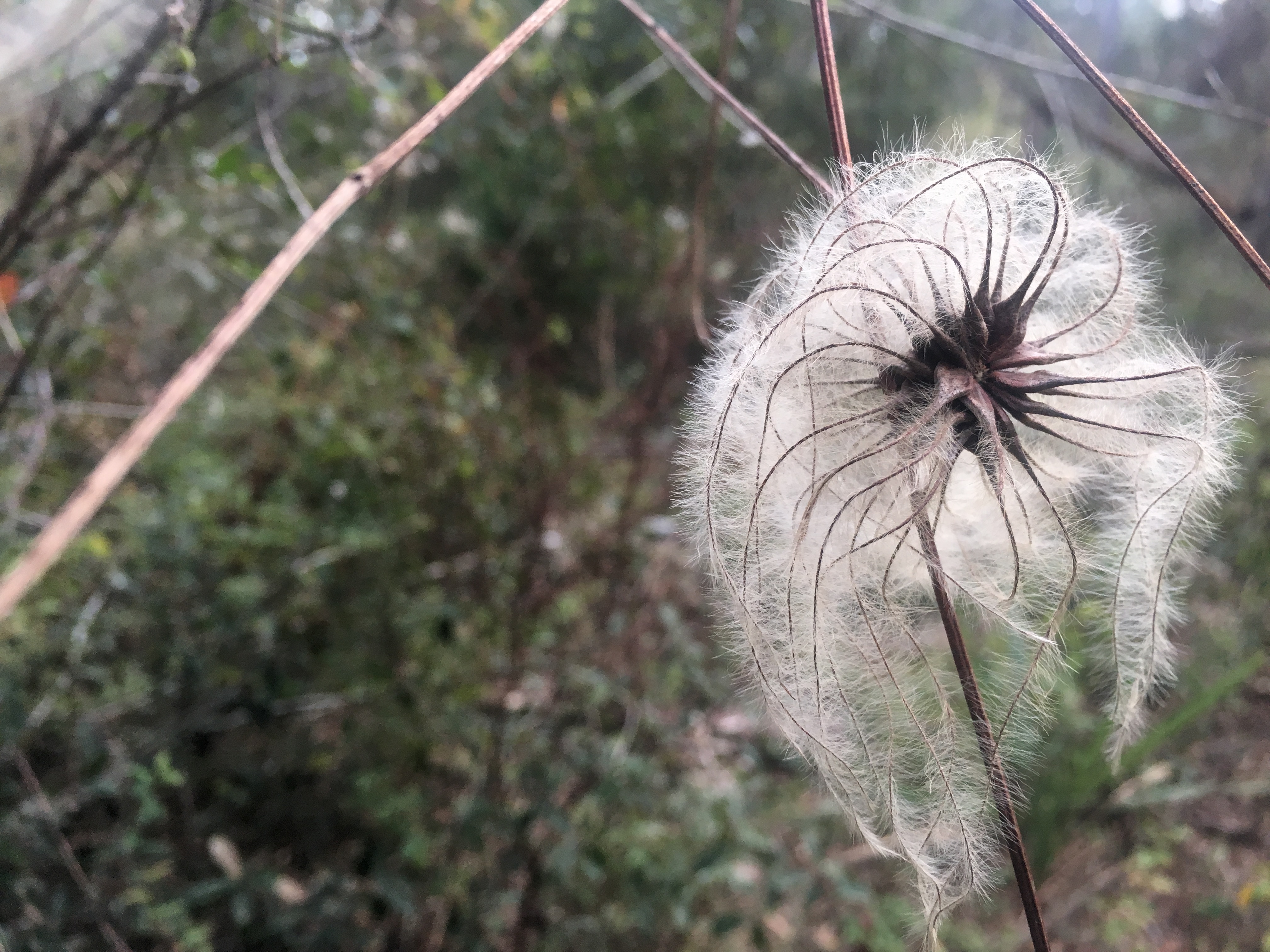
This native clematis grows wild, and it’s seed heads are peculiar and wonderful. They remind me of something depicted in a Dr. Seuss book.
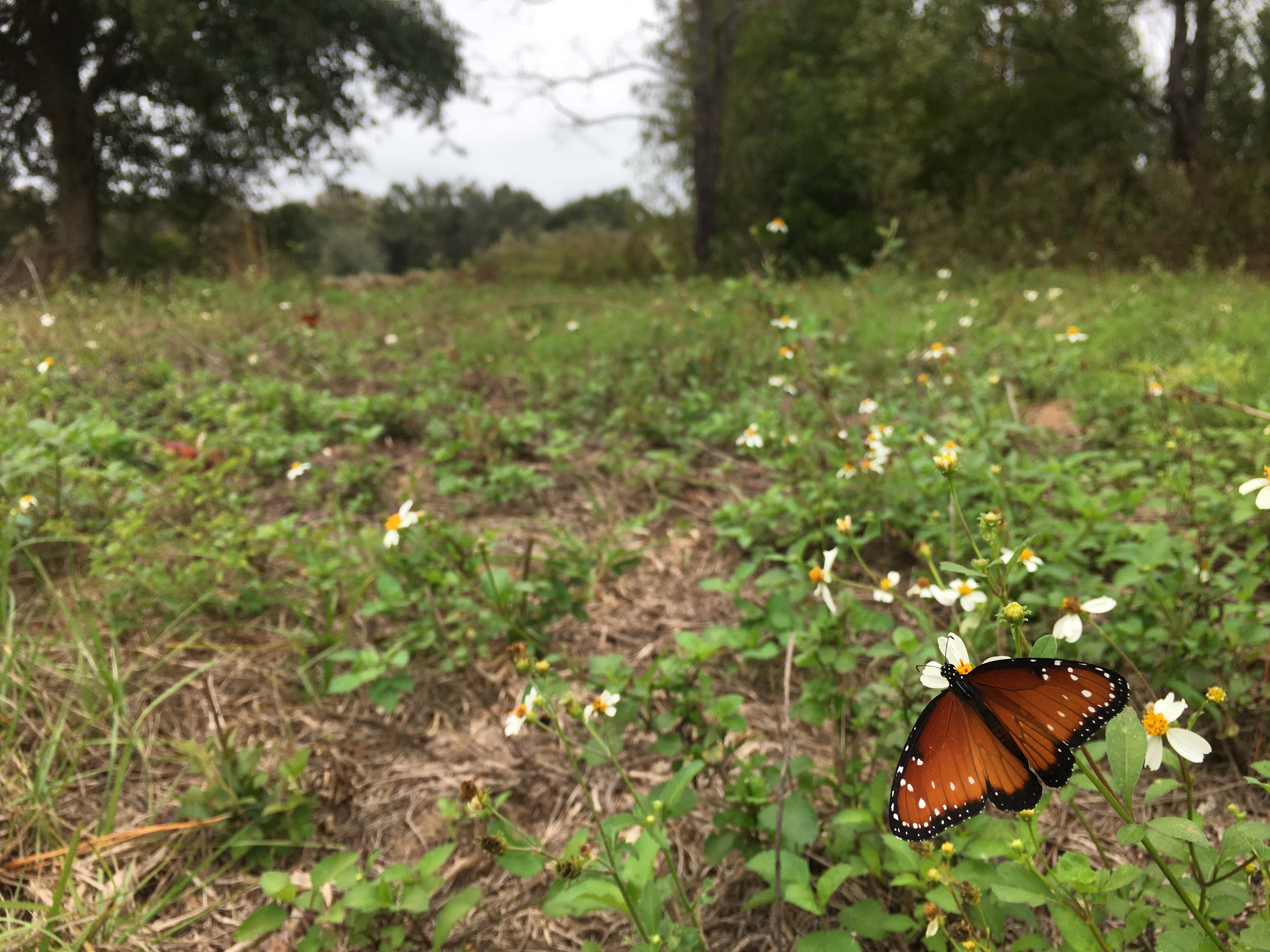
This field was fully of “weedy” Bidens alba, and a whole lot of Queen butterflies. This photo could’t capture it, there were lots of butterflies! There is a lot of value in these scrappy looking pieces of land, I wish more people would leave them be.
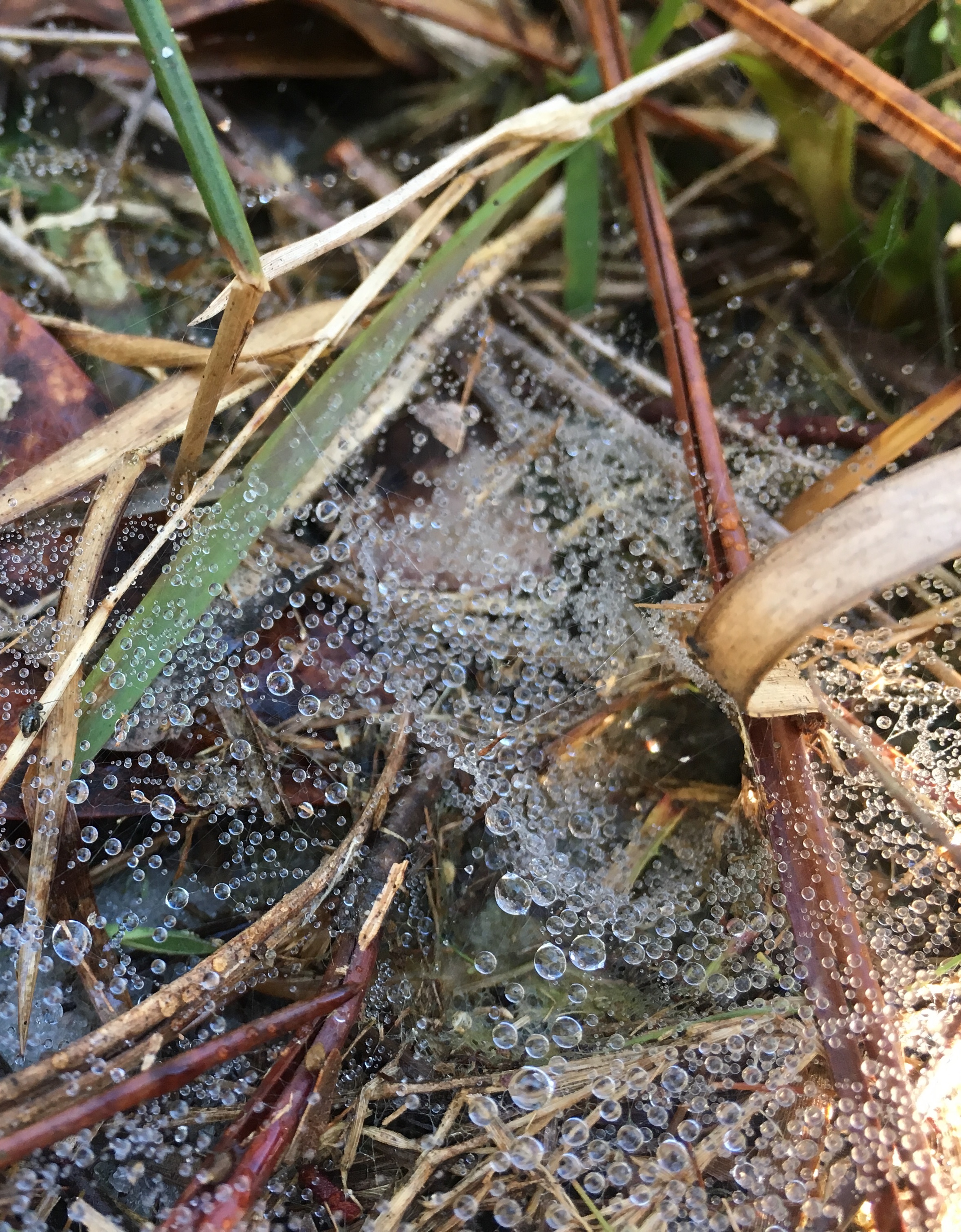
Wouldn’t want to be an insect that stumbled over this trapdoor spider (hunkering down in the hole in the upper right). All the rain we’ve had, accumulated like delicate glass beads on her elaborate trap.
I’m so in love with this Seminole Pumpkin. It was my gateway drug to gardening and seed saving. This year’s crop was so lovely and diverse!! Look at the shape of this beauty, and the speckling.
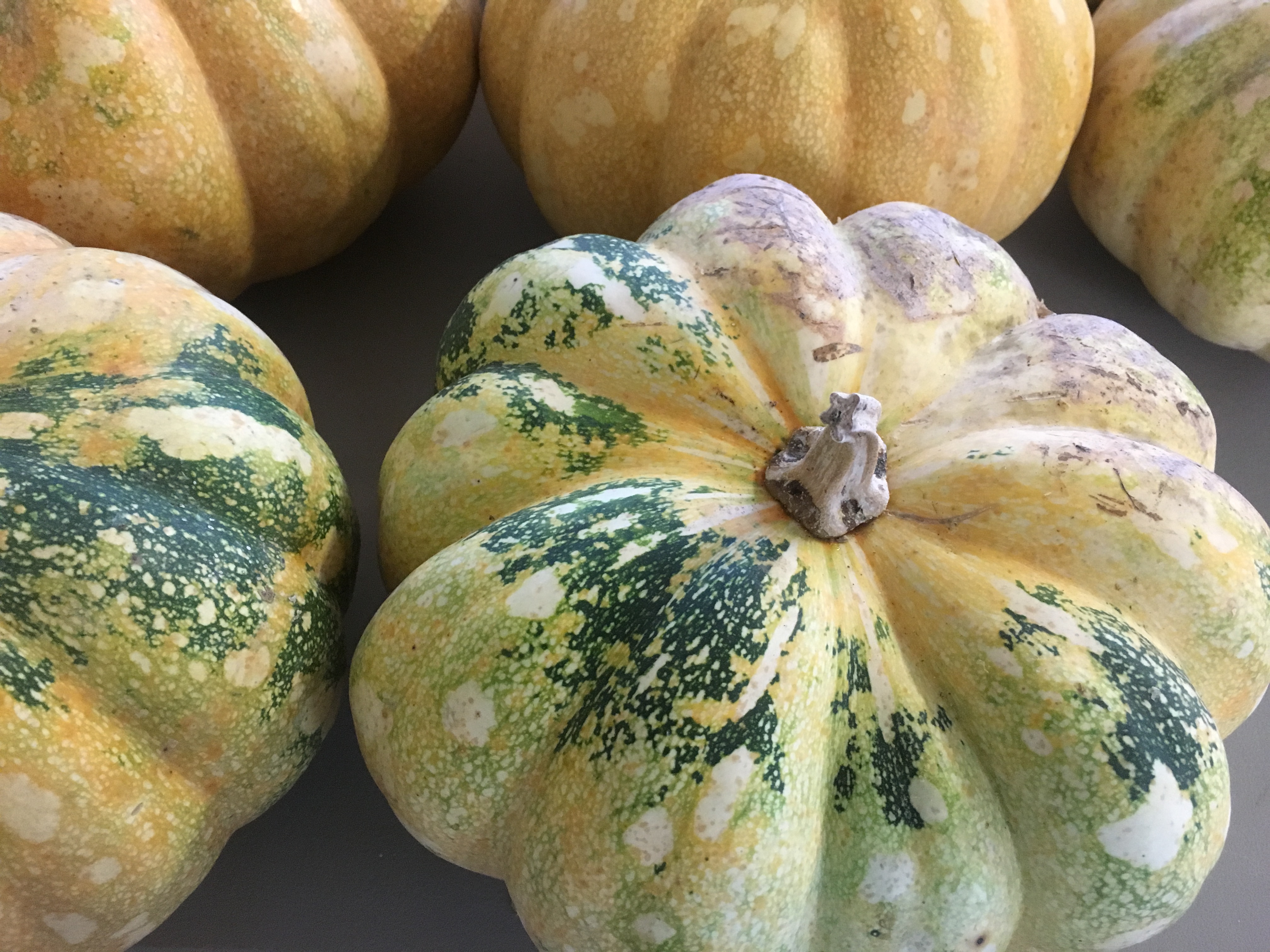
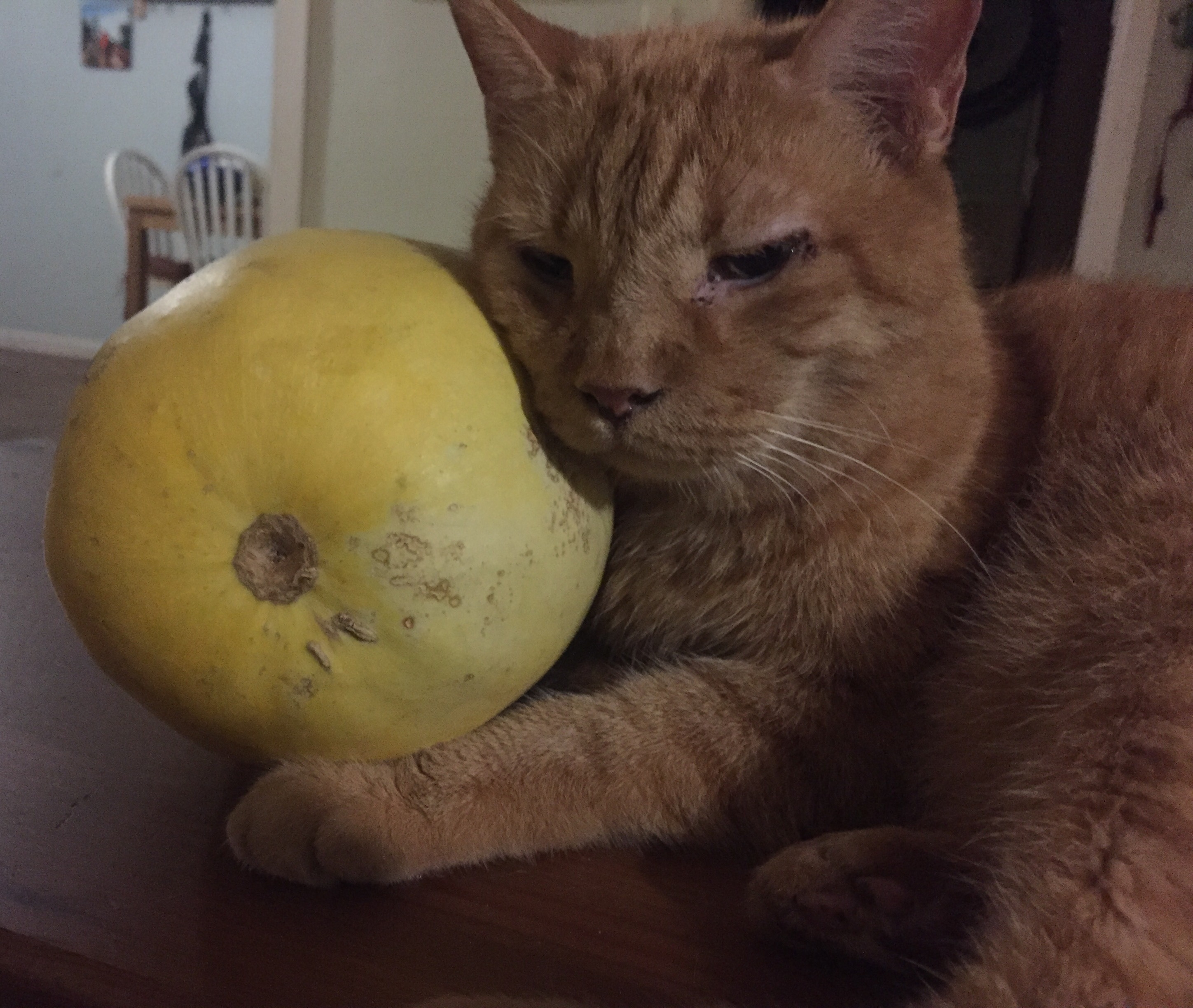
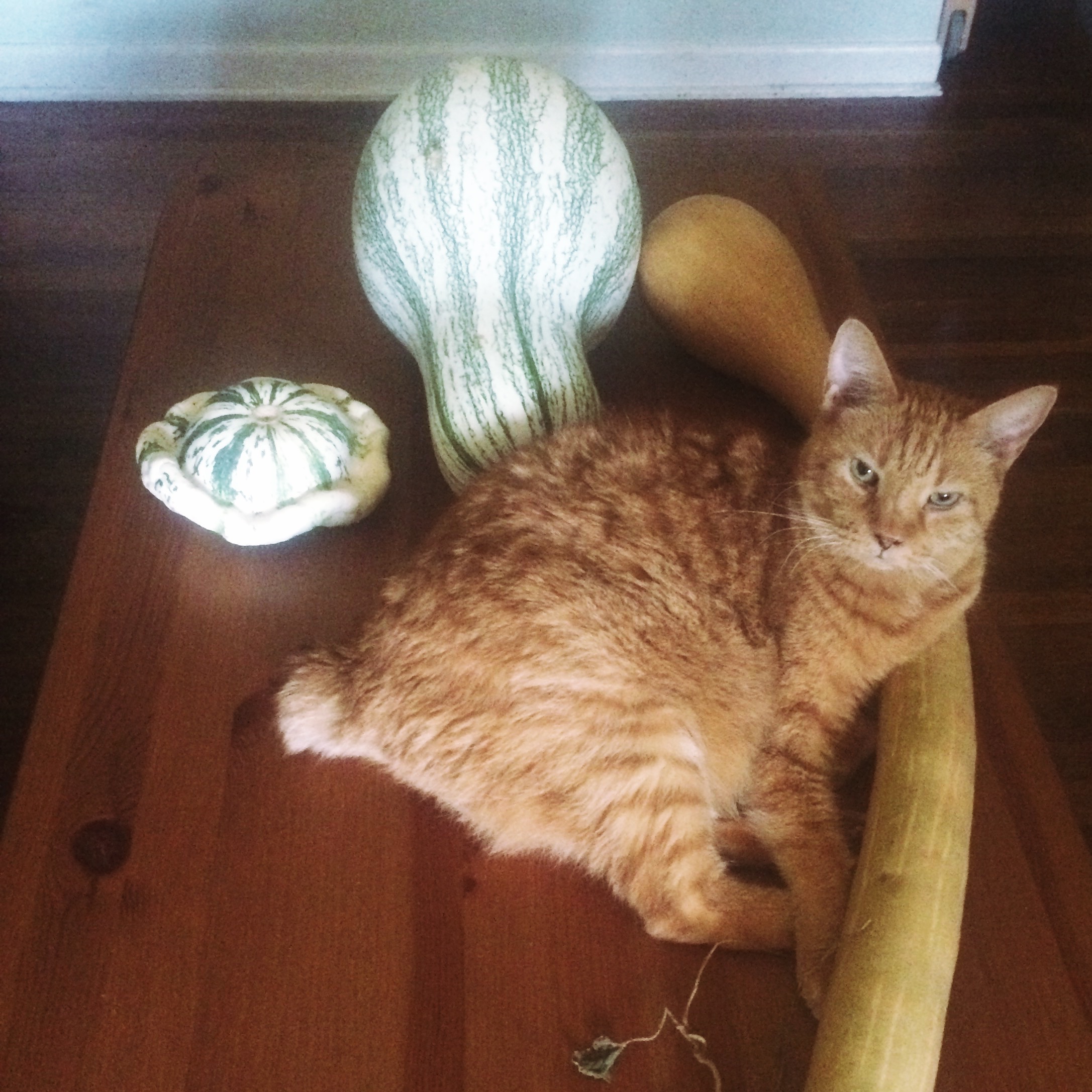
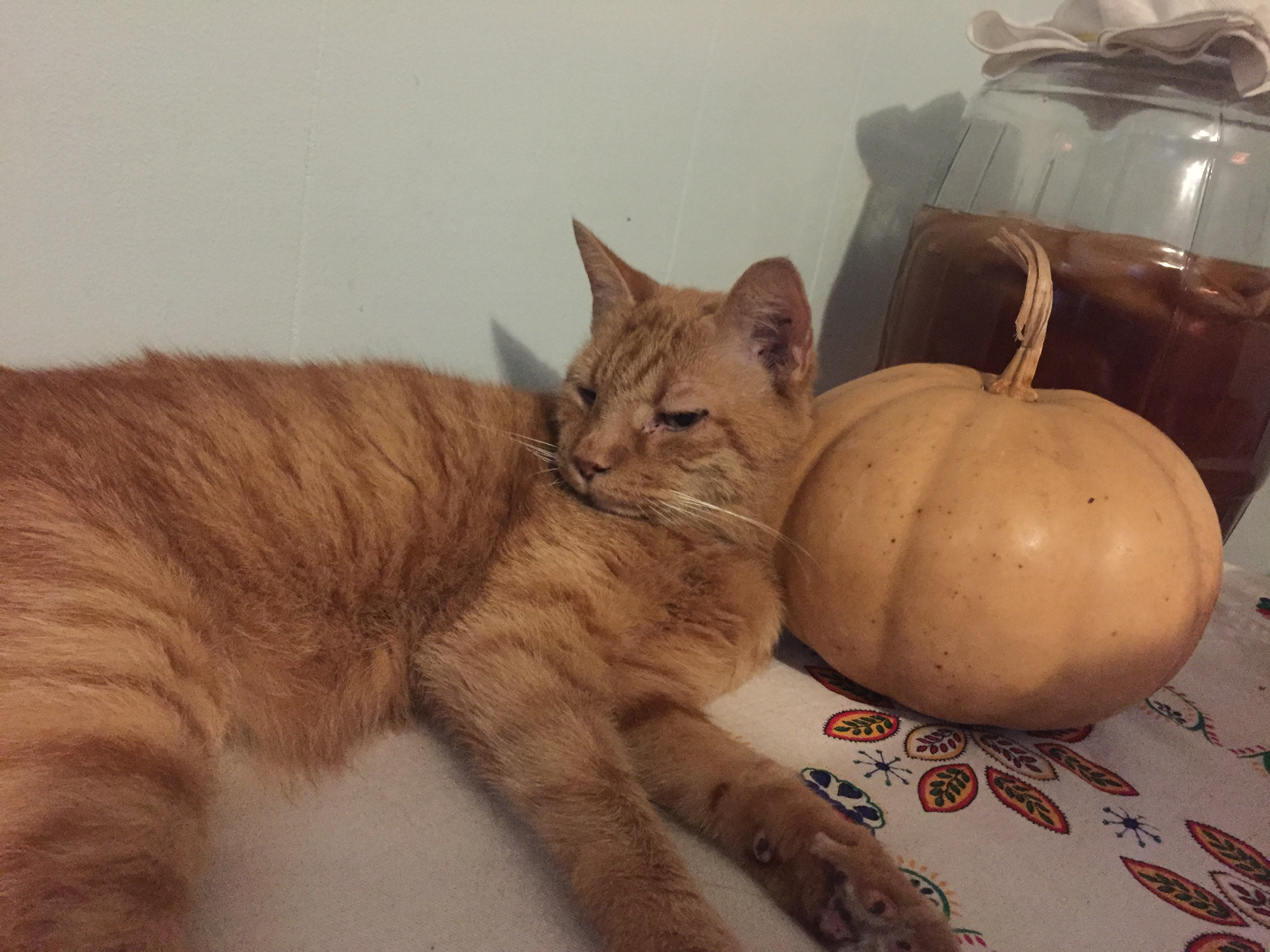
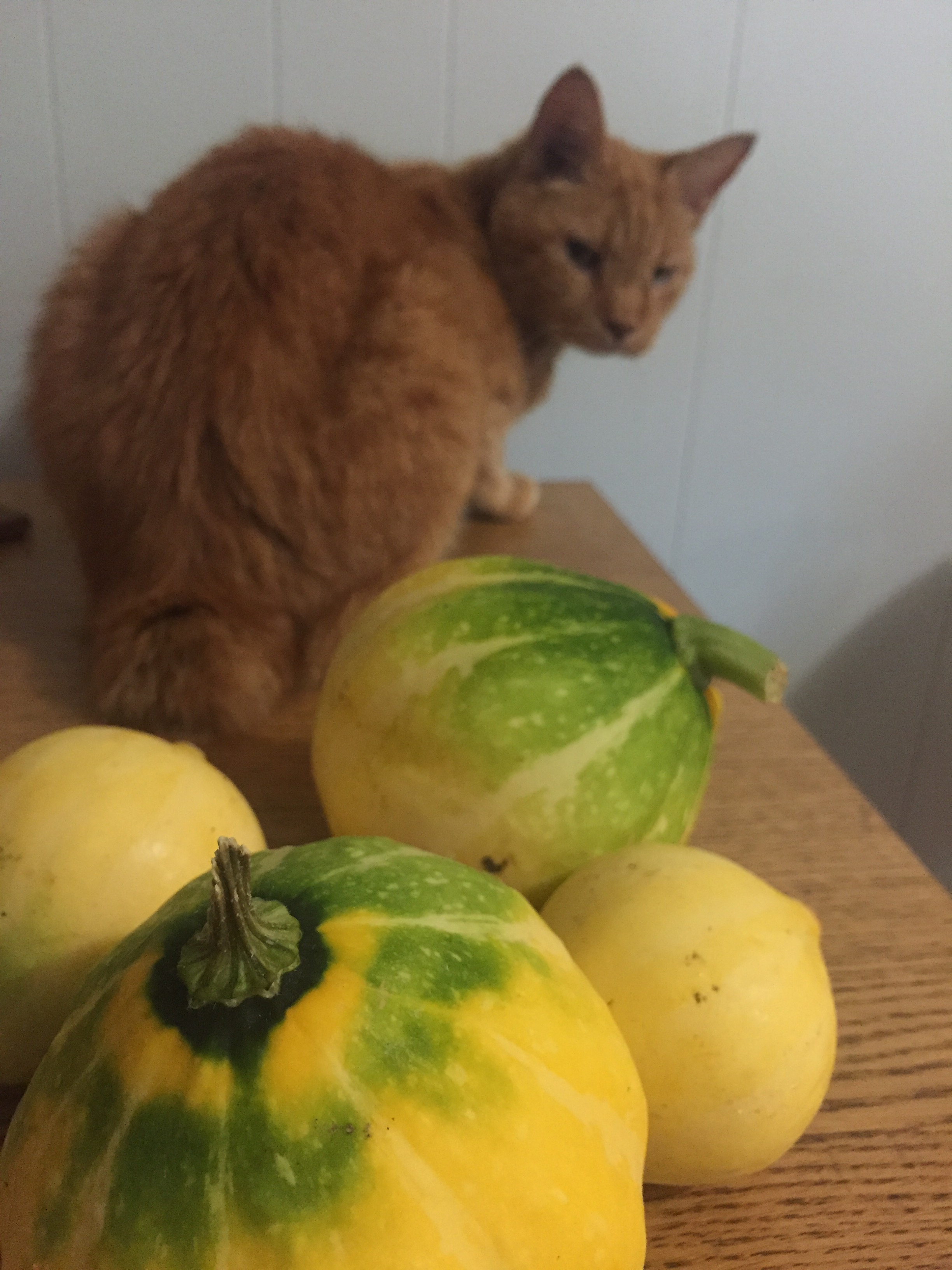
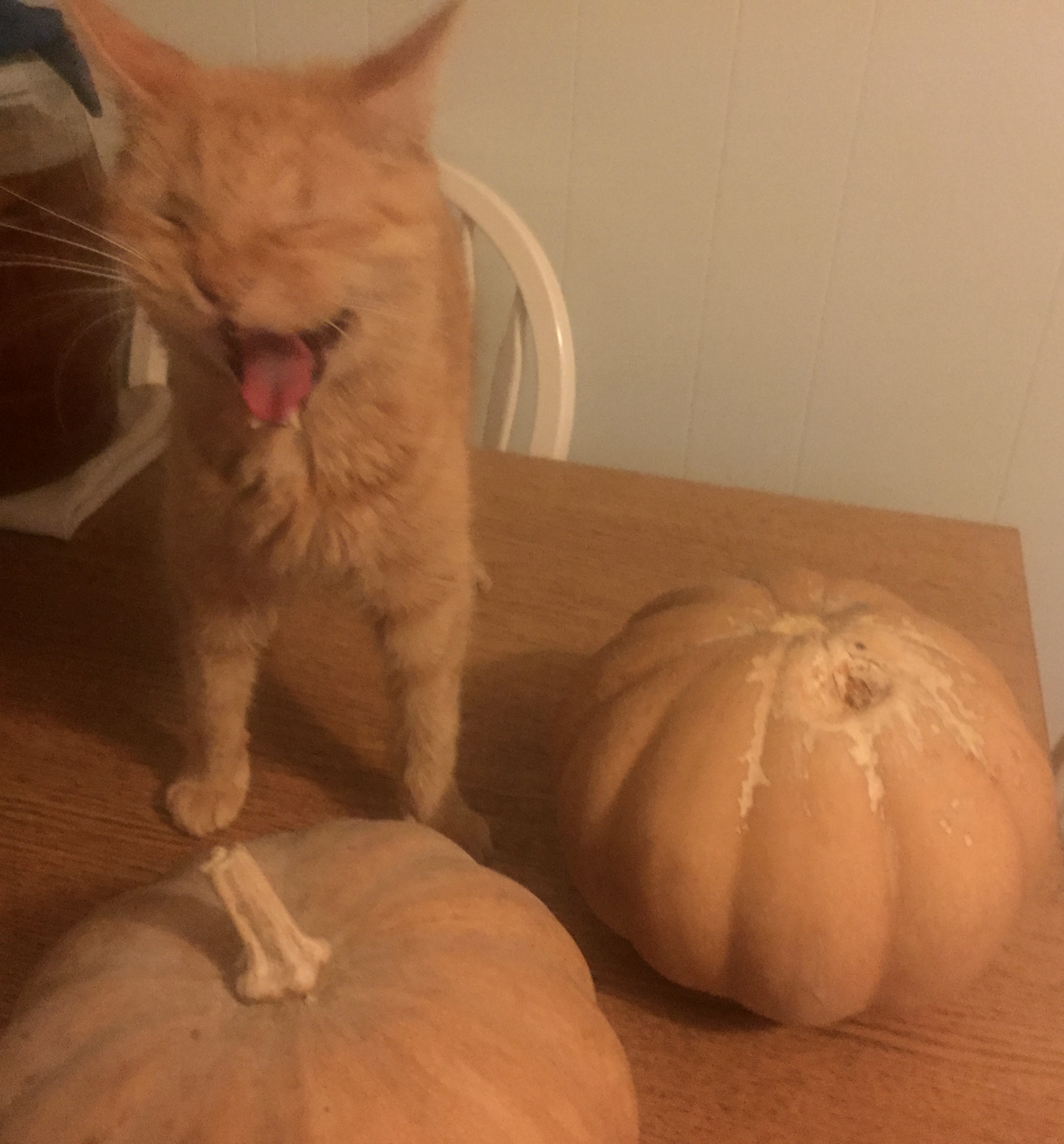
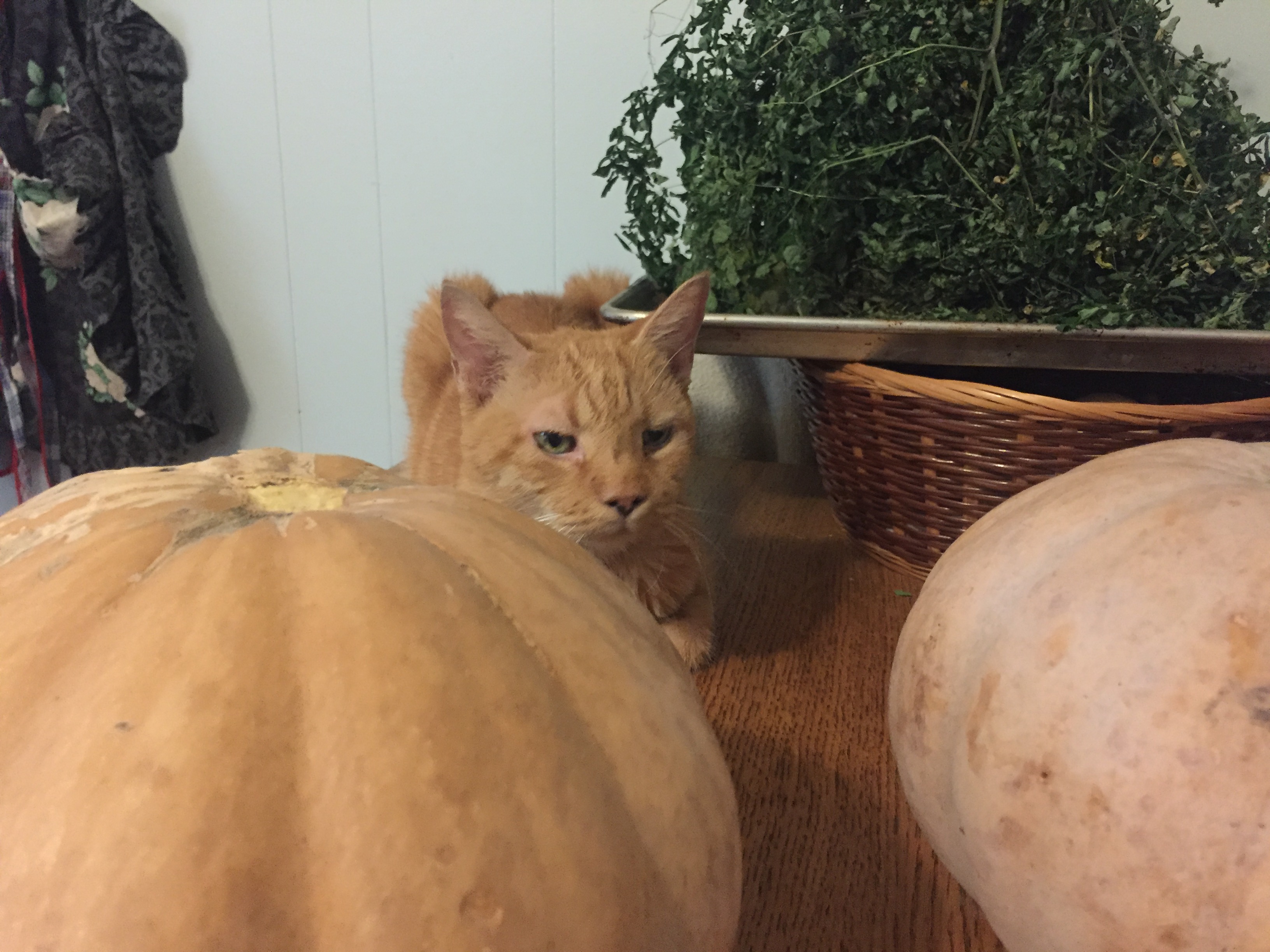
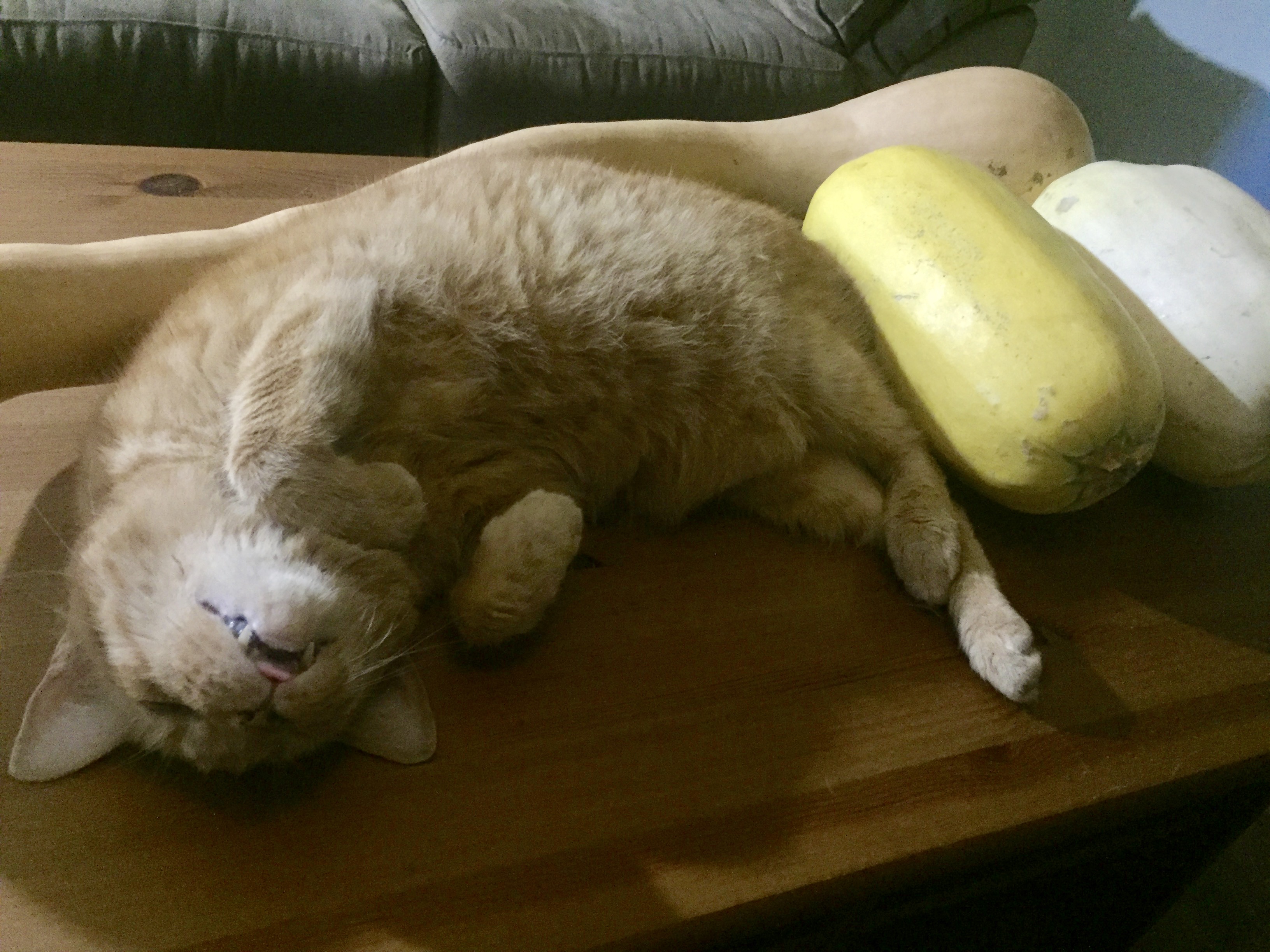
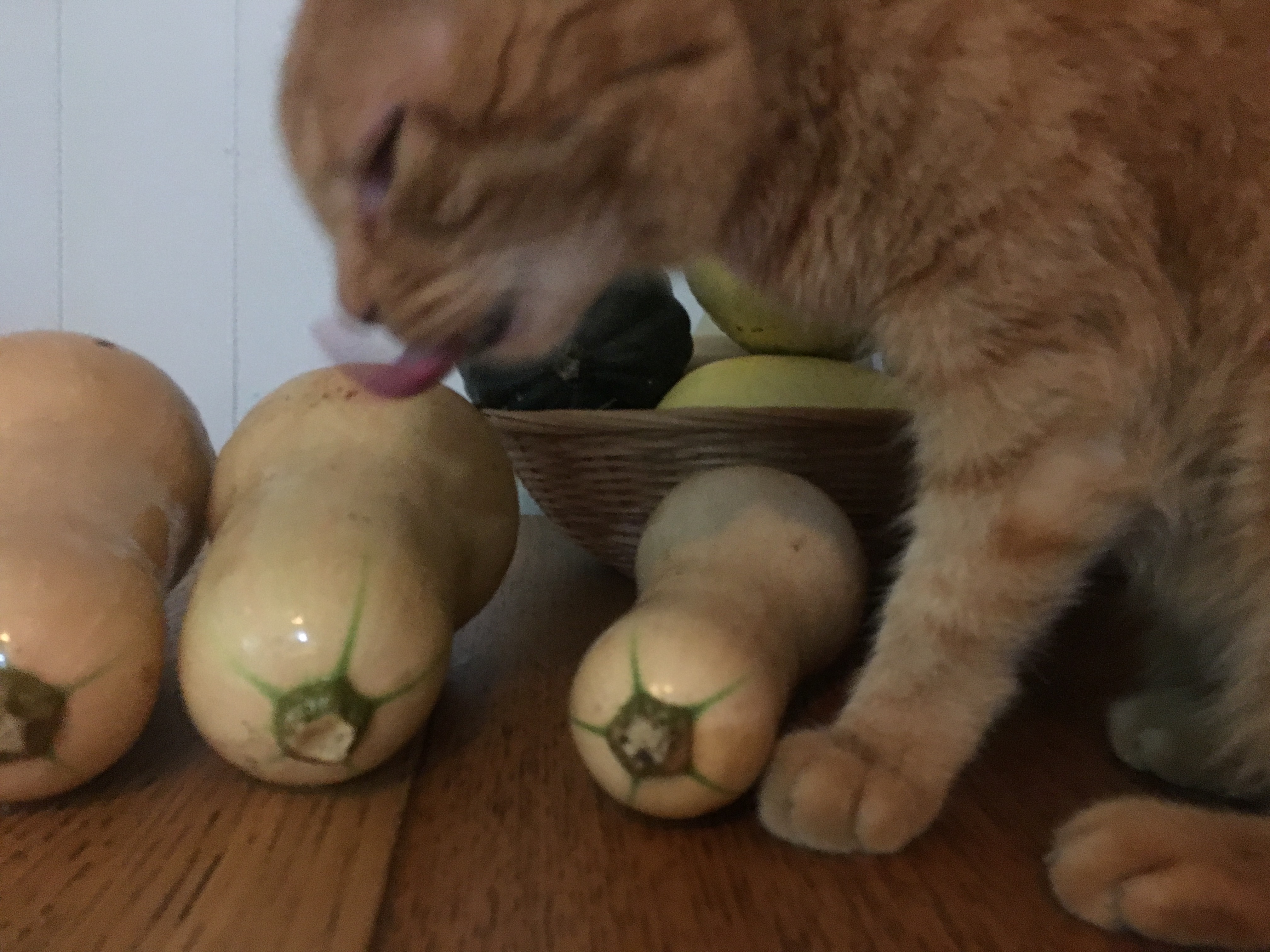
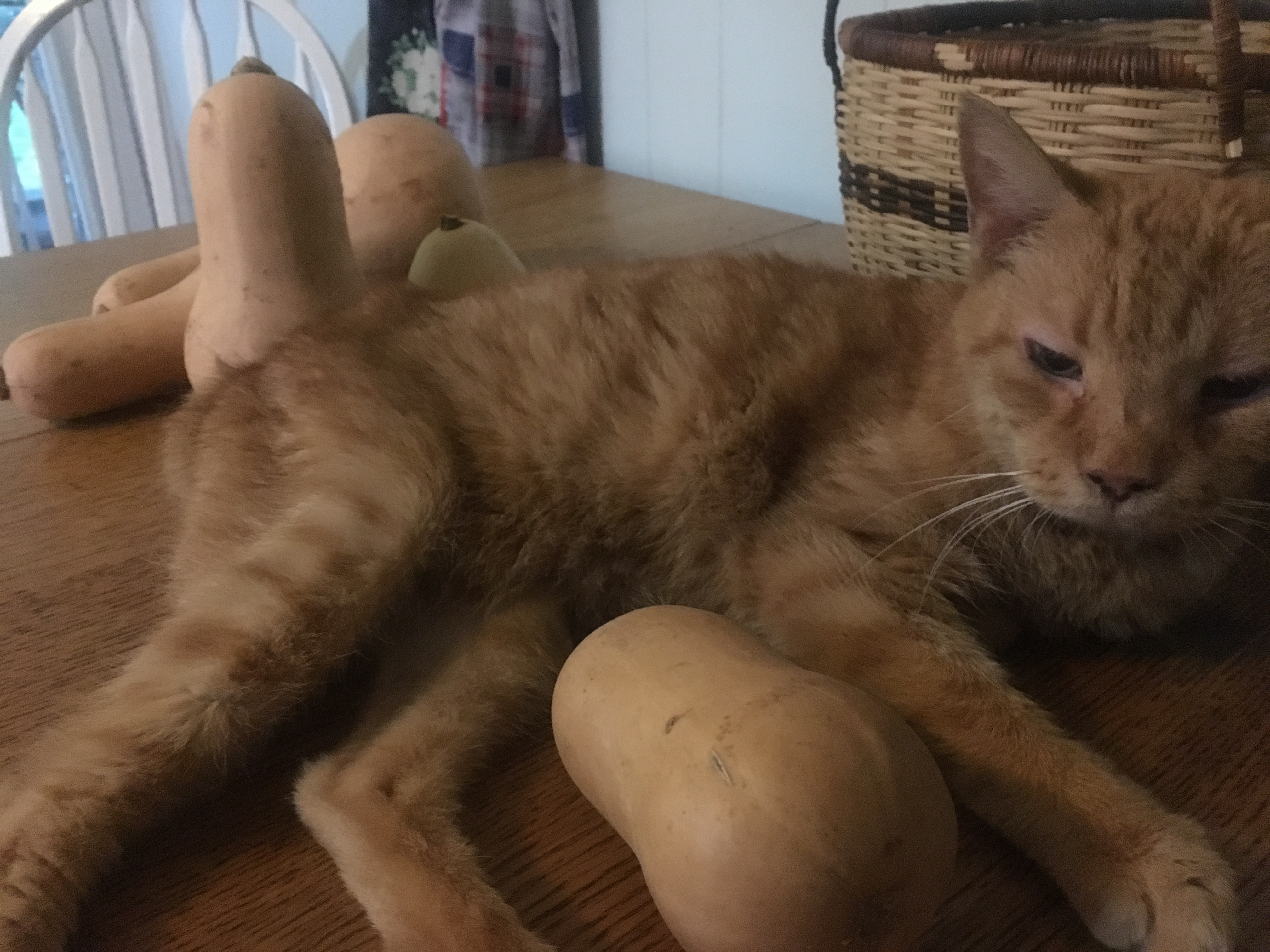
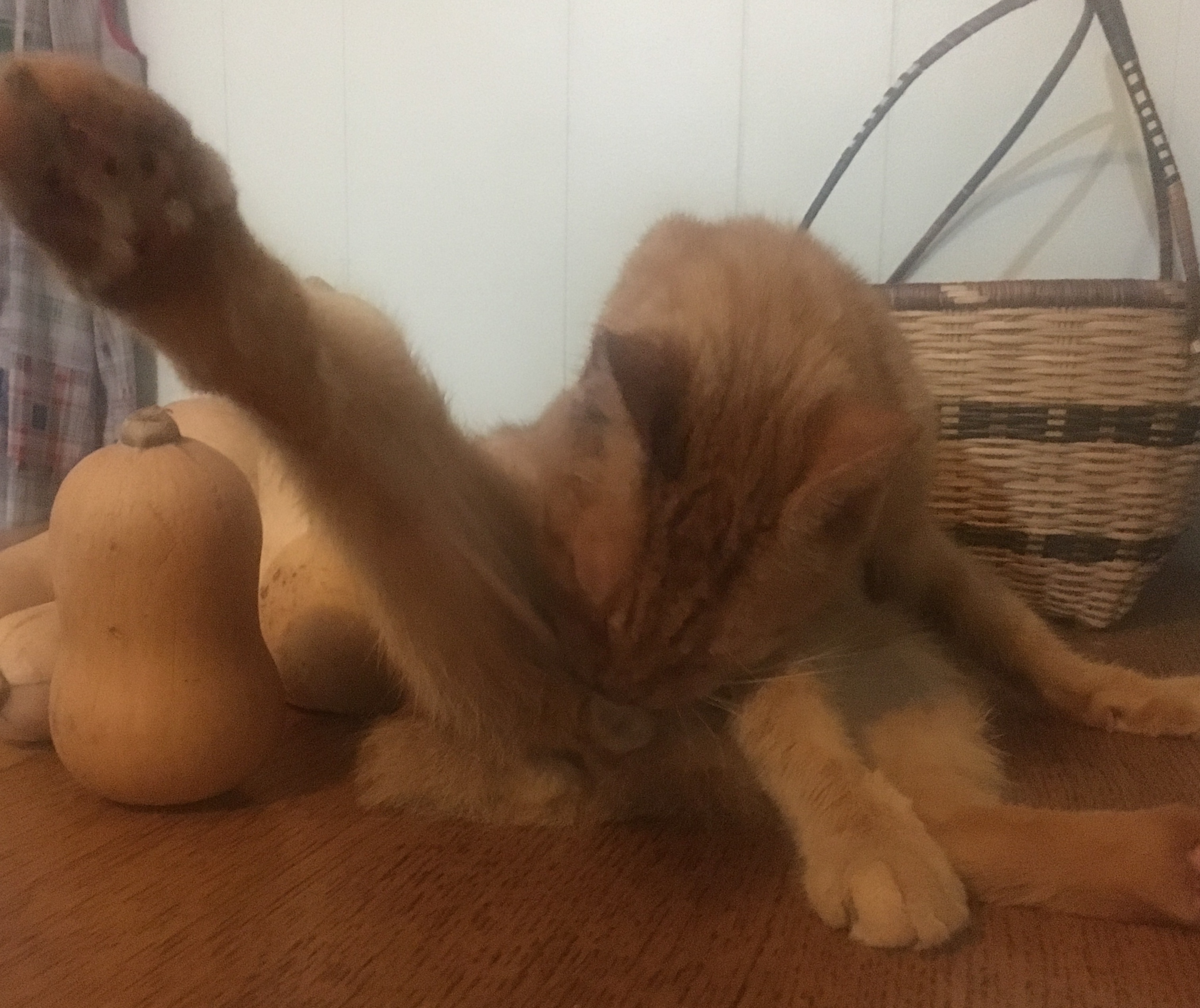
Throughout the year, I have squash of various kinds sitting on the kitchen or living room table. Since many of them are winter squashes, they last a long time and become centerpieces for many months. One of my cats, Arthur likes to lay about with them. Like any cat he wants to be on new things, and often lays on top of my books, seed catalogs, boxes of gear. Since he can’t sit on the squashes, he snuggles and lounges with them.
I think they’re funny enough to share, so here they are! Enjoy 🙂




















 seedsandstories.blog